Dmitry Savonin

282 posts

Dmitry Savonin banner
Dmitry Savonin

Dmitry Savonin

@dmitry123

blending everything, co-founder @fluentxyz; prev. solution architect @ankr; contrib: @erigoneth, @chiliz, @bnbchain; mscs

Dubai, UAE Katılım Kasım 2017
152 Takip Edilen991 Takipçiler
Dmitry Savonin
Dmitry Savonin@dmitry123·
Nobody warned me that an emulated EVM environment could be this fast inside Blended Execution. ~20µs for a raw ERC20 transfer in the unified Blended Execution runtime. ~6µs for a UST transfer, seamlessly accessible across execution environments (EVM, SVM, WASM). UST (Universal Token Standard) is an ERC20-driven execution layer where token operations execute seamlessly across blended environments. Assets can exist simultaneously across EVM, SVM, and WASM, and are accessible from contracts regardless of language or execution environment. All of this is possible because of rWasm IR.
Dmitry Savonin@dmitry123

Can’t stop saying this: 1. Blended Execution is powered by rWasm IR — the first ZK-friendly blended execution VM that runs close to machine-code speed while producing proofs as efficient as RISC-V. 2. EVM and SVM support are achieved by running specialized system smart contracts compiled into rWasm IR, where all user contracts execute. Fluent doesn’t support EVM/SVM/WASM natively — it’s all orchestrated through the rWasm VM. 3. With UST (Universal Token Standard), developers can perform ERC20-related operations with significantly higher performance and seamlessly across execution environments — whether ERC20 or SPL.

English
1
1
12
454
Dmitry Savonin
Dmitry Savonin@dmitry123·
Can’t stop saying this: 1. Blended Execution is powered by rWasm IR — the first ZK-friendly blended execution VM that runs close to machine-code speed while producing proofs as efficient as RISC-V. 2. EVM and SVM support are achieved by running specialized system smart contracts compiled into rWasm IR, where all user contracts execute. Fluent doesn’t support EVM/SVM/WASM natively — it’s all orchestrated through the rWasm VM. 3. With UST (Universal Token Standard), developers can perform ERC20-related operations with significantly higher performance and seamlessly across execution environments — whether ERC20 or SPL.
English
1
2
13
1.7K
Dmitry Savonin
Dmitry Savonin@dmitry123·
Agree with the core diagnosis here: L2s should not be treated as mandatory extensions of Ethereum. They are becoming a spectrum of execution environments with different trust, latency, regulatory, and VM tradeoffs. Scaling alone is no longer a durable differentiator. The real frontier is execution diversity and new capability, while still preserving strong interoperability with Ethereum. This is where @fluentxyz fits. Fluent introduces a unified execution model — Blended Execution — where EVM and Wasm contracts coexist natively within the same system. Instead of copying L1 execution and adding throughput, Fluent treats the EVM as one execution domain among others. It follows Ethereum’s standards, remains interoperable with Ethereum assets and tooling, but does not constrain the entire system to EVM semantics. This opens up concrete new capabilities. For example: * Privacy-preserving logic (ZK circuits, custom cryptography, confidential state) can live in Wasm alongside EVM contracts, instead of being awkwardly encoded into EVM bytecode. * Application-specific execution (orderbooks, games, social graphs, AI agents) can use Rust-based Wasm for performance and expressiveness, while still settling value and interacting with EVM contracts. * High-performance or low-latency components can be written in Rust and executed natively, without forcing everything through EVM’s instruction model. Under the hood, Fluent is built on rWasm, a ZK-friendly VM design that avoids many EVM-era inefficiencies and is better suited for high-performance execution and proving. This makes it possible to scale not just transaction count, but what kinds of programs are feasible onchain. The post also highlights an important direction for Ethereum itself: the emergence of stronger, more native trust anchors for verification and interoperability. While mechanisms like native rollup verification are EVM-specific, the broader implication is that Ethereum can serve as a canonical settlement and verification layer, even as execution environments diversify. That is the world Fluent is designed for: Ethereum as the settlement and trust root, with specialized execution layers that add genuinely new capabilities — different VMs, semantics, and performance profiles — rather than simply duplicating L1 execution elsewhere. The next era is not “extend Ethereum”. It’s “blend Ethereum”. And that’s the bet Fluent is making.
vitalik.eth@VitalikButerin

There have recently been some discussions on the ongoing role of L2s in the Ethereum ecosystem, especially in the face of two facts: * L2s' progress to stage 2 (and, secondarily, on interop) has been far slower and more difficult than originally expected * L1 itself is scaling, fees are very low, and gaslimits are projected to increase greatly in 2026 Both of these facts, for their own separate reasons, mean that the original vision of L2s and their role in Ethereum no longer makes sense, and we need a new path. First, let us recap the original vision. Ethereum needs to scale. The definition of "Ethereum scaling" is the existence of large quantities of block space that is backed by the full faith and credit of Ethereum - that is, block space where, if you do things (including with ETH) inside that block space, your activities are guaranteed to be valid, uncensored, unreverted, untouched, as long as Ethereum itself functions. If you create a 10000 TPS EVM where its connection to L1 is mediated by a multisig bridge, then you are not scaling Ethereum. This vision no longer makes sense. L1 does not need L2s to be "branded shards", because L1 is itself scaling. And L2s are not able or willing to satisfy the properties that a true "branded shard" would require. I've even seen at least one explicitly saying that they may never want to go beyond stage 1, not just for technical reasons around ZK-EVM safety, but also because their customers' regulatory needs require them to have ultimate control. This may be doing the right thing for your customers. But it should be obvious that if you are doing this, then you are not "scaling Ethereum" in the sense meant by the rollup-centric roadmap. But that's fine! it's fine because Ethereum itself is now scaling directly on L1, with large planned increases to its gas limit this year and the years ahead. We should stop thinking about L2s as literally being "branded shards" of Ethereum, with the social status and responsibilities that this entails. Instead, we can think of L2s as being a full spectrum, which includes both chains backed by the full faith and credit of Ethereum with various unique properties (eg. not just EVM), as well as a whole array of options at different levels of connection to Ethereum, that each person (or bot) is free to care about or not care about depending on their needs. What would I do today if I were an L2? * Identify a value add other than "scaling". Examples: (i) non-EVM specialized features/VMs around privacy, (ii) efficiency specialized around a particular application, (iii) truly extreme levels of scaling that even a greatly expanded L1 will not do, (iv) a totally different design for non-financial applications, eg. social, identity, AI, (v) ultra-low-latency and other sequencing properties, (vi) maybe built-in oracles or decentralized dispute resolution or other "non-computationally-verifiable" features * Be stage 1 at the minimum (otherwise you really are just a separate L1 with a bridge, and you should just call yourself that) if you're doing things with ETH or other ethereum-issued assets * Support maximum interoperability with Ethereum, though this will differ for each one (eg. what if you're not EVM, or even not financial?) From Ethereum's side, over the past few months I've become more convinced of the value of the native rollup precompile, particuarly once we have enshrined ZK-EVM proofs that we need anyway to scale L1. This is a precompile that verifies a ZK-EVM proof, and it's "part of Ethereum", so (i) it auto-upgrades along with Ethereum, and (ii) if the precompile has a bug, Ethereum will hard-fork to fix the bug. The native rollup precompile would make full, security-council-free, EVM verification accessible. We should spend much more time working out how to design it in such a way that if your L2 is "EVM plus other stuff", then the native rollup precompile would verify the EVM, and you only have to bring your own prover for the "other stuff" (eg. Stylus). This might involve a canonical way of exposing a lookup table between contract call inputs and outputs, and letting you provide your own values to the lookup table (that you would prove separately). This would make it easy to have safe, strong, trustless interoperability with Ethereum. It also enables synchronous composability (see: ethresear.ch/t/combining-pr… and ethresear.ch/t/synchronous-… ). And from there, it's each L2's choice exactly what they want to build. Don't just "extend L1", figure out something new to add. This of course means that some will add things that are trust-dependent, or backdoored, or otherwise insecure; this is unavoidable in a permissionless ecosystem where developers have freedom. Our job should make to make it clear to users what guarantees they have, and to build up the strongest Ethereum that we can.

English
5
2
22
2.3K
Dmitry Savonin retweetledi
Fluent
Fluent@fluentxyz·
To build a better internet, reputation must be the main currency Slow to earn. Hard to fake. We gave it weight. On a banknote. If you hold a First Press NFT, your final reveal is waiting → nft.fluent.xyz
English
21
14
93
10.2K
Dmitry Savonin retweetledi
Fluent
Fluent@fluentxyz·
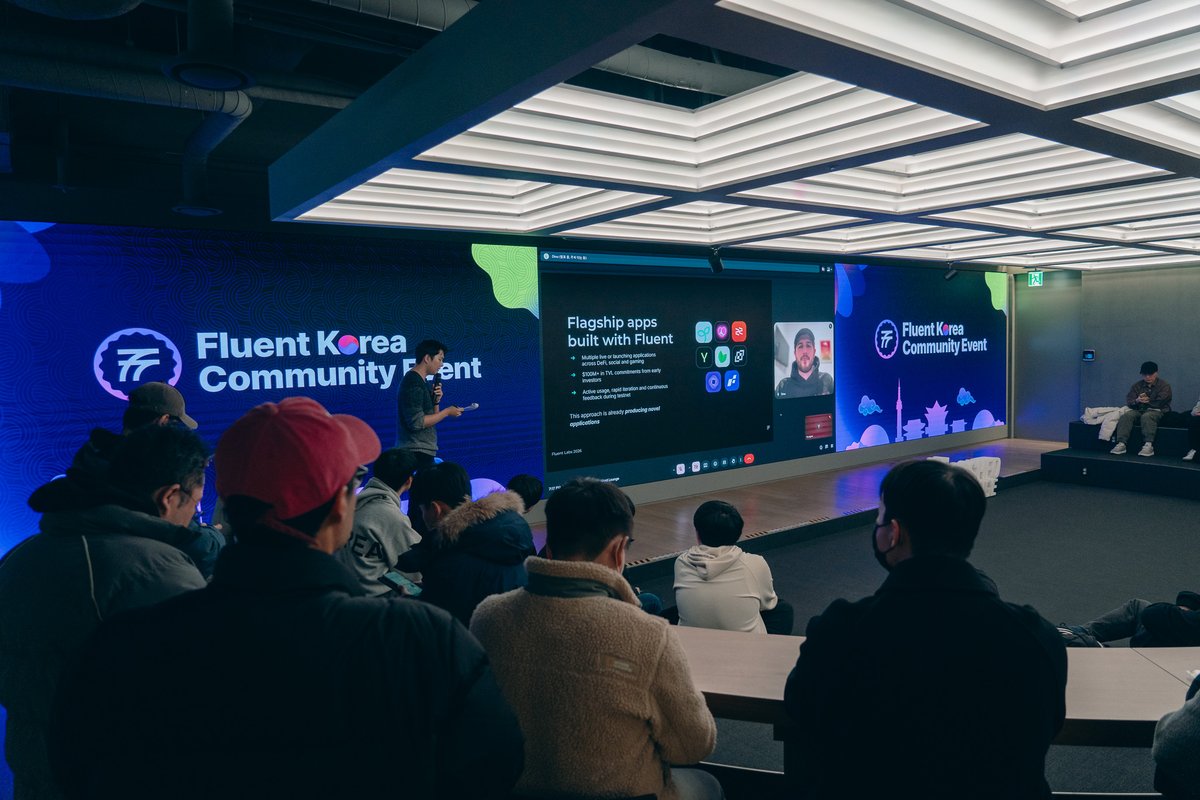
Yesterday in Seoul, 120+ people showed up at Hashed Lounge, where @blendino shared more about Fluent and our upcoming roadmap. Dino, Fluent Labs cofounder & CEO, shared his perspectives on: → the L2 landscape and the real design tradeoffs today → how blended execution lets builders build without compromise → why Fluent is betting on reputation, starting with Fluent Connect and the Prints primitive → why Korea matters to Fluent’s roadmap “Korea is a priority market for Fluent. The level of participation and engagement here is exceptional, and we will be staying close to the Korean community as we roll out our roadmap.” Thank you Korea and @hashed_official for making this possible! 🇰🇷
Fluent tweet mediaFluent tweet media
English
13
9
98
5.1K
Dmitry Savonin retweetledi
Fluent
Fluent@fluentxyz·
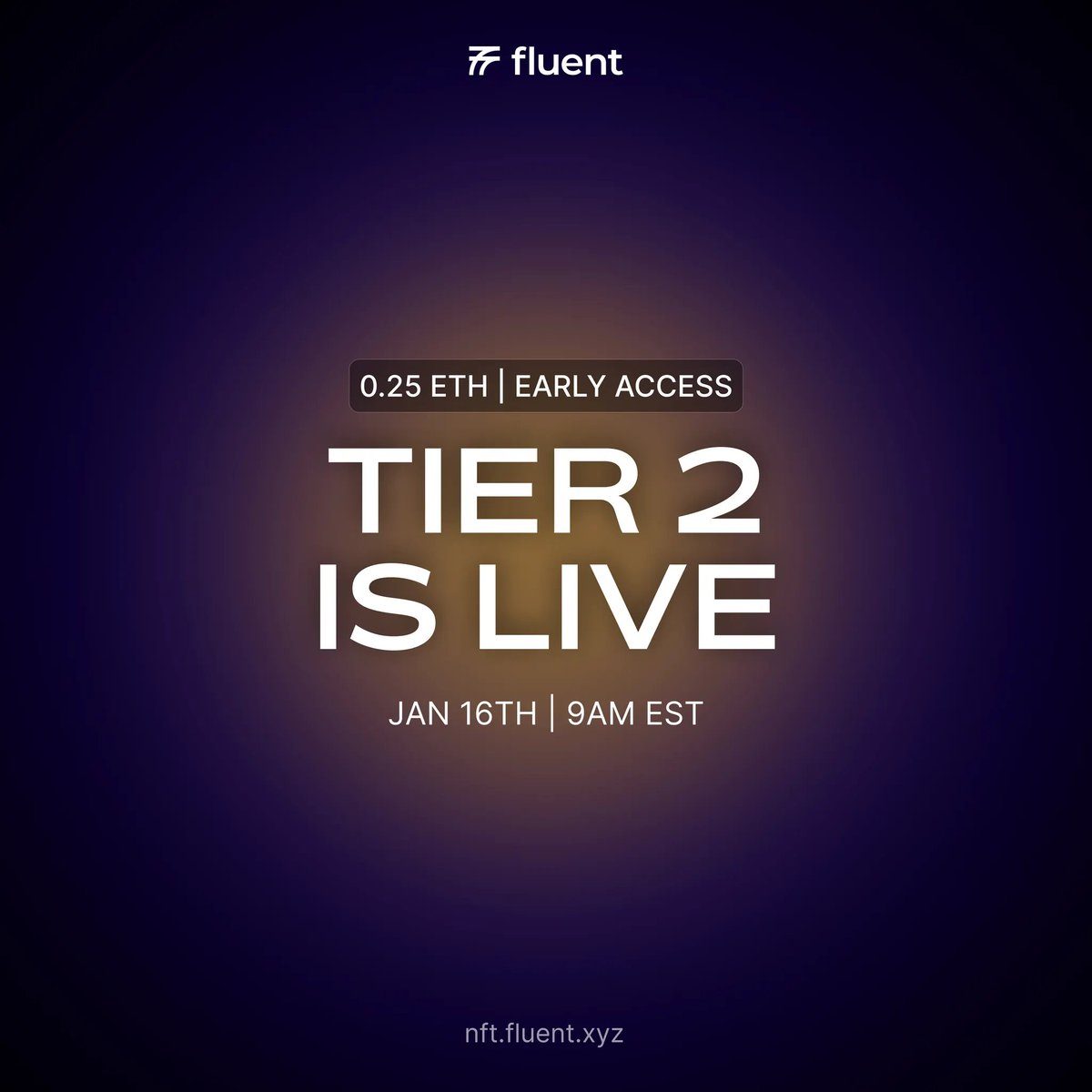
Tier 2 window is live Eligible users can now mint up to 5 NFTs at 0.25 ETH each Priority access ends in 72h nft.fluent.xyz
Fluent tweet media
English
18
13
116
26.2K
Dmitry Savonin retweetledi
Fluent
Fluent@fluentxyz·
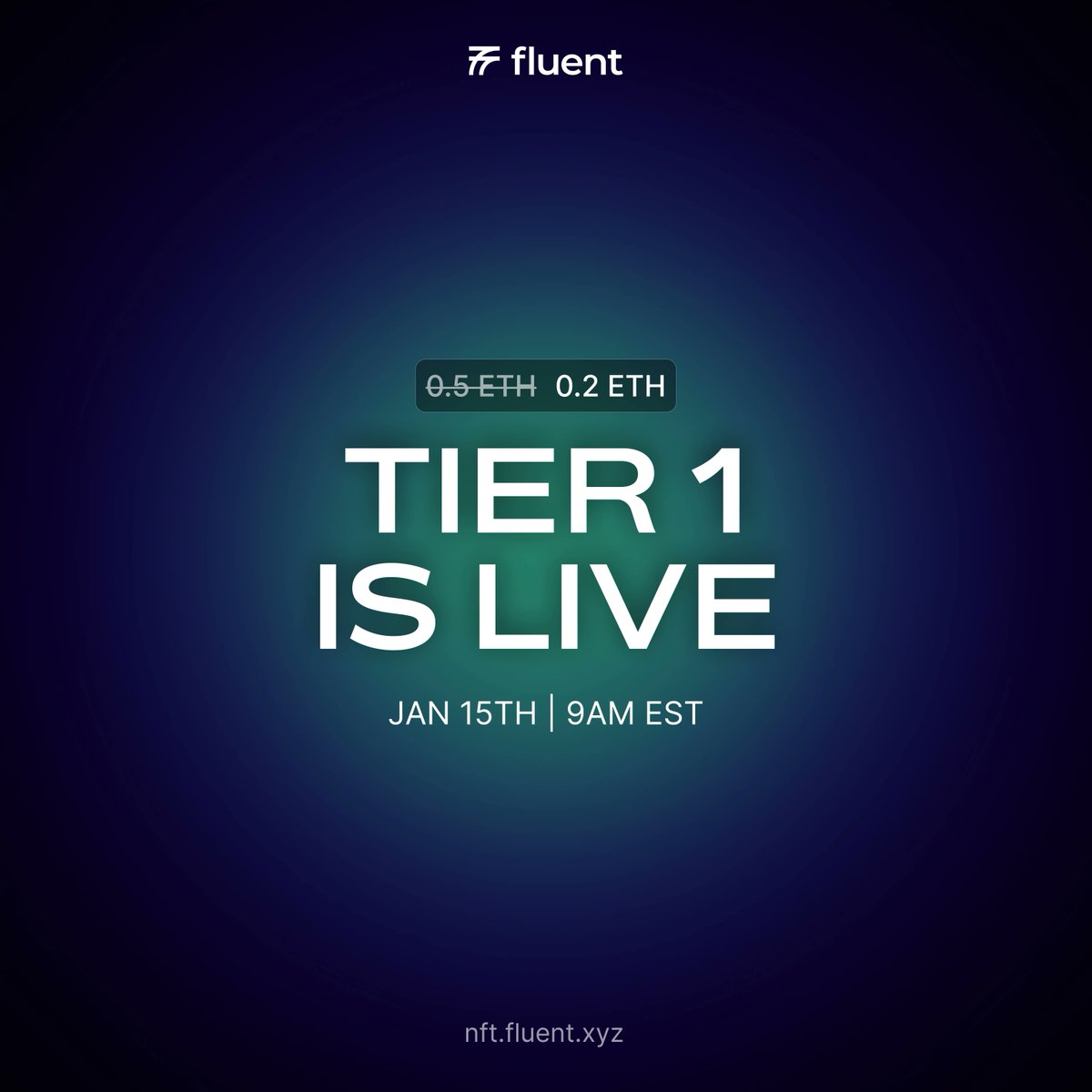
The First Press Collection sale has started Tier 1 users can now mint up to 5 NFTs at 0.2 ETH each Priority access ends in 24h nft.fluent.xyz
Fluent tweet media
English
53
37
189
105K
Dmitry Savonin retweetledi
Dino
Dino@blendino·
25,000 Fluent Connect signups Big day for reputation
English
20
5
75
4.9K
Dmitry Savonin retweetledi
Fluent
Fluent@fluentxyz·
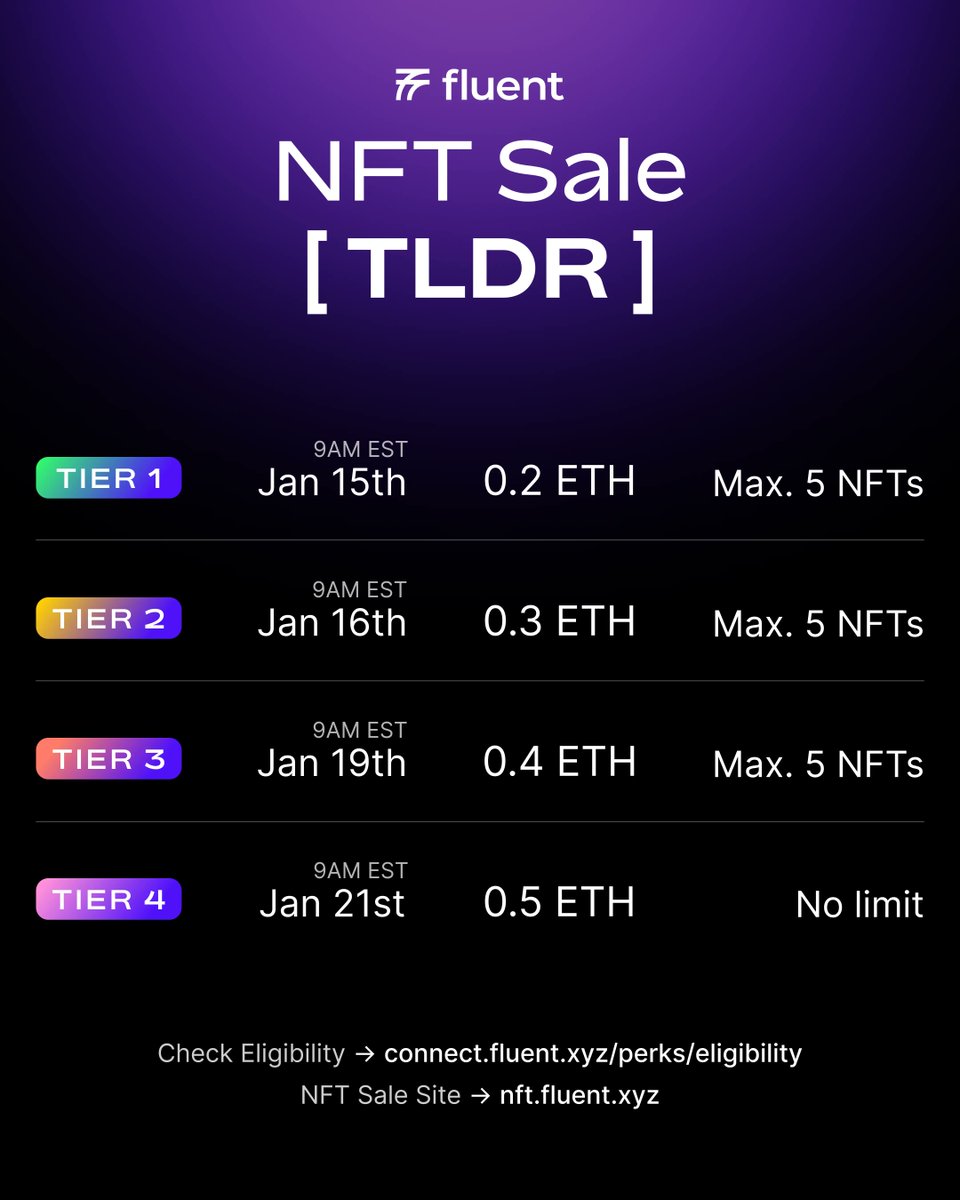
The First Press Collection goes live tomorrow at 9AM EST Tiers, pricing, sale schedule, everything you need to know ↓
Fluent tweet media
English
34
13
156
25.8K
Dmitry Savonin
Dmitry Savonin@dmitry123·
Reputation works because it’s slow, cumulative, and hard to spoof. It’s basically a long-running checksum over behavior. Fluent Connect and Prints try to surface that checksum and make it usable as infrastructure. First Press just applies it: access and pricing are functions of existing reputation, not reach or hype. If reputation can’t be used this way, it probably isn’t a real primitive. That’s it.
Fluent@fluentxyz

x.com/i/article/2010…

English
3
3
28
1.6K
Dmitry Savonin retweetledi
Fluent
Fluent@fluentxyz·
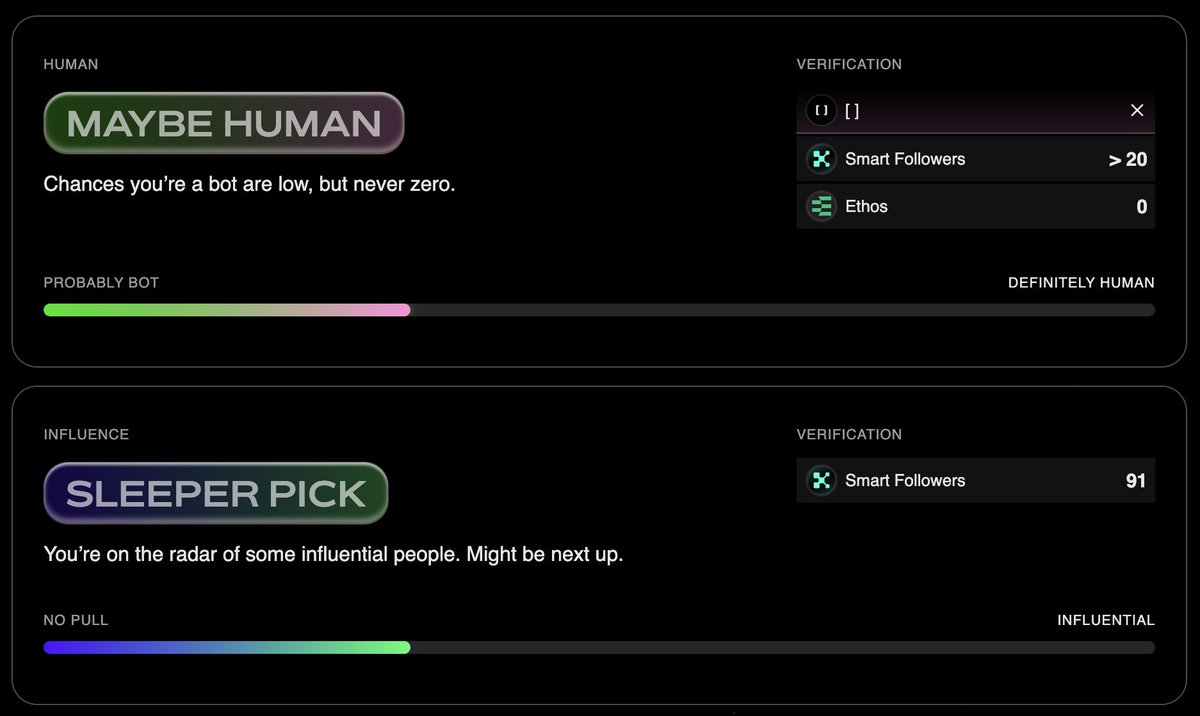
2,446 of you so far Turns out CT has humans (The other ~12,000 Prints still have more to prove)
Fluent tweet media
English
44
13
178
11.3K
Dmitry Savonin
Dmitry Savonin@dmitry123·
This problem absolutely exists on ethereum. @fluentxyz solved it by unifying contracts into reusable, Rust-based components with a clear account ownership model. You don’t keep re-implementing tokens, swaps, hooks, or core state logic — you reuse the same primitives across apps. You get the same velocity people point to on Solana, but without splitting execution models or rebuilding everything per use case. As a side effect, this setup is also much more ZK-friendly: smaller, cleaner traces by construction. And yes — SVM-style contracts are coming to Fluent too, as first-class citizens, not a side VM bolted on.
mert@mert

surprised no one has mentioned this but AI gives Solana development a big edge over others why? because Solana's program model is much safer for AI than EVM's interface model on Solana, you do not need to write a new contract for most things and especially not core functions like creating/swapping/moving tokens meaning you can reuse existing pipes on the client without requiring new security audits and move much, much faster you can integrate existing pipelines, swaps, token hooks within basically a few prompts and even if you needed to write a contract, a huge thing holding back Solana was how difficult it is to write contract code since Solidity is much easier to grok than nuances of Rust on Solana since the latter is a much lower level of abstraction that gap is also now effectively reduced if you reason up from these, it's hard not to see how we don't see at least several more 9-10 digit startups on Solana this year
English
3
3
22
1K
Dmitry Savonin retweetledi
Naval
Naval@naval·
The three forms of capital are knowledge, reputation, and capital.
English
661
2.3K
17.8K
619.7K
Dmitry Savonin retweetledi
Fluent
Fluent@fluentxyz·
Introducing Prints Your unique social footprint formed by your identity and reputation across the internet Get yours now: connect.fluent.xyz
English
160
104
804
219.5K
Dmitry Savonin
Dmitry Savonin@dmitry123·
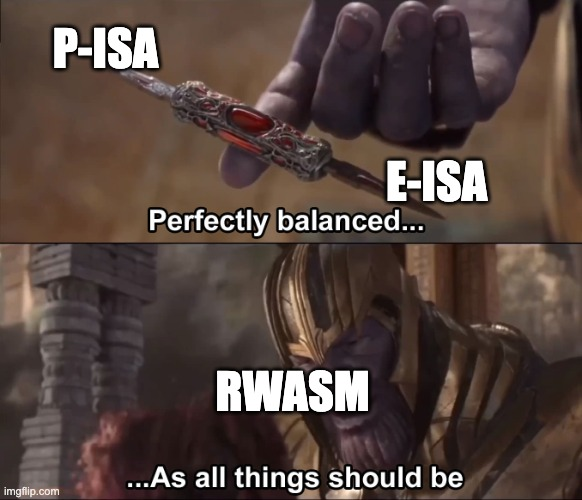
You can’t build an efficient STF without splitting the bytecode into pISA and eISA. Simply adding 64-bit ISA support to zkVMs isn’t a solution—it wipes out most system extensibility and increases boundary complexity, so it doesn’t scale long-term. rWasm already solves this trade-off, striking a clean balance between efficiency, performance, and trace size (proving performance).
Dmitry Savonin tweet media
zooko🛡🦓🦓🦓 ⓩ@zooko

I'm convinced by this article that enshrining RISC-V into Ethereum would be a mistake. WASM is the standard for portable code. ethresear.ch/t/why-risc-v-i…
English
0
1
10
502
Dmitry Savonin
Dmitry Savonin@dmitry123·
I kept wondering how to explain Blended Execution. But if you seriously optimize for both execution and proving, you inevitably rediscover blending. One of its cores is a stateless state transition. The hard part is turning the EVM into a stateless VM without breaking compatibility. That’s exactly what makes blending EVM with Wasm, SVM, or anything else possible.
English
3
0
14
571