DongMin Kim

11 posts

DongMin Kim banner
DongMin Kim

DongMin Kim

@dmkim_omrguy

MIR researcher@SORI-AI Optical Music Recognition

Katılım Kasım 2024
51 Takip Edilen7 Takipçiler
DongMin Kim retweetledi

思维怪怪
思维怪怪@0xLogicrw·
OpenAI 后训练核心成员翁家翌(Jiayi Weng)以个人名义提出了一种名为「启发式学习」的强化学习新范式,并开源了全部实验代码。他用 Codex(GPT-5.4)反复玩 Atari 打砖块游戏,但 GPT-5.4 自始至终没有被重新训练过。真正在进步的,是 GPT-5.4 写出来的那套游戏策略代码。 流程是这样的:GPT-5.4 先写一版打砖块的 Python 策略,跑一局,看录像,找出哪里打丢了球,然后自己改代码再跑。经过几轮迭代,策略代码从 387 分涨到了 864 满分。全程没有任何神经网络被训练,纯靠 AI 反复修改 if-else 规则、调落点预测、加死循环检测。最终那套代码包含球路预测器、卡球检测器、回归测试和实验日志,已经长成了一个完整的软件系统。 这和传统强化学习的核心区别在于「学到的东西存在哪」。传统做法把知识压进神经网络参数里,人看不懂,学新任务还容易把旧的覆盖掉(即灾难性遗忘)。翁家翌的做法反过来:知识就是代码,人能读、能改、能加测试锁住,不会因为学新东西就丢了旧本领。 除了打砖块满分,他还在 MuJoCo Ant(模拟机器蚂蚁走路)上跑出超 6000 分的深度强化学习级成绩,在 Atari57 全套 57 个游戏上逼近了 PPO 基准。但翁家翌也明确画了边界:纯代码搞不定复杂感知任务,比如用 Python 写 if-else 去认图片。 他设想的终局是混合架构:底层用轻量神经网络负责视觉等感知,中层用启发式学习处理实时逻辑和安全规则,顶层由大模型审查日志、改代码,再周期性地用底层积累的高质量数据更新自身。过去手写规则之所以被淘汰,不是因为规则没用,而是人类维护不起。现在 AI 写代码够快够好,这条老路重新走得通了。
Jiayi Weng@Trinkle23897

Codex grew programmatic policies with no neural nets: max score on Breakout, and SOTA-level scores on MuJoCo. Maybe heuristics were not too weak. Maybe they were just too expensive to maintain. Maybe it's the next paradigm. trinkle23897.github.io/learning-beyon…

中文

58
225
1.5K
344.4K
DongMin Kim retweetledi
Tom Yeh
Tom Yeh@ProfTomYeh·
Evolution of Deep Learning by Hand ✍️ As my tribute to Geoff Hinton's Nobel Prize, I drew this animation to illustrate the key idea behind Hinton's major contributions to deep learning over the years, with artistic liberty. ---- 100% original, made by hand ✍️ Join 56k readers of my newsletter: byhand.ai
English
19
238
1.3K
58.5K
DongMin Kim retweetledi
atharva ☆
atharva ☆@k7agar·
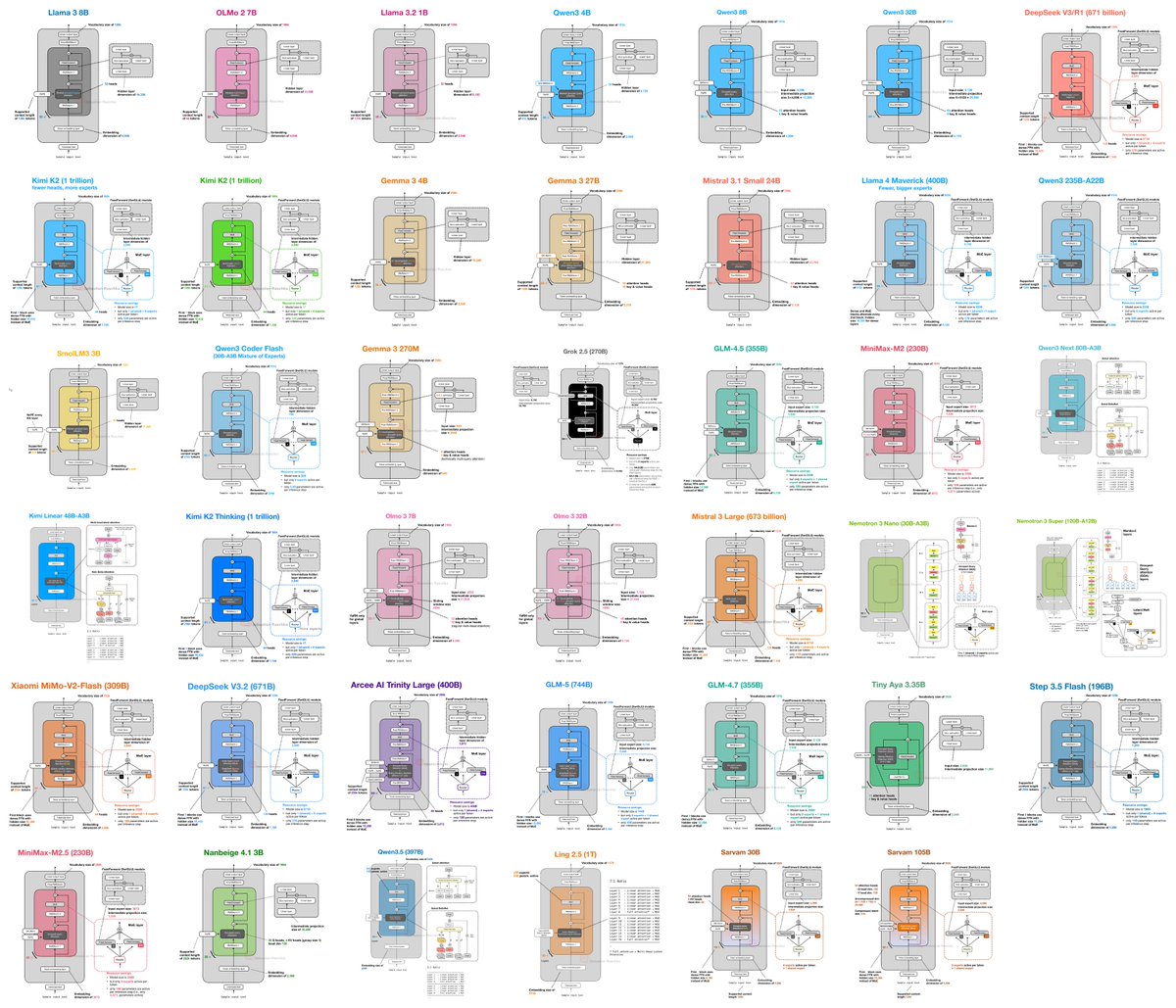
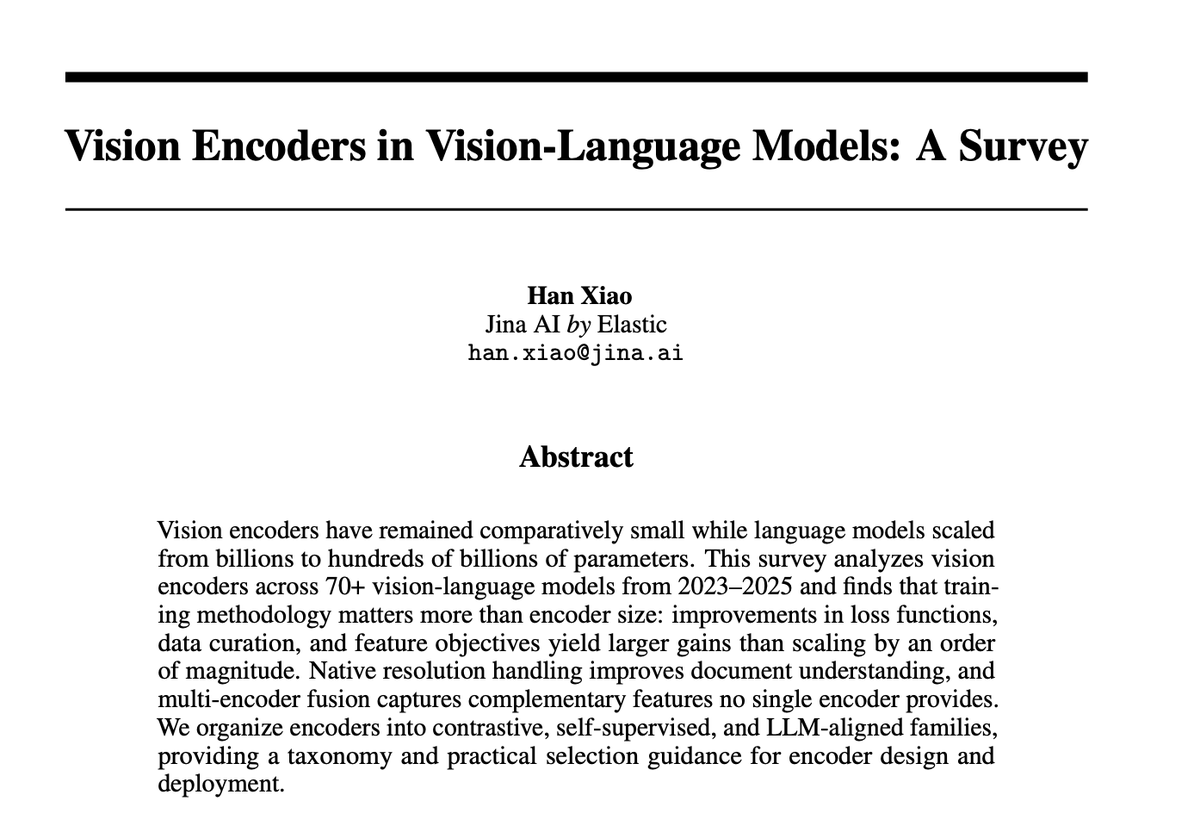
I rarely like survey papers but this one is an exception, reads really well like a blog and has really good insights all along.
atharva ☆ tweet media
English
8
73
650
40.4K
DongMin Kim retweetledi
Peter Richtarik
Peter Richtarik@peter_richtarik·
I am an AC for ICLR 2026. One of the papers in my batch was just withdrawn. The authors wrote a brief response, explaining why the reviewers failed at their job. I agree with most of their comments. The authors gave up. They are fed up. Just like many of us. I understand. We pretend the emperor has clothes, but he is naked. Here is the final part of their withdrawal notice. I took the liberty to make it public, to highlight that what we are doing with AI conference reviews these last few years is, basically, madness. --- Comment: We thank the reviewers for their time. However, upon reading the reviews for our paper, it became immediately apparent that the four "reject" ratings are not based on good-faith academic disagreement, but on a critical failure to read the submitted paper. The reviews are rife with demonstrably false claims that are directly contradicted by the text. The core justifications for rejection rely on asserting that key components are "missing" when they are explicitly detailed in the manuscript. Some specific examples are (and many are even fake claims). Claim: Harder tasks like GSM8K are missing. Fact: GSM8K results are in many tables, like Table 2 (Section 4.2) and Appendix G. Claim: The method does not use per-layer ranks. Fact: This is the entire point of our method. The reviewer clearly mistook our method for the baselines. (Section 2, Table 1). Claim: The GP kernel is not specified. Fact: It is specified in Appendix E (Table 6). Claim: There is no ablation of the method's three stages. Fact: Section 4.4 ("Ablation Study") and Appendix J are dedicated to this. Reviewers have a fundamental responsibility to read and evaluate the work they are assigned. The nature of these errors is so fundamental, so systemic in overlooking explicit content, that it goes far beyond what "limited time" or "oversight" can explain. This work has gone through several rounds of revision over the last year. In earlier submissions, the paper usually received borderline or weak-accept scores. Numerous signs strongly suggest that some reviewers are relying entirely on AI tools to automatically generate peer reviews, rather than fulfilling their fundamental responsibility of personally reading and evaluating manuscripts. We strongly protest this. This is a gross disrespect to the authors. It is a flagrant desecration of the reviewer's sacred duty. It fundamentally undermines the integrity of the entire peer-review process. Given that the reviews are not based on the actual content of our paper, we have decided to withdraw the submission. We leave this comment so that future readers of the OpenReview page are aware that the items described as "missing" are already present in the submitted manuscript. These negative reviews for this submission are factually unsound and do not reflect the content of the paper. We cannot and will not accept an assessment that is not based on the work we actually submitted.
English
33
203
1.5K
150.6K
DongMin Kim retweetledi
Alexander Panfilov
Alexander Panfilov@kotekjedi_ml·
A “Who is Adam?” successor has arrived
Alexander Panfilov tweet media
English
15
30
517
67.5K
DongMin Kim retweetledi
Tanishq Mathew Abraham, Ph.D.
Tanishq Mathew Abraham, Ph.D.@iScienceLuvr·
A NEW PAPER FROM YANN LECUN: LeJEPA: Provable and Scalable Self-Supervised Learning Without the Heuristics This could be one of LeCun's last papers at Meta (lol), but it's a really interesting one I think. Quick summary: Yann LeCun's big idea is JEPA, a self-supervised learning method. However, there are various failure modes of this approach, so training strong JEPA models is very brittle, unstable, and quite difficult. So overall JEPA has seen little adoption in practice. This paper tries to directly address this, making specific design decisions that improve training stability. The authors identify the isotropic Gaussian as the optimal distribution that JEPA models’ embeddings should follow and design the Sketched Isotropic Gaussian Regularization (SICReg) to constrain embeddings to reach that ideal distribution. This forms the LeJEPA framework, which can be implemented in ~50 lines of code. On empirical tests, the authors demonstrate stability of training across hyperparameters, architectures, and datasets. A result particularly interesting to me however is that training a LeJEPA model from scratch directly on the downstream dataset outperforms finetuning a DINOv2/v3 model on the dataset!
Tanishq Mathew Abraham, Ph.D. tweet media
English
41
252
1.8K
420K
DongMin Kim
DongMin Kim@dmkim_omrguy·
I wrote a wrapper that lets MuseScore 3.6.2 run on Ubuntu servers using a virtual display. Now we can use MuseScore-based rendering in music21 and other libraries without any extra scripts! 🎉 github.com/halsoo/musesco…
English
0
1
1
89
DongMin Kim retweetledi
Michael Saxon
Michael Saxon@m2saxon·
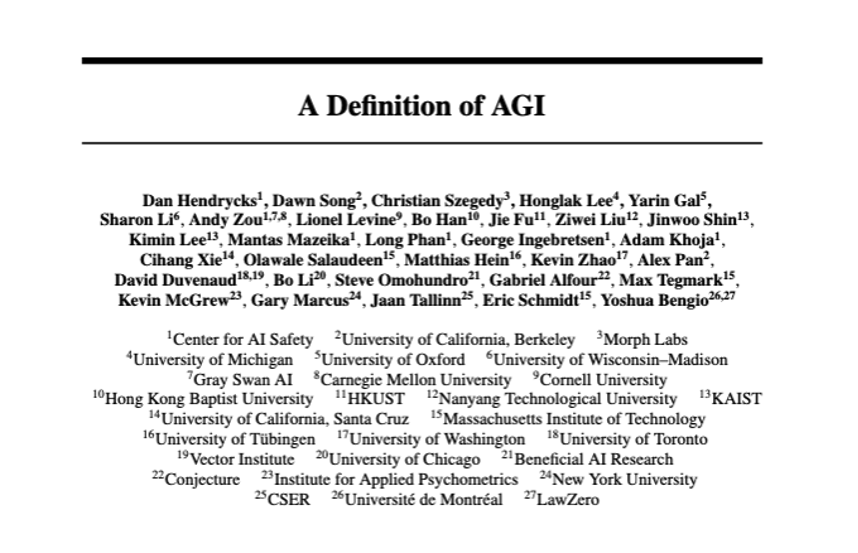
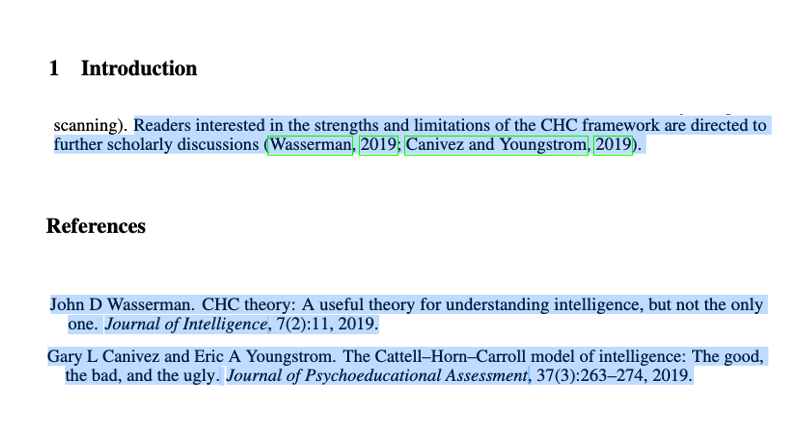
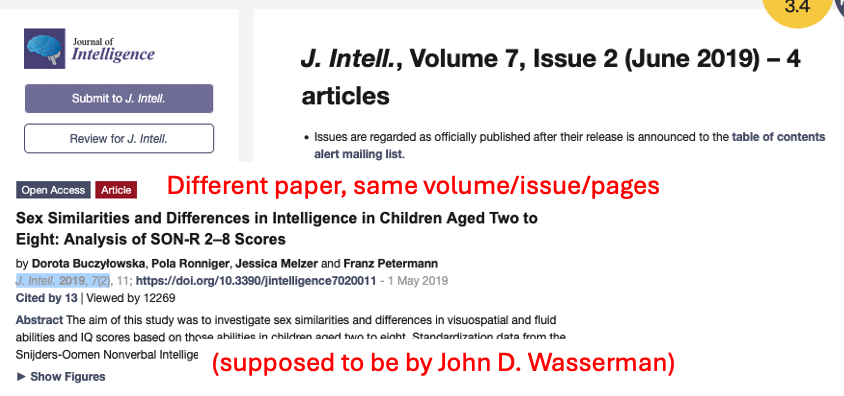
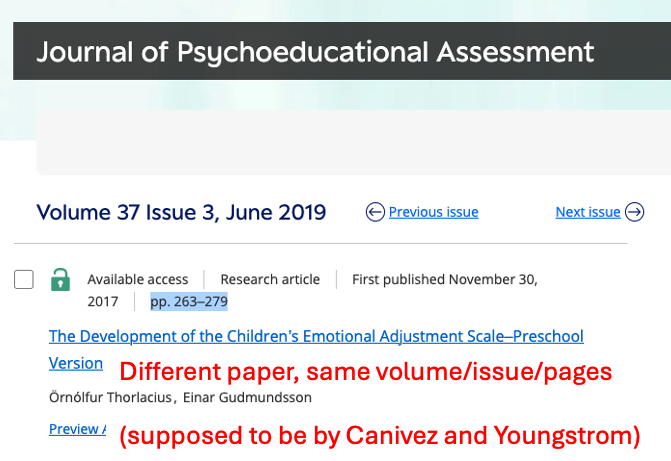
The viral new "Definition of AGI" paper has fake citations which do not exist. And it specifically TELLS you to read them! Proof: different articles present at the specified journal/volume/page number, and their titles exist nowhere on any searchable repository.
Michael Saxon tweet mediaMichael Saxon tweet mediaMichael Saxon tweet mediaMichael Saxon tweet media
English
99
211
1.6K
470.8K
DongMin Kim
DongMin Kim@dmkim_omrguy·
My first research have been accepted to ISMIR2024 @ISMIRConf. I've done an optical music recognition part. It was a really cool project to be a part of.
Dasaem Jeong@DasaemJ

🐉Six Dragons Fly Again: It's time for applying symolic music gen to Korean traditional music🇰🇷 Our work on generating Korean court music will be presented @ISMIRConf🥳 Work by @DanbiNaerinHan @MarkGothamMusic DongMin Kim, @crescent_stdio @is_s_yun Web Demo and Concert video⬇️

English
1
2
4
248