DNA Genetics

3.8K posts

DNA Genetics banner
DNA Genetics

DNA Genetics

@DNAGenetics

DNA Genetics was founded in Amsterdam in 2003 and is known for the creation of many strains of medicinal cannabis seeds.

everywhere... Katılım Aralık 2010
491 Takip Edilen16.7K Takipçiler
Umami Seed Co™
Umami Seed Co™@Umamiseedco·
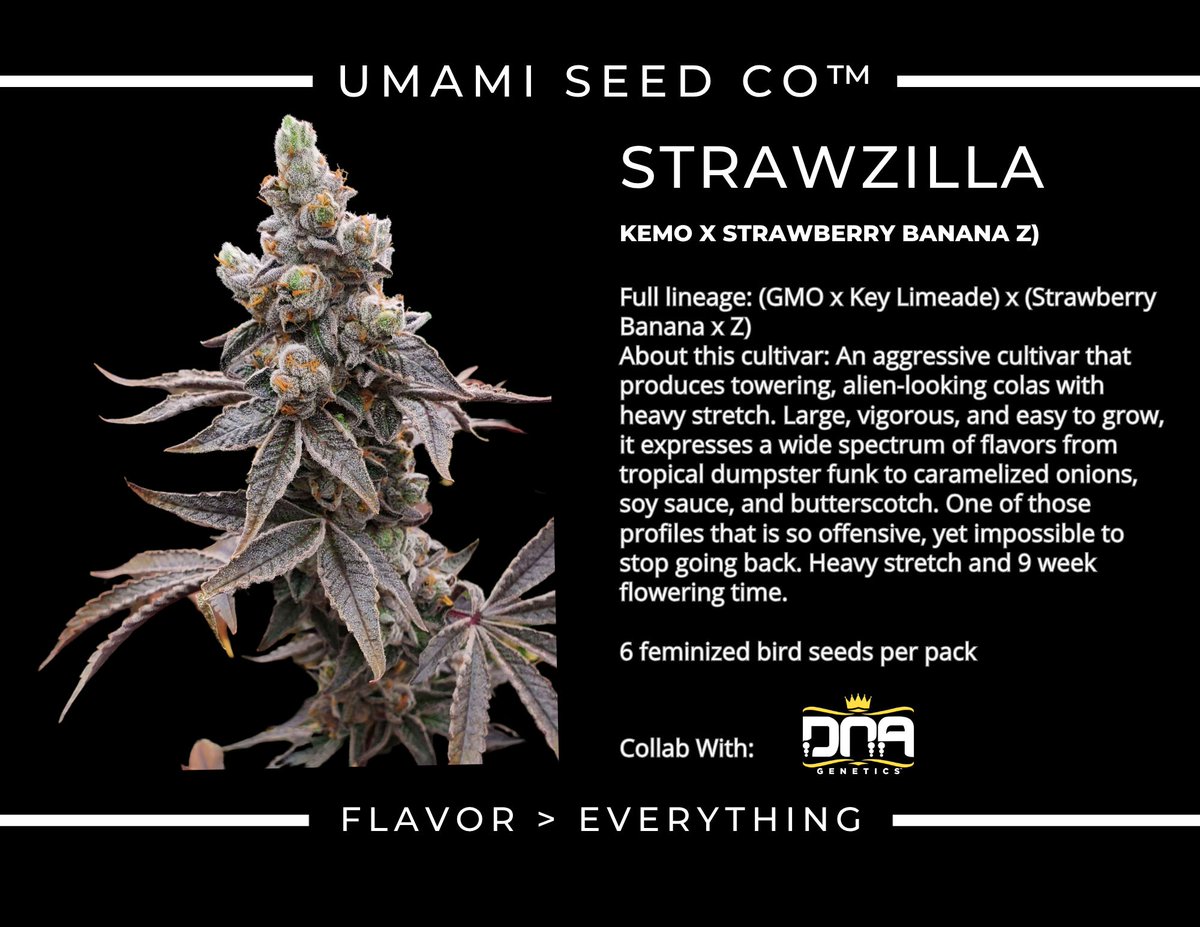
These new Umami x @DNAGenetics collabs shaping up to make a serious splash. 5/15 drops on our website than in person at @zalympix. Za is gonna be wild we have the flower, rosin, and seeds all available with Watson Supply Co.
Umami Seed Co™ tweet mediaUmami Seed Co™ tweet mediaUmami Seed Co™ tweet mediaUmami Seed Co™ tweet media
English
7
6
104
3.4K
DNA Genetics
DNA Genetics@DNAGenetics·
35% OFF Seeds (Ends 21st April) Only at dnagenetics.eu | Your source for award winning cannabis seeds in Europe!
DNA Genetics tweet media
English
0
1
7
277
DNA Genetics
DNA Genetics@DNAGenetics·
20% OFF (No code needed) on dnagenetics.eu Your source for DNA Genetics Cannabis Seeds and merchandise in Europe! Free DNA Cake Seeds! | Spend over 120 Euros and qualify for 3 x feminized seeds
DNA Genetics tweet media
English
0
0
9
353
DNA Genetics
DNA Genetics@DNAGenetics·
20% OFF (NO CODE NEEDED) at dnagenetics.eu Score your Seeds and Feed your Garden with DNA Genetics!
GIF
English
0
2
2
381
DNA Genetics
DNA Genetics@DNAGenetics·
For the outdoor growers, the planning season is basically here. Last frost dates are approaching for a lot of regions, seed selection decisions need to be locked in soon, and anyone who's been putting off sorting out their setup is running out of runway. So where are you actually at with your 2026 outdoor plans? Still in research mode and haven't committed to strains yet? Seeds already in hand and counting down to the weather window? Waiting on your local temps to stabilize before you commit to anything? Or skipping outdoor altogether this year and going full indoor? Drop your answer and if you've already locked in your strain selection, share what you're running. Always good to see what people are actually growing versus what they're just thinking about.
English
2
1
11
883
DNA Genetics
DNA Genetics@DNAGenetics·
The first two weeks of flower are when cannabis plants are arguably the most vulnerable to stress-related problems, and they're also the stage a lot of growers rush through without paying close attention. The plant is going through a massive internal shift, restructuring its priorities from vegetative growth to reproductive development, and any disruption during that window can have consequences that show up weeks later when it's harder to trace back to the cause. Light leaks that weren't a problem in veg suddenly matter a lot. Temperature swings that the plant tolerated before become a bigger deal. Overfeeding at transition is one of the most common causes of nutrient lockout problems that growers spend weeks troubleshooting in mid-flower without ever connecting it back to what happened in week 1. The growers who get consistently great results tend to be the ones who treat the transition into flower as its own phase that deserves its own level of attention, not just a flip of the switch and business as usual. How do you handle the first two weeks after the flip? Anything specific you do or avoid during that window? #GrowFacts #Cannabis101 #FloweringStage
English
3
1
27
1.4K
DNA Genetics
DNA Genetics@DNAGenetics·
Challah Bread is the kind of strain that quietly becomes a regular in your rotation without you making a conscious decision about it. You grow it once because the name caught your attention, you smoke it and think okay, that's actually really good, and then six months later you're on your third run and wondering why you ever grew anything else. The aroma is warm and doughy with sweet undertones that fill the tent in the last few weeks of flower in the best possible way. The high is relaxed and comfortable, the kind that lets you actually decompress at the end of the day without putting you completely out of commission. It's a social strain, a wind-down strain, an everything-in-between strain. It also grows well, which matters. Good structure, decent yields, not a drama queen in flower. The kind of strain that makes you look like a better grower than you might actually be, which is always appreciated. If you've already run Challah Bread, how did yours turn out and what did you think of the smoke? If you haven't, what are you waiting for? Seeds right here: dnagenetics.com/product/challa…
English
1
1
4
473
DNA Genetics
DNA Genetics@DNAGenetics·
Genuinely want to know this one: What's a strain you grew that came out completely different from what you expected based on the description, the reviews, or the reputation? Not necessarily bad, just different. Maybe the smell was nothing like what was advertised. Maybe the effects caught you off guard. Maybe it grew in a way nobody warned you about. The gap between how a strain gets described and what actually happens in your specific environment, with your specific methods, is one of the most interesting parts of growing. No two growers seem to get the exact same result from the same genetics. Drop the strain name and what surprised you. This could save someone else a shock.
English
8
0
6
1.1K
DNA Genetics
DNA Genetics@DNAGenetics·
Grow Tip: Your Gear Has Been Sitting. Check It. Most growers do a full audit of their setup at the start of a new run and find at least one thing that's quietly on its way out. A timer that skips, a pH pen that's reading half a point off, a fan that hums louder than it should, a ballast that flickers on startup. None of these things feel urgent until they become an emergency at week 4 of flower. March is a genuinely good time to go through everything methodically. Pull out your meters and calibrate them against a fresh solution. Run your lights through a full cycle and watch them. Check every connection, every seal, every piece of equipment that your plants depend on. The stuff that breaks mid-grow never breaks at a convenient moment. The small investment of an afternoon now versus the cost of losing a run or even a few weeks of progress is not a close call. What's the piece of equipment that failed on you at the worst possible time? Drop it below because someone here probably needs the warning.
English
0
0
8
607
DNA Genetics
DNA Genetics@DNAGenetics·
There's a reason GG4 took over every dispensary shelf and grow tent it came into contact with. It's not hype, it's just genetics doing what good genetics do. The resin production on this thing is almost offensive, and if you've ever tried to trim it without gloves you already know exactly what the name means. The high is that classic heavy, full-body locked-in feeling that doesn't apologize for what it is. Diesel and earth on the nose with a chemical edge underneath that lets you know this isn't a lightweight. Effects come on strong and stay a while, which is either perfect or a lot depending on your tolerance and your afternoon plans. As a grow it's not fussy, but it rewards growers who know what they're doing. It stacks hard in flower and the trichome coverage makes for some seriously impressive harvest photos. If you're planning a spring run and haven't put GG4 on the list, this is your reminder. What was your first GG4 grow like? And did you actually try trimming without gloves? Get seeds here: dnagenetics.com/product/gorill…
English
3
0
47
1.7K
DNA Genetics
DNA Genetics@DNAGenetics·
Chocolope 256 represents the evolution of a legend – taking the classic Chocolope genetics that made DNA famous and refining them into something even more impressive. This isn't just a renamed version of the original, it's a deliberately selected phenotype that enhances everything people loved about Chocolope while addressing the few criticisms that existed. The chocolate-coffee flavor profile is more pronounced and complex, with deeper cocoa notes and a smoother finish that lingers pleasantly. The sativa-dominant effects deliver that signature Chocolope energy and creativity, but with slightly more body presence that keeps you grounded instead of potentially anxious like some pure sativas can make you feel. It's the kind of strain that makes your morning coffee redundant because you're already energized, focused, and genuinely excited to tackle whatever the day throws at you. Artists, writers, and anyone doing creative work appreciate how it opens up mental pathways without the scattered, unfocused feeling that ruins productivity. The plant structure is more manageable than the original Chocolope, which could stretch aggressively, making this version more suitable for growers with height limitations. Yields are generous, trichome production is outstanding, and the overall growing experience is smoother from start to finish. If you loved classic Chocolope but wanted just a bit more refinement, 256 is exactly what you've been waiting for. Who's upgrading to the evolved version? dnagenetics.com/product/chocol…
English
3
3
21
717
DNA Genetics
DNA Genetics@DNAGenetics·
Good point. Leaf surface temp definitely gives you the most accurate VPD calculation, no argument there. That said, most growers don’t have an IR gun or thermal camera, so air temp + RH is still a very useful practical baseline. In most rooms the leaf temp is only a couple degrees off ambient anyway, which keeps you close enough to stay in the right zone. If someone really wants to dial it in, measuring leaf surface temp is the next step for sure. But even just thinking in terms of VPD instead of isolated temp/RH already puts growers ahead of the curve.
English
0
0
0
48
peace_mane
peace_mane@Peace_Main_420·
@DNAGenetics It's not worth the risk, in my view, but if you do fuck around with VPD you better be checking leaf surface temperature, because calculating VPD with air temps and humidity if going to fuck you.
English
2
0
0
42
DNA Genetics
DNA Genetics@DNAGenetics·
Let's talk about VPD (Vapor Pressure Deficit) because it's one of those concepts that sounds intimidating and overly technical, but understanding it can genuinely level up your grows in ways that surprise you. Basically, VPD is the relationship between temperature and humidity, and it tells you whether your plants can efficiently transpire and take up nutrients. When VPD is in the ideal range, your plants are drinking and feeding optimally, growing faster, and producing better quality. When it's off, you get stunted growth, nutrient issues, and compromised final product even if you're doing everything else perfectly. Here's the simple version: in veg, you want VPD around 0.8-1.0 kPa. In flower, aim for 1.0-1.5 kPa. To hit these ranges, you need the right combination of temperature and humidity – warmer temps require higher humidity to maintain proper VPD, while cooler temps need lower humidity. Most growers focus on hitting specific temperature or humidity numbers without considering how they interact, which is why you can be at "correct" levels but still have problems. There are VPD calculators and charts everywhere online, and once you understand the relationship, you can diagnose why your plants might be struggling even when temps and humidity individually seem fine. The plants that blow people away with growth speed and quality? They're usually being grown in optimal VPD ranges whether the grower realizes it or not. Have you dialed in your VPD or are you just winging the temp/humidity combo?
English
4
0
9
784