Doan Nam Long Vu
5 posts

Doan Nam Long Vu
@doannamlongvu
PhD Student at the MAIN associated with @UKPLab, @CS_TUDarmstadt @TUDarmstadt, Germany Working on AI and NLP for mental health
Darmstadt Katılım Nisan 2014
30 Takip Edilen13 Takipçiler

A really interesting paper on representation geometry in LLMs written by my friend @frankniujc :
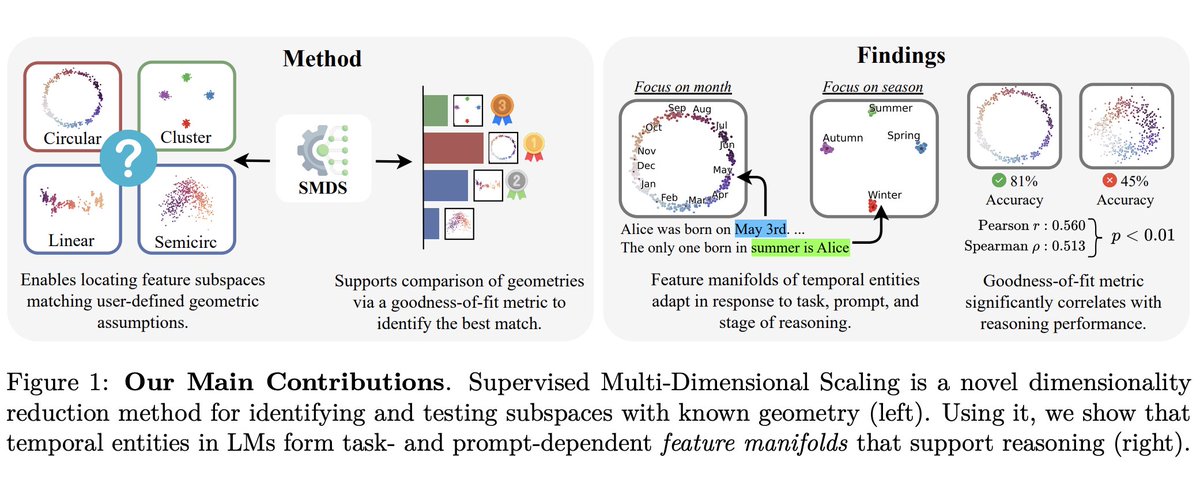
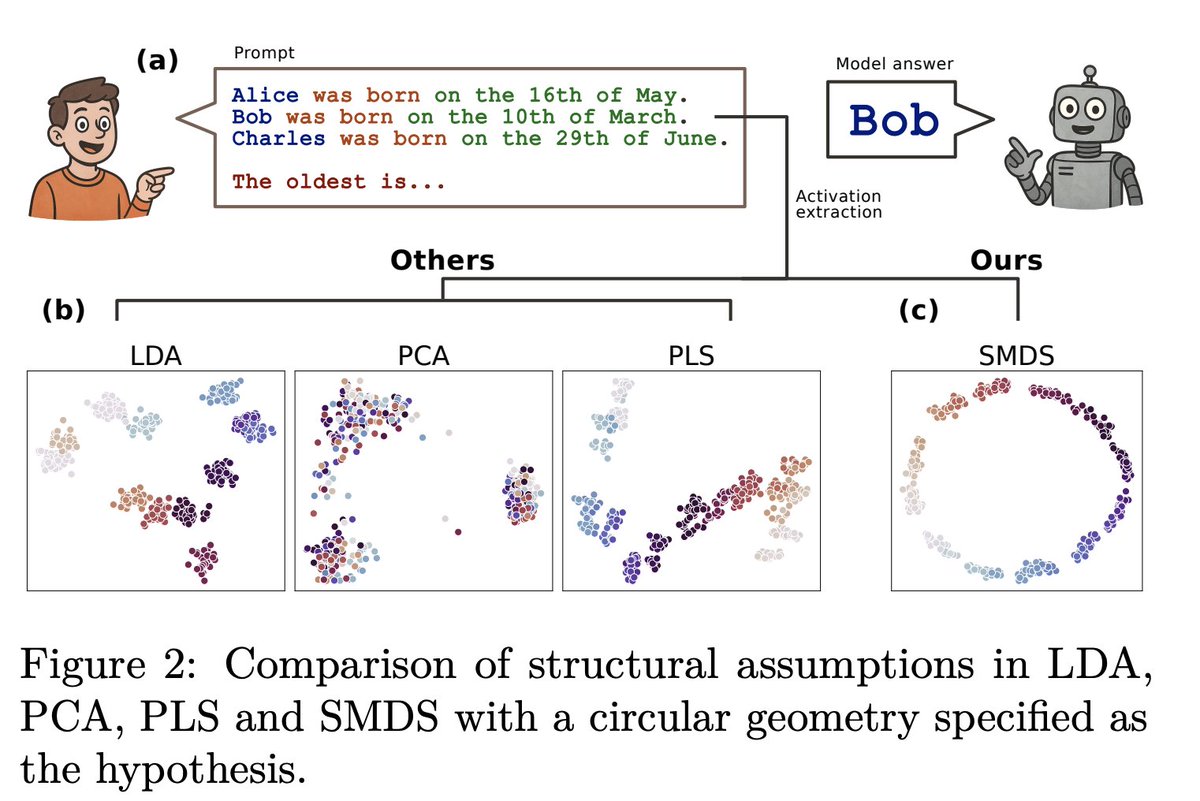
“Hypothesis-Driven Feature Manifold Analysis in LLMs via SMDS” proposes a model-agnostic way to test geometric hypotheses about latent representations instead of assuming everything is just linear directions. They find that different concepts naturally form different structures like circles, lines, clusters, and that these manifolds remain surprisingly stable across model families/sizes while also dynamically reshaping with context. Very cool bridge between mechanistic interpretability and representation geometry. 🔥
Especially liked the framing that reasoning may operate over structured manifolds rather than isolated features.
Paper: openreview.net/pdf?id=vCKZ40Y…
Code: github.com/UKPLab/tmlr202…
#LLM #MechanisticInterpretability #AIResearch #RepresentationLearning #TMLR #Interpretability #DeepLearning


English
Doan Nam Long Vu retweetledi

So happy to meet so many amazing people at #EACL2024 in 🇲🇹! We presented our framework for differentially private machine translation with MSc student @doannamlongvu, find out more about our paper "DP-NMT: Scalable Differentially-Private Machine Translation" below ⬇️

English
Doan Nam Long Vu retweetledi

It seems that we won an outstanding paper award @coling2022 😊
This work was the result of @doannamlongvu bachelor thesis! and a great collaboration with @egere14
Looking forward to Doan’s future success🌺

Nafise Sadat Moosavi@NafiseSadat
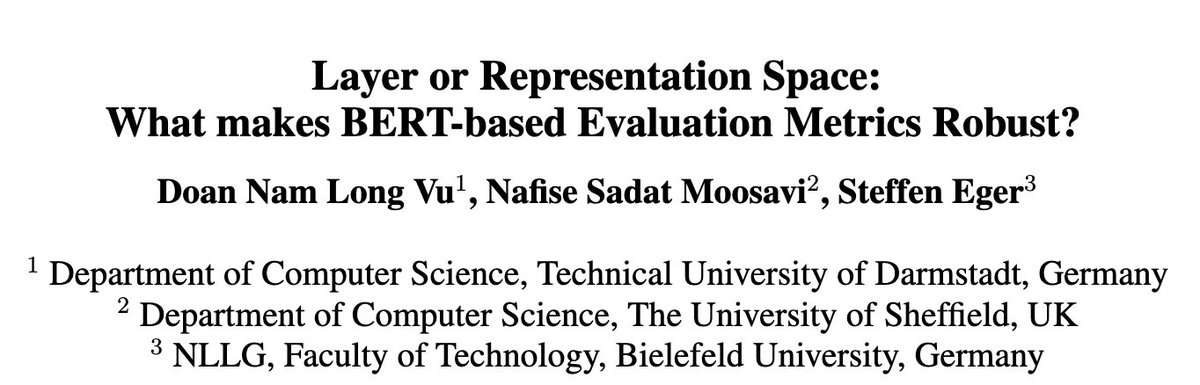
Embedding-based eval metrics show high correlations with human eval But they are evaluated on benchmarks from similar domains as those of pretraining embeddings How to make them more robust on new/noisy domains with more unk tokens? @coling2022 led by @doannamlongvu with @egere14
English
Doan Nam Long Vu retweetledi

Embedding-based eval metrics show high correlations with human eval
But they are evaluated on benchmarks from similar domains as those of pretraining embeddings
How to make them more robust on new/noisy domains with more unk tokens?
@coling2022
led by @doannamlongvu with @egere14

English