Mawoneke II

5.1K posts

Mawoneke II banner
Mawoneke II

Mawoneke II

@dope_m_X

Lawyer | Retired Mixologist of note | Practicing Christian | Married with an amazing baby boy |
Harare , Zimbabwe Katılım Ocak 2011
2.1K Takip Edilen806 Takipçiler
Dr Glen Meda
Dr Glen Meda@MedaGlen·
Hopewell Chin’ono@daddyhope

Hopes of a military coup against President Emmerson Mnangagwa, led by his vice president, General Constantino Chiwenga and his associates, have reportedly been quashed after sources say that South African President Cyril Ramaphosa assured his Zimbabwean counterpart that South Africa will not countenance any unconstitutional removal of a president in Zimbabwe. Today, President Emmerson Mnangagwa met with Ramaphosa in Harare, where he was received by Mnangagwa alongside businessmen Wicknell Chivayo and Kudakwashe Tagwirei, before the two leaders and the two businessmen flew on a one hour helicopter trip together to Mnangagwa’s farm, Precabe, in Kwekwe. They toured the farm, where the South African president was shown Mnangagwa’s Ankoli cattle and fish breeding pools. When they reached the ostriches, Ramaphosa is said to have remarked, in a pointed and politically loaded statement, that “nothing and nobody will remove my elder brother from power unconstitutionally.” The remark was made in the presence of members of the delegation accompanying the two leaders. “The owner of these ostriches will be president until 2030 if Parliament says so,” Ramaphosa is further reported to have said, reinforcing his assurance to Mnangagwa and those present. The two leaders then went into a four-hour closed-door meeting, where they were joined by Tagwirei and Chivayo. The meeting was described as highly personal and private, with even the president’s spokesperson, George Charamba, excluded from the delegation for today’s visit. Sources familiar with the discussions say Ramaphosa made it clear that South Africa would neither support nor recognise a military coup against Mnangagwa. Those within Mnangagwa’s inner circle were reportedly buoyant after the engagement, interpreting Ramaphosa’s position as a significant reinforcement of regional backing. They believe that, with South Africa’s stance now aligned with that of countries such as Tanzania, Mozambique, Zambia, and, more recently, Botswana, where Chivayo travelled in recent days, Mnangagwa has effectively strengthened his position and insulated his presidency within the region against any potential coup attempt. What was significant today is that South African President Cyril Ramaphosa’s trip to Zimbabwe, which I broke last night, was not an official bilateral state engagement conducted at the level of heads of state. It was a private trip, and sources in Pretoria say that many people in the president’s office, and indeed within DIRCO, the foreign affairs department of South Africa, were not aware of it. President Cyril Ramaphosa is now back in South Africa after the short visit to Zimbabwe.

QME
1
0
0
733
Luhle
Luhle@Luhlelo22·
I’m tired of pretending...what does “ZAR” actually mean? Zouth African Rands 😔...?
English
365
290
5.2K
840.2K
Munya Hoto
Munya Hoto@its_hot_o·
Does InfraCo sponsor your show or something? With respect, this is the least objective analysis I have seen from you lot.
ZFN Friday Drinks@fridaydrinks_

Econet InfraCo is Zimbabwe’s largest private infrastructure group, comprising towers, power, and real estate. Trading in Econet InfraCo securities will commence on 31 March 2026. 📺 Watch to @baba_nyenyedzi, @dziya_mya and @rufarogz discuss the Econet InfraCo listing on the Victoria Falls Stock Exchange (VFEX). 💡Econet InfraCo will trade under the symbol INFR.VX. To invest in Econet InfraCo securities, please consult a stockbroker or financial advisor. Link to the full episode: youtu.be/050wDvEInKg?si… 🎙 Please subscribe to and like our YouTube channel — your support helps us deliver in-depth analysis and reach a wider audience.

English
15
5
57
18.7K
Thabani Mpofu
Thabani Mpofu@adv_fulcrum·
There are two things that are not going to work, and the sooner people realise that, the better for all of us. They are: 1. Accusing Chamisa of being bribed by ZANU PF without tangible evidence to support such allegations. Such claims may occupy us on Twitter, but the ordinary person has no time for them. 2. Gaslighting the anti‑2030ists because of truly questionable political decisions they made in the past. The middle class sees in them at least a pushback against 2030 that is not coming from other quarters. Zimbabweans are living in different bubbles, and each believes that their immediate environment is all there is to consider. That’s self‑deception, and that’s our current problem. What we need now is leadership — not a single person — that unites these two classes, because both are opposed to ZANU PF and to its many unruly and unworthy shenanigans. Such leadership must also reach out to the disgruntled within ZANU PF, including war veterans and the army. Those are also truly opposed to the current ZANU PF. That is what will give us a breakthrough. The idea that we must, through divisive and invective language, win debates in pubs and on social media is what has emboldened ZANU PF to continue on its ruinous path. “Throw them a bone and they’ll maul each other to death”. If we stay in that cocoon, we are guaranteed to die in our situation. Don’t be misled by the illusion of perspective.
Thabani Mpofu tweet media
English
163
154
595
74.3K
Mukomana Wepa Vic Falls
Mukomana Wepa Vic Falls@Louis_wacho1·
So my card declined last week by Nando’s and this lady offered to pay for my meal. Felt I owed her and took her number so I could repay her. After we started chatting on WA she offered to pay for my rent and I agreed. Today she came and wants to sleep with me. Ladies 🚮
English
100
496
4.9K
177.8K
Mawoneke II
Mawoneke II@dope_m_X·
@matinyarare There was a model which worked. Instead of centralising licensing to Zinara, give it back to Councils.Make sure Councils use all the licence fees on fixing roads. You will an instant improvement
English
0
0
0
5
Rutendo Matinyarare
Rutendo Matinyarare@matinyarare·
𝗛𝗢𝗪 𝗗𝗢𝗘𝗦 𝗭𝗜𝗠𝗕𝗔𝗕𝗪𝗘 𝗙𝗜𝗫 𝗜𝗧𝗦 𝗥𝗢𝗔𝗗𝗦 𝗔𝗡𝗗 𝗜𝗡𝗙𝗥𝗔𝗦𝗧𝗥𝗨𝗖𝗧𝗨𝗥𝗘? We are being left behind by most of Africa so how do we change our situation? Will $20 - $100/driver per month fix the situation?
English
268
36
272
89K
Mawoneke II
Mawoneke II@dope_m_X·
@tawandan1 What happens if the incumbent "wins" the election and before the new term reaches 3yrs he dissolves Parliament again, calls a general election and "wins" again for another term
English
0
0
1
105
Tawanda Nyambirai
Tawanda Nyambirai@tawandan1·
Seeing the controversy generated by the proposed constitutional amendments, is it not time to consider a less divisive way forward that will allow a reset? The President could dissolve Parliament in terms of Section 158 as read with S143 of the Constitution and call for Parliamentary and Presidential elections before August 2026. No one is disqualified from contesting. The time served since August 2023 is less than 3 years and is thus not a term. Therefore, the incumbents will be entitled to contest without violating the Constitution. And the Constitution will be saved.
English
162
21
104
102.5K
Mawoneke II
Mawoneke II@dope_m_X·
@advocatemahere Fair point.Part of the reason why law students can't afford a mushika shika is because of a regulatory body that views it's mandate as to gatekeep the profession for lawyers of old
English
0
0
0
149
Mawoneke II
Mawoneke II@dope_m_X·
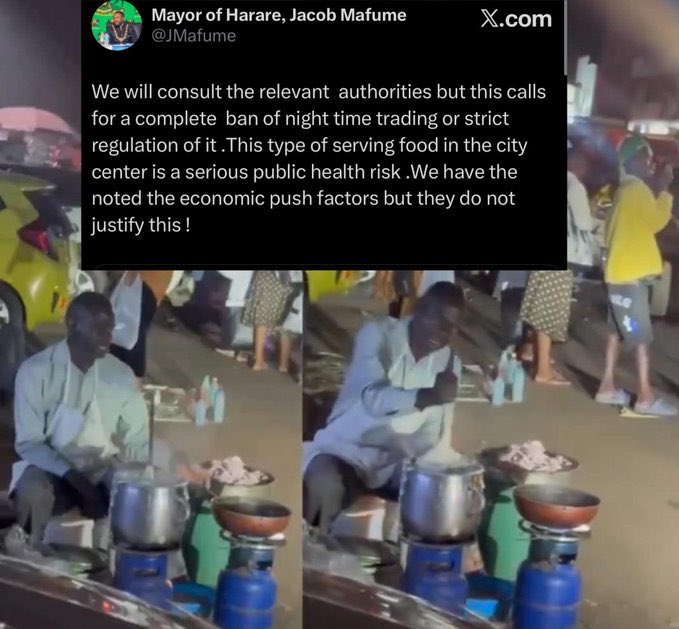
@CrimeWatchZW The other day pple were sympathizing with someone cooking sadza at the centre of town.
English
0
0
1
510
Mawoneke II
Mawoneke II@dope_m_X·
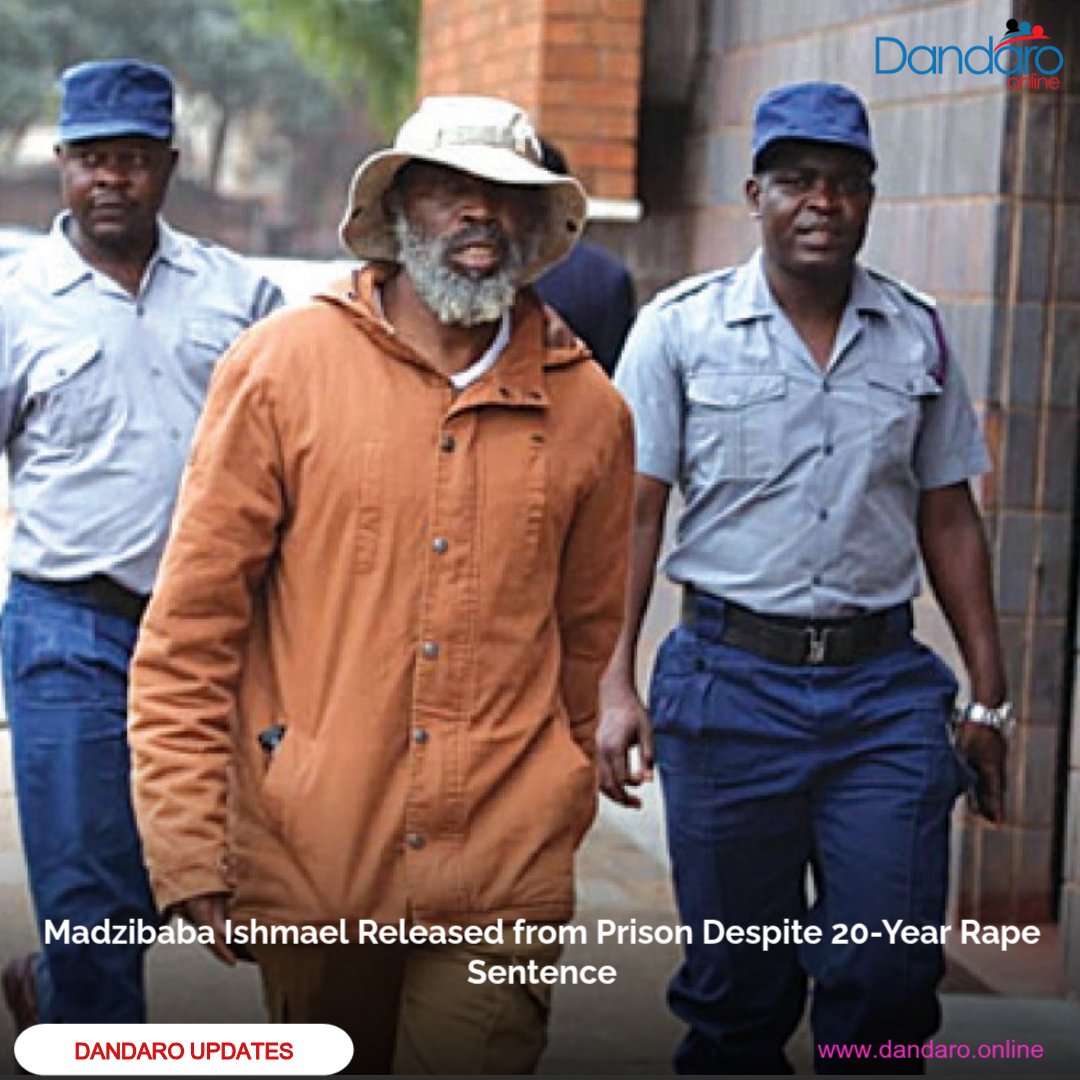
@DandaroOnline Bail pending appeal is routinely granted by our Courts. A convicted person is entitled to test the correctness of his conviction before a higher court. To be granted bail the Court will have been convinced of his prospects of success in his appeal.
English
0
0
1
203
Dandaro Online
Dandaro Online@DandaroOnline·
#dandaroupdates Madzibaba Ishmael, who was sentenced to 20 years in prison for rape and jailed last year, has reportedly been released from prison. The circumstances surrounding his release are not yet clear, and the matter remains a developing story. Follow Our WhatsApp Channel: whatsapp.com/channel/0029Va…
Dandaro Online tweet media
English
22
9
37
29K
King Jay🇿🇼
King Jay🇿🇼@KingJayZim·
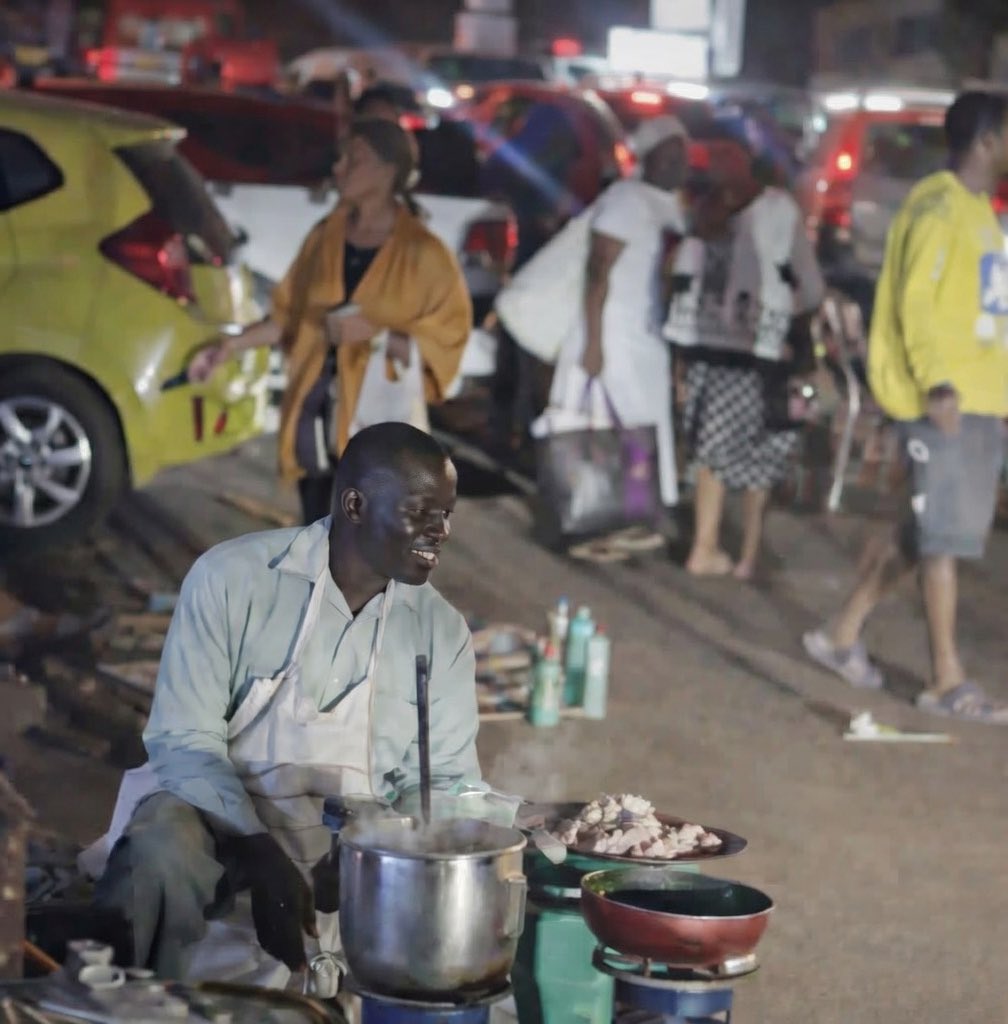
“The court heard that the first incident occurred in November 2022 when the 24-year-old student received a WhatsApp message from Manyika, asking her to come to Old Mutual Gardens to assist with packing banners. Upon her arrival, she went to the basement, where the banners were stored. After completing the task, Manyika lured the student to his office, locked the door, and sexually assaulted her by pushing her onto a table and raping her. Two years later: The second incident took place on June 19, 2024, when Manyika contacted the complainant again.  This time, they met at Ashbrittle Shops, where Manyika, who also oversees the Old Mutual Scholarship programme, invited the complainant into his car. He then engaged in sexual intercourse with her against her will.” The Herald.
The Herald Zimbabwe@HeraldZimbabwe

A senior manager at Old Mutual, Musa Nyasha Dube Manyika (41), has been sentenced to 15 years in prison after being convicted of two counts of raping a female university student who was on attachment at the company. heraldonline.co.zw/senior-manager…

English
72
16
107
69K
Tinashe
Tinashe@baba_nyenyedzi·
The real tragedy in Harare’s CBD is that bylaws still obstruct the formal conversion of buildings to residential use and make genuine city living difficult, yet the city fathers are remarkably accommodating of vendors and hawkers who effectively live and work on the streets. Many of these vendors only go home on weekends.
Tinashe tweet media
English
21
14
75
13.8K
Cde Treasure Basopo
Cde Treasure Basopo@TreasureBasopo·
Despicable as is regrettable! The trendy man who was captured making Sadza in Harare has been tracked down by authorities so that he can receive a severe punishment for seeking to make an honest living in a country reeked by unemployment and kleptomania. This followed a stern warning by the City’s Mayor Jacob Mafume @JMafume who promised to clampdown on vendors in general and this gentleman in particular. It’s regrettable that the poor have become cheap punching bags for the rich, easy targets unworthy to be listened to, and protected by laws and policies. I hope this detestable act has fixed potholes in Harare, housing crisis, unemployment and rampant poverty! Shame on ZANU PF and The City of Harare !
Cde Treasure Basopo tweet mediaCde Treasure Basopo tweet media
English
6
21
59
8.3K
Mawoneke II
Mawoneke II@dope_m_X·
@daddyhope I guess it's impossible to make a point without throwing in the "someone asked me""I was speaking to a top chakuti chakuti who said .....“.
English
2
0
0
549
Hopewell Chin’ono
Hopewell Chin’ono@daddyhope·
These are the before and after video images of the compound of the assassinated Iranian Supreme Leader, Ayatollah Khamenei. What this teaches us, especially in Africa, is that no one is safe if the superpowers decide they want you, and that the intelligence services of many countries are heavily infiltrated. People who are trusted and believed to be loyal are often working for other interests. One of the key reasons is that they are badly paid and poorly motivated. If a superpower comes, as America did in Venezuela, and offers millions in exchange for information, that transaction becomes very easy because many of these officials live in abject poverty. Suddenly, the opportunity of a massive payday and long-term security not just for themselves but for their children and grandchildren becomes more attractive than all the ideological rhetoric that dictatorships throw around. Loyalty weakens when survival and wealth are placed on the table. In the case of my country, Zimbabwe, the security services are heavily compromised due to corruption and incompetence. There are even instances where fake intelligence reports are written to please political superiors. If America can do this to Iran, which had solid intelligence services and significant regional power, I shudder to think what it could do to small African republics like Zimbabwe, where institutions are weaker and more porous. Someone asked me whether there is any reason for dictatorships, especially in Zimbabwe, to worry after seeing what has happened in Iran. I think the only issue that would attract serious American attention to Zimbabwe is the question of the unpaid compensation due to former white farmers. President Emmerson Mnangagwa made a massive political blunder by publicly promising to pay that compensation. That commitment created a formal obligation that can be internationalised and politicised. Zimbabwe is not a strategic prize that Washington desperately wants. It has rare minerals and rare earth deposits, but not at a scale that would automatically trigger escalation. However, the unresolved issue of compensation, which Mnangagwa voluntarily placed on the table, could easily be linked to broader governance concerns, including his controversial constitutional extension. In the event that America wanted to exert pressure, it would have a plausible issue to cite, even though such a scenario still appears far-fetched at this stage. There are deep divisions within Zimbabwean society, largely because the regime has failed to unite citizens around shared national goals and common causes. It is difficult to build unity when public health services have collapsed, when there is no reliable access to clean drinking water, when unemployment is widespread, and when poverty and hardship are visible everywhere you go. These conditions weaken the social fabric of a nation. They create vulnerability. A country struggling with economic collapse, institutional decay and public frustration becomes easier to penetrate, influence and manipulate by foreign powers. When citizens lose trust in their own institutions, external actors find openings. That has long been one of the downsides of many African regimes that prioritise political survival over governance and service delivery. When governance fails, legitimacy erodes. And in a situation where a superpower decides it wants to pressure or remove a regime in Africa, the justifications, leverage points and entry pathways are often numerous, whether framed around human rights, corruption, economic mismanagement or unresolved international obligations. Strong institutions, accountable leadership and functional public services are not luxuries. They are the first line of national security. Many people who live under dictatorships are content with authoritarian rule when the state reliably delivers basic public goods and maintains economic stability, because what matters most to many citizens is their daily livelihood rather than abstract political freedoms. That is why regimes that succeed in providing secure jobs, affordable daily necessities, functioning services and improvement in living standards can retain a degree of popular acceptance even without democratic rights. In the case of Iran, there are clear signs that public support has weakened not primarily because of foreign pressure but because the regime has been unable to uphold the social contract which required it to deliver economic stability, basic services and a rising standard of living. In late 2025 and early 2026, widespread protests erupted across all 31 of Iran’s provinces over high inflation, a collapsing currency, rising food prices and deteriorating living conditions, drawing in workers, students, pensioners, teachers and professionals alike, a much broader cross-section of society than earlier protests. The demonstrations reflect frustrations rooted in long-term economic mismanagement, corruption and declining living standards, as many Iranians feel the state is failing to provide for their basic needs. The same dynamic can be observed in many African countries, including Zimbabwe, where a long period of economic decline, institutional decay and failing public services has eroded citizens’ faith in the state. When health systems collapse, water supplies are unreliable, jobs are scarce and hardship is widespread, people focus first on survival. Those conditions do not unify society, they fragment it, as individuals and groups compete for limited resources and effective governance is replaced by personal networks and patronage. Societies like Iran and Zimbabwe have become deeply divided not simply because of their political systems, but because governments have sacrificed the everyday needs of their citizens on the altar of ideology, regional ambition or personal aggrandisement, leaving ordinary people to shoulder the consequences. When such a failure persists, the social contract, the implicit agreement that citizens forego certain freedoms in exchange for security and basic goods breaks down, making populations more restive and more receptive to alternative sources of power or influence. The regime in Harare is fortunate that there is currently no organised and effective opposition capable of mobilising and sustaining mass protests against it. In the absence of coordinated leadership, widespread public frustration does not easily translate into structured resistance. That gives the authorities a measure of comfort. They can sleep, but only with one eye open. History shows that regimes appear stable until the moment citizens are successfully mobilised and remain on the streets in sustained numbers. The decisive factor is not anger alone, but organisation, discipline and endurance. The day someone is able to mobilise people at scale and keep them mobilised, the political landscape would fundamentally change. That could signal the beginning of the end for the regime, or at least for a faction within it, particularly if such mobilisation were backed or quietly supported by elements within the military or security establishment. When states respond to internal unrest with lethal force against their own citizens, they weaken their own legitimacy. The use of excessive force does not just inflame domestic anger, it also creates grounds for international scrutiny and pressure. Civilian deaths in moments of political crisis often become the moral and diplomatic trigger for external actors to justify sanctions, intervention or other forms of action. Ultimately, the greatest protection for any government is not repression, but legitimacy rooted in performance, accountability and the consent of its people. A regime does not fall because superpowers are powerful, it falls because it failed its own people first. While regimes such as the Zimbabwean government routinely point fingers at opposition activists, journalists and opposition politicians, accusing them of being Western puppets, the uncomfortable reality is often far more complex. Those who shout the loudest about foreign interference are sometimes the very people who engage foreign governments quietly, negotiating, lobbying and socialising in private while preaching sovereignty in public. The loud accusations directed at activists and journalists frequently serve as political theatre and cover, designed to divert attention from what is happening within the corridors of power. It is easier to brand critics as agents of the West than to explain private dealings, undisclosed meetings and selective alliances that take place behind closed doors. Regimes that claim to be under constant foreign siege often operate within global financial systems, send their families abroad, seek diplomatic recognition from the same Western capitals they publicly condemn and maintain economic relationships that contradict their rhetoric. The Iranian system, like many entrenched power structures around the world, has long faced infiltration, internal rivalries and external pressure. The same can be said of the political establishment in Harare and in other capitals. The more centralised and opaque a system becomes, the more vulnerable it is to internal compromise. The real question is not simply whether infiltration exists. The real question is who benefits from it, who is manipulating whom, and what strategic interests are ultimately being served. It is widely reported and privately acknowledged in many circles that Zimbabwe’s intelligence services are in a weakened state at the moment. Beyond concerns about infiltration, there are persistent allegations of low morale, internal factionalism and frustration over leadership style and corruption within the system. Many of these issues rarely receive sustained public scrutiny, partly because journalists often face significant legal and political risks when attempting to report on the internal condition of intelligence institutions. As a result, much of what is discussed remains in private briefings and quiet conversations rather than in the public domain. An intelligence structure affected by demoralisation, corruption and internal mistrust becomes vulnerable. Institutional weakness creates openings. In such an environment, if a powerful external actor were ever to target the regime in Harare, the existence of internal fractures and low cohesion would significantly reduce the system’s resilience. The strength of any intelligence service ultimately depends not only on technical capability, but on morale, professionalism, discipline and integrity. When those foundations erode, the entire structure becomes easier to penetrate, manipulate and destabilise. Just like Iran, even if a regime change were to happen today in Zimbabwe, there is no legitimate, well organised and clean alternative ready to replace what would have been removed. Today, the real opposition to Emmerson Mnangagwa is General Constantino Chiwenga, who has been part of this regime from its inception and was central to the 2017 military intervention that brought it into power. In Iran, the most prominent alternative being projected is Reza Pahlavi, the American based son of the former Shah (King), Mohammad Reza Pahlavi, who was overthrown by the 1979 Islamic Revolution. The Shah’s rule was corrupt, repressive and brutal, many of the same traits associated with the current clerical regime. Yet his son is now being positioned by external actors as the face of a possible post regime Iran. What we also learn is that having the support of China, Russia or any other country does not guarantee protection if the United States decides to target you. Alliances and diplomatic backing may offer political cover, but they do not automatically deter a determined superpower.
English
40
43
165
78.3K
mawarire mbizvo jealousy
mawarire mbizvo jealousy@mawarirej·
This man is brilliant. He is not just a patriot, a decorated soldier or a nationalist, he is also an intellectual, a very versatile mind quick to grasp things. If we want Zimbabwe to work, let's use his discipline and commitment to making things done for the people. He is the best person to restore dignity to our people by making our economy work again. He has the capability to arrest the thievery that has been promoted and amplified by the Korokoza and Mushika-shika approach to governance which is the hallmark of @edmnangagwa's administration. #2027EDAnengeAsipo #Ngazvitenderere
𝐂𝐫𝐢𝐦𝐞 𝐖𝐚𝐭𝐜𝐡 𝐙𝐖@CrimeWatchZW

WATCH | Spoken like a true president in the making. 📹Rory Studios News @LynneStactia

English
69
93
327
38.1K
ManFromNyasaland
ManFromNyasaland@PhiriTofara·
haaaa marriage dzangova nharo hadzo🤣🤣😭😭😭😭😭😭😭😭😭😭😭😭😭😭😭😭😭😭😭😭
ManFromNyasaland tweet mediaManFromNyasaland tweet mediaManFromNyasaland tweet media
62
4
64
19.1K
Mawoneke II
Mawoneke II@dope_m_X·
@Jamwanda2 Pple will always feel what they feel about the departed.It can't be imposed.One day a story will be told about a man who thought he was wiser than he was, served and betrayed two masters,beat up his wife,fathered an Olympian but ultimately lost it all
English
0
0
0
56
Jamwanda
Jamwanda@Jamwanda2·
BEWARE OF FALSE HEROES: CASE THREE AND LAST. A day ago, we celebrated the so-called Valentine Day, a day dedicated to lovers, always imaged as red/gossamer. Where I come from, the colour red does not depict love; it is a gory colour of death. Where I come from too, Valentine, is not a name I normally associate with indigenous naming traditions and practices. Where I come from, names are verbal nouns, within which action is always embedded, in keeping with our fame as a DOING CULTURE. A producing culture. A commemorative culture, for better and for worse. When I shot out of my late mother’s womb, to utter my first cry which announced my arrival in this world, the happy Family gathered and named me KUDZANAI, which roughly translates to RESPECT ONE ANOTHER. The doing word was “kudza-“, and the exhortation was “-NAI”, making my name a verbal noun. All Shona names follow that naming traditions: In my compound, I have RUKUDZO, KOMBORERO, MAKANAKAISHE, MUKUDZEI, IVAINASHE and NYEPAI, all of them verbal nouns. That how we NAME in order to OWN. I have always had a problem with this Valentine thing, through which we are inserted into western celebratory and commemorative traditions as if we never loved before the first white man, acting on both conscience and Christian goodness, reached our land! Except the word RUDO/KUDA predates these so-called white do-gooders, meaning we had a word for the practice which enabled processes by which life reproduced itself. As if to punish us for kowtowing to this alien malpractice in the name of one Italian called VALENTINE, our former Prime Minister was called from this life on the same day, in what appeared to be a deep, holy tribute to what he loved most! I waited to see who would emerge a bitter hero: COUNT VALENTINE or MORGEN TSVANGIRAI, our late Prime Minister. On balance, COUNT VALENTINE lost to SAVE, something which should make me thrice happy as a Vuheran, a Zimbabwean and an African. Except he did not prevail in contradistinction to COUNT VALENTINE; rather, he prevailed for the role and values he personified as a politician embedded within our body-politic. There was a spirited attempt to re-issue him as a political paragon, a visionary. Save ndisekuru vangu; I joined the MDC-T throng to bury him in HUMANIKWA in Buhera. But his role as a political actor and leader was far from exemplary. He took a firm stance against the national Interest and agreed to be instrumentalized by the West against reclamation of his heritage: the land. I am not talking about his role as an activist for democracy as he understood it, although we can also debate that. I am talking about the politics which saw him become the darling of erstwhile settler colonial white farmers, against whom the Land Reform became necessary. Nothing summarised this more than that fateful day white settlers signed a fat cheque in MUTORASHANGA to fund his MDC as their black-led vehicle for opposing land reforms, themselves the new phase in our national anti-colonial struggle. Read against that sombre and chequered backdrop, the memorial paeans composed for Morgan Tsvangirai will always read gratuitously deceitful, nay a robust effrontery to the being, values and memory of our Nation. Often, wafawanaka is best realized through silent tribute, especially when times may be too soon for honest appraisal!
English
11
4
16
5.8K
Jamwanda
Jamwanda@Jamwanda2·
BEWARE OF FALSE HEROES! To keen watchers of Zimbabwean politics, the few weeks which have gone by have been quite unsettling. There was a concerted attempt to use death to re-polish out and out quislings of imperialism in our past, all of them cleaned and scoured from our midst by natural expiry. I have agonized to conceive this tweet which looks inhumane and bereft of milk of human kindness. Even Shona says, afa anaka, the only issue being that this adage works well if the bad dead are quietly left to depart from us. Where some narrow interests try to turn the bad dead into false models for our children, then one’s conscience and sense of responsibility gets aroused, in which case hard truths might have to be made publicly. We lost businessman Mawere recently; he was a college mate in the early 1980s. We shared a life, an age. That apart, he committed a very serious offense against this Nation in his life as a businessman whose rise had been facilitated by both the ruling party and Government. In line with his Policy of indigenizing the Economy, the late RG Mugabe ran into a situation in which previous owners of Mashava and Shabani mines wanted out. But on ideological grounds, the previous owners did not want to sell those two asbestos mines to the Zimbabwe Government. Time was running out for the transaction. In desperation, the Zim Government delegation looked around for a Zimbabwean who could be used as proxy in the transaction. The closest we had was Mawere then with IFC in the US; he was approached and he agreed to become the proxy. That is how SMM was born, with Mawere as the face of it. Coincidentally, Mawere’s term with IFC was also coming to an end. He came back home to run SMM, with Party and Govt behind. He did a lot more. He consolidated his hold under very controversial terms, leading to a conflict situation with his godfather who felt elbowed out. Worse, he created a maze of offshore companies, primarily in South Africa to which he sold Zimbabwean asbestos at beaten down prices, thus prejudicing the State both by way of due taxes and dividend. More infractions followed: proceeds from transfer-priced sales were never repatriated to Zimbabwe, itself the domicile of SMM. These were kept offshore, principally in SA. The prejudice to Zimbabwe was huge and litigation was put in train. This is how Mawere became a fugitive. Fast-forward to his death: we get paeans and encomiums by way of dirges and epitaphs in respect of a character who did such huge harm to this Nation. He gets undeserved appellations like “business mogul”, “shrewd businessman”, etc, etc! Death and ignorance polishes all his heinous misdeeds against this Nation and sheer villainy and knavery is reissued anew as virtue and keen business acumen. Tisadaro weduwee!!! Case Number Two:
English
16
13
56
24.9K
Rufaro Hozheri 🇿🇼
Rufaro Hozheri 🇿🇼@andrea_hoxbucks·
In the past 24 months, ❌Standard Charted existed the Zim market ❌Lafarge (Holcim) exited the Zim market ❌Deloitte exited the Zim market ❌Didn't PwC also leave? ❌Choppies gone ❌Nampak is packing right now (pun intended) Also, in the past 24 months 👨‍🦽Truworths has gone under corporate rescue 👨‍🦽Metro Peach is under corporate rescue 👨‍🦽Bindura Nickel Corporation the same 👨‍🦽Khayah cement 👨‍🦽Ohh Beta Holdings The list obviously longer than this, but I think the point is clear. Has management of the companies suddenly become incompetent, or failed to read the room or to adapt as we often claim here on social media, or its way bigger a problem than that?
English
134
225
787
159.7K
Mawoneke II
Mawoneke II@dope_m_X·
@loiceMututuvar1 Times and events change but pple never change at all.She is cheating.When she was fighting you she was not.The moment she had no energy to fight you she had already left
English
0
0
0
76
Tabani 🏆³⁵
Tabani 🏆³⁵@tabanimcgucci·
We have to be honest about this guy
Tabani 🏆³⁵ tweet media
English
208
33
531
79.8K