Using AI chatbots these days are like being in a conversation with a boring individual at a social gathering. It’s always you, who have to come up with the discussion ideas and you have to pay for the conversation to be smarter.
Increasingly finding that the one thing that most makes managers panic about AI is showing them, not the advanced features of GPT-4, but rather the fact that Copilot for Office can create an OK PowerPoint with speaker notes from a document in 47 seconds.
This is all real time.
Point Nemo is located in the South Pacific Ocean, approximately 2,688 kilometers (1,670 miles) away from the nearest land. Situated at the point of coordinates 48°52.6′S 123°23.6′W, it is the most remote location on Earth, as it is the furthest point from any landmass.
Geographically, this mystery point is located at the intersection of the equator, the International Date Line, and the 90th meridian west.
The nearest landmasses to Point Nemo are the Pitcairn Islands’ Ducie Island to the north; Motu Nii, a small island that is part of the Easter Island chain, to the northeast, and Maher Island, off the shore of Marie Byrd Land, an unclaimed territory in Antarctica, to the south.
These islands are all unpopulated. You would have to travel to New Zealand, which is located around 2,500 miles (4,023 kilometers) away, or to one of the world’s most isolated inhabited islands, Easter Island, which is located about 2,200 miles (3,540 kilometers) to the west of Chile to find the closest hint of civilization.
This journey can only be completed by boat and could take more than two weeks.
Surprisingly, the closest people to Point Nemo are astronauts on board the International Space Station (ISS) in space. At their closest, they are about 258 miles (415 kilometers) away from the location that marks the spot.
An amazing interaction. This is how the NSC often works (President-dependent of course):
Memos rule everything, and can take weeks (months, even!) to write. Must be razor sharp, clear, and coordinated with various stakeholders.
Then, “messy meeting.”
Jeff Bezos explains what it means to disagree and commit
“Disagree and commit is a really important principle that saves a lot of arguing.”
There will be disagreements in any endeavor in life where you have teammates.
“In society, and inside companies, we have a bunch of mechanisms we use to resolve disputes. And a lot of them are really bad. An example of a really bad way of coming to an agreement is compromise.”
He continues:
“The advantage of compromise as a resolution mechanism is that it’s low energy, but it doesn’t lead to truth… You shouldn’t allow compromise to be used when you can know the truth.”
Another bad resolution mechanism is the more stubborn person winning:
“You have two executives who disagree and they just have a war of attrition. And whichever one gets exhausted first, capitulates to the other one. Again you haven’t arrived at truth and it’s very demoralizing.”
Jeff tells people on his team to never get to a point where you’re resolving something by who gets exhausted first:
“Escalate that. I’ll help you make the decision.”
When making decisions, you want to get as close to the truth as possible:
“Exhausting the other person is not truth-seeking. And compromise is not truth-seeking.”
But there are a lot of cases where no one knows the real truth and that’s where “disagree and commit” comes in:
“Escalation is better than war of attrition. Escalate to your boss and say ‘we can’t agree on this. We like each other and respect each other, but we strongly disagree with each other and need you to make a decision so we can move forward.’ Decisiveness and moving forward on decisions as quickly as you responsibly can is how you increase velocity. Most of what slows things down is taking too long to make decisions.”
Companies tend to organize hierarchically in which the more senior person ultimately makes the decision. But as Jeff explains in the clip below, that wasn’t always the case—he would often be the one to disagree and commit:
“I would often say: ‘You know what, I don’t think you’re right. But I’m going to gamble with you and you’re closer to the ground truth than I am. I’ve known you for 20 years—you have great judgement. I don’t know that I’m right either—all of these decisions are complicated. Let’s do it your way.’ But at least then you’ve made a decision, and I’m agreeing to commit to that decision. I’m not going to be second guessing it. I’m not going to be sniping at it. I’m not going to be saying ‘I told you so.’ I’m going to actively try to make sure it works. That’s a really important teammate behavior.”
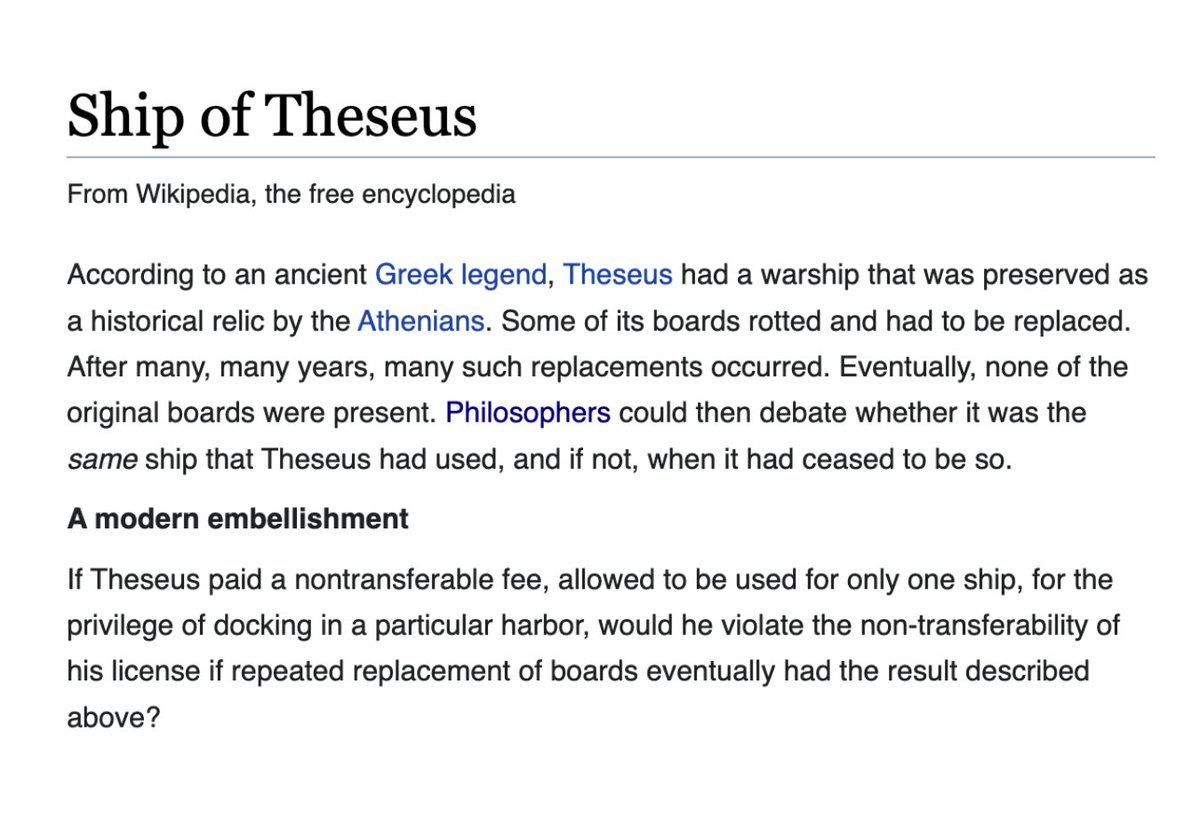
The "Ship of Theseus" article has been edited 1792 times since it was created in July of 2003. At present, 0% of the phrases in the original article (seen below) remain.
People just aren't thinking about you that much...
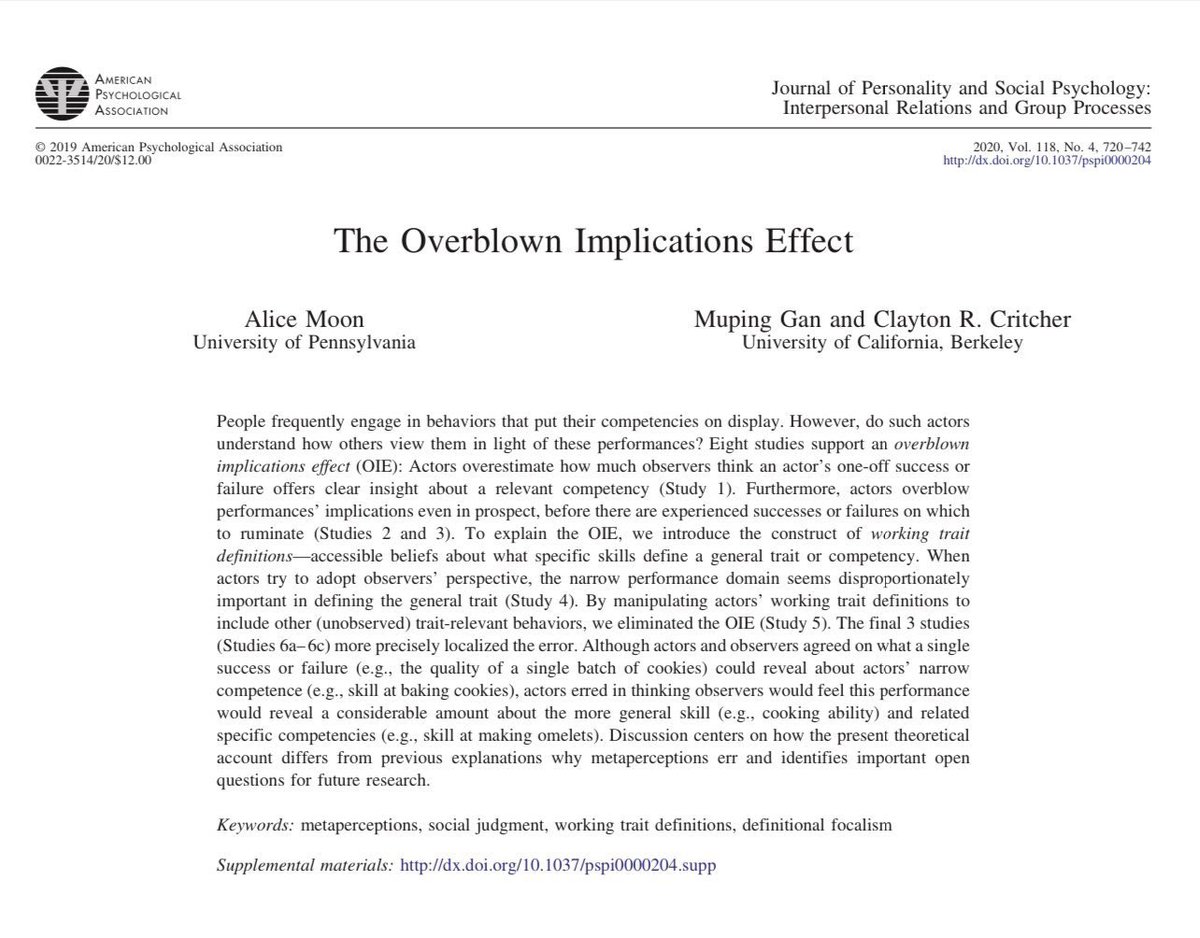
The Overblown Implications Effect: we think people judge us by a single success or failure, but they don’t. If you mess up one meal, no one thinks you are a bad chef and if you have one great idea, no one thinks you are a genius
MORE FAVES FROM MY NOTEBOOK
Didn’t have room in my book..
1.DECONSTRUCTION
After your first cut, watch it m.o.s. on fast-forward. Your mind fills in context as the narrative returns to outline form.Cut one prosaic scene and juxtapose two good ones. Watch your movie take flight.
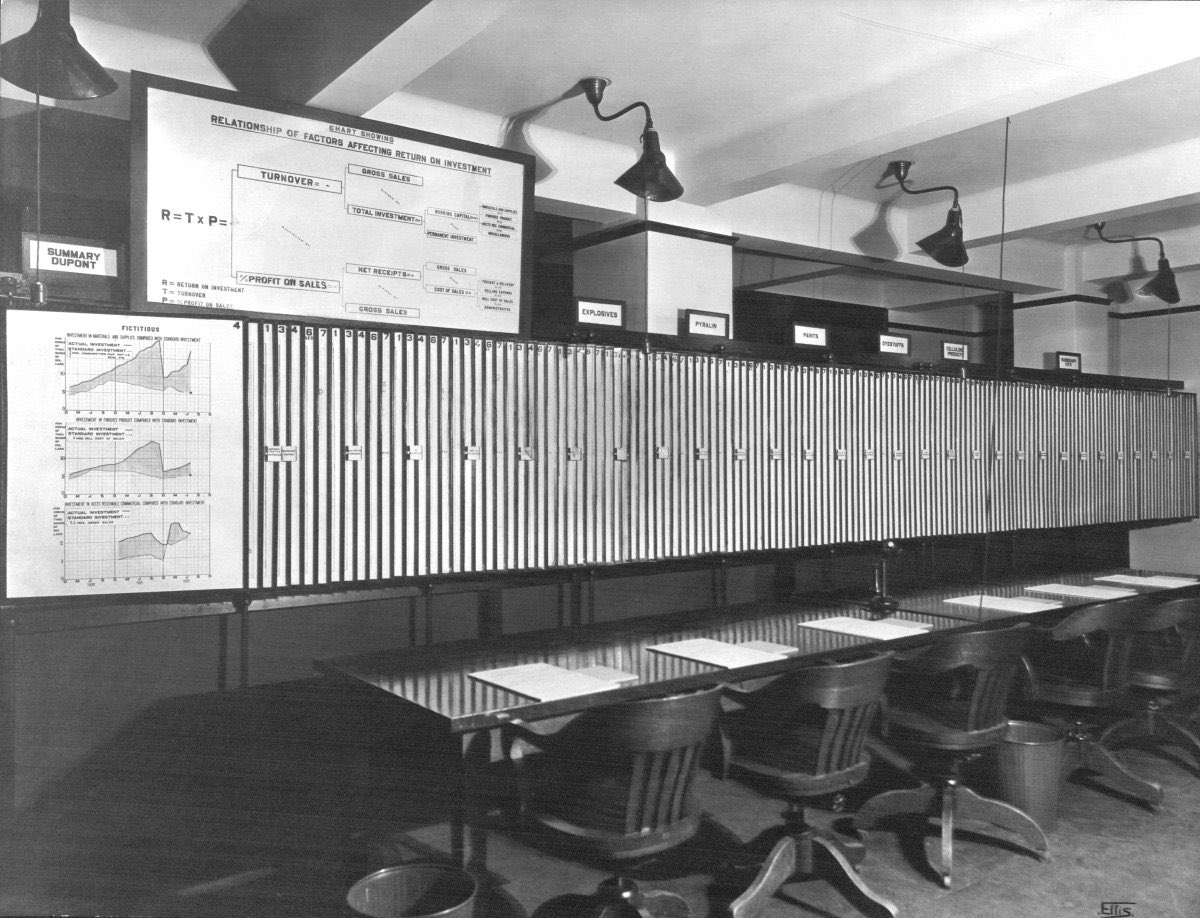
Before PowerPoint, DuPont had a Chart Room. Made in 1919, it was considered so vital that its existence was secret for 40 years
Charts would zoom towards the board on monorails. The original version was a set of fixed slides that executives in wheelie chairs would be pushed past