
Sabitlenmiş Tweet

we're on track to building the best dspy powered llm framework in the typescript world
Omar Khattab@lateinteraction
@VarunGodbole @isaacbmiller1 @DSPyOSS Yes — @dosco’s Ax is pretty much the official DSPy in TS.
English
spacy
16.8K posts

@dosco
LLM research, systems and compilers | ax + dspy in TS | agent engineering. https://t.co/sfb9LG5uSU https://t.co/CM4AQP5n1z https://t.co/ZdGcEh57Wh
@VarunGodbole @isaacbmiller1 @DSPyOSS Yes — @dosco’s Ax is pretty much the official DSPy in TS.

Transformers struggle to generalize to tasks they were not explicitly trained on. Instead, we propose in 2026 that it is the job of the harness to generalize through composition. We observe a powerful property when training RLMs: for tasks with shared structure that look different, the root model naturally learns the same trajectory, meaning it views the two task trajectories as the same! In other words, the Transformer does not need additional generalization capabilities to transfer capabilities from one task to the other, the harness induces it. We find that well-designed harnesses form a quotient set over task trajectories, meaning their individual LLM calls can see structurally “similar” tasks as near-identical, token-for-token! Harnesses can effectively generalize for the Transformer during training, without relying on any intrinsic generalization capability from the model. For example, RLMs can see problems of different lengths as the same: we show that RLMs can train exclusively on short tasks, and fully generalize to similar but unseen tasks 8-32x longer because it produces near identical trajectories for both. Taking this further, we show that tasks across different domains (e.g. math solutions vs. essay writing) that share a decomposition strategy exhibit the same generalization effect. RLMs can train on the problem of finding which essays belong to the same author and improve performance on finding math problems that share similar solutions. The full blogpost, experiments, and discussion are in the thread below.
Transformers struggle to generalize to tasks they were not explicitly trained on. Instead, we propose in 2026 that it is the job of the harness to generalize through composition. We observe a powerful property when training RLMs: for tasks with shared structure that look different, the root model naturally learns the same trajectory, meaning it views the two task trajectories as the same! In other words, the Transformer does not need additional generalization capabilities to transfer capabilities from one task to the other, the harness induces it. We find that well-designed harnesses form a quotient set over task trajectories, meaning their individual LLM calls can see structurally “similar” tasks as near-identical, token-for-token! Harnesses can effectively generalize for the Transformer during training, without relying on any intrinsic generalization capability from the model. For example, RLMs can see problems of different lengths as the same: we show that RLMs can train exclusively on short tasks, and fully generalize to similar but unseen tasks 8-32x longer because it produces near identical trajectories for both. Taking this further, we show that tasks across different domains (e.g. math solutions vs. essay writing) that share a decomposition strategy exhibit the same generalization effect. RLMs can train on the problem of finding which essays belong to the same author and improve performance on finding math problems that share similar solutions. The full blogpost, experiments, and discussion are in the thread below.


Our results suggest that similar to tuning model architectures and training recipes, well-designed harnesses can reduce the cost of curating more data and generating longer rollouts while increasing the coverage of tasks solvable through post-training. One might be tempted to train harnesses through known inductive biases, but this can end up at odds with the research we’ve done as a field on training models. Harnesses with desirable properties can be paired with scaling techniques to yield a wider class of solvable tasks at the same cost. In our experiments, we choose to train as naively as possible to reflect how future work may design and train around these harnesses!
Transformers struggle to generalize to tasks they were not explicitly trained on. Instead, we propose in 2026 that it is the job of the harness to generalize through composition. We observe a powerful property when training RLMs: for tasks with shared structure that look different, the root model naturally learns the same trajectory, meaning it views the two task trajectories as the same! In other words, the Transformer does not need additional generalization capabilities to transfer capabilities from one task to the other, the harness induces it. We find that well-designed harnesses form a quotient set over task trajectories, meaning their individual LLM calls can see structurally “similar” tasks as near-identical, token-for-token! Harnesses can effectively generalize for the Transformer during training, without relying on any intrinsic generalization capability from the model. For example, RLMs can see problems of different lengths as the same: we show that RLMs can train exclusively on short tasks, and fully generalize to similar but unseen tasks 8-32x longer because it produces near identical trajectories for both. Taking this further, we show that tasks across different domains (e.g. math solutions vs. essay writing) that share a decomposition strategy exhibit the same generalization effect. RLMs can train on the problem of finding which essays belong to the same author and improve performance on finding math problems that share similar solutions. The full blogpost, experiments, and discussion are in the thread below.

Transformers struggle to generalize to tasks they were not explicitly trained on. Instead, we propose in 2026 that it is the job of the harness to generalize through composition. We observe a powerful property when training RLMs: for tasks with shared structure that look different, the root model naturally learns the same trajectory, meaning it views the two task trajectories as the same! In other words, the Transformer does not need additional generalization capabilities to transfer capabilities from one task to the other, the harness induces it. We find that well-designed harnesses form a quotient set over task trajectories, meaning their individual LLM calls can see structurally “similar” tasks as near-identical, token-for-token! Harnesses can effectively generalize for the Transformer during training, without relying on any intrinsic generalization capability from the model. For example, RLMs can see problems of different lengths as the same: we show that RLMs can train exclusively on short tasks, and fully generalize to similar but unseen tasks 8-32x longer because it produces near identical trajectories for both. Taking this further, we show that tasks across different domains (e.g. math solutions vs. essay writing) that share a decomposition strategy exhibit the same generalization effect. RLMs can train on the problem of finding which essays belong to the same author and improve performance on finding math problems that share similar solutions. The full blogpost, experiments, and discussion are in the thread below.


GPT Researcher, built on deepagents, is the easiest way to get started building a deep research agent!
Andrej Karpathy just broke the entire premise of modern AI: "Agents aren't magic. They're distillation at scale." 99.99% of your LLM's capacity is wasted on garbage data it never needed. Small model + right tools + closed loop = terrifying capability. In a 16-minute conversation, Karpathy reveals the full reasoning stack. Worth more than any $500 AI course you've seen this year.
A nice trick you can do with tool calling and coding agents is adding a "displayText" parameter where the model needs to explain in a short phrase what he is trying to achieve with a tool call Otherwise you just show the user boring and illegible stuff like `Ran apply_patch` or `Edited file` Much better to show `Reading invoice and editing ledger` instead
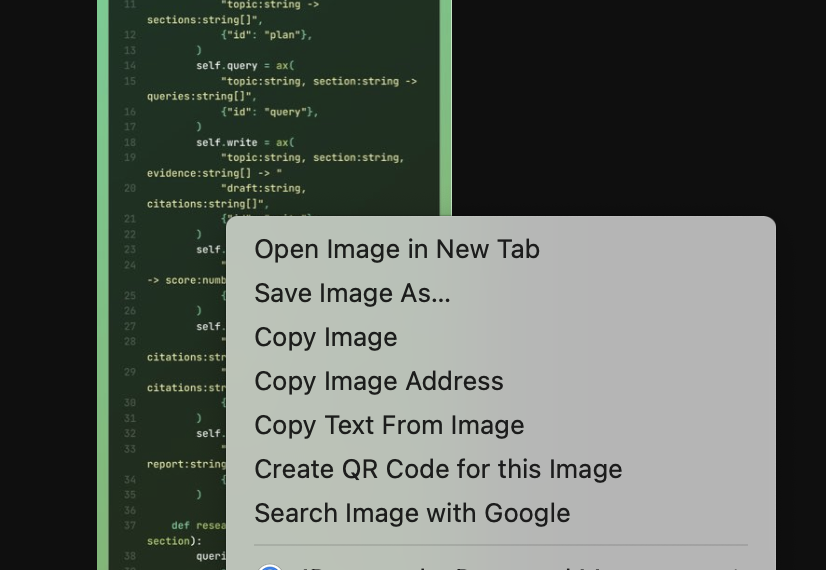

@dosco looks like prompts to me
This picture floating on X is supposedly from Moonshot's office, days before K3 launch. What caught my eye are the instantly recognizable words from @RichardSSutton's Bitter Lesson framed on their wall: "We want AI agents that can discover like we can, not which contain what we have discovered. Building in our discoveries only makes it harder to see how the discovering process can be done."


How can an LLM switch between low-, medium-, and high-effort reasoning? And how does an LLM learn to reason more or less? I put together a “little” article explaining how these effort levels are implemented at inference time and during training.


