

Todd Maderis, ND
3.3K posts

Todd Maderis, ND
@dr_todd
Specializing in treating the cause of complex chronic illness #LymeDisease, #MoldIllness, #MCAS #LongCOVID #MECFS #autoimmune
Larkspur, CA Katılım Nisan 2009
223 Takip Edilen5.1K Takipçiler

@dr_todd What would you recommend for lipid support or LRT?
English
Did you know that many mycotoxins are lipophilic, meaning they have an affinity for fat? This allows them to embed in cell and mitochondrial membranes, which are made of lipids. This can lead to oxidative damage, inflammation, and impaired energy production.
The good news is that lipid replacement therapy (LRT) helps remove #mycotoxins from these membranes while restoring damaged cellular structures. By replenishing essential phospholipids, LRT supports mitochondrial function, improves detoxification, and enhances overall cellular health.
If you're dealing with mold toxicity, chronic fatigue, or neuroinflammation, consider incorporating lipid support into your recovery protocol. Your mitochondria will thank you!

English
@stella_chadwick I primarily use Real Time and provoked the collection with intravenous glutathione.
English

This is such a valuable post and I’m amazed more people aren’t all over it. I love your work and very much appreciate your posts. Can I ask which lab you used to test for mould and mycotoxins? We use Realtime labs and Mosaic and find the former to be more helpful. My team and I are focused primarily on children and young adults with PANS PANDAS - sadly “long covid” type symptoms feature heavily in this young population. Many thanks.
English
Early in the COVID pandemic, some people continued to experience symptoms following an infection with the SARS-CoV-2 virus, physicians and researchers were scrambling to discover what caused some people to remain ill (and develop new symptoms). Scientific research was published associating concomitant findings such as reactivation of Epstein Barr virus, autoimmunity, increased coagulation, mast cell activation syndrome, mold illness, and Lyme disease. Physicians treating these associated conditions before the pandemic would test patients with Long COVID to identify what was underlying that contributed to the ongoing illness.
I have tested most of the #LongCOVID patients I have seen over the past few years for the above conditions and infections. What is the most common condition I have seen with Long COVID? Elevated mold and mycotoxin levels.

English
Methylene blue has received much attention for its effect on infections, including Bartonella, Lyme disease, and COVID the past few years. But did you know methylene blue also supports mitochondrial function? #Mitochondria are concentrated inside of cells and produce the energy currency ATP. Organs and tissues with higher energy demands, such as the brain, immune system, and heart have higher concentrations of mitochondria per cell.
Within mitochondria, #methyleneblue donates electrons to the main energy production pathway, the electron transport chain. Methylene blue has been shown to increase cerebral blood flow and metabolic activity in the brain and is neuroprotective.
Sources: ncbi.nlm.nih.gov/pmc/articles/P…
ncbi.nlm.nih.gov/pmc/articles/P…
drtoddmaderis.com/methylene-blue…

English
Over 65 million people are affected by Long COVID, and a third of those experience neurological symptoms, including chronic fatigue syndrome (ME/CFS), anxiety, and depression. Over the past four years, there have been multiple theories and evidence that might explain the pathophysiology of #LongCOVID. Persistent SARS CoV-2 virus, reactivated infections, inflammation, and autoimmunity are some causes identified in research settings. In addition, there is evidence that major depressive disorder and ME/CFS are associated with bacterial translocation seen in leaky gut syndrome.
The authors of the current study set out to determine what role these variables play in Long COVID. Markers for various pathophysiological causes were measured in ninety patients with Long COVID and ninety healthy controls.
The results of this unique study were surprising.
Sources: onlinelibrary.wiley.com/doi/10.1002/jm… drtoddmaderis.com/leaky-gut-synd…
English
Causes:
* Bacterial infections
* Viral infections
* Fungal infections
* Heavy metals
* Herbicides
* Mold illness
* Food and environmental allergens
* Leaky gut syndrome
Mast cell activation syndrome is often the result of an underlying pathology causing immune system dysfunction. Mast cell treatment helps mitigate the symptoms associated with #MCAS, but it is critical to identify and treat the root cause. I like to use an analogy with my patients: “If the immune system is like a beehive, we need to find out what is poking the hive, not just stabilize it.”
Reactions to foods and medications/supplements can result from mast cell dysfunction, but leaky gut syndrome and heavy metal toxicity can also contribute to these sensitivities. Be sure to turn over every stone to find the cause or causes of your symptoms!
Read my article about mast cell activation syndrome: drtoddmaderis.com/mast-cell-acti…
English
Over the years, I have seen patients with mold-related illnesses who have a history of cancer. Recognizing the correlation made me curious if #mold and mycotoxin exposure played a role in cancer development, so I looked at research studies.
Although this connection has not been thoroughly examined, the available research reveals the risks associated with indoor mold exposure and mycotoxins in cancer development. Mycotoxins such as aflatoxins, ochratoxins, and zearalenone, produced by molds in damp or water-damaged environments, are associated with DNA damage, disruption of tumor-suppressor genes like TP53, and cancer-causing mutations.
Studies in the review reveal strong connections between #mycotoxins and specific cancers:
✅ Ochratoxins: Associated with kidney cancer, as well as suspected links to testicular cancer through disruption of cellular metabolism and oxidative stress.
✅ Aflatoxins: Long recognized as potent carcinogens, primarily targeting the liver, with a strong association with hepatocellular carcinoma through their genotoxic effects.
✅ Zearalenone: An estrogen-mimicking mycotoxin linked to reproductive cancers like breast and cervical cancer due to its ability to interact with hormone receptors and induce DNA adducts.
Physicians must recognize environmental exposures as contributors to cancer risk. If mycotoxins induce a malignancy and the cancer is successfully treated by surgical removal, chemotherapy, or radiation, the cause must be treated to prevent future illnesses or diseases.
Have you experienced cancer and mold-related illness? Please comment below.
Source: pmc.ncbi.nlm.nih.gov/articles/PMC92…
English
Infection with #Candida can occur in multiple locations in the body, including mouth, scalp, skin, intestines, and genitals.
Sources: ncbi.nlm.nih.gov/pmc/articles/P…
pubmed.ncbi.nlm.nih.gov/34537272/

English
People with chronic infections like Lyme disease are familiar with biofilms. They are like a city of bacteria surrounded by a matrix that protects them from the immune system and antibiotics. Bacteria in a biofilm can be up to 1000 times more resistant to antibiotics!
However, most people, including many physicians, don’t realize that genes can influence biofilm formation. You may have heard of hypercoagulation in chronic conditions such as COVID and Lyme disease. Increased coagulation occurs due to excessive fibrin production or inadequate fibrin breakdown – or worse, both! Fibrin plays a role in biofilm formation, and many individuals with chronic illnesses possess genetic variations that heighten fibrin production or diminish fibrin breakdown.
Biofilm formation from increased fibrin production or decreased fibrin breakdown may be the most significant reason chronic infections like Lyme disease, #LongCOVID, chronic urinary tract infections, and PANDAS persist. Relapsing SIBO may be a biofilm issue. Furthermore, conditions that cause inflammation, such as mold illness and mast cell activation syndrome (MCAS), cause excess fibrin production. So, you do not have to have the genetic aberration to have increased #biofilmformation.

English
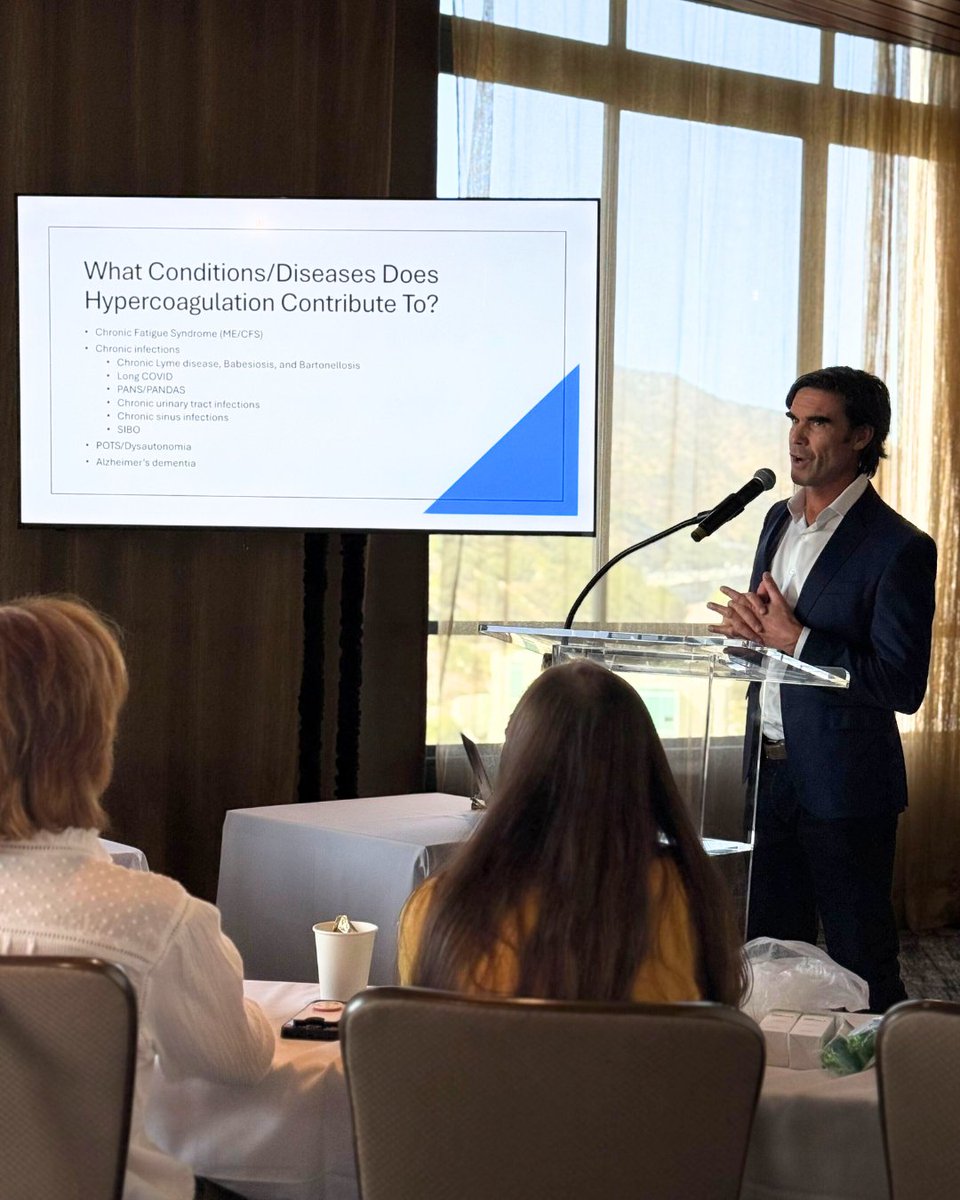
Inflammation and, in some cases, genetics contribute to increased fibrin production in the blood. Elevated fibrin leads to #hypercoagulation and biofilm production, causing symptoms and contributing to infections becoming chronic.
The conditions and diseases that are associated with hypercoagulation:
• Chronic fatigue syndrome (ME/CFS) – decreased oxygen and nutrients delivery to cells affects energy production pathways in the mitochondria
• Chronic infections – due to biofilm formation
-Lyme disease, Babesia, and Bartonella
-Long COVID
-PANS/PANDAS
-Chronic sinus infections
-And more
• POTS/Dysautonomia – decreased blood flow
• Alzheimer’s dementia
Source: drtoddmaderis.com/hypercoagulati…
English
Narrative review highlights mitochondrial ROS as a unifying mechanism in #LongCOVID. Key findings: mtDNA fragments, impaired mitophagy, redox imbalance → chronic inflammation.
Source: pmc.ncbi.nlm.nih.gov/articles/PMC12…
English
In #mold illness, untreated sinus colonization can serve as a persistent #mycotoxin reservoir. Biofilm formation shields fungi from host immunity and antifungals, driving symptoms (brain fog, headaches, anxiety, sinus pain). Intranasal antifungals + biofilm disruptors (e.g., EDTA) are key to recovery.
Source: drtoddmaderis.com/sinus-coloniza…
English
Recent advances in #Borreliaburgdorferi gene regulation:
• RpoS as gatekeeper – switches on host survival genes while repressing tick-phase genes
• BosR–RpoS feedback – BosR not only activates rpoS but is itself positively regulated by RpoS
• BadR regulon expansion – functions as both activator and repressor, influencing metabolism and virulence genes
• PlzA & c-di-GMP – modulates RpoS activity, linking tick vs. mammalian phase gene expression
• Small RNAs – hundreds identified, adding a new layer of post-transcriptional control
Understanding these mechanisms may help the development of new therapies targeting #generegulation rather than the bacteria directly (think SOT).
Source: pmc.ncbi.nlm.nih.gov/articles/PMC12…
English
A patient I recently saw had been living with severe #nausea for over a year. She told me that at its worst, eating was a daily challenge. After treatment for intestinal dysbiosis and normalizing gut motility, her nausea resolved.
Nausea in people with #chronicillness can have many different causes:
• Gut dysbiosis or small intestinal bacterial overgrowth (SIBO)
• Mold or mycotoxin exposure
• Chronic infections such as Lyme disease or viral reactivations
• Medication side effects
• Mast cell activation syndrome (MCAS)
• Autonomic dysfunction (common in conditions like POTS or Ehlers-Danlos syndrome)
• Mitochondrial dysfunction and cellular energy deficits
• Toxin overload from heavy metals or environmental chemicals
If you struggle with chronic nausea, the cause may not be obvious, but it’s rarely “just in your head.” Identifying and treating the underlying driver can make a significant difference in quality of life.

English
Autoimmune conditions have been on the rise for the past three decades. About 50 million people in the U.S. suffer from an autoimmune condition – more than heart disease and cancer combined. There are over 100 recognized autoimmune conditions and 98% of people with an #autoimmune condition also experience fatigue.
Autoimmune conditions improve and can resolve, following treatment of #moldillness.
Learn more about mold illness symptoms in my article: drtoddmaderis.com/symptoms-of-mo…
English
New research highlights the power of two #bioflavonoids, nobiletin and eriodictyol, in protecting the brain from inflammation caused by the #COVID spike protein and the mold toxin ochratoxin A.
✅ Ochratoxin A & Spike Protein exposure triggered high levels of inflammatory markers in human microglia (immune cells in the brain), potentially leading to brain fog, neurodegeneration, and cognitive issues.
✅ Both flavonoids significantly reduced pro-inflammatory cytokines (IL-1β, CXCL8, IL-6) and MMP-9, a protein linked to blood-brain barrier damage and neurodegeneration.
✅ Nobiletin & eriodictyol effectively blocked this inflammatory response, suggesting their potential as natural neuroprotective agents.
These findings point to bioflavonoids as promising tools for reducing neuroinflammation related to viral infections and environmental toxins, offering new hope for conditions like long COVID and mold-related neuroinflammation.
Source: pubmed.ncbi.nlm.nih.gov/39859348/
English
New research highlights promising next-generation mast cell stabilizers (ngMCS).
Unlike antihistamines that block only histamine, these compounds suppress the entire mast cell response—histamine, cytokines, proteases, and lipid mediators.
Using a novel data platform (PhAROS), researchers identified natural compounds with strong potential, including apigenin, quercetin, curcumin, resveratrol, EGCG, kaempferol, alpha-mangostin, and parthenolide.
These candidates may offer:
• Broader anti-inflammatory effects
• Better bioavailability
• Fewer side effects
• Hope for conditions like #MCAS, eczema, asthma, and allergies
Next-gen mast cell stabilizers could transform treatment for complex inflammatory and mast cell disorders.
Source: pmc.ncbi.nlm.nih.gov/articles/PMC12…

English
Mast Cell Activation Syndrome (MCAS) is driven by inappropriate mast cell degranulation and mediator release. GLP-1 medications may dampen this process via:
• ↑ cAMP/PKA signaling → stabilizes mast cell membranes and reduces degranulation
• ↓ Pro-inflammatory cytokines (TNF-α, IL-6) through NF-κB suppression
• ↑ NRF2/HO-1 antioxidant pathways → lowers oxidative stress, a mast cell trigger
• Improved endothelial function → less vascular permeability and histamine amplification
• Neuroimmune modulation via enhanced vagal tone and reduced neuropeptide release
We are just beginning to see the benefits of #GLP1 medications for #MCAS. In time, we will see what role GLP-1s play in immune-mediated conditions like autoimmune conditions, chronic infections, and toxin-related illness.
Have you seen an improvement in symptoms from GLP-1 medication? Share your comments below.

English
In this new study, researchers evaluated how chronic exposure to this #mycotoxin affects the immune system in developing mice. The results are alarming and may leave you wondering why we don’t screen newborns for mold toxins.
🔹 Suppresses NK cells → weaker antiviral & anti-tumor defense
🔹 Reduces B cells & lowers IgA, IgG, IgM → impaired antibody response
🔹 Damages immune organs (thymus, spleen, lymph nodes) & gut barrier
🔹 Drives systemic inflammation & oxidative stress
In complex #chronicillness, proper mycotoxin testing is critical. A healthy immune system is essential for controlling infections, preventing oxidative damage, and reducing inflammation.
Source: sciencedirect.com/science/articl…
English