@saraboru_love I was hoping this artist would draw them someday. They're loving each other's company. Hope they draw more of these two! Lovely art.
English
Dragondemon42
162 posts




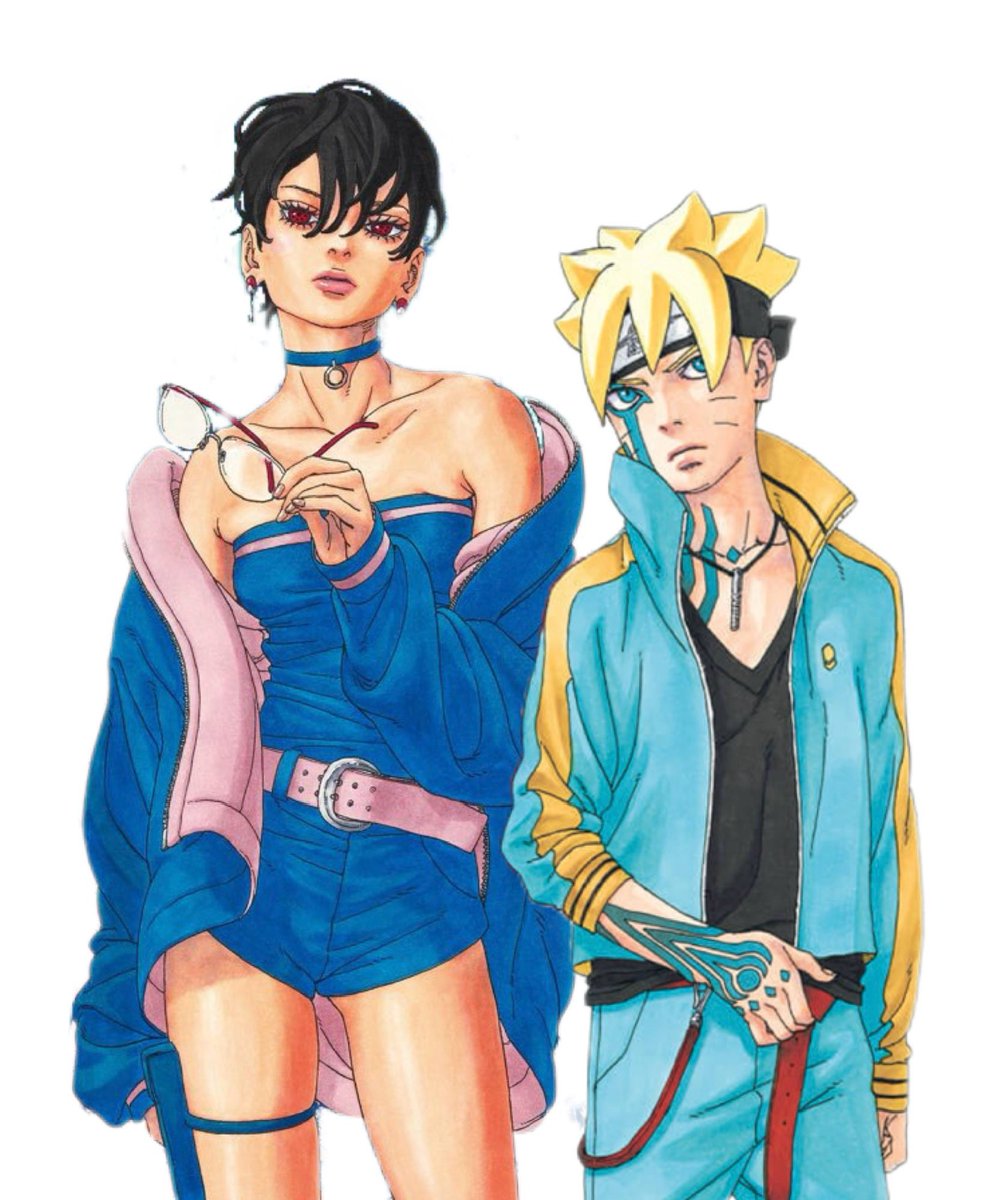





A THREAD🧵 FAN TRANSLATIONS ARE MISCHARACTERIZING BORUTO. First, let’s look at page 7, the first page of the sneak peek. What we know from the context is that Boruto is explaining Daemon to Mamushi. The line used is: 悪魔みてえな野郎さ (akuma mitē na yarō sa), which the official translation renders as: “He’s demon-like, like his name.” So why doesn’t the official translation use “bastard” like some fan translations? The word fans focus on is 野郎 (yarō). Yes, in a dictionary sense, this word can mean “guy,” “dude,” or even “bastard.” But translation is not about picking one meaning at random, it’s about choosing the meaning that fits the context and structure of the sentence. Here, the key element is みてえな, which functions as a descriptive “like” or “similar to.” This frames the phrase as descriptive, not insulting. Boruto isn’t attacking Daemon, he’s characterizing him. The particle な (na) connects the descriptive phrase to the noun, forming “a demon-like guy.” This shows that the line is structured as a description rather than an insult. On top of that, the sentence-ending particle さ (sa) gives the line a casual, laid-back, and confident tone, without any aggressive or hostile nuance. Taken together, the structure and particles frame the line as descriptive rather than insulting. Boruto is acknowledging Daemon’s nature, almost admiring how fitting his name is, not insulting him. That’s why the official translation keeps it as: “He’s demon-like, like his name.” In contrast, translating yarō as “bastard” ignores the structure and shifts the tone into something overly harsh and negative, which doesn’t match the context. This isn’t just a wording issue, it alters Boruto’s characterization. ⬇️ #BORUTO