Chris Y

348 posts

Chris Y banner
Chris Y

Chris Y

@drchrisyu

@PMunkCardiacCtr/@UHN Cardiologist trained in 🇦🇺 (@SydneyLHD) and 🇬🇧 (@imperialcollege). PhD (@Sydney_Uni). Advanced Cardiac Imaging and Cardio-oncology.

Toronto, Ontario Katılım Şubat 2012
711 Takip Edilen309 Takipçiler
Chris Y retweetledi
Berci Meskó, MD, PhD
Berci Meskó, MD, PhD@Berci·
A low-cost and expert-driven medical technology is being used in rural areas in Australia! The machine is operated by a sonographer remotely (using a gaming controller) and helps perform an ultrasound examination. Doctor shortages shouldn't mean that patients have to travel more (sometimes for no medical reason), but to use technologies that can extend the reach of medical care. This is a perfect example of that!
English
41
391
1.3K
274.2K
Chris Y retweetledi
Bo Wang
Bo Wang@BoWang87·
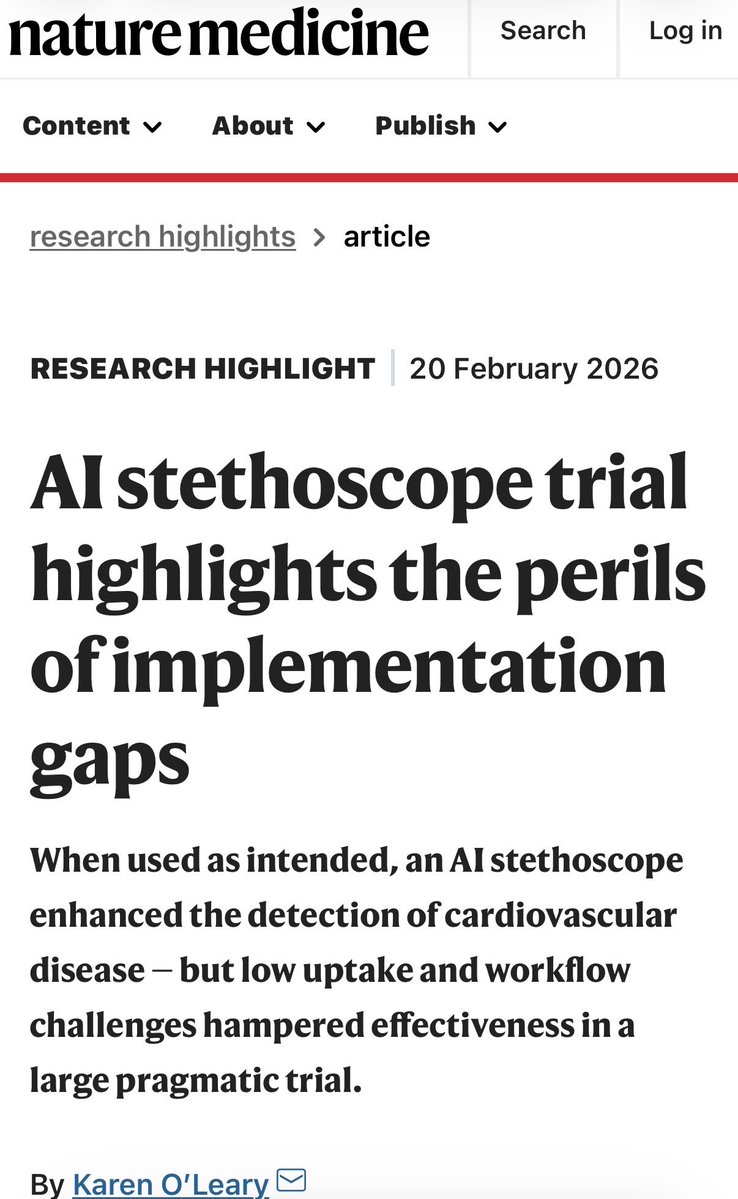
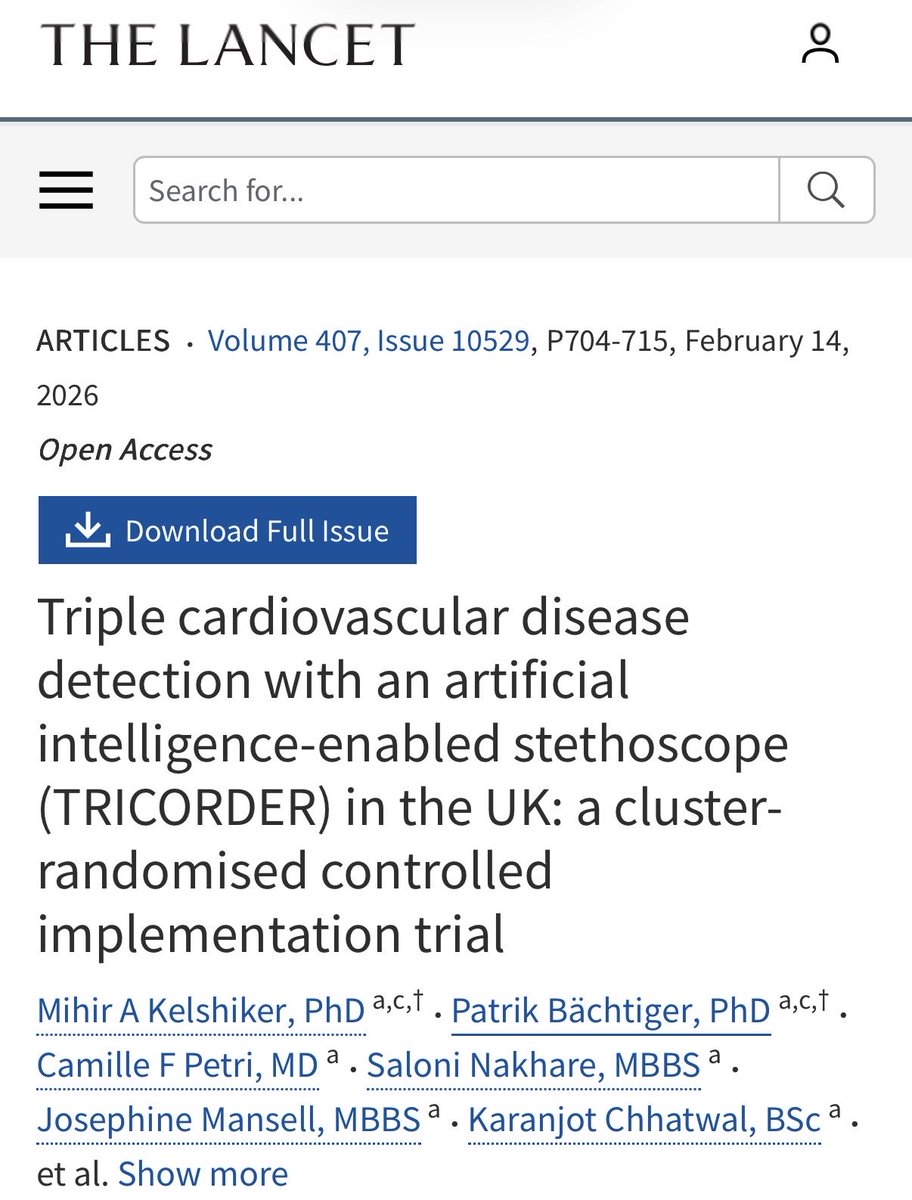
The largest real-world AI medical device trial just published. The results are... complicated. The setup: 205 NHS primary care practices. 1.5 million patients. Eko Health's AI-enabled stethoscope vs. standard care. Published in The Lancet (Feb 14, 2026). Nature Medicine dedicated a commentary. This is how you test AI in healthcare. Not lab benchmarks. Real clinics. Real doctors. Real patients. The headline finding: When clinicians actually used the AI stethoscope, detection rates jumped: • Heart failure: 2.3X • Atrial fibrillation: 3.5X • Valvular heart disease: 1.9X The algorithm works. No question. The problem: The intention-to-treat analysis showed no significant difference between intervention and control groups. Translation: on average, across all practices, patients weren't diagnosed any better. Why? Implementation gaps. The AI stethoscope improved detection dramatically — when used. But adoption was inconsistent. Workflow integration failed. Some clinicians ignored the alerts. Some forgot the device. Some didn't trust it. The algorithm was sound. The humans were the bottleneck. The deeper lesson: This is AI's dirty secret in healthcare. We obsess over model performance — AUC, sensitivity, specificity. But the real challenge isn't building the model. It's getting clinicians to use it. An algorithm with 95% accuracy that sits in a drawer is worse than one with 80% accuracy that's actually deployed. What the commentary said: Nature Medicine called it "the perils of implementation gaps." The gap between "works in theory" and "works in practice" is where most AI healthcare projects die. My take: This study is actually good news for AI in medicine. It proves the technology works. The detection improvements are real and substantial. But it also proves that deployment is harder than development. UX matters. Workflow integration matters. Clinician trust matters. The next generation of AI medical devices needs to be designed with implementation in mind, not just algorithmic performance. We're entering the "implementation era" of AI healthcare. The low-hanging fruit of algorithm development is picked. The hard work now is making these tools actually useful in chaotic clinical environments. TRICORDER is a roadmap for what to fix. Not a reason to stop. Sources: • thelancet.com/journals/lance…nature.com/articles/d4159…ekohealth.com/blogs/newsroom…
Bo Wang tweet mediaBo Wang tweet media
English
17
87
309
29.5K
Chris Y retweetledi
Chris Y retweetledi
Jason Fish
Jason Fish@FishLab_UHN·
Excited to share our paper jacc.org/doi/10.1016/j.…. Together with @dineshpmcc1 and led by Dakota Gustafson and Priya Mistry, we show that elevated levels of inflammatory and endothelial activation biomarkers before treatment can predict cancer therapy-related cardiac dysfunction.
English
0
3
11
2K
Chris Y retweetledi
Canadian Cardiac Oncology Network
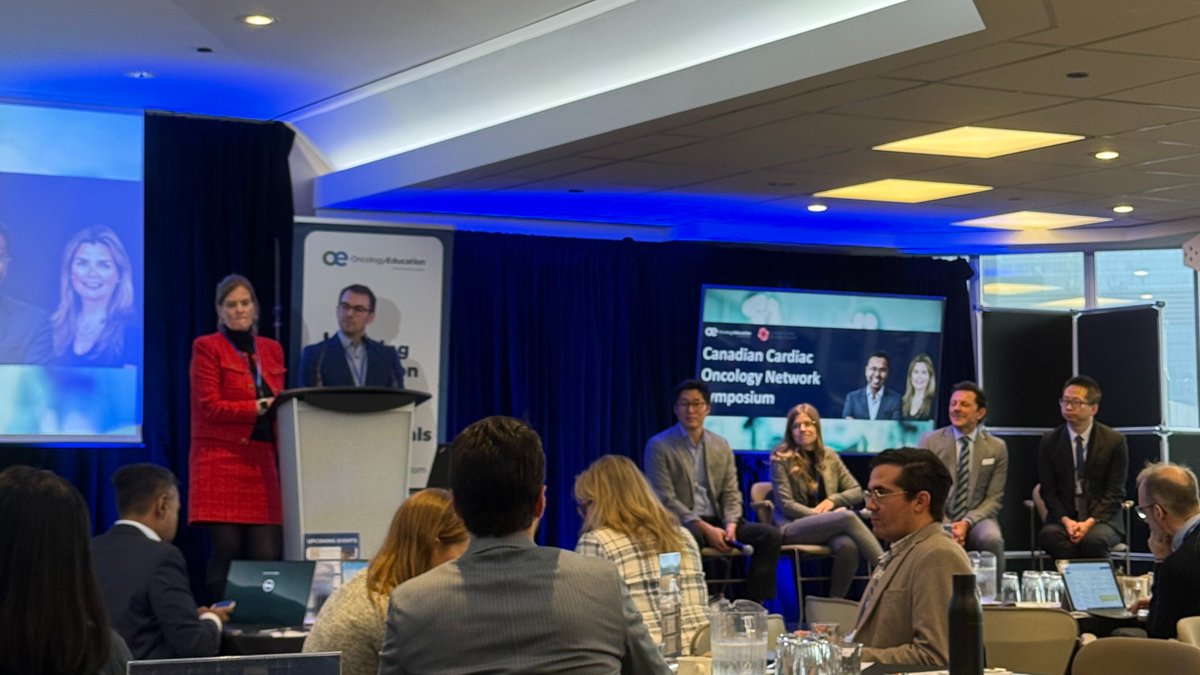
An excellent opening session with Drs. Sénéchal-Dumais, @drchrisyu, Luong, and @KibarYared, taking a deep dive into risk assessment strategies, guideline-driven care, cardiac surveillance, and potential options for primary prevention of CVD in cardio-oncology patients📋❤️
Canadian Cardiac Oncology Network tweet media
English
0
1
5
153
Chris Y
Chris Y@drchrisyu·
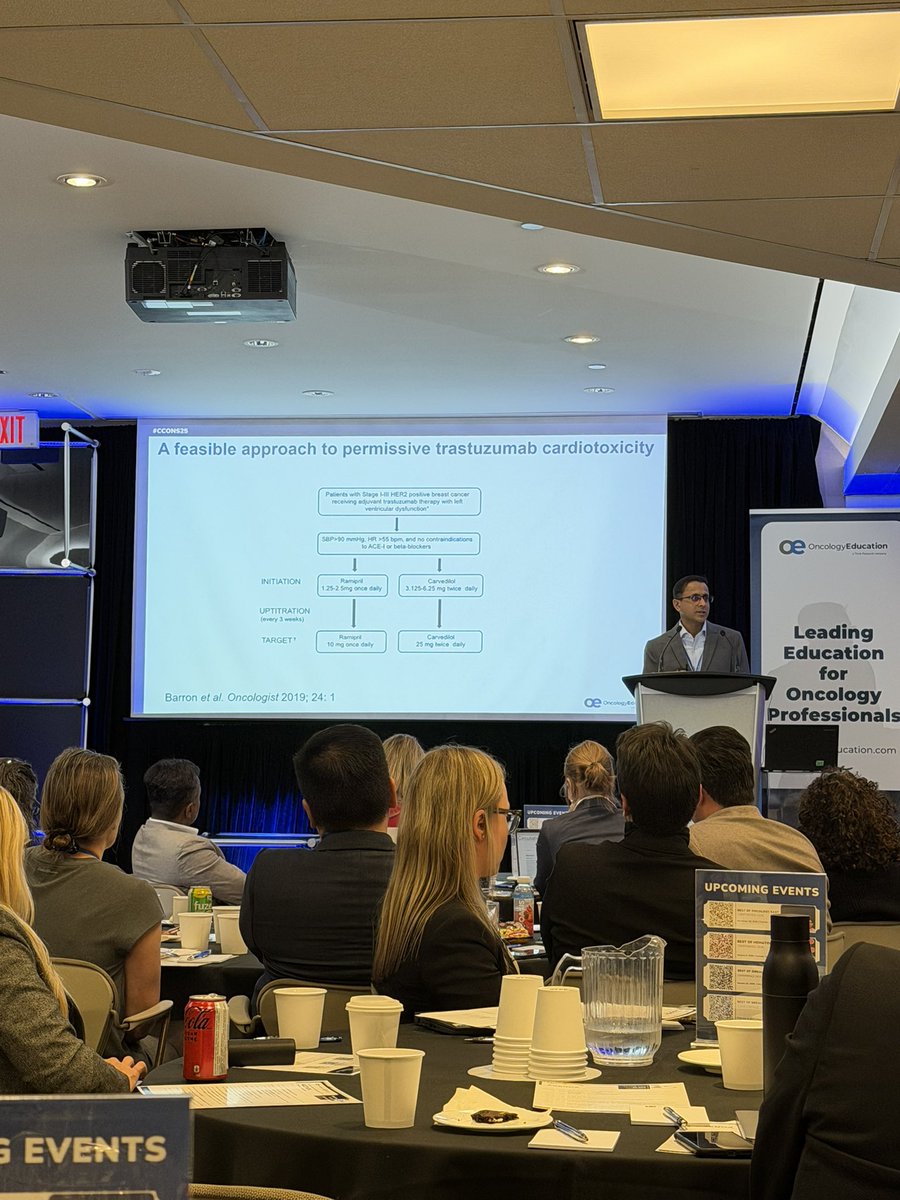
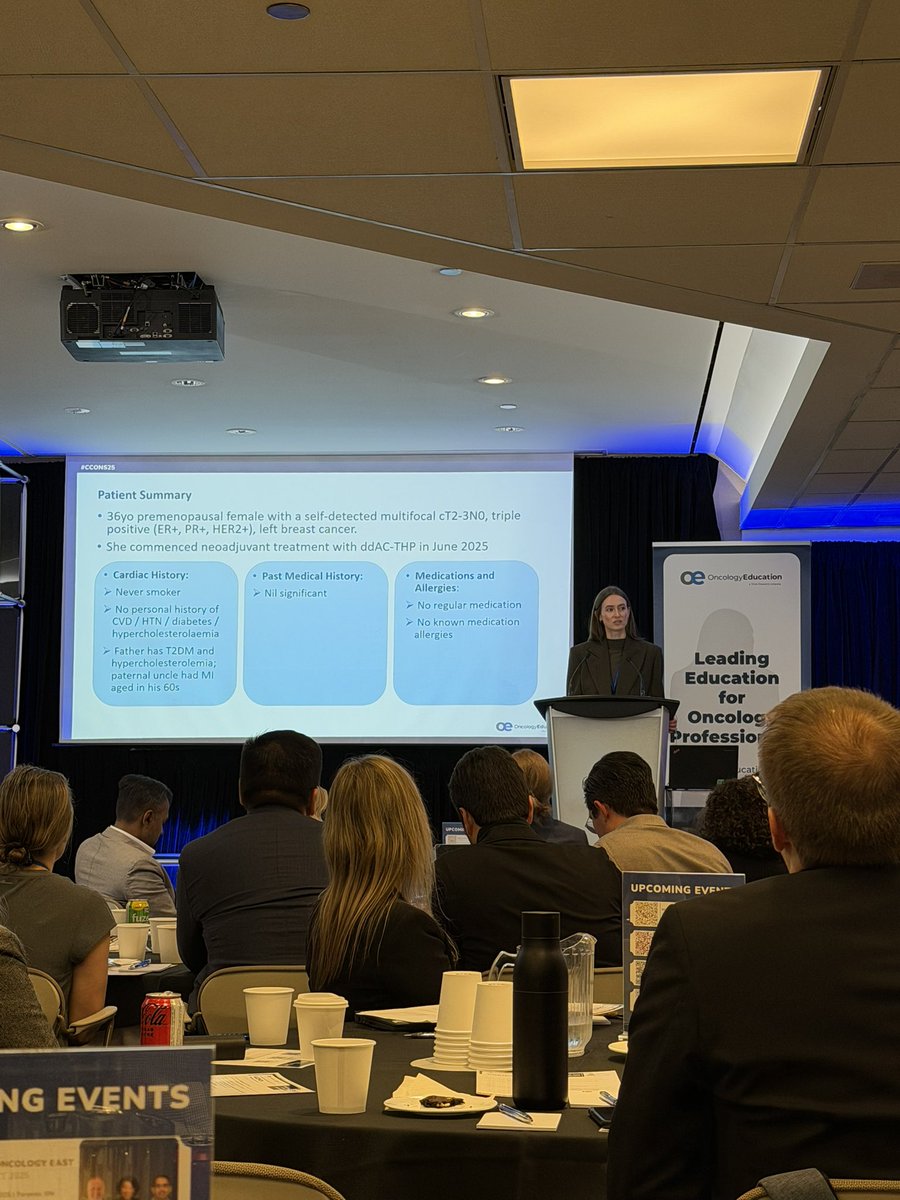
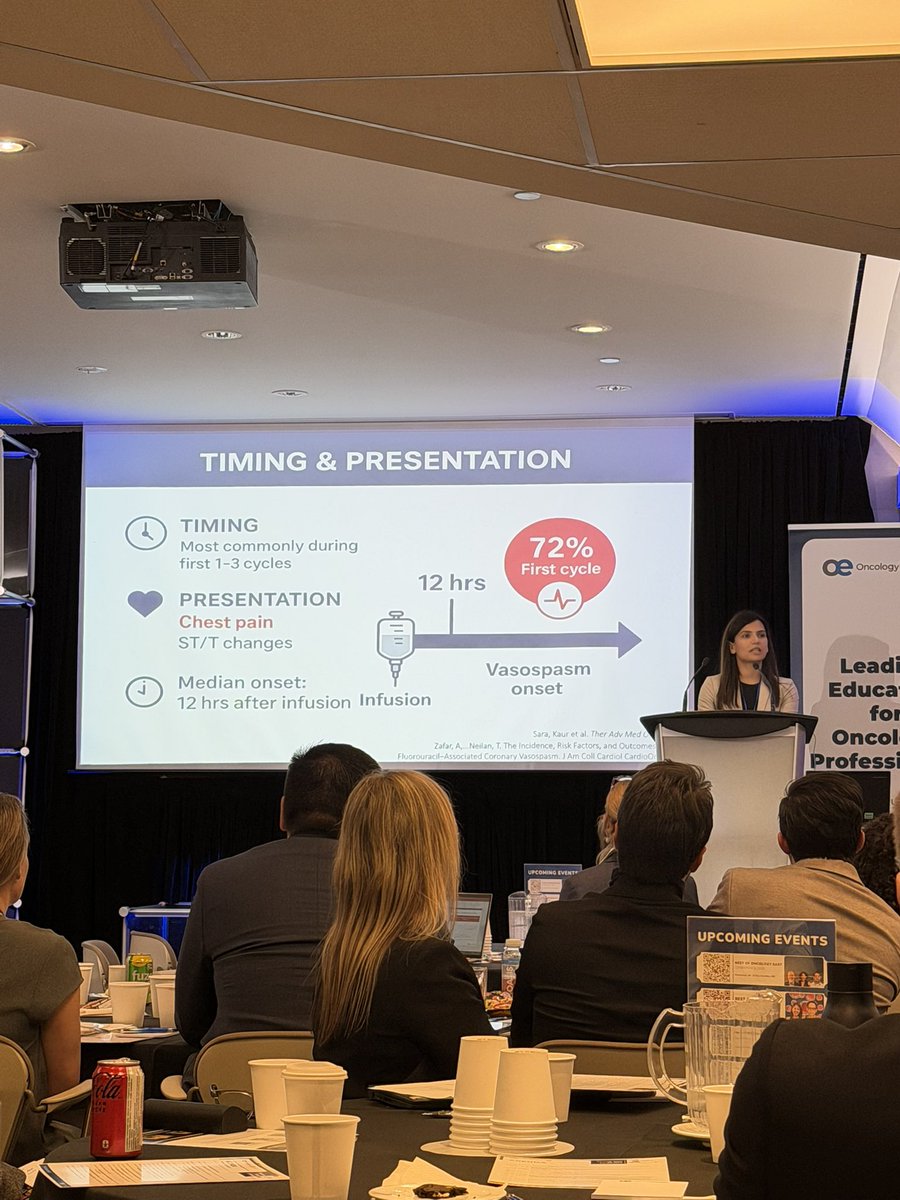
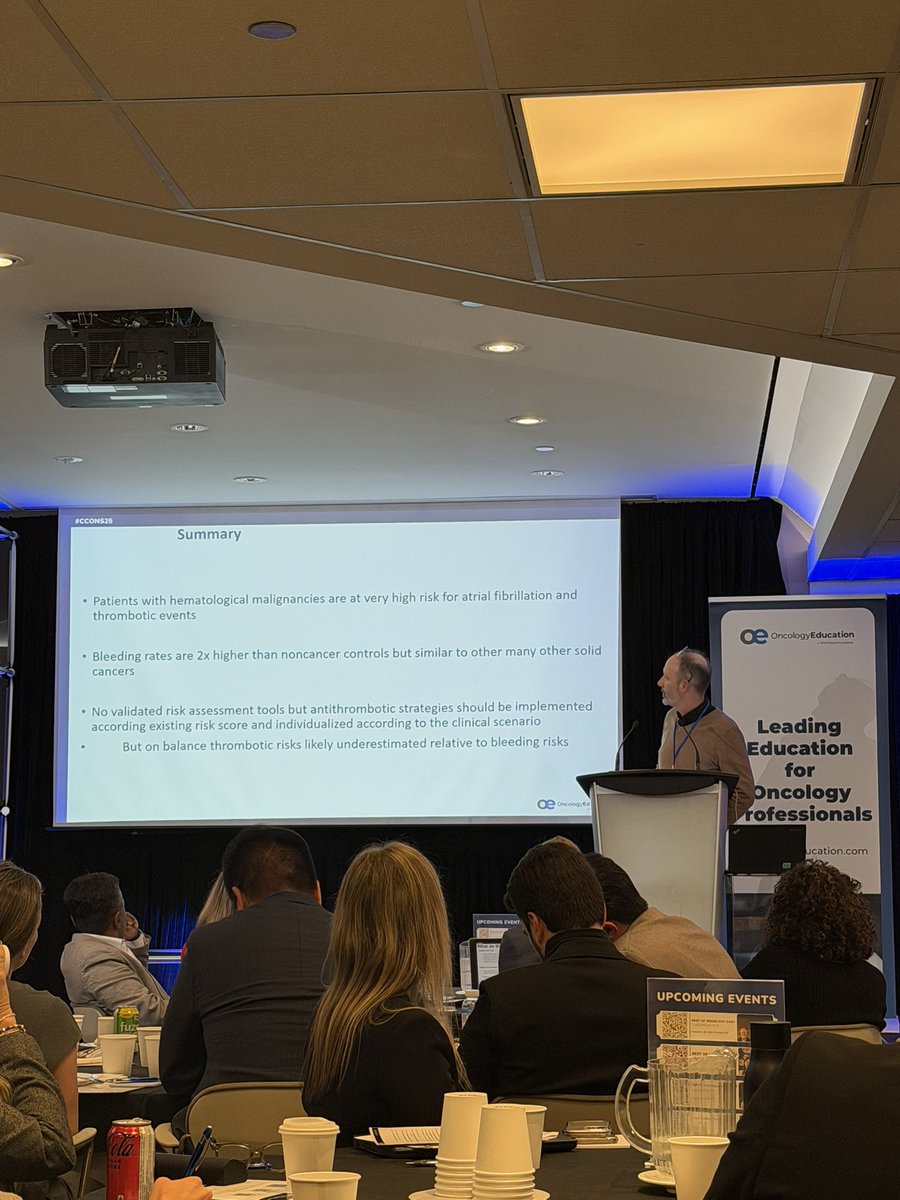
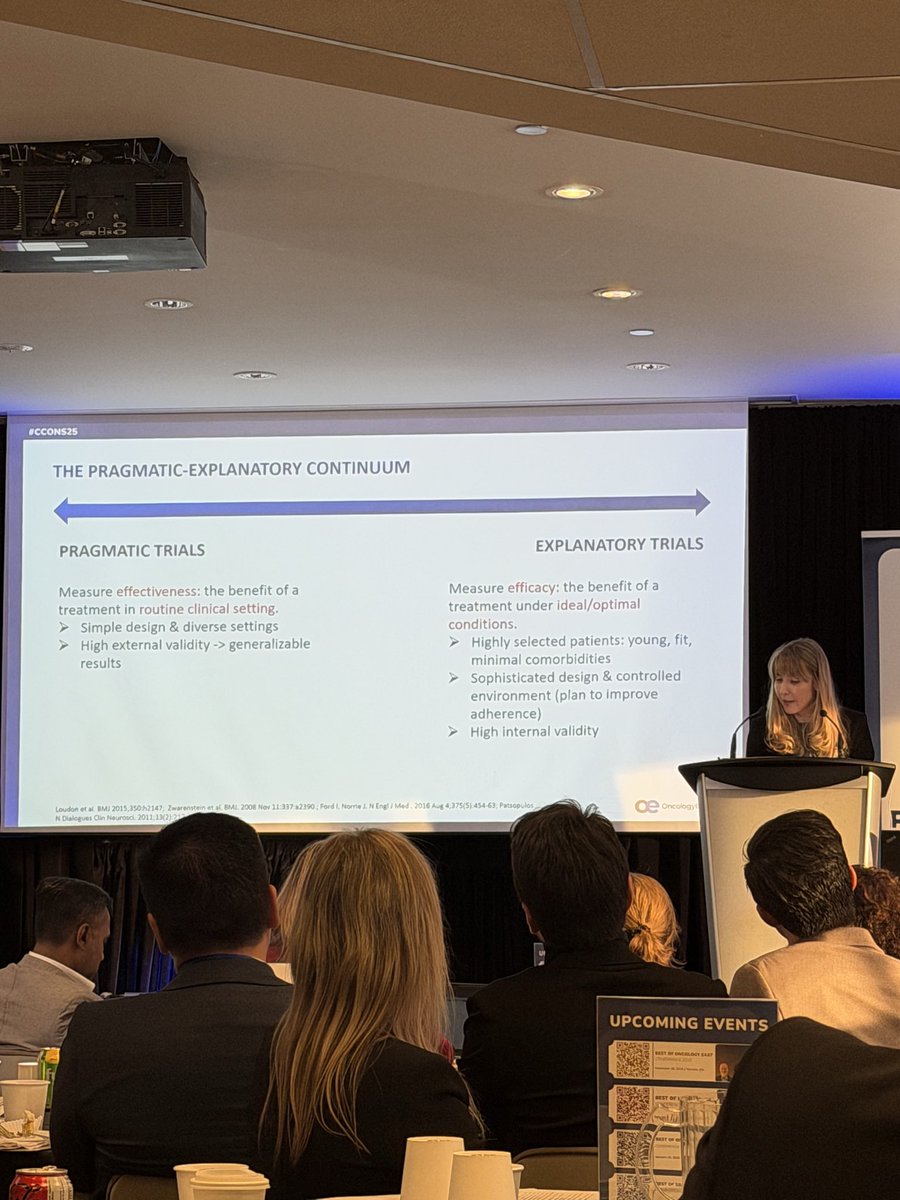
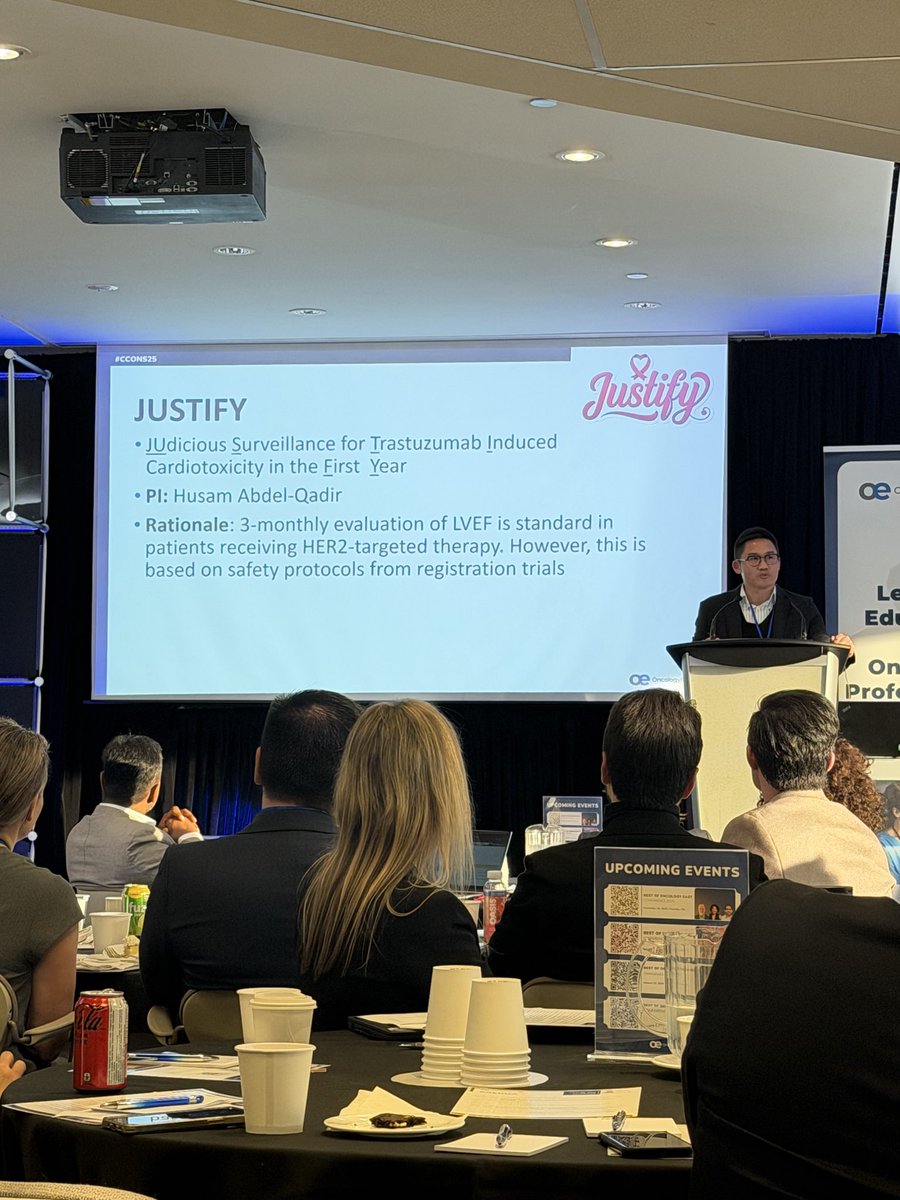
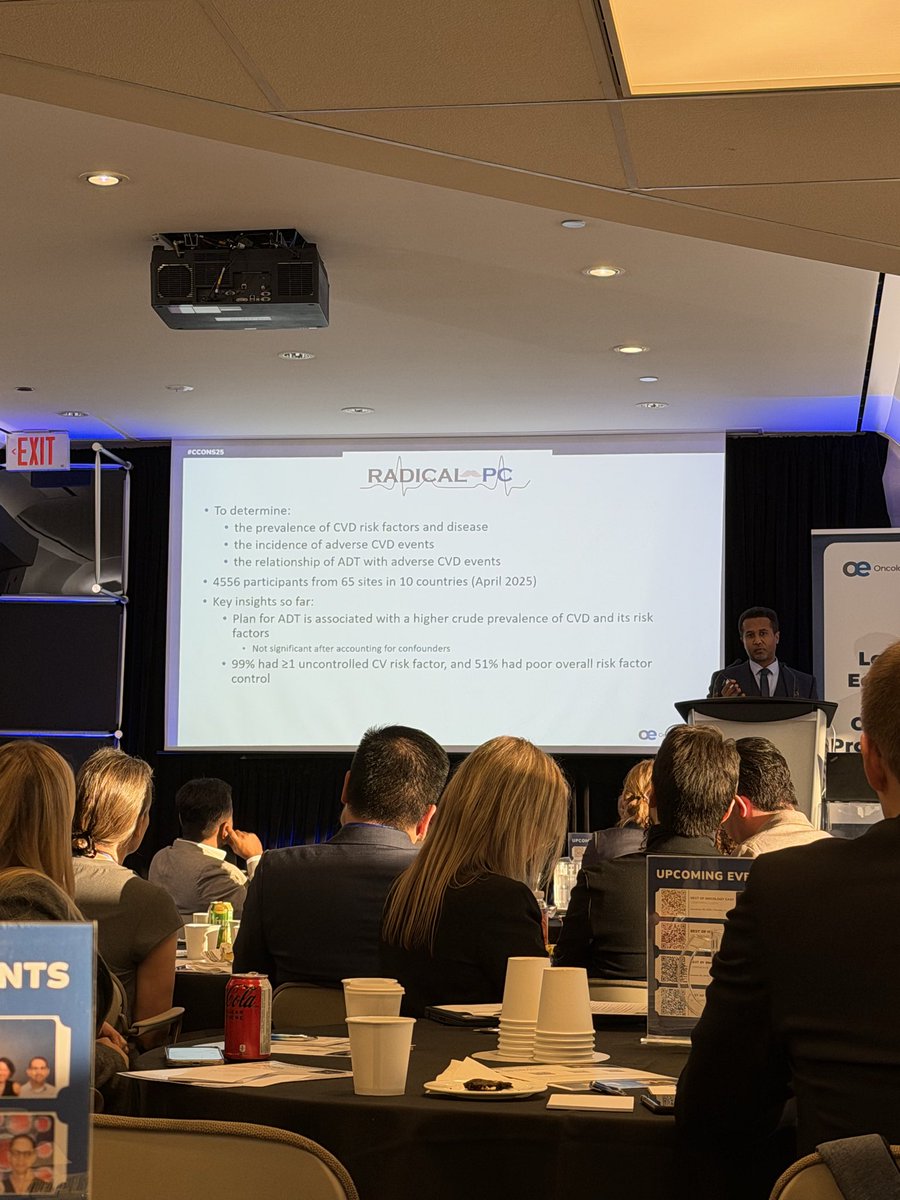
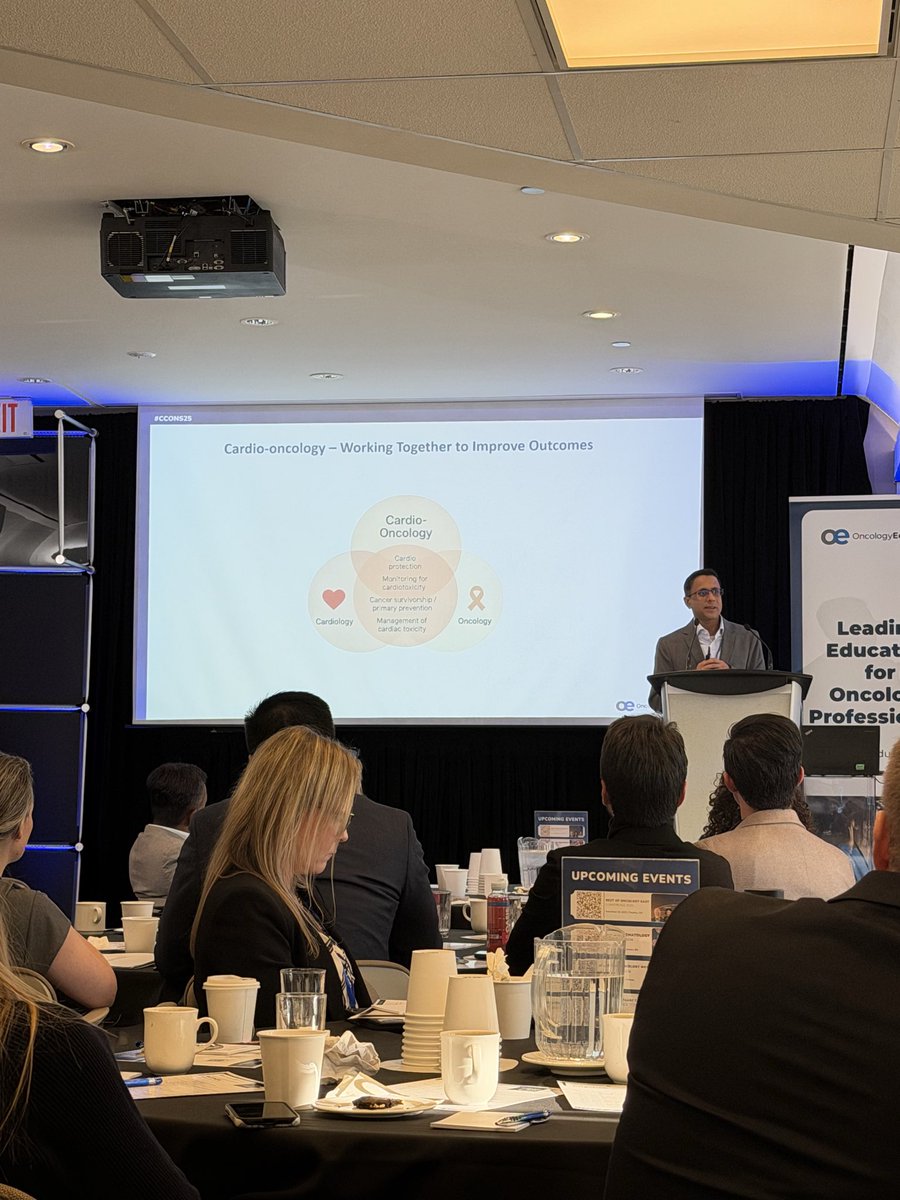
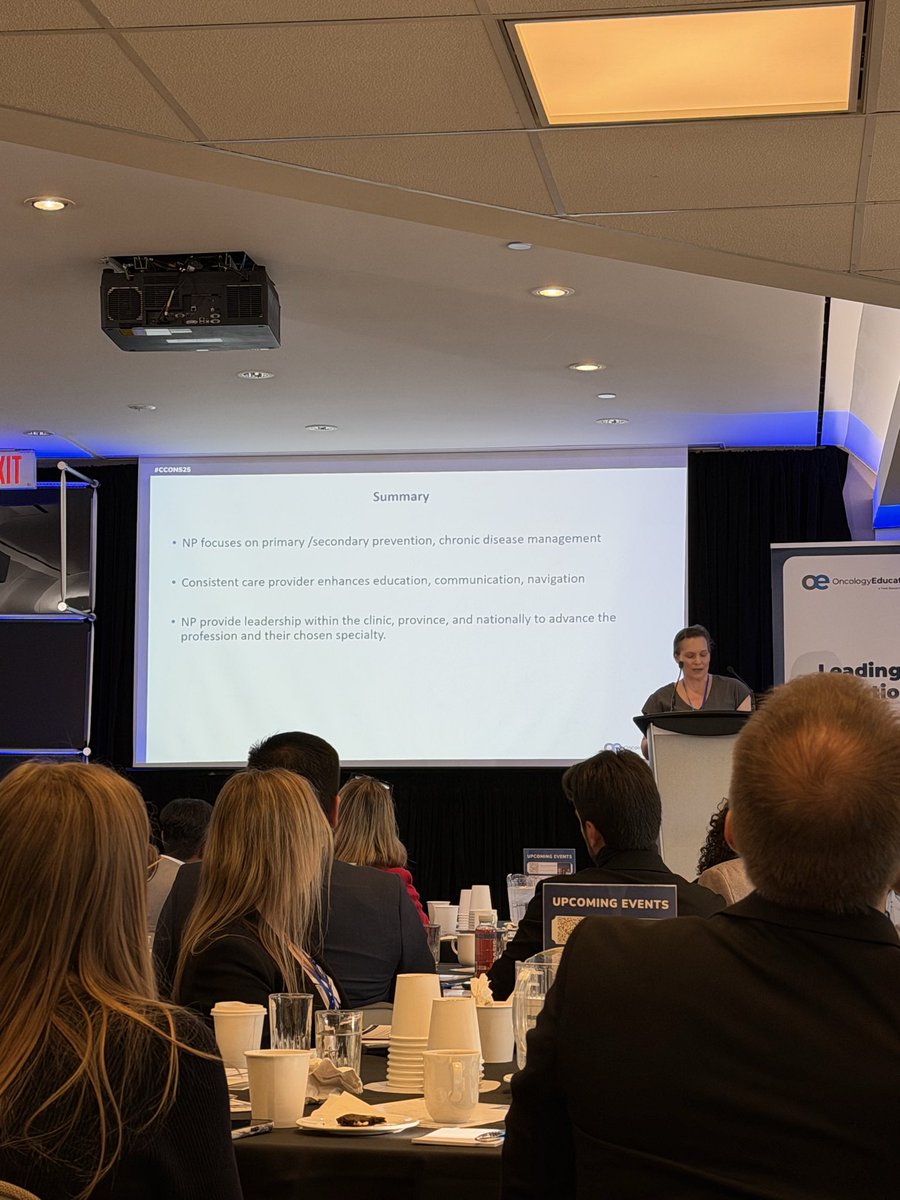
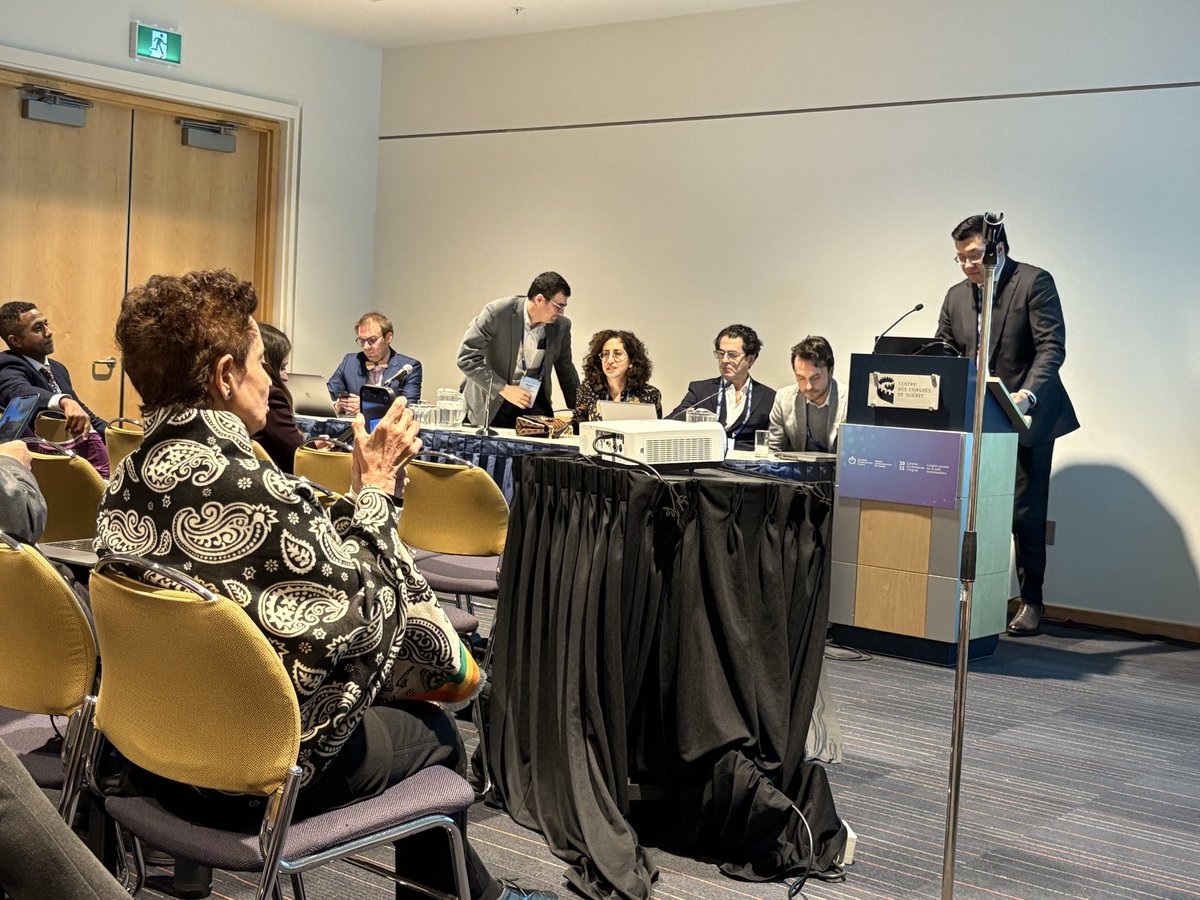
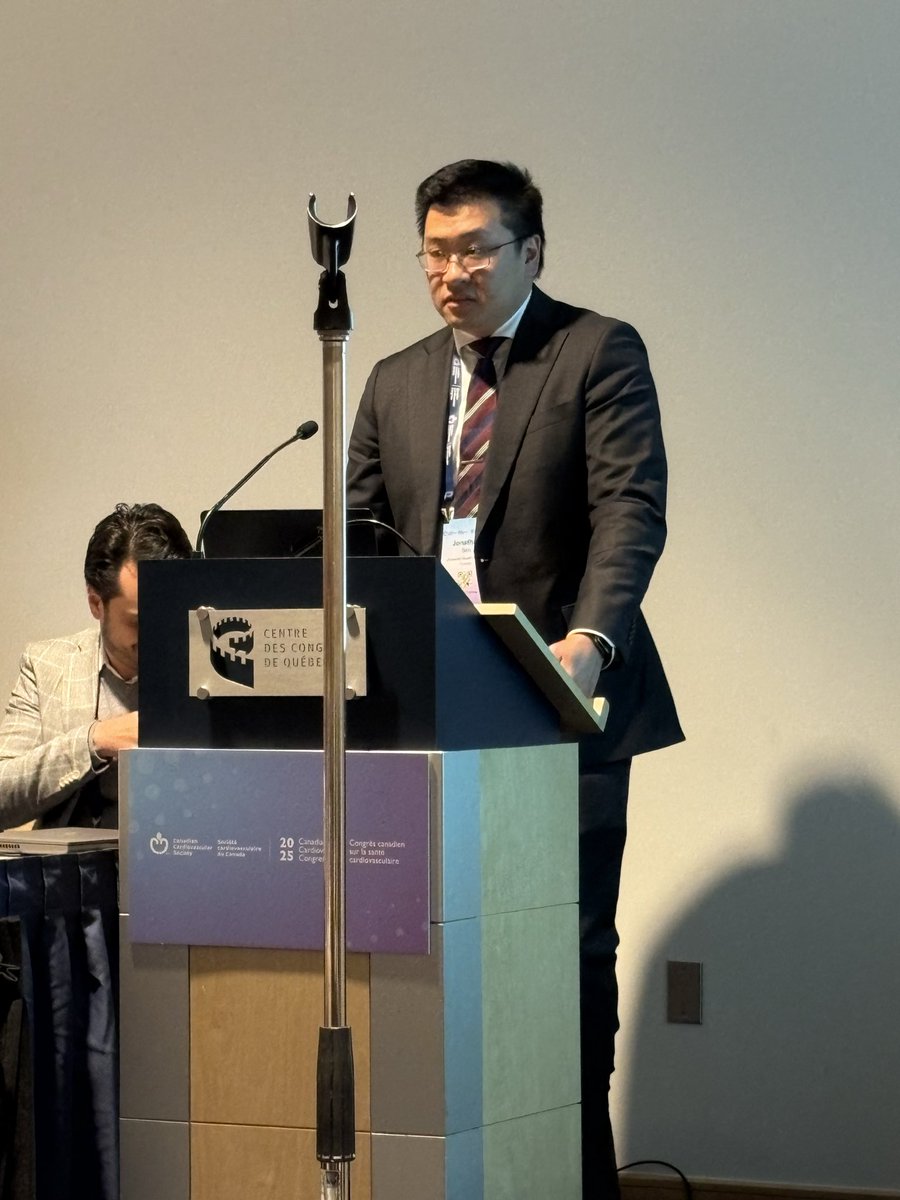
Ending day 1 of @CCardiacON 2025 by discussing everyday clinical #cardioonc challenges. 5-FU vasospasm, anti coagulation management in hematological malignancies & LV Dysfn during cancer therapy @AZafar_MD Dr Karine Ronan, Dr Ian Paterson & Dr Kai Wu
Chris Y tweet mediaChris Y tweet mediaChris Y tweet mediaChris Y tweet media
English
1
5
10
394
Chris Y
Chris Y@drchrisyu·
@CCardiacON Dr Som Mukherjee from @JuravinskiRI talking about the value of a #cardioonc service for #Oncology specialists. With shared risk factors there are so many opportunities for collaboration to improve outcomes for our pts.
Chris Y tweet media
English
0
1
1
43
Chris Y
Chris Y@drchrisyu·
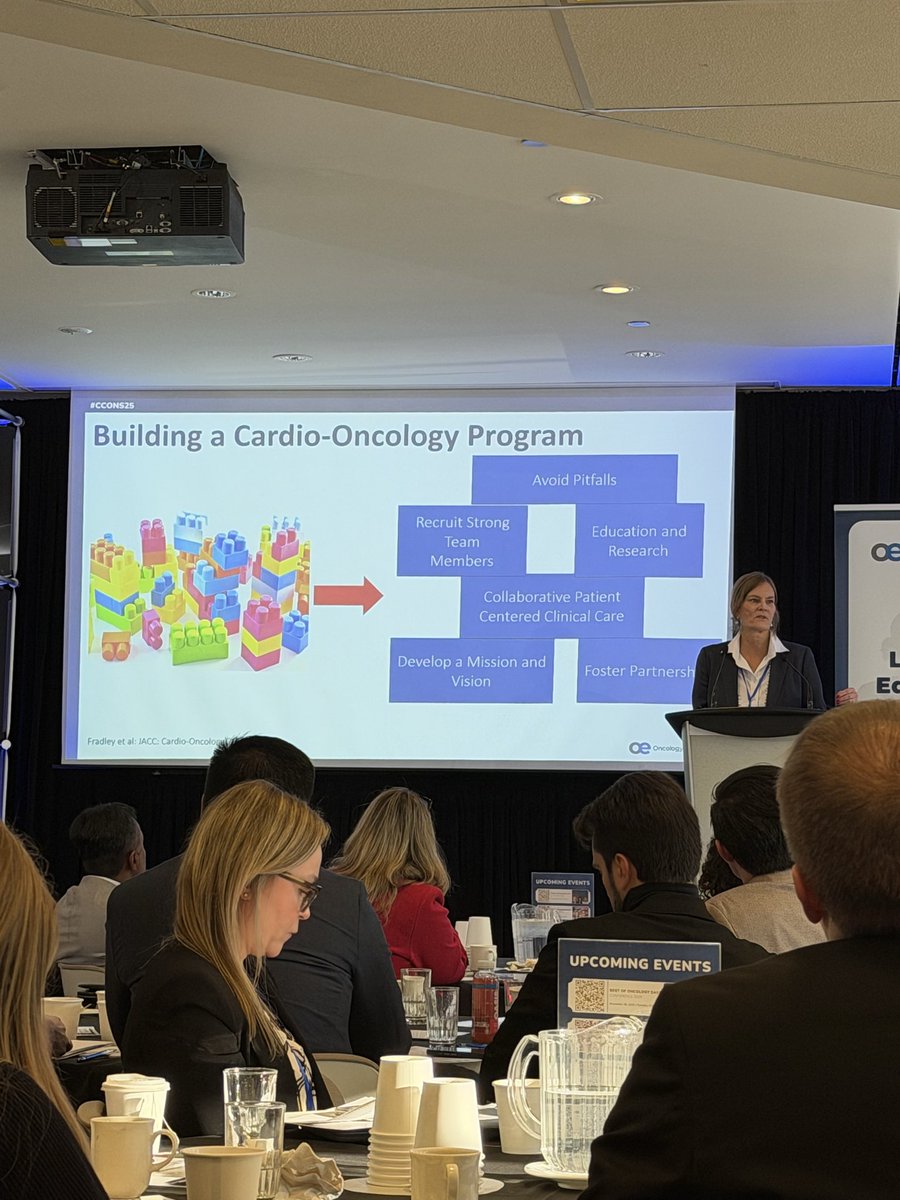
@CCardiacON @sdent_cardioonc talking on building a #cardioonc program. Have a mission statement and good “building blocks” to develop a successful program. The next step is to implement quality metrics for cardio-oncology programs.
Chris Y tweet media
English
0
4
4
327
Chris Y
Chris Y@drchrisyu·
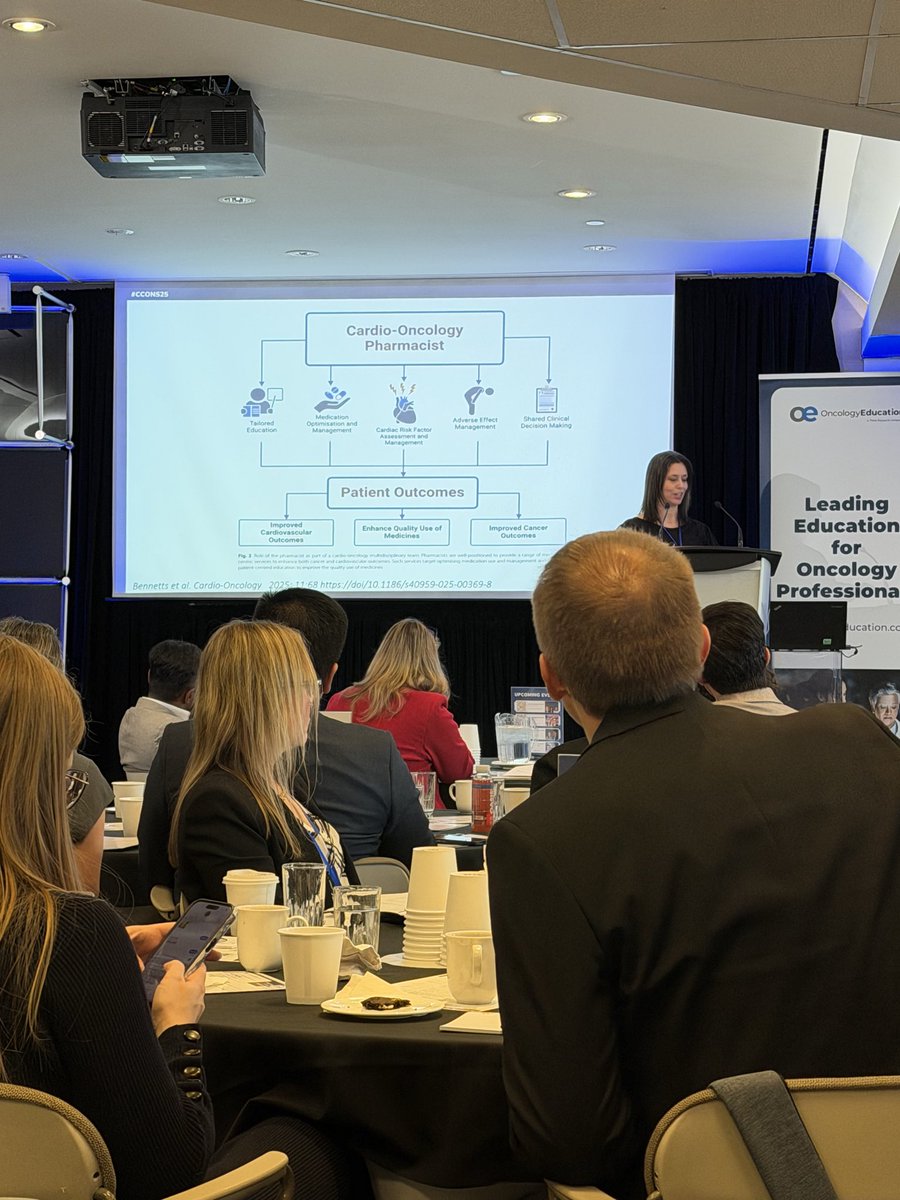
@CCardiacON 2025 @iheart_Rx highlighting the role of a pharmacist in a #cardioonc service. Optimising patient’s medication, ensuring safe drug interactions. This is important as #cancer pts are on numerous drug regimes which may frequently need adjusting in their cancer journey
Chris Y tweet media
English
0
2
0
72
Chris Y retweetledi
dineshpmcc
dineshpmcc@dineshpmcc1·
@CCardiacON Ongoing cardiooncology case based presentation at the Canadian cardiovascular society meeting with a full room! @husam247 @DarrylLeong
dineshpmcc tweet mediadineshpmcc tweet media
English
0
3
11
461
Chris Y retweetledi
Husam Abdel-Qadir
Husam Abdel-Qadir@husam247·
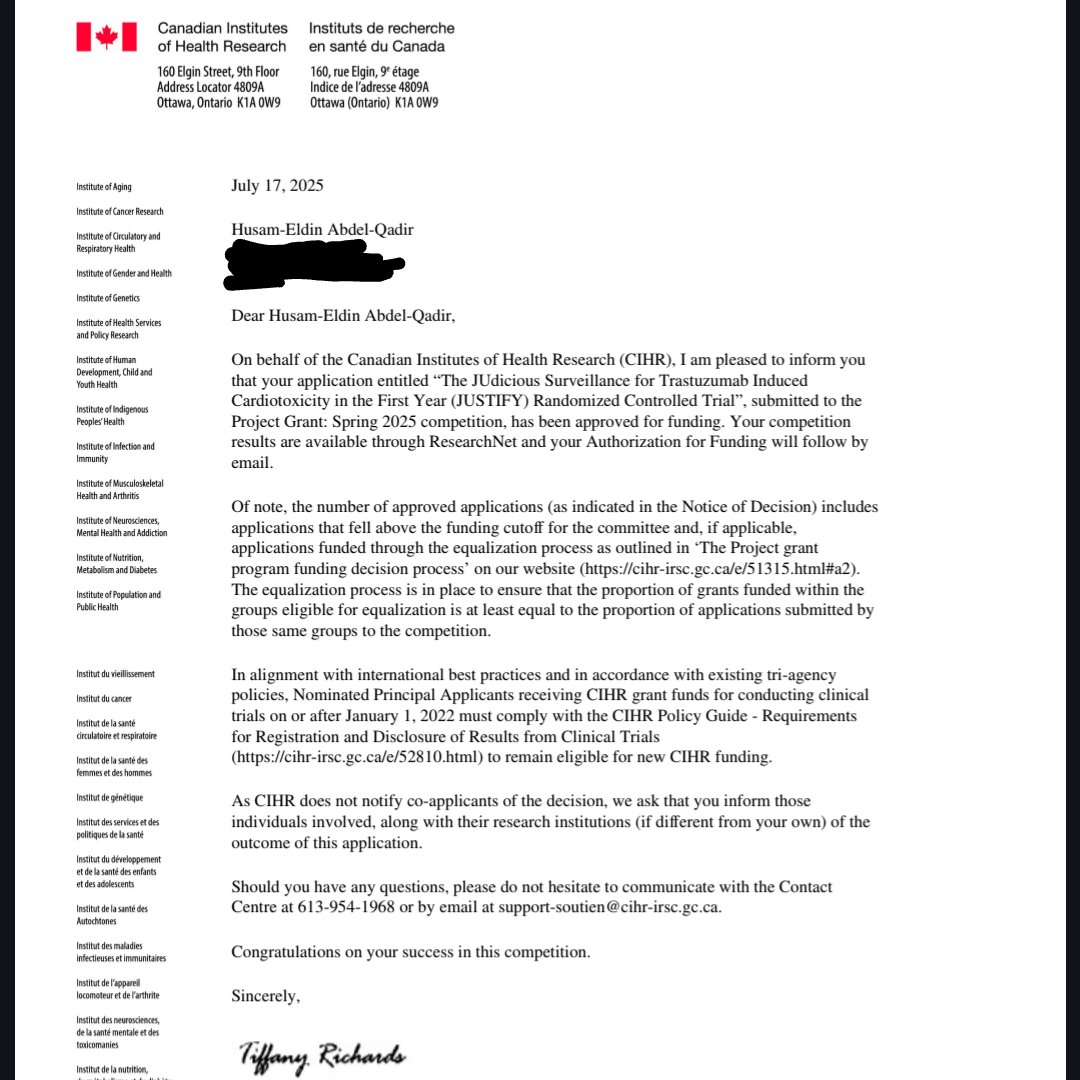
Too much waste. Too much waiting. Too much #scanxiety. Happy to share that we received @CIHR_IRSC funding for the JUSTIFY RCT (NCT06930521), which will test a novel approach to reduce mandatory routine heart imaging during HER2+ #breastcancer treatment. #CardioOncology
Husam Abdel-Qadir tweet mediaHusam Abdel-Qadir tweet media
Toronto, Ontario 🇨🇦 English
3
9
41
2K