Dreamstar Lines retweetledi
Dreamstar Lines
5 posts

Dreamstar Lines
@DreamstarLines
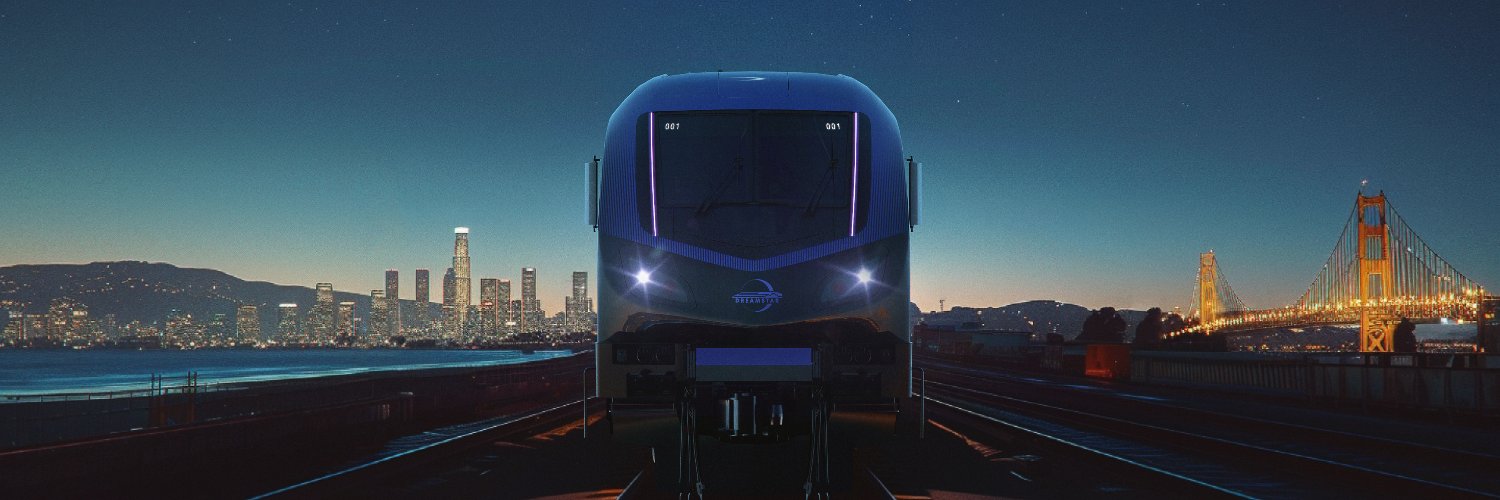
Dreamstar is taking American rail from afterthought to world leader. Starting with a premier overnight sleeper train between LA and SF.
USA Katılım Eylül 2017
47 Takip Edilen686 Takipçiler
Dreamstar Lines retweetledi

We found a way to expand passenger rail across America without laying a single track.
Dreamstar Lines uses underutilized freight capacity to run passenger trains across thousands of miles of existing rail infrastructure
We’ve secured a memorandum of understanding with Union Pacific to operate on the LA -> SF corridor one of the highest-demand rail routes in the country, with plans for this route to launch service on the eve of the 2028 Olympics.
This is just the beginning. We plan to expand these partnerships across the most important corridors in America. In just a decade, Americans will have a well deserved alternative to flying or driving in the medium distance. Once and for all we will Make Trains Great Again.
English
Dreamstar Lines retweetledi

@DreamstarLines is a top 10 tech products to watch for me. Tuesday Sleeper Trip > Wednesday 15 hours of meetings + Sleeper Trip = 24 hour victory, minimal waking hours away from family.
The key, like a good space movie, is turning sleep time into travel time.
English
Dreamstar Lines retweetledi

Would you take a train over night from LA to SF? What if it was a really nice train?
Caught up with @DreamstarLines CEO to talk about the train route they hope to open before the 2028 Olympics
English
Dreamstar Lines retweetledi

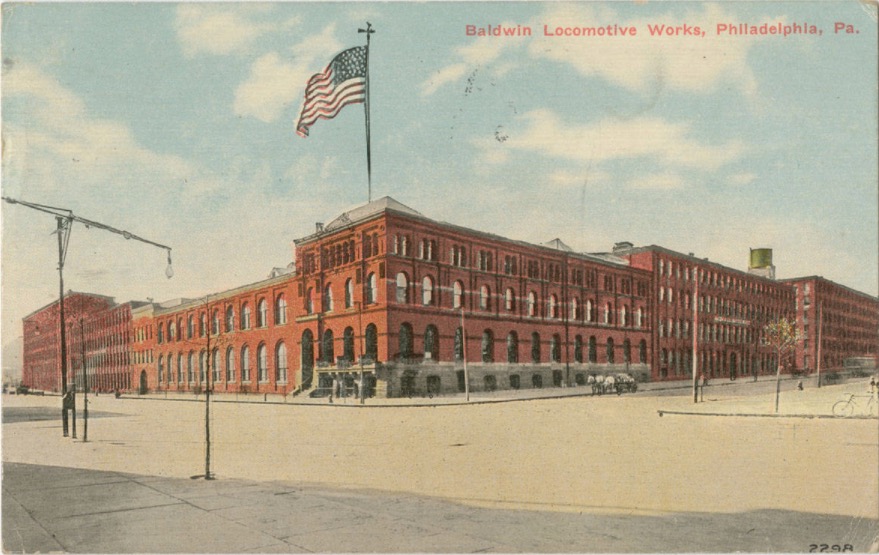
This hard tech startup operated a factory so massive it stretched across 18 city blocks.
Before @DreamstarLines committed to building trains in the United States, this startup had to create the market.
With 22 days left until @reindsummit, we are continuing our countdown of 25 manufacturers that shaped America.
Founded in 1831 in Philadelphia, Pennsylvania, Baldwin Locomotive Works emerged just as the steam engine market began to grow. In 1825, steam engines were mainly used in textile mills, coal mines, metal foundries, and early steamships.
Matthias W. Baldwin started out as a jeweler and engraver. His trade required skills that overlapped with precision machining. He eventually moved into building steam engines for industrial clients and gained traction across the country. In 1831, the Philadelphia Museum asked Baldwin to build a working model of a British steam locomotive. The goal was to teach the public about steam transportation, but the project gave Baldwin the knowledge to build full-sized locomotives. A year later, he delivered the first American built steam locomotive to Philadelphia, Germantown and Norristown Railroad.
Between the early 1840s and 1850s, American rail mileage jumped from 2,800 miles to over 9,000. Every mile of track used steam-powered locomotives. This was not just an American story. The United Kingdom was already building a national network by 1870. France launched state-backed rail projects in 1842. India ran its first passenger train between Bombay and Thane in 1853.
Baldwin Locomotive scaled with perfect timing. It began producing steam locomotives in large numbers during the 1840s and soon became the largest manufacturer in the United States. Its plant expanded to cover 190+ acres and employed hundreds of workers. While each locomotive was technically custom, Baldwin standardized core components like boilers, wheelsets, valves, and gears. The company vertically integrated its supply chain, used batch production, and split the facility into focused areas. The boiler shop, wheel shop, and erecting shop worked in parallel to assemble different sections of the train at the same time. This created an early version of what we now call assembly line manufacturing.
Baldwin Locomotive Works did not just serve commercial markets. It played a critical role in multiple major American conflicts. The Union Army was heavily supported by Baldwin, which delivered hundreds of steam locomotives and freight cars to move troops, artillery, and supplies. Rail was a key edge for the Union, and Baldwin built locomotives capable of operating on recently repaired or rapidly constructed tracks.
In World War I, Baldwin produced more than 5,500 locomotives for the United States and Allied forces and contributed to post-war reconstruction. In World War II, Baldwin expanded beyond rail, producing M3 and M4 Sherman tanks, armored vehicles, and naval gun components.
As the steam era came to an end, Baldwin Locomotive attempted to pivot into the diesel market. The company struggled to compete and produced its last locomotive in 1956.
But Baldwin Locomotive Works had already made its mark. Over its history, it manufactured more than 75,000 locomotives and helped lay the foundation for the American rail.


English