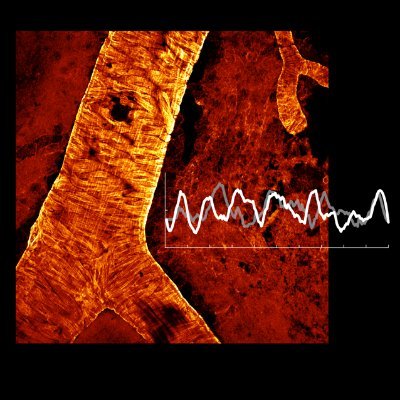
Aging vessel mapping paper is officially out. nature.com/articles/s4146…
We examined structural and functional changes of cerebrovasculature and found brain region specific changes in normally aging C57 mice compared to young mice.
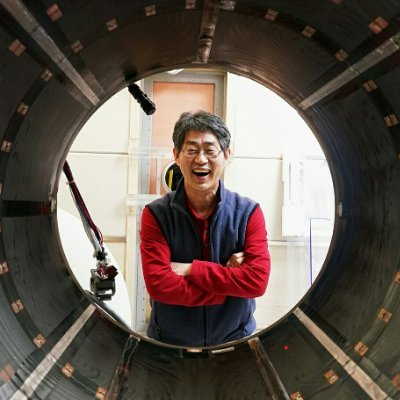
Patrick Drew (@drew_lab_nvc), professor of engineering sciences and mechanics, of neurosurgery, of biology and of biomedical engineering and associate director of the Huck Institutes of the Life Sciences, has been selected to serve as interim director.
psu.edu/news/huck-inst…
We team up with @drew_lab_nvc to examine anatomical and functional changes in aged mouse brain. We found that aging induces selective regional vascular and pericyte degeneration, slowed NVC response, and lower oxygen carrying capacity.
biorxiv.org/content/10.110…
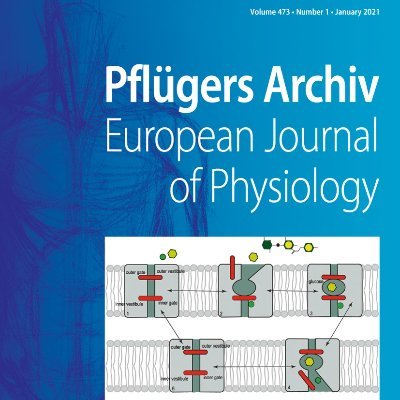
Parvalbumin (PV) interneuron activity induces hemodynamic responses differentially under anesthesia and wakefulness. Check out the source of biphasic #fMRI responses (pnas.org/doi/10.1073/pn…). Great collaboration with @drew_lab_nvc@CNIR_IBS.
Parvalbumin interneuron activity drives fast inhibition-induced vasoconstriction followed by slow substance P-mediated vasodilation | Proceedings of the National Academy of Sciences pnas.org/doi/10.1073/pn…
Happy to share my paper diving into rodent pupil dynamics is now out. Being able to accurately and non-invasively sleep score with a single camera was fun.
Relating Pupil Diameter and Blinking to Cortical Activity and Hemodynamics across Arousal States jneurosci.org/content/43/6/9…
Ready to meditate by controlling your breathing? By simultaneously recording rsMRI, electrophysiology and respirational signals, we discovered a respiration-associated brain network mediated by neural activity. The paper just came out in eLife.
doi.org/10.7554/eLife.…@eLife
Neural activity can drive changes in local blood flow. This link is often described as being required to supply the metabolic needs of neurons. Patrick Drew @drew_lab_nvc outlines evidence questioning this view, and discusses alternative explanations: cell.com/trends/neurosc…
very interesting perspective by Patrick Drew - why does neurovascular coupling exist? It argues against the idea that it serves neuronal metabolic needs, and instead for alternative functions: sciencedirect.com/science/articl…