Dr lalith

1.4K posts

Dr lalith banner
Dr lalith

Dr lalith

@drlkl009

Coimbatore Katılım Şubat 2016
1.3K Takip Edilen146 Takipçiler
Dr lalith retweetledi
Upamanyu Acharya
Upamanyu Acharya@upamanyuacharya·
"India is overcrowded" is the most successful gaslighting campaign Indian babus ever ran on their own citizens. They underbuilt the country for forty years and convinced 1.4B Indians to blame themselves for it. Every overcrowded space you've ever queued in is a supply failure the state engineered, not a demographic accident. Five lifts in a hospital, one working. Seven railway counters, one ticketer. Toll plazas, water boards, municipal offices: built once in 1972, patched once in 1996, abandoned ever since. The only exception is airports, and even those lounges are gigafried at peak. Why did this happen? 4 reasons, none of them are "too many people." 1. Cost of capital. Rupee down 60% against the dollar in two decades. Inflation 5-7% on paper, 8-10% in reality. Risk-free rates above 7%. No rational allocator underwrites a hospital with a 30-year payback under those conditions. Capital flows into software and consumer brands; anything with a 3-5 year ROI window. Parks, ports, metros, dams, schools need multi-decade underwriting that India's macro structurally cannot support. 2. The regulatory stack is engineered to prevent construction. 50+ clearances across municipal, state, and central bodies for any large project, each with its IAS gatekeeper extracting rent. Real builders give up. The only construction happening at scale is therefore illegal, which is exactly why slums mushroom while sanctioned housing projects sit at 15% completion for a decade. 3. The corruption tax. Budget 15-20% of project cost in bakshish before pouring a single slab. Stacked on top of GST, stamp duty, capital gains, property tax, labour cess. Software shops escape it; they ship from a laptop. Anyone touching cement, steel, or land pays the surcharge in cash, off the books, with zero recourse and zero deductibility. 4. State capacity has collapsed into pure friction. GST portal crashes on filing deadlines. MCA21 is a relic. Every regulator (SEBI, RBI, IRDAI, FSSAI, BIS) optimises for CYA, never throughput. Babus paid 1990s salaries to administer 2026 complexity respond rationally by doing nothing. India's perpetual undercapacity is a capital allocation story the political class would rather you never learn. The 1.4B is a feature. The people running the country are the bug. Until cost of capital drops, the regulatory fat gets gutted, and the corruption surcharge gets squeezed out, the lifts and the counters and the hospitals will stay exactly as broken as they were when your grandfather first complained about them in 1987.
Pankaj Arora 🇮🇳@Panks_Arora

Every single place in India is just so overcrowded. - Want to go to a park? Hundreds are already there, not enough space. - Want to go to a temple? You won’t even get five minutes of peace. - Want to visit a hill station? Not a single hotel is available. - Same with Ladakh, Uttarakhand, and everywhere else. It feels like the calmest place is your own house.

English
107
1.4K
5.8K
307.3K
JayPrashanth
JayPrashanth@JayPrashanth·
Battery swapping has started but as of now, it's not yet deployed on large scale. A massive industrial group - Murugappas (Montra Electric) - has even put out a roadmap for this. On the other hand, green hydrogen is also being pushed with trials happening on that end as well. GST on green hydrogen has been slashed from 18 % to 5 %. Adani wants to become the world's largest green hydrogen maker. So, it's easy to see which way Govt is leaning. 1. cartoq.com/car-news/montr… 2. cartoq.com/car-news/adani… 3. cartoq.com/car-news/gst-c…
English
1
0
0
27
Dr lalith
Dr lalith@drlkl009·
@evelectree @ferrarirules86 @Xroaders_001 @volklub @JayPrashanth They don't care about customers tbh , if and when e25 kicks what will happen to the existing e20 complaint ones ? Maruti has only petrol cars , cng prices have increased now , diesel is the best fuel option for those who live in south India or ev' s if city usage is higher
English
0
0
3
84
Dr lalith
Dr lalith@drlkl009·
@evelectree @ferrarirules86 @volklub @Xroaders_001 @JayPrashanth Sir we own trucks , if at all there is a viable long haul electric option we'll happily move on ( faster charging. Battery replacement, turn over times matter ) that is why diesel is irreplaceable as of now sadly as now it seems impossible for this decade
English
1
0
1
38
Dr lalith
Dr lalith@drlkl009·
@evelectree @Xroaders_001 @volklub @ferrarirules86 @JayPrashanth Yes Maruti has lost market share bcz of it people who owned swift diesel and ciaz have moved onto 3x0 x sonet, altroz,seltos , 7xo , crysta etc . I'm taking about live examples among my circle who live here , only people who have most of city driving choose ev's and hybrid
English
1
0
1
89
Dr lalith
Dr lalith@drlkl009·
@evelectree @volklub @ferrarirules86 @Xroaders_001 @JayPrashanth I'm from a town in tn that owns majority of the trucking business in India it is impossible to replace diesel as a fuel in tier 2 and 3 towns , people here easily clock 2l kms on their vehicles and will stick to diesel engines,Maruti before to kia , hyundai, Mahindra and tata now
English
2
0
1
128
Dr lalith retweetledi
Akshat
Akshat@lilxkshat·
Until the poets run out of rhyme In other words, until the end of time
Akshat tweet mediaAkshat tweet mediaAkshat tweet media
English
746
7.4K
67.6K
15.9M
Dr lalith
Dr lalith@drlkl009·
@volklub Absolutely, when u feel the turbo kick and the surge in rpm it's such a joyful experience ( better without music ) . If u have friends close by then it's an even better experience tbh blessed are those people in life
English
0
0
1
325
Sunderdeep - Volklub
Sunderdeep - Volklub@volklub·
Evening drives of 20–30 km to the outskirts in a car are a must after a long day. They keep you going. And if it’s a petrol/diesel car where you can stretch the RPMs for that exhaust melody, that’s even better. Don’t compromise on such luxuries. You are too insignificant.
Sunderdeep - Volklub tweet media
English
26
11
294
14.9K
Dr lalith
Dr lalith@drlkl009·
@volklub Why not seltos htk o diesel automatic, with 80 percent highway usage ?
English
1
0
0
3.7K
Sunderdeep - Volklub
Sunderdeep - Volklub@volklub·
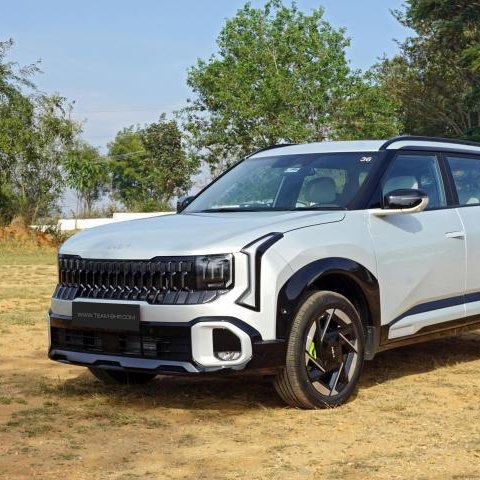
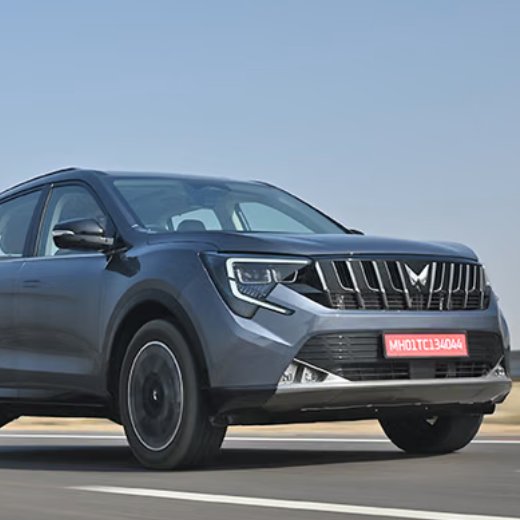
4 cars for Hyderabad under 23L 37 year-old Surya (name changed) wanted a car with a ₹23 lakh on-road budget (flexible) and came for a voice note consultation. ✅ Second time buyer ✅ 20:80 use with 1600 km monthly running ✅ 4 family members, likes performance and stability on highways is a must ✅ Know about tech and cars Cars suggested: - KIA Seltos HTX Turbo Petrol 1.5 DCT - Skoda Kushaq Prestige 1.5 DSG - XUV 7XO AT 5 Petrol AT TC - Virtus 1.5 TSI DSG GT Plus (with discounts) by explaining all + and - for each car and extended warranty suggested. I hope my assessment is right.
Sunderdeep - Volklub tweet mediaSunderdeep - Volklub tweet mediaSunderdeep - Volklub tweet mediaSunderdeep - Volklub tweet media
English
62
6
411
74.8K
Dr lalith retweetledi
le.hl
le.hl@0xleegenz·
Walking alone through a foreign city at night and realizing how far you’ve come has to be a top 3 peak moment of all time
English
937
22.6K
110.1K
19M
Dr lalith retweetledi
Sirish Chandran
Sirish Chandran@SirishChandran·
Duster in the wild, finally, and - hot damn - this looks damn good 🔥 Platform clarification 👉 Indian #RenaultDuster is on RGMP, European is on CMF-B. Basic architecture is same, but… RGMP can also be electrified, CMF-B cannot
Sirish Chandran tweet mediaSirish Chandran tweet media
English
19
9
370
36.6K
Dr lalith retweetledi
TheLiverDoc™
TheLiverDoc™@theliverdoc·
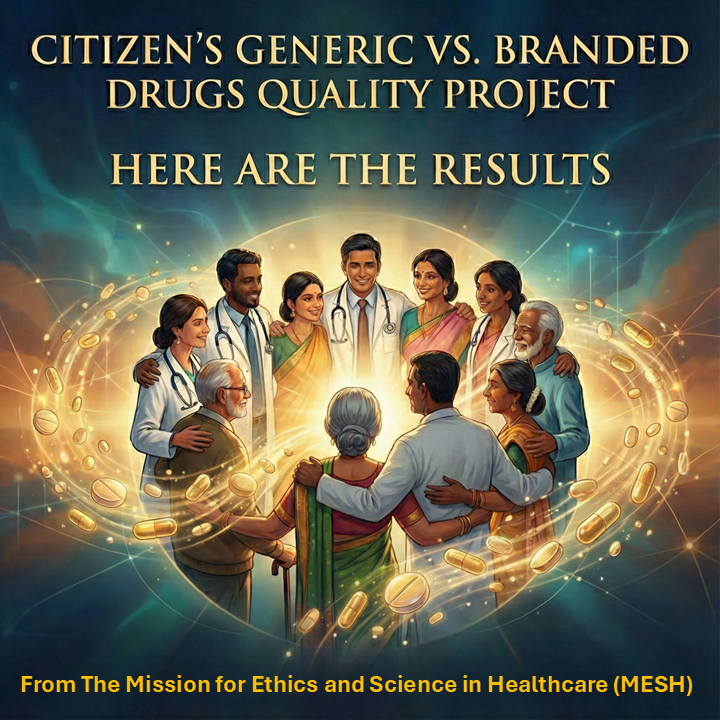
STAY WITH ME. A few years ago, a patient was referred to me because he was diagnosed with complicated cirrhosis. He had an infection which led to a condition called hepatic encephalopathy (brain failure due to high ammonia levels). The treatment largely involved ammonia reducing therapies. One drug was central to this - Rifaximin - a non-absorbable antibiotic that reduced ammonia in the body. I prescribed him Rifaximin for 6 weeks and advised him follow-up. He came back to me, not after six weeks, but in 4 weeks, this time, in liver coma (worst stage of brain failure - due to very high ammonia). He spent two days in the ICU and six days in total in the hospital. His hospital bill was close to INR 80,000. He had no insurance and his wife borrowed the money from neighbors and friends to clear hospital dues. Upon questioning, I found that he was not taking the Rifaximin drug I had prescribed. He was only on the other two drugs (one, a syrup called lactulose for improving ammonia clearance in gut). I was furious, because the patient spent a whole week unecessarily in the ICU and wasted so much money that he never had - just because he was "not compliant" to my orders. I decided it was time for me to school him a bit. But I was wrong. He was compliant. He had purchased Rifaximin and was on it. For 15 days. Thereafter, he could not afford it. He was an autorickshaw driver who shuttled school children every morning and evening. He could hardly make ends meet. He had two children of his own. The Rifaximin brand I prescribed him was 42 rupees per tablet. He had to consume two a day - which would mean 2520 rupees a month. He just did not have that money - so he skipped it - to not compromise on other important matters - childrens education and food. He was confused and scared about opting for a cheaper version of Rifaximin because one, he was unsure about the quality of Rifaximin that was not prescribed by me and two, he was "scared" that I would scold him for buying a cheaper Rifaximin and if that got him into trouble. I was confused and scared about prescribing a cheaper version of Rifaximin because one, I was unsure about the quality of Rifaximin that was not "a good promoted brand" and two, I was "scared" that his family would scold me for prescribing a cheaper Rifaximin and if that got him into trouble. It is heartbreaking that many doctors still simply don’t trust generic medicines. Too often, they worry that these cheaper options are lower quality or might cause more problems than the big, famous brands. This fear leads them to prescribe expensive drugs instead, and the real tragedy is that it pushes vital healthcare out of reach for the ordinary people who need it most - like my patient. This narrative, that generic drugs 'are never good' and that only big pharmaceutical marketed drugs are what works has been deeply ingrained into doctors and patients alike - I do not know by whom and since when. Looking back, these strong emotions were based on either opinions, testimonials or second- and third-hand information. Not evidence. Like I said. Stay with me. This is life changing and will disrupt the drug market in India. Here are the results of The Citizens Generic vs. Brand Drugs Quality Project. 1/11
TheLiverDoc™ tweet media
English
287
1.4K
3.7K
532.7K
Dr lalith retweetledi
TheLiverDoc™
TheLiverDoc™@theliverdoc·
THE RIGHT SIDE UP: We often hear: "Government meds are weak" or "Cheap meds don't work." This is false. Our lab data proves that Indian generics match the quality of premium brands. Don't let marketing fool you. The molecule doesn't care about the brand name on the box. Your health deserves quality. Your wallet deserves fairness. This large scale study proves that in general: Generics ≠ Inferior We tested. We verified. The results are undeniable. EVERY. SINGLE. PILL. PASSED. Whether it was a ₹61 liver tablet from a big brand or a ₹16 one from Jan Aushadhi - they ALL met the strict Indian Pharmacopoeia standards. Zero failures. The cheap meds worked just as well in the lab. Please share and RT to help your family & friends save tens of thousands on medicines! 11/11
TheLiverDoc™ tweet media
English
36
207
750
58.6K
Dr lalith retweetledi
Deepinder Goyal
Deepinder Goyal@deepigoyal·
Last one on this topic, and I have been holding this in myself for a while. For centuries, class divides kept the labor of the poor invisible to the rich. Factory workers toiled behind walls, farmers in distant fields, domestic help in backrooms. The wealthy consumed the fruits of that labor without ever seeing the faces or the fatigue behind it. No direct encounter, no personal guilt. The gig economy shattered that invisibility, at unprecedented scale. Suddenly, the poor aren't hidden away. They're at your doorstep: the delivery partner handing over your ₹1000+ biryani, late-night groceries, or quick-commerce essentials. You see them in the rain, heat, traffic, often on borrowed bikes, working 8–10 hours for earnings that give them sustenance. You see their exhaustion, their polite smile masking frustration with life in general. This is the first time in history at this scale that the working class and consuming class interact face-to-face, transaction after transaction. And that discomfort with our own selves is why we are uncomfortable about the gig economy. We want these people to look our part, so that the guilt we feel while taking orders from them feels less. We aren't just debating economics. We are confronting guilt. That ₹800 order might equal their entire day's earnings after fuel, bike rent, and app cuts. We tip awkwardly, or avoid eye contact, because the inequality is no longer abstract. It's personal. Pre-gig era, the rich could enjoy luxury without moral discomfort. Labor was out of sight. Now, every doorbell ring is a reminder of systemic inequality. That's why debates explode. It's not just policy. It's emotional reckoning. Some defend the system (“they choose it”), others demand change (“this isn't progress, its exploitation”). And here’s the uncomfortable twist: the unsaid ask of clumsy ‘solutions’ isn’t dignity. It is about returning to invisibility. Ban gig work and you don’t solve inequality. You remove livelihoods. These jobs don’t magically reappear as formal, protected employment the next day. They disappear, or they get pushed back into the informal economy where there are even fewer protections and even less accountability. Over-regulate it until the model breaks, and you achieve the same outcome through paperwork instead of slogans: the work evaporates, prices rise, demand collapses, and the people we claim to protect are the first to lose income. And then what happens? The rich get their old comfort back. Convenience returns without faces. Guilt dissolves. We go back to clean abstractions and moral posturing from a distance. The poor don’t become safer, they become invisible again: back in cash economies, back in backrooms, back in shadows where regulation rarely reaches and dignity isn’t even debated. The gig economy just exposed the reality of inequality to the people who previously had the luxury of not seeing it. The doorbell is not the problem. The question is what we do after opening the door. Visibility is the price of progress. We can either use this discomfort to build something better (which we keep doing continuously as delivery partners are our backbone), or we can ban and over-regulate our way back into ignorance. One of those choices improves lives. The other simply helps the consuming class feel virtuous in the dark.
English
2K
5.2K
25.4K
3.7M