Knox Elias

6.9K posts

Knox Elias banner
Knox Elias

Knox Elias

@drop_sync

Web3 Enthusiast || Student of Artificial Intelligence & Data Science || Yapper and Fapper

WEB3 Katılım Kasım 2024
2.1K Takip Edilen2.5K Takipçiler
Sabitlenmiş Tweet
Knox Elias
Knox Elias@drop_sync·
Most people compare Extended and Variational using volume and OI. But one of the most important questions gets ignored. Are traders actually profitable on the platform, or are they just farming points while taking losses? Looking at the data tells a clear story. Extended Total volume : $144.55B Total PnL : -$19.89M Average PnL : -$575 Variational Total volume : $143.51B Total PnL : -$56.83M Average PnL : -$1.32K Variational is doing well on volume, especially considering it launched its points system almost 6 months later than Extended and still reached similar volume. But traders are suffering significantly higher losses on Variational compared to Extended. If a platform rewards activity but traders consistently lose money, it becomes farming, not sustainable trading. Extended shows better trader profitability and a higher profit rate, which is a strong signal many overlook.
Knox Elias tweet media
English
3
1
10
599
onchainmonk
onchainmonk@onchainmonk·
Let's play a game. Out of 32 indian stocks invested here in Zerodha, only three are in positive 😭 Anyone who first guesses which 3 stocks are in positive, monk will giveaway $50/stock (if guessed correctly). Payment will be in USDT (crypto) Time starts now till next 24 hours.
onchainmonk tweet media
English
93
12
71
10K
Shashank | 𝔽rAI
Shashank | 𝔽rAI@0xshai·
Some takes from different L2s on Vitalik's post: 1. Base (@jessepollak ): broadly agrees with Vitalik’s framing. L1 scaling is a win, but L2s still matter if they actually do something. Positions Base as already leaning into differentiation: apps, UX, account abstraction, privacy, onboarding normal users. Very “we’ve been building toward this anyway” energy, plus their commitment towards stage 2. 2. MegaETH (@yangl1996 ): basically says “this was always the thesis.” L2s exist to explore different tradeoffs, not to be mini-Ethereum clones. If you’re just copying L1 design choices, you’re wasting everyone’s time. Specialize or die. 3. Arbitrum (@sgoldfed ): the most defensive but also the most substantive response. Strongly pushes back on the idea that scaling is no longer a core value. Points to real-world spikes where L2s handled ~1k TPS while L1 sat at ~40 TPS. Also reframes L2s as institutional infrastructure: customization, compliance, control, branding, and fast iteration matter just as much as raw tech. Subtext: if Ethereum scares L2s away, institutions won’t move to L1, they’ll just spin up their own L1s. 4. Aztec (@clairekart ): frames Vitalik’s post as validation of a broader market dynamic: most L2s converged on undifferentiated blockspace, which predictably leads to fee wars, marginal improvements, or go-to-market arms races, none of which create durable moats. In crypto, traditional moats like vendor lock-in don’t work, and most teams also didn’t seriously build long-term distribution advantages. Aztec’s takeaway is that the only sustainable differentiation is at the execution layer itself, which is why they focused on privacy from the start, despite higher technical complexity.. Starknet (@EliBenSasson ): reacts with a one-liner, joking that Vitalik “said Starknet without saying Starknet,” pointing to Starknet’s long-standing focus on non-EVM design, ZK-optimized execution, and specialization as fitting neatly into the “L2s must add something new” framing. Polygon (@0xPolygon ): no long essay, just vibes. “Due to market conditions, we now identify as a sidechain.” Bonus: @mert , infamous @solana CEO pops in with “since L2s don’t make sense anymore, I’m reframing SOL as money.” Low-key perfect timing. “Sci-fi money” does sound cool though, not gonna lie. The stand-in CEO @toly joined in with "De Monet!" Net-net: Vitalik says “L2s need a reason to exist beyond cheap gas,” and most L2s reply with “we already do,” except Polygon, which just cracked a joke, and Solana, which immediately rebranded itself as Sci-fi money. Never a dull day.
vitalik.eth@VitalikButerin

There have recently been some discussions on the ongoing role of L2s in the Ethereum ecosystem, especially in the face of two facts: * L2s' progress to stage 2 (and, secondarily, on interop) has been far slower and more difficult than originally expected * L1 itself is scaling, fees are very low, and gaslimits are projected to increase greatly in 2026 Both of these facts, for their own separate reasons, mean that the original vision of L2s and their role in Ethereum no longer makes sense, and we need a new path. First, let us recap the original vision. Ethereum needs to scale. The definition of "Ethereum scaling" is the existence of large quantities of block space that is backed by the full faith and credit of Ethereum - that is, block space where, if you do things (including with ETH) inside that block space, your activities are guaranteed to be valid, uncensored, unreverted, untouched, as long as Ethereum itself functions. If you create a 10000 TPS EVM where its connection to L1 is mediated by a multisig bridge, then you are not scaling Ethereum. This vision no longer makes sense. L1 does not need L2s to be "branded shards", because L1 is itself scaling. And L2s are not able or willing to satisfy the properties that a true "branded shard" would require. I've even seen at least one explicitly saying that they may never want to go beyond stage 1, not just for technical reasons around ZK-EVM safety, but also because their customers' regulatory needs require them to have ultimate control. This may be doing the right thing for your customers. But it should be obvious that if you are doing this, then you are not "scaling Ethereum" in the sense meant by the rollup-centric roadmap. But that's fine! it's fine because Ethereum itself is now scaling directly on L1, with large planned increases to its gas limit this year and the years ahead. We should stop thinking about L2s as literally being "branded shards" of Ethereum, with the social status and responsibilities that this entails. Instead, we can think of L2s as being a full spectrum, which includes both chains backed by the full faith and credit of Ethereum with various unique properties (eg. not just EVM), as well as a whole array of options at different levels of connection to Ethereum, that each person (or bot) is free to care about or not care about depending on their needs. What would I do today if I were an L2? * Identify a value add other than "scaling". Examples: (i) non-EVM specialized features/VMs around privacy, (ii) efficiency specialized around a particular application, (iii) truly extreme levels of scaling that even a greatly expanded L1 will not do, (iv) a totally different design for non-financial applications, eg. social, identity, AI, (v) ultra-low-latency and other sequencing properties, (vi) maybe built-in oracles or decentralized dispute resolution or other "non-computationally-verifiable" features * Be stage 1 at the minimum (otherwise you really are just a separate L1 with a bridge, and you should just call yourself that) if you're doing things with ETH or other ethereum-issued assets * Support maximum interoperability with Ethereum, though this will differ for each one (eg. what if you're not EVM, or even not financial?) From Ethereum's side, over the past few months I've become more convinced of the value of the native rollup precompile, particuarly once we have enshrined ZK-EVM proofs that we need anyway to scale L1. This is a precompile that verifies a ZK-EVM proof, and it's "part of Ethereum", so (i) it auto-upgrades along with Ethereum, and (ii) if the precompile has a bug, Ethereum will hard-fork to fix the bug. The native rollup precompile would make full, security-council-free, EVM verification accessible. We should spend much more time working out how to design it in such a way that if your L2 is "EVM plus other stuff", then the native rollup precompile would verify the EVM, and you only have to bring your own prover for the "other stuff" (eg. Stylus). This might involve a canonical way of exposing a lookup table between contract call inputs and outputs, and letting you provide your own values to the lookup table (that you would prove separately). This would make it easy to have safe, strong, trustless interoperability with Ethereum. It also enables synchronous composability (see: ethresear.ch/t/combining-pr… and ethresear.ch/t/synchronous-… ). And from there, it's each L2's choice exactly what they want to build. Don't just "extend L1", figure out something new to add. This of course means that some will add things that are trust-dependent, or backdoored, or otherwise insecure; this is unavoidable in a permissionless ecosystem where developers have freedom. Our job should make to make it clear to users what guarantees they have, and to build up the strongest Ethereum that we can.


English
42
50
124
4K
John
John@Johncoin_·
Are we cooked?
John tweet media
English
120
7
133
4.3K
Extended
Extended@extendedapp·
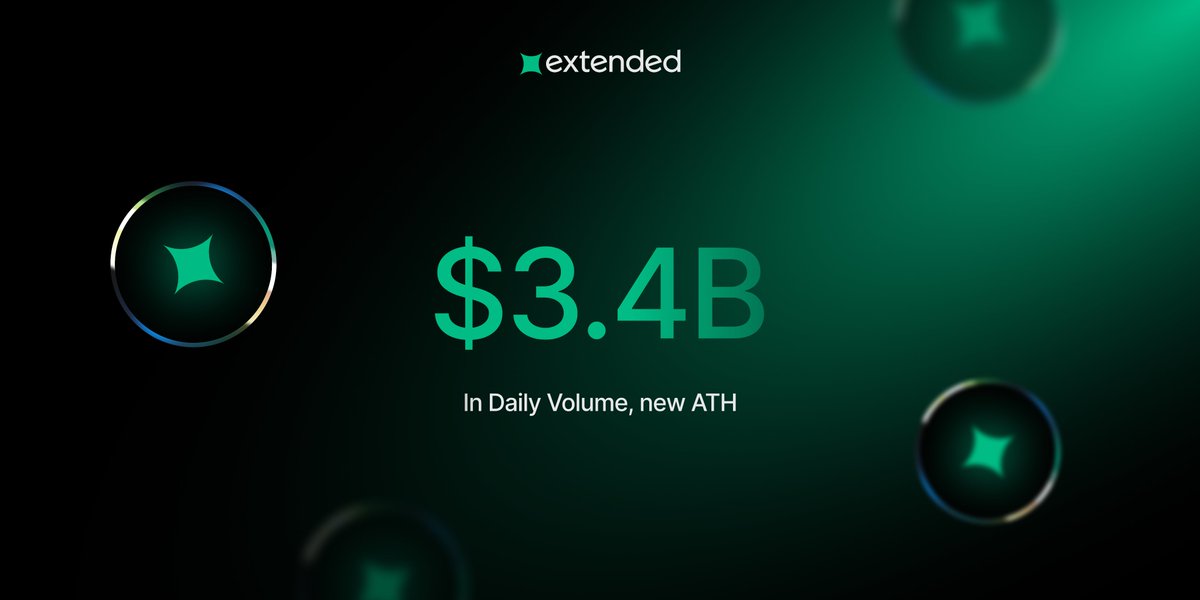
Extended has hit an all-time high with $3.4B in daily trading volume
Extended tweet media
English
71
58
428
47.4K
Knox Elias
Knox Elias@drop_sync·
@Somesh_333 Extended has 0.02% taker and 0% maker fees while Variational has 0% fees, i like Extended UI more
English
0
0
1
24
Knox Elias
Knox Elias@drop_sync·
Most people compare Extended and Variational using volume and OI. But one of the most important questions gets ignored. Are traders actually profitable on the platform, or are they just farming points while taking losses? Looking at the data tells a clear story. Extended Total volume : $144.55B Total PnL : -$19.89M Average PnL : -$575 Variational Total volume : $143.51B Total PnL : -$56.83M Average PnL : -$1.32K Variational is doing well on volume, especially considering it launched its points system almost 6 months later than Extended and still reached similar volume. But traders are suffering significantly higher losses on Variational compared to Extended. If a platform rewards activity but traders consistently lose money, it becomes farming, not sustainable trading. Extended shows better trader profitability and a higher profit rate, which is a strong signal many overlook.
Knox Elias tweet media
English
3
1
10
599
Fraction AI
Fraction AI@FractionAI_xyz·
We used to build captchas to filter out bots. Now bots build them to filter out humans
Fraction AI tweet media
English
88
105
169
3.9K
Knox Elias
Knox Elias@drop_sync·
@MaxCrypto Rotation to crypto will be huge, BTC may touch $150k
English
0
0
2
27
Max Crypto
Max Crypto@MaxCrypto·
Silver has lost its parabola. Is rotation into crypto next?
Max Crypto tweet media
English
104
77
383
18.8K
sammy.crypto | | 𝔽rAI
sammy.crypto | | 𝔽rAI@Somesh_333·
DAY 01 - WHAT IS POLYMARKET (@Polymarket ) ? In today's video, Day 01 of POLY DECODE, I have covered the following topics - - What is Polymarket ? - What is the idea behind Polymarket ? - Few examples of bets Polymarket ? Drop you feedback below and stay tuned for Day 2👇
English
3
1
4
46
Knox Elias retweetledi
Fraction AI
Fraction AI@FractionAI_xyz·
Join us this Friday for an insightful livestream with our CEO @0xshai and @noble_xyz founder @jelena_noble. We're diving into agentic payments on stablecoin rails. Friday 16th | 2PM GMT Live on X and YouTube Mark your calendars.
Fraction AI tweet media
English
170
204
375
18.8K
Knox Elias retweetledi
Fraction AI
Fraction AI@FractionAI_xyz·
Tap the post
Fraction AI tweet mediaFraction AI tweet mediaFraction AI tweet mediaFraction AI tweet media
English
110
137
224
6.2K
Knox Elias retweetledi
Fraction AI
Fraction AI@FractionAI_xyz·
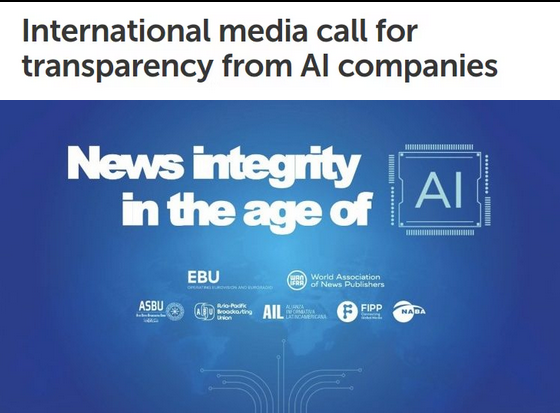
As more people access news via AI, closed-source models are increasingly changing stories, stripping context, and misattributing original reporting. In response, international organizations are pushing back, calling for urgent accountability from tech giants. This is why open-source is so important, because if you can't trust the source, you can't trust the information.
Fraction AI tweet media
English
128
147
235
7.6K
Knox Elias
Knox Elias@drop_sync·
@jswihart Billions from 10k downloads (that's also most probably fake) 💀
Knox Elias tweet media
English
0
0
0
43
Josh Swihart 🛡
Josh Swihart 🛡@jswihart·
We are all in on Zcash. We need to scale Zcash to billions of users. Startups can scale, but nonprofits can't. That's why we created a new Zcash startup. cashz.org
Josh Swihart 🛡 tweet media
English
449
445
2.5K
983.9K