
Matt Provencher, MD

2.6K posts

Matt Provencher, MD banner
Matt Provencher, MD

Matt Provencher, MD

@drprovencher

Knee, Shoulder & Sports Medicine Specialist The Steadman Clinic, Vail CO FOX Sports Injury Analyst Fantasy Football Predictor App 🏈 https://t.co/ydOsmgamD3

Vail, CO Katılım Eylül 2016
1.1K Takip Edilen5.2K Takipçiler
Matt Provencher, MD
Matt Provencher, MD@drprovencher·
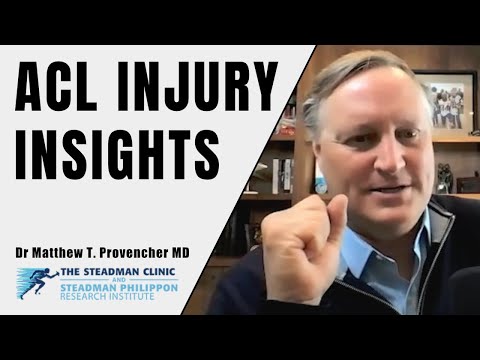
Why does #ACLinjury change how an athlete moves? Dr. Provencher explains the ligament’s stabilizing role and walks through what happens after functional instability is diagnosed including key principles guiding treatment and rehab progression. medilink.us/ze6m #kneeinjury
Matt Provencher, MD tweet media
English
0
0
1
45
Matt Provencher, MD
Matt Provencher, MD@drprovencher·
Dr Provencher would like to congratulate his co-authors for their fantastic work on this study: Ivan Wong, Marco Adriani, Sarah Remedios, Phob Ganokroj, Nate Dickinson, Annalise Peebles, Ryan Whalen, Stephanie Eble, Justin Arner, Toufic Jildeh, Liam Peebles, and Anthony Romeo!
English
0
0
0
111
Matt Provencher, MD
Matt Provencher, MD@drprovencher·
He is honored for his research “DTA for Recurrent Shoulder Instability: Comparison of Open Fresh vs. Arthroscopic Frozen Grafts,”highlighting critical differences in graft strategy and surgical approach for recurrent instability.
English
1
0
0
84
Matt Provencher, MD
Matt Provencher, MD@drprovencher·
Advancing the science of shoulder instability! Dr. Provencher and his team were recently honored with the 2026 Stephen S. Burkhart Shoulder Innovation Research Award from the @AANAORG
English
1
0
4
1.6K
Matt Provencher, MD
Matt Provencher, MD@drprovencher·
Are certain populations more at risk for #clavicle #fractures? Yes! Contact athletes (especially males, ~3x higher risk), adolescents with developing bone density, and older adults with age-related bone loss. Even lower-energy trauma can cause injury. medilink.us/2cdi
English
0
0
0
106
Matt Provencher, MD
Matt Provencher, MD@drprovencher·
Many assume they can push through pain and “bounce back.” In reality, #ACL, labral, and #rotatorcuff injuries build over time. Biggest mistakes: ignoring instability, rushing return, masking pain. Respect load or risk failure. Checkout the podcast ➡️ medilink.us/lxgt
English
0
0
1
87
Matt Provencher, MD
Matt Provencher, MD@drprovencher·
Most #biceps #tendonitis cases recover without surgery using rest, therapy, and anti-inflammatory care. Surgery is for severe or persistent symptoms. Common procedures: biceps tenodesis (repositions tendon) or tenotomy (releases it). medilink.us/d2nv
English
0
0
0
132
Matt Provencher, MD
Matt Provencher, MD@drprovencher·
A posterior cruciate ligament tear typically presents with swelling, pain, and stiffness in the knee right after injury. Some patients also notice difficulty moving the joint and a feeling that the knee isn’t stable during walking. medilink.us/m2kr #kneehealth #kneeinjury
English
0
0
0
137
Matt Provencher, MD
Matt Provencher, MD@drprovencher·
#Kneepain with locking or catching may suggest a #meniscus injury. Symptoms include joint line tenderness and swelling. Diagnosis: exam (McMurray test) + X-ray/MRI. Treatment ranges from conservative care to surgery depending on severity/activity level. medilink.us/xekw
English
0
0
0
73
Matt Provencher, MD
Matt Provencher, MD@drprovencher·
The #ACjoint is a small but critical stabilizer of the #shoulder. When injured, often from a fall or contact sport, it can range from a mild sprain to a complete separation (Grades I–VI). Proper grading = better treatment decisions and outcomes. medilink.us/rz0c #ACinjury
English
0
1
0
66
Matt Provencher, MD
Matt Provencher, MD@drprovencher·
Most “failed” #ACjoint surgeries aren’t surgical failures. They’re diagnostic misses, biology issues, or underestimated injury patterns. Revision isn’t repeating the same operation, it’s rebuilding stability in a changed shoulder. medilink.us/mlcs #shoulderpain
English
0
0
0
107
Matt Provencher, MD
Matt Provencher, MD@drprovencher·
#ShoulderInstability is when the soft tissues (ligaments & tendons) that stabilize the shoulder are stretched or torn, making the joint loose and prone to repeated dislocations. Common in overhead athletes like swimmers, baseball, and volleyball players. medilink.us/7zbu
English
0
0
0
104