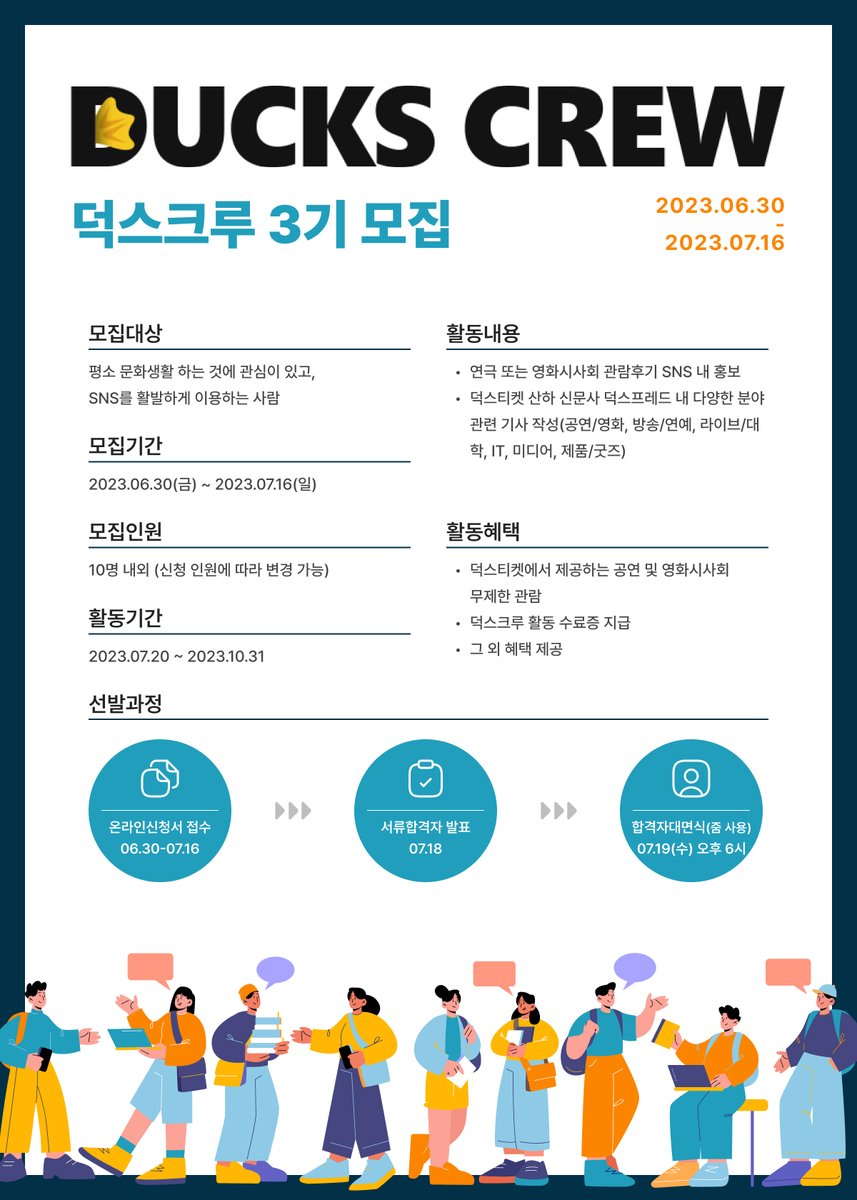
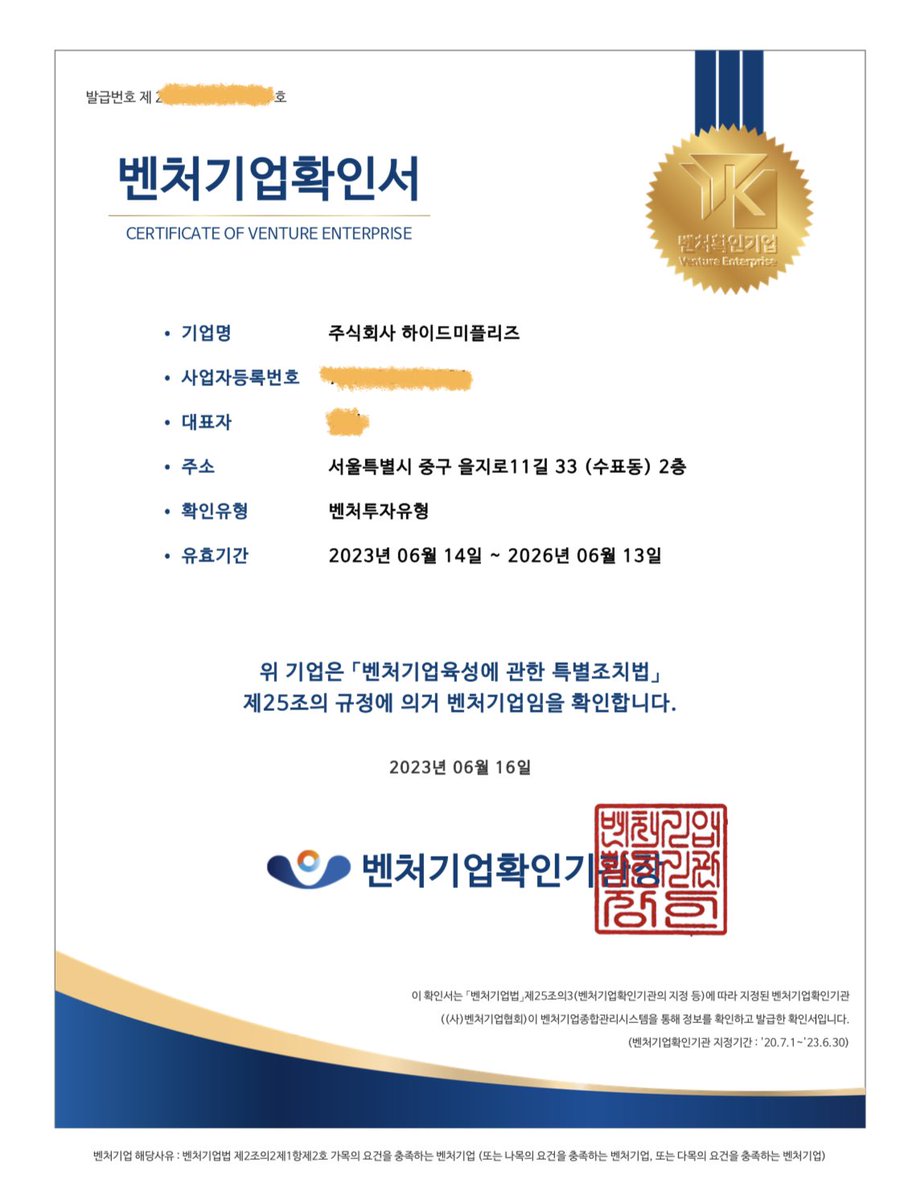
Sabitlenmiş Tweet
대한민국 국민 여러분의 문화공연 활성화를 위한 서명운동 입니다.
덕스티켓은 문화공연 플랫폼에서 확장하여 대한민국 언제 어디에서 공연을 접할수 있도록 하고자 합니다.
서명운동 참여 : forms.gle/MdG1Q78Jh6eqV9…
이 서명운동을 주변에 널리 퍼뜨려주시면 감사하겠습니다.
#덕스티켓 #연뮤덕
한국어
덕만이::덕스티켓
919 posts

@ducksticket
❤️ 당신의 #문화생활 덕스티켓이 책임질게요(๑˃̵ᴗ˂̵) 🎫 영화부터, 연극, 뮤지컬, 전시회까지 무료 초대권 제공?! 🤝 문의 [email protected] 👇🏼 덕스티켓에 놀러오세요❗️ #KNFT #NFT #시사회 #영화 #공연 #연극 #대학로 #뮤지컬 #연뮤

I'd like to share my story with you😀 I majored in computer science and worked as a developer, specializing in RoR, C++, Android, and Java. However, back then, the working conditions for developers were not as good as they are today. All-nighters were common, and the pay wasn’t exceptional. In Korea, if you don't become an executive by around 45, you're often forced to retire from development. Seeing my seniors retire to start BBQ or chicken shops, I wondered if I should start my own business earlier. My father, who studied hotel management, ran various businesses, eventually finding great success with a world beer pub. Thanks to his success, I had a comfortable upbringing. Given my parents’ success in the F&B industry, I decided to start my own F&B business, with their support. Over 10 years, I launched various brands including churros, pizza, Italian cuisine, bakery, donuts, and Korean pubs. I was fortunate to experience moderate success, but it wasn’t quite what I envisioned, especially since the F&B industry lacks scalable opportunities outside of franchises. One day, Pokémon GO was released in Korea. I noticed customers at my café were all absorbed in playing the game on their phones. Initially, I just thought, “Wow, people are really into Pokémon GO,” but soon realized there was another reason. My café happened to be a PokéStop within the game. Customers would come daily to catch Pokémon while enjoying their coffee, and my sales soared. However, what intrigued me more than the sales boost was the idea that linking games with offline stores could create an exciting system. From that point on, I started thinking about how to make this possible. In late 2021, a friend suggested I study NFTs, claiming they were profitable. Watching him spend countless nights trying to secure whitelists or mint NFTs sparked my interest. I started studying NFTs, blockchain, and the metaverse. The best way to learn, of course, is through experience. I bought various NFTs and studied the roadmaps of different projects. I also learned about the relationship between NFTs and blockchain technology. I even experienced having expensive NFTs stolen through wallet hacks and witnessed projects disappear after minting. One day, I bought an NFT that promised to pay out 1.5 million KRW monthly. It was a highly anticipated NFT in Korea, dubbed the Korean BAYC. However, soon after I purchased it, the Russia-Ukraine war broke out, causing the crypto and NFT markets to crash. The project’s developers failed to deliver on their roadmap, and the coin they promised to NFT holders lost all its value. Over six months, I identified three major problems with the NFT and Web3 markets : 1. Most NFT projects are too focused on the online space. 2. The crypto market is highly volatile, especially in response to major societal changes like wars, making sustainability a challenge. 3. There are plenty of mainnet and infrastructure projects, but a lack of content creators. Many NFT projects aim to create metaverses or virtual worlds, using their IP to build VR or games. While these goals are understandable, they require a lot of time and the simultaneous advancement of various technologies. I realized there are very few blockchain businesses focusing on offline integration, which I saw as a blue ocean opportunity. All NFT businesses are based on a specific mainnet, but the high volatility of the crypto market in response to significant societal events can cause well-built businesses to fail overnight. Most Web3 businesses need mainnets and infrastructure, but there’s an oversaturation of these providers. Meanwhile, companies creating content and services are scarce, especially those targeting Web2 users. These three issues led me to start the “Hide Me Please” project. I believe that to create a system or world where games and offline experiences are interconnected, blockchain technology, with its strong interoperability, is the answer. To achieve this, I propose a three-step roadmap : 1. Develop a multi-chain-based offline utility map. By downloading the “Hide Me Please” app and linking their wallet, users can register their NFTs (EVM, Solana, etc.) and receive discounts at offline stores. Successfully implementing this first step will attract Web2 users to the Web3 market and allow us to build an offline map integrated with blockchain games. (By “offline map,” I mean the infrastructure of stores partnered with Hide Me Please. Currently, around 80 local restaurants in Korea are partnered with us, and we are analyzing user and store behavior patterns to activate transactions.) 2. Integrate crypto payments into the offline utility map. Store owners and Web2 users generally don’t know much about crypto, blockchain, or Web3, and often aren’t interested in learning. It will be challenging to introduce crypto payments to stores in the future, so it’s better to prepare in advance. The “Hide Me Please” app is recognized by store owners as a new marketing platform and by Web2 users as a discount and benefits platform. This naturally leads to wallet installations and NFT usage. Once crypto payment regulations and laws are in place, we will immediately offer crypto payment services within the app. 3. Link blockchain games with the Hide Me Please offline utility map. Here are a few examples: 1) As a game character’s level increases, the discount rate at offline stores also increases. 2) In M2E games, visiting certain stores could allow you to repair your shoes or obtain special items. 3) Coupons usable at offline stores drop in the game. These examples are simple ideas anyone could come up with, but building such a system requires a solid offline infrastructure based on blockchain. Some may question whether games need to be linked to offline experiences, but I believe it enhances financial sustainability and service longevity. Additionally, studies show that when online activities are connected to offline experiences and vice versa, user engagement with games and other users increases significantly. I’ve heard that there are two types of medicine in the world : prescription drugs and vitamins. Startups created to solve specific problems are like prescription drugs, while my venture, aimed at building a dream world, is more like a vitamin. It’s not essential, but it’s definitely beneficial. If you understand the importance of daily vitamins, feel free to reach out. ;) #hidemeplease #WeAreCreatingAnOfflineUtilityMapThatWillBeConnectedToTheWeb3World