Sabitlenmiş Tweet

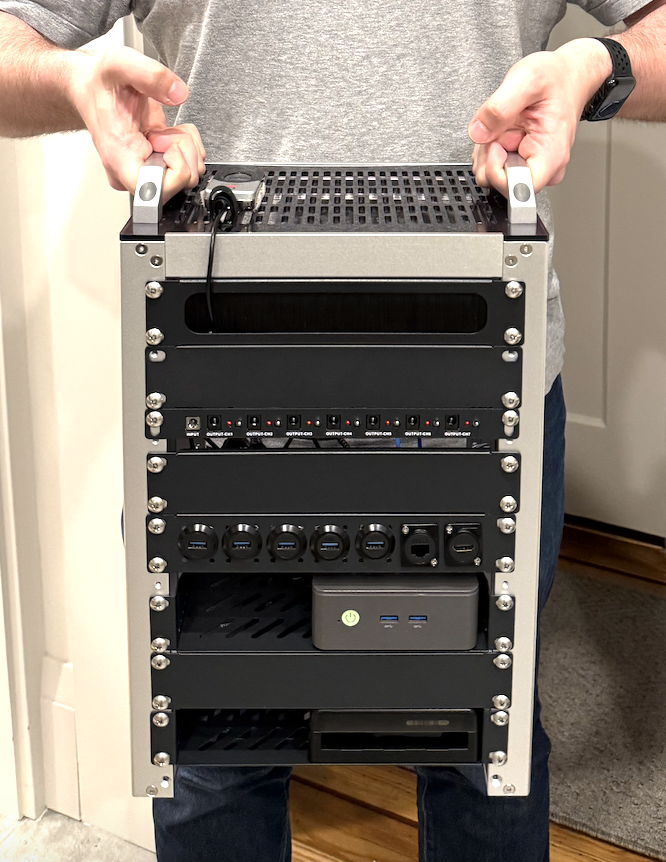
Mini computers have gotten so affordable and low-power usage that it just makes sense to run them as a home server.
So excited to get started with @dhh’s omarchy as my distro!

English
Frederik Dudzik
453 posts

@dudzik_co
💻 Machine Priest | 💾 home lab-ing | 📩 DMs are open

Starter is a new Braintrust pricing plan with no platform fee. It includes: - 1GB processed data - 10K scores - 14 day retention You can pay for more usage as your AI workloads grow.


Pax Historia is the first-AI powered sandbox game. Players create worlds, publish them to the community, and play to answer all of their ‘what would have happened if…?’ questions. Congrats on the launch @Eli_BullockPapa and @Ryzhang22! ycombinator.com/launches/PMu-p…
Introducing Cowork: Claude Code for the rest of your work. Cowork lets you complete non-technical tasks much like how developers use Claude Code.

Introducing Cowork: Claude Code for the rest of your work. Cowork lets you complete non-technical tasks much like how developers use Claude Code.
it's usually more convenient to use existing apps than making your own, but for this specifically everything sucks and i don't trust any of these random apps with my data made a github for it, so you can run it locally github.com/rohunvora/just…
Introducing CallMe, a minimal plugin that lets Claude Code call you on the phone. Start a task, walk away. Your phone/watch rings when Claude is done, stuck, or needs a decision. Free & open source (MIT). Underlying API costs are cents per minute of call.
Everyone’s hyping Ralph but overcomplicating it. Let me break it down simply. Ralph is an automated assistant that codes for you while you sleep. You give it a to-do list, it works through each task one by one, and stops when everything’s done. Here’s the concept: Normally when you use AI to code, it’s a back-and-forth conversation. You ask, it builds, you check, you ask again. Ralph removes you from that loop. You define what “finished” looks like upfront, then the AI works through tasks automatically until they all pass. Why it actually works: Each time Ralph runs, it starts with a clean slate (so it doesn’t get confused by old context). But before working, it reads notes from previous rounds: - What was already built - What was learned along the way - What’s still left to do It’s like hiring someone new every morning who reads yesterday’s handoff notes before starting work. If you want to try it: 1. You need an AI coding tool (like Amp, Claude Code, or Cursor) 1. You write out your feature as small tasks. Not “build a login system” but broken down like: - Add email and password fields - Check if email is valid - Show error message when login fails 1. You run the script and let it loop through each task 1. Ralph marks each task complete when it passes your tests, then moves to the next one Real tips that actually matter: Each task should take under 5 minutes for the AI. If you’re writing a task description longer than 3 sentences, it’s too big. Split it. Your acceptance criteria needs to be stupidly specific. “User can log in” will fail. “Email field exists, password field exists, submit button triggers auth function, error displays on wrong password” will work. Ralph gets smarter as it goes. By task 10, it’s learned patterns from tasks 1-9. The progress.txt file compounds knowledge. Don’t delete it mid-session. Watch the first 3 iterations manually. You’ll catch bad patterns before they multiply across 20 commits. Don’t use Ralph for: exploring ideas, major rewrites, or anything touching payments/security. It’s for well-defined feature work where you already know what “done” means. Ryan’s team shipped 13 tasks in about an hour of compute time. Each iteration ran 2-5 minutes. That’s the realistic expectation.
i have fully dropped Claude Code for OpenCode i donʼt use Opus 4.5, i use GLM-4.7 and MiniMax-M2.1 theyʼre opensource and can be self-hosted nobody can nerf my models or rug pull me nobody should be able to do that to your intelligence p.s. buy a GPU and run your LLMs locally


What are the best patterns for maintaining an identical claude.md and agents.md in the same GitHub repository? Is there a symlinking trick that works? Can you have one of them just say "go read the other one"? Or is it worth automating copying them?

One of our KumoRFM August Hackathon finalists, Azin Asgarian and Frederik Dudzik from Georgian’s AI Lab, built KumoVC using KumoRFM to predict high-potential startups, ideal advisors, and best-fit investments. Read their blog: kumo.ai/company/news/k…