Laurence

283 posts

Laurence banner
Laurence

Laurence

@duqles

Strategy @sophon, writing @finblueprint | formerly @consensys

London Katılım Eylül 2012
702 Takip Edilen387 Takipçiler
Laurence retweetledi

Lex Sokolin | Generative Ventures
I have been working on the concept of $ROBOTMONEY since 2009, when I founded my first fintech company, a roboadvisor called @NestEggWealth, thereafter became @AdvisorEngine In 2015, I wrote this piece, which you can see still rhymes with how the future turned out: sokolin.medium.com/investing-in-t… Ethereum and DeFi became my next love, promising a new financial infrastructure for a digitally native economy. 2017-2023 were a time when I developed the core thesis behind Fintech Blueprint, tokenization, and AI in finance. In the next phase of this evolution, robots build the new GDP and control massive amounts of capital. How do we position for it? This is the experiment we are trying to run.
English
27
28
156
30.6K
Laurence
Laurence@duqles·
@DeFi_Andree @aave Don't get me wrong I love Aave but this is comparing it to bank savings accounts rather than money market funds which are more comparable. Difference between SoFi Vs Aave wrt compounding, like you have in the image, is more interesting imo
English
0
0
3
168
DeFi Andree
DeFi Andree@DeFi_Andree·
Aave is becoming the default onchain savings app. $5,000 + $250/month → ~$309K in 30 years at ~6.5% APY. Same habit at banks → ~$101K. The gap is decades of lost compounding. Try your number and see the difference. @aave
DeFi Andree tweet media
English
55
14
301
70.9K
Laurence
Laurence@duqles·
You are missing a couple of key points: 1. Custom benefits / rewards / features will still attract new audiences. Whether it is a crypto card or a non-crypto neobank providing this does not matter, it is about who executes best. Yonder is a good example of a new entrant in the neobank space that is suceeding because of a differentiated perk system. 2. Self-custodial wallets / cards enable users to access DeFi. This has historically been far too technically complex for the average person. Self-custodial crypto cards can abstract that complexity and enable easy access. DeFi lending is still far better than many tradfi opportunities with similar risk profiles. Also, ether.fi's borrowed spending model is good but also not entirely defensible nor does it apply to a large portion of people in the world. There is much more opportunity than this article lets on.
English
1
0
7
110
Laurence retweetledi
Sophon
Sophon@Sophon·
100,000+ humans came together to make an album 📀 Huge congrats to our friends @dannycoleee and @anthpo on bringing this to life. We're grateful to be part of the story (+)
English
15
10
77
21.1K
Aixa
Aixa@aixarizzo·
fuck
Aixa tweet media
English
49
0
119
5.6K
Naffy
Naffy@n_andrea_q·
@duqles Loved it all. “Don't expect your children to love you, so they can, if they want to.” is prob my favorite
English
1
0
1
16
Laurence
Laurence@duqles·
Recommend starting your day with "How to Be Perfect" by Ron Padgett. poetryfoundation.org/poems/57243/ho… Some of my favourite excerpts: "Design your activities so that they show a pleasing balance" "Make eye contact with a tree." "Be nice to people before they have a chance to behave badly." "Live with an animal." Lots of gems in there.
English
1
0
1
88
Laurence
Laurence@duqles·
@SuhailKakar L2s will live on -- too much TVL split across too many L2s now -- we just need better interoperability solutions
English
0
0
0
18
Suhail Kakar
Suhail Kakar@SuhailKakar·
hot take: we don't need more l2s, we need one l2 to actually win 50 different chains with fragmented liquidity is objectively worse than one chain with unified state ethereum's biggest mistake was letting everyone launch their own l2
English
65
6
111
7.8K
Laurence
Laurence@duqles·
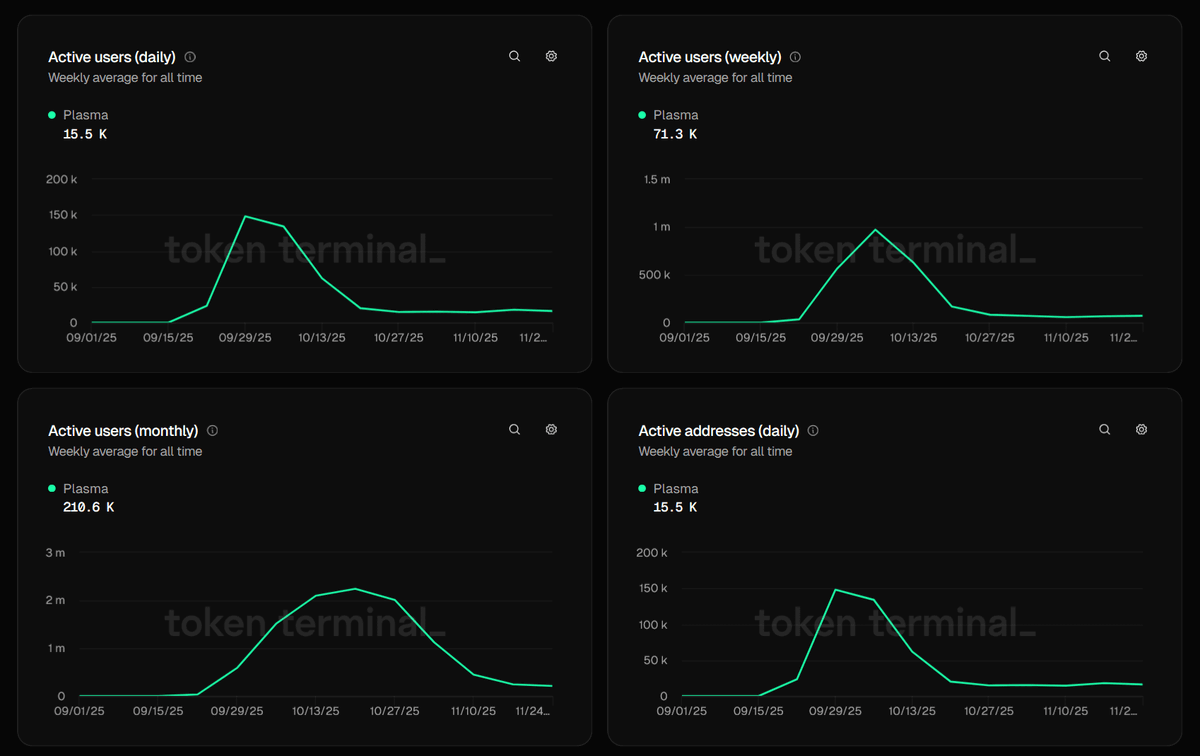
When incentives dry up so does activity. Protocols can't expect to deploy the same old DeFi protocols, with the same offerings and then expect users to stay around post-incentives. Its extra risk for users w/o the incentive upside. They either need to create or partner with a differentiated product/feature with real value. Copy pasta protocol strategy no longer works (if it ever really did)
English
0
0
2
114
Stacy Muur
Stacy Muur@stacy_muur·
This is another proof: You can have flawless infrastructure, top-tier backers, and every CEX listing, but if you can’t convert incentives into organic demand, the market will price that failure instantly. XPL as a token needs a narrative, an application layer, and non-mercenary user retention before it becomes anything other than a short-term trading vehicle.
English
2
0
22
1.8K
Stacy Muur
Stacy Muur@stacy_muur·
Plasma’s launch was one of the most anticipated events of 2025, and on the infrastructure side, it delivered flawlessly. But the past few weeks show a chain struggling to convert perfect execution into sustained, organic demand. @Plasma flows tell the story. • TVL is down 35% from the peak. • Daily active addresses collapsed 90%. • Transactions are down 75%. Every metric tied to real users shows unwinding, not growth. Mercenary farmers left nothing. $XPL is also down 87% from its $1.68 ATH, now trading around $0.22, despite maintaining deep liquidity across major exchanges. The recent 88.9M token unlock added additional sell pressure, with larger cliffs still ahead into mid-2026. None of this is unusual; it’s a classic post-incentive unwind.
Stacy Muur tweet media
English
72
9
192
20.9K
Adam
Adam@CryptoDealer·
@duqles Great article 🤝
English
1
0
1
21
Laurence
Laurence@duqles·
Can’t understand the hate for SheFi. It’s a paid networking group. And it’s getting more hate than CT trader’s TG groups, when shefi people actually meet irl, don’t have a cult-like leader and focus on education instead of pumping and dumping. Who cares if it’s for women. It’s a net positive.
English
1
0
3
134
Laurence
Laurence@duqles·
Odd goings on in crypto rn. Tokens are in the dumps, yet more and more of the financial world’s operations are moving onchain (and to public chains at that). Fundamentals, fundamentals, fundamentals.
English
0
0
2
74
Laurence
Laurence@duqles·
These models aren't sustainable and are mostly trying to get you to pump their token, lock you into restricted spending patterns, or their own yield products. What's a sustainable alternative that's better for users and better for card distributors? Give users open access to the best DeFi opportunities directly within the UI. Earn on everything you own, not just what you spend. Sophon is building this - more soon.
English
0
0
6
116
Laurence
Laurence@duqles·
Card Economics 101. The normal way that cards make money is on interchange fees. In the UK and EU these fees are capped at 0.2-0.3% of the transaction size. In the US they can go as high as 2-3%. That's why US cards tend to have much better cashback. But then you have to negate Visa and Mastercard's processing fees, Apple Pay fees and lots more. Even without these costs the cashback schemes are unsustainable for businesses, particularly if they're operating (and providing these perks) globally. The gap gets filled in three ways - all of them problematic: - token emissions that dilute your staked capital - merchant partnerships that restrict where you spend for rewards, or - network subsidies (like Scroll paying ether.​fi for user traffic) until incentives dry up And obviously, most users never realise the headline cashback rates. The +3% cashbacks get plastered everywhere but require top-tier staking, holding, or spending thresholds most people won't hit. The average user gets a fraction of that while the marketing runs on the aspirational number.
English
1
0
6
149
Laurence
Laurence@duqles·
Cashback farming is the new yield farming. Every crypto card in the space is competing on who can provide the highest cashback, from ether.​fi's 3% SCR to Coinbase's 4% BTC or even crypto.com’s 8% cashback (disclaimer: you need to stake $1M of CRO to get that). All of this is reminiscent of yield farming strategies. Projects boosting their DeFi yield with points or token rewards for mercenary capital that ups and leaves as soon as the incentives dry up. It does not grow the ecosystem in the long-run or create lasting products. Instead, it uses tokens to inflate activity before leaving products to slowly die. The same trend is happening with crypto cards.
Laurence tweet media
English
5
1
20
2.9K