Daniel Z. Feldman

1.8K posts

Daniel Z. Feldman banner
Daniel Z. Feldman

Daniel Z. Feldman

@dzfeldman

Student of Torah and the World, Striving to Bring Them Together. Engaging regarding Daf Yomi, Parshah, Jewish Law & Philosophy, Morality, AI, and World Events.

Yeshiva University Katılım Eylül 2023
2.2K Takip Edilen3K Takipçiler
Sabitlenmiş Tweet
Daniel Z. Feldman
Daniel Z. Feldman@dzfeldman·
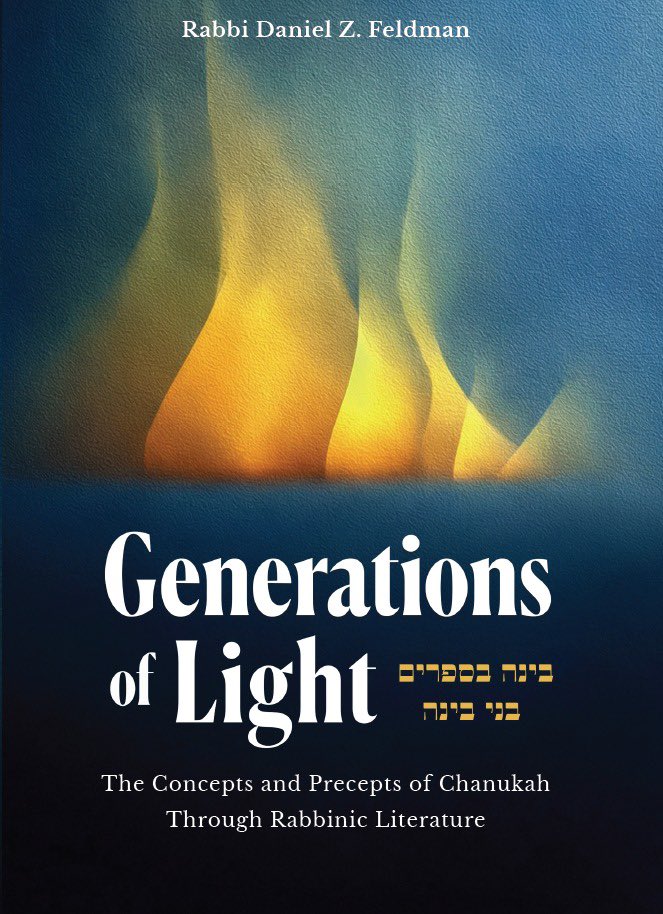
New and now available from RIETS Press: Generations of Light is an adaptation, through the collaborative efforts of humans and AI, of the Hebrew volume Binah BaSefarim: Bnei Binah, surveying and analyzing the concepts and principles of Chanukah, through the prism of the rabbinic literature, from the Talmud through contemporary times, from legal and conceptual foundations through practical applications and philosophical themes. The volume is 535 pages and is available for $10 plus shipping at this link: rietspress.org/products/gener… In-person pickup in Bergen County, Yeshiva University, and Stern College can also be arranged: contact golchanukah@gmail.com
Daniel Z. Feldman tweet media
English
3
2
16
6.7K
Daniel Z. Feldman
Daniel Z. Feldman@dzfeldman·
The same is true on an individual level: we can use AI to accomplish the same amount with 10% effort, or we can work just as hard and accomplish 10x more; or even more so, if the increased impact motivates working even harder, or with more focus.
Ash Jogalekar@curiouswavefn

When AI enables one person to do the work of ten people, companies have a choice: either lay off nine people and keep productivity the same or keep all ten and increase productivity tenfold. The choice seems clear.

English
0
2
4
594
Eyal Yakoby
Eyal Yakoby@EYakoby·
Israel is being condemned for placing a death penalty on convicted murderers, but not a word is said about the Palestinian Authority’s death penalty for people who merely sell land to Jews. Weird.
English
169
310
2.1K
29.6K
Daniel Z. Feldman
Daniel Z. Feldman@dzfeldman·
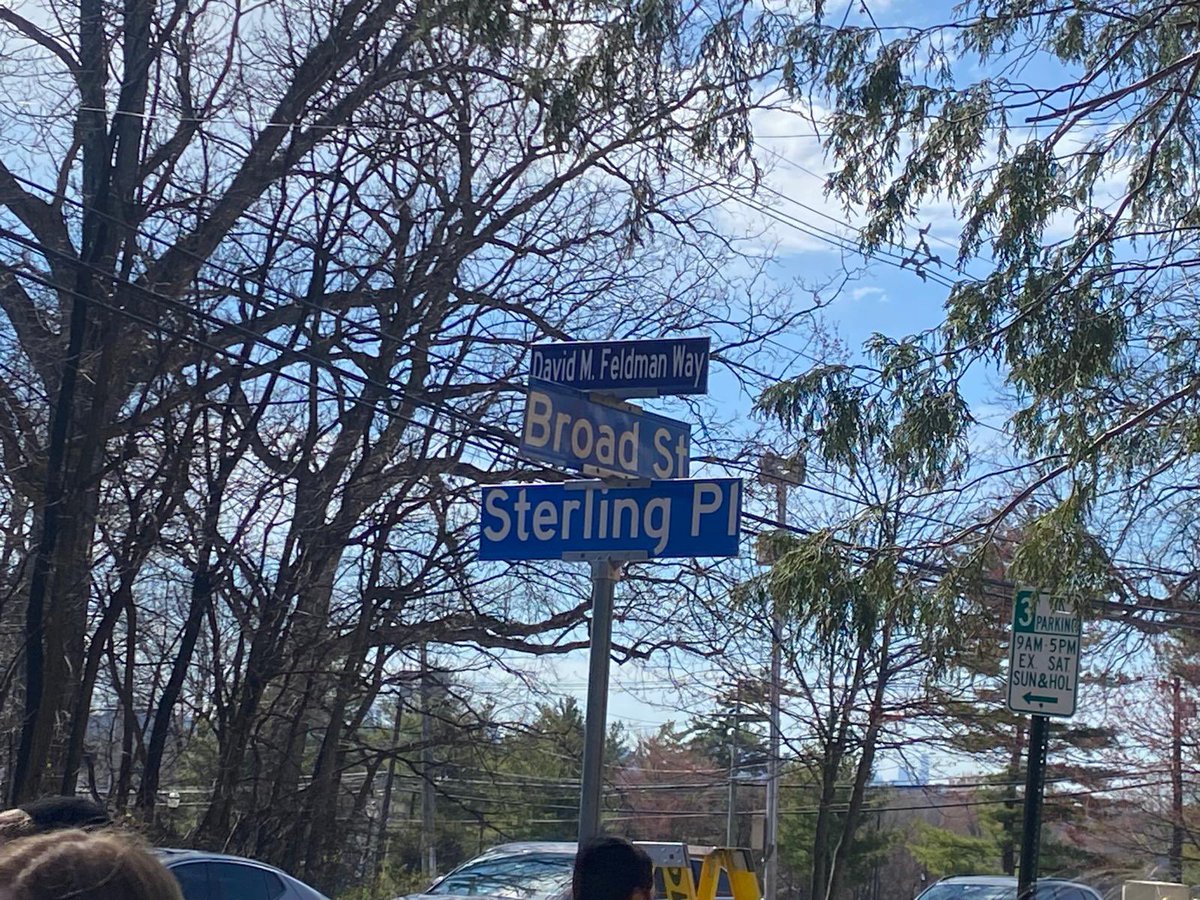
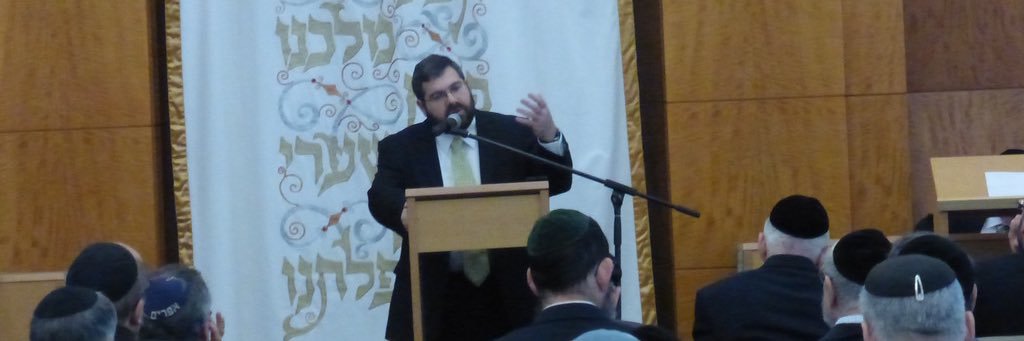
Below is the recording of the presentations from the street naming of Rabbi David M. Feldman Way. Tremendous thanks to all involved.
Daniel Z. Feldman tweet mediaDaniel Z. Feldman tweet media
English
1
2
24
2.1K
Daniel Z. Feldman retweetledi
David/Dovid Bashevkin
David/Dovid Bashevkin@DBashIdeas·
This is the way. ❤️
David/Dovid Bashevkin tweet media
English
2
1
26
3.6K
Daniel Z. Feldman
Daniel Z. Feldman@dzfeldman·
One of the events marked by Shabbat HaGadol is a battle that took place between the Egyptian firstborns and their parents and Pharaoh, after the firstborns realized the danger they were in and tried unsuccessfully to convince the others to let the Jews go (Midrash, quoted in Tosafot, Shabbat 87b). It commemorates the emergence of unexpected allies, and the fact that salvation can come through unexpected channels, and that those who threatened Israel can find themselves challenged by forces they did not anticipate.
Kosher@koshercockney

BREAKING Saudi Arabia officially confirm they will be joining the war against the Islamic Republic of Iran.

English
0
1
3
537
Daniel Z. Feldman
Daniel Z. Feldman@dzfeldman·
In anticipation of this Sunday’s street naming in memory of my father Z”L (see links below), reposting here the link to his speech that displays so much of what made him so influential in his rabbinic work and which I turn to whenever I need a reminder of what it’s all about. If I could choose one line to highlight: “When it works…”
Daniel Z. Feldman@dzfeldman

In recognition of my father's yahrtzeit today, sharing this speech that I always turn to when I need encouragement, inspiration, or just a reminder of why we do what we do.

English
2
1
16
2.6K
Daniel Z. Feldman
Daniel Z. Feldman@dzfeldman·
@yudapearl A wonderful post as always from CH, but there is a SERIOUS MISTAKE in the audio version of this post. The narration SKIPS the very words being highlighted, reversing the points and deleting the emphasis.
English
0
0
2
49
Daniel Z. Feldman
Daniel Z. Feldman@dzfeldman·
@mdubowitz @coldxman Note: SERIOUS MISTAKE in the audio version of this post. The narration SKIPS the very words being highlighted, reversing the points and deleting the emphasis.
English
0
0
0
34
Daniel Z. Feldman
Daniel Z. Feldman@dzfeldman·
@coldxman Note: SERIOUS MISTAKE in the audio version of this post. The narration SKIPS the very words being highlighted, reversing the points and deleting the emphasis.
English
0
0
0
28
Lidia
Lidia@Marco1412851·
@dzfeldman Possible to link to previous post? Much appreciated
English
1
0
0
15
Daniel Z. Feldman
Daniel Z. Feldman@dzfeldman·
The Great Supermarket Controversy: Testing the Limits of Mekhirat Chametz In a previous post, the practice of *mekhirat chametz* (the sale of leavened products to a non-Jew before Passover) was explored and defended. The argument rested on an understanding of the Torah’s intent behind the prohibition of owning chametz: since the Torah’s primary concern is that chametz not be eaten, the requirement to remove it from one’s possession functions as a safeguard against the risk of consuming it absentmindedly. On this basis, the Jewish people have embraced *mekhirat chametz* as a declaration that there is another force equally capable of keeping one away from the chametz: the prohibition of theft. The individual homeowner who sells his chametz, and then scrupulously avoids touching it throughout Passover because it legally belongs to another, is giving powerful expression to the integrity of monetary relationships. The question that arises, then, is what happens when the seller has no intention whatsoever of leaving the chametz alone. The individual homeowner’s sale, whatever questions it generates, is within the lines of halakhic legitimacy. A far more contested scenario is the sale of the inventory of stores (supermarkets, liquor stores, grocery chains) that continue to operate throughout Passover, selling chametz to all comers. The debate this practice has generated is contentious, and cuts to the heart of what *mekhirat chametz* is really about and what the halakhic system is willing to tolerate in the name of minimizing transgression. The Objections The difficulties with such a sale are significant, and they operate on multiple levels simultaneously. A store owner who sells his inventory to a non-Jew before Passover, and then opens his doors on Passover morning and sells chametz to every customer who walks in, is doing something that looks nothing like a valid sale. The *ha’aramah* objection to *mekhirat chametz* in general (the term refers, alternatively, to halakhic evasion or to a legal sham) would seem to apply here with particular force. There is no pretense of actually separating from the chametz. The chametz never leaves the premises. The owner handles it, prices it, stocks it, and profits from it throughout the holiday. A second, and more than merely technical, problem sits alongside the first. Assume for a moment that the pre-Passover sale was valid, that ownership genuinely transferred to the non-Jewish purchaser. In that case, the store owner who continues to do business with the chametz is not merely evading the spirit of the law. He is committing *gezel*, theft, against the person who now legally owns the merchandise. The very rationale offered in defense of individual *mekhirat chametz*, that the prohibition of theft is what keeps the Jew away from the chametz, is here inverted: the sale, if real, creates a prohibition of theft, and the store owner is violating it openly with every transaction. The two objections thus mirror the two poles of the broader *ha’aramah* debate: on one hand, the sale is a sham, wholly outside the spirit of the law; on the other hand, if it is not a sham, the owner’s conduct is an active violation of ownership rights. Either way, the situation is deeply problematic. (It should be noted that the objection is not limited to overt chametz dealers; some authorities have disqualified the *mekhirat chametz* even of any individual whose general behavior indicates he does not personally respect the relevant religious principles; see *Mo’adim L’Simchah*, p. 176. The situation of the merchant is, however, more extreme, both because of the public nature of the non-observance and because the commerce specifically undermines the claim of having sold the chametz to another.) The Voices of Stringency Given these objections, it is no surprise that a significant number of major authorities completely rejected the validity of such sales, ruling not merely that they were inappropriate but that they were null and void, leaving the chametz fully prohibited. Among those taking this position were the *S’dei Chemed* (*ma’arekhet chametz u’matzah*, 9:35), *Resp. Maharam Shik* (OC 205), R. Tuvia Goldstein (*Resp. Emek Halakhah*, II, 36:3), *Resp. Uri V’Yishi* 121, *Resp. Shevevei Eish* (OC, III, 12:5), and R. Yosef Shalom Elyashiv, as quoted in R. Eliyahu Shlesinger’s *Mo’adei Kodshekha* (p. 216). Rav Joseph B. Soloveitchik was also among those who completely disapproved of such sales. The stringent position offered its own counter-argument to the lenient technical claims that have been presented. The standard defense of *mekhirat chametz* in these circumstances holds that a seller’s insincerity, even when established by later actions, cannot retroactively cancel the rights of a buyer. The stringent authorities responded that when the insincerity is blatant and evident to the entire world, as it is when a store has been publicly open on Passover for years running, this is categorically different. The situation parallels the case of *Matnat Beit Choron* discussed in the Talmud (*Nedarim* 48a): a man had taken a vow prohibiting himself from deriving any benefit from his son. When the son wished to make a wedding for his own son, he sought a maneuver that would allow his father to attend the wedding. To circumvent the vow, the son transferred his property to a friend, with the transparent understanding that the transfer had no real-world effect and existed only to allow the father to make use of it for the wedding. The Talmud rules that such a transfer is treated as null, because the subsequent behavior of the parties makes the original insincerity manifest. Here too, where a store’s doors open on Passover morning just as they do every other day of the year, the owner’s earlier “sale” is similarly exposed as having never reflected genuine intent. R. Moshe Shternbuch (*Resp. Teshuvot V’Hanhagot*, I, 288) combined both objections, invalidating the sale because of the continuing commerce and additionally noting that since there is no valid *bittul* (nullification) of the chametz, the sale falls short even of the standard defended by the *Bekhor Shor* regarding ordinary *mekhirat chametz*. *Resp. Pri HaSadeh* (II, 124) inverted the logic of the *Chatam Sofer*, who had argued that the main consideration validating *mekhirat chametz* is the removal of the Jew from engagement with the chametz, noting that in this case the Jew is openly conducting business with the chametz, thus eliminating the very foundation of the sale’s legitimacy. Notably, even the *S’dei Chemed*, despite his stringent ruling, did not follow his position to its full logical conclusion of declaring the chametz completely forbidden in all benefit after Pesach. Rather, he limited the prohibition to selling to other Jews, explaining that while the more stringent position would be more logical, it is less likely to be observed, and he therefore opted for the lesser evil (*ha-ra b’miuto*). The Sanzer Rebbe and the Opening for Leniency Notwithstanding these formidable objections, there were significant authorities who found at least some basis for the validity of such sales. In many respects, the question is not fundamentally different from that of allowing any non-observant Jew to participate in the communal *mekhirat chametz*, a person who may not take the sale seriously and may in fact continue to consume his own chametz during Passover. The arguments in both directions tend to travel together. The most widely cited responsum on this question was authored by R. Chaim Halberstam of Sanz (1793–1876), known as the *Divrei Chaim* (*Resp. Divrei Chaim*, II, OC, 46). He addressed the scenario of a completely non-observant Jew who regularly sold his chametz before Passover but was traveling one year when the time came, and sent a message to his non-Jewish wife instructing her to arrange the sale *lifnim* (superficially, for appearances) so that he not be given trouble afterward. (The analysis of related aspects of this situation is further developed in *Resp. Avnei Nezer*, OC, 337, and *Resp. Yashiv Yitzchak*, XXVII, 11–14.) R. Chaim Halberstam was asked: given the seller’s explicit insincerity, is such a sale still valid? Perhaps, he explained, this seller believes the sale is only superficial because the chametz returns to him after Passover; in other words, he misunderstands the nature of the transaction. If he were made aware that the requirement is a genuine transfer of ownership before Passover, he would presumably agree to such a sale. On this basis, the sale should be considered valid, and his chametz is permissible after Passover. While R. Chaim did not directly address the question of the seller consuming his own chametz over Passover, given the seller’s non-observance and non-Jewish spouse, this was presumably taken for granted. (This is noted explicitly in *Resp. Chelkat Ya’akov*, OC 194.) The core of his ruling, that the owner would consent to a genuine sale if he properly understood it, was endorsed by many subsequent authorities. Later authors connected this reasoning to a Talmudic principle (*Bava Batra* 48a) that was explained in a striking way by Maimonides (*Hil. Gerushin* 2:20): that a bill of divorce can under certain circumstances be coerced from a recalcitrant husband, despite the formal requirement of his consent, on the grounds that his inner will is to comply with divine law, no matter how much his statements and actions suggest otherwise. The overwhelming practical and spiritual benefit to the store owner, preserving his chametz’s value and minimizing his technical violations, points to a clear, objectively desirable outcome, and thus this can be considered his true underlying desire. (See *Chelkat Ya’akov*, ibid., in detail; *Mo’adim L’Simchah*, IV, pp. 176–178; and R. Yitzchak Zilberstein, *Chashukei Chemed*, *Pesachim* 10a. R. Zilberstein also considers an additional approach, based on a comment of *Rashba*, *Shabbat* 18b, s.v. *gigit*, that invokes the possibility of *Beit Din* communally declaring property ownerless when doing so will prevent the populace from sinning, an approach first suggested, albeit cautiously, by R. Yehoshua of Kutno, *Resp. Yeshuot Malko*, OC 36.) A Spectrum of Lenient Positions Even among those who found some validity in such sales, the range of positions was wide, reflecting different calibrations of the *ha’aramah* debate: **Position A: The sale is completely valid, effective *ab initio*, and morally acceptable.** This view rests on three premises. First, a transaction between two parties is governed only by its explicit terms; a seller’s insincerity, even when clearly established by later actions, cannot cancel ownership rights already acquired by a buyer. (R. Binyamin Aryeh Weiss, *Resp. Even Yikarah*, *telita’ah*, 127, goes further, stressing that even if both parties subsequently agree to cancel an effective sale, it remains in force until they actually complete the formal process of retransfer.) Second, even a non-observant seller may be presumed to prefer the more acceptable classification for his behavior — this is actually expressed as a general Talmudic principle (*Chulin* 4a) that even one willing to sin does not abandon what is permitted in order to indulge in the prohibited. Third, the store owner should not be considered a thief against the non-Jewish purchaser, either because that purchaser consents to the ongoing commerce, or more justifiably, because he will simply deduct the value of all sales from the assessed value he is ultimately paying. All three points are endorsed by R. Moshe Feinstein in multiple responsa (*Resp. Iggerot Moshe*, OC I:149; II:91; and IV:95). R. Yitzchak Leibes (*Resp. Beit Avi*, I, 3) initially challenged this position, drawing on Talmudic passages such as the *Matnat Beit Choron* case, where subsequent actions are used to determine earlier intent. He ultimately suggested, however, that this retroactive principle is not invoked when doing so would require labeling the individual a sinner retroactively — which itself reflects the presumption of minimal possible transgression. **Position B: The sale is valid after the fact, but concededly outside the spirit of the law.** This view accepts the technical validity of the sale while acknowledging that the arrangement fails to meet any reasonable standard of the prohibition’s spirit. It is valid, and the parties involved are not thieves, but no one should be comfortable describing it as an ideal fulfillment of the law’s intent. **Position C: The sale is technically valid, but the store owner is committing theft.** This position accepts only the narrow technical point that a seller’s later actions cannot retroactively void an effective sale; it rejects, however, the claim that the ongoing commerce is innocent. The store owner is selling merchandise that legally belongs to someone else, and this constitutes *gezel*, plain and simple. (The question of whether the sale is a net spiritual detriment to the store owner, in that it renders him a thief, or whether there are instead alternative understandings that prevent this, is the subject of a detailed exchange between the author of *Resp. Chelkat Ya’akov* and his sons, whose glosses are appended to the responsum.) The Communal Rabbi’s Dilemma What emerges from this spectrum is that even the lenient authorities do not view the store owner’s situation as remotely ideal. The disagreement is not over whether the arrangement is praiseworthy but over whether it has any legal standing at all, and whether the net communal benefit of partial compliance outweighs the costs of legitimizing a deeply compromised practice. This is where the question of communal rabbinic responsibility enters. A passionate advocate for the lenient position was R. Ya’akov Breisch of Zurich (*Resp. Chelkat Ya’akov*, ibid.), who argued not only that such sales were permissible but that facilitating them was an *obligation* of the rabbinate, in order to minimize sin whenever possible. Dismissing suggestions in the Talmud that there is no responsibility to save intentional sinners from their transgressions, he advanced multiple arguments that this situation presented a distinct opportunity that religious leadership was required to pursue. R. Menachem Mendel Schneerson, the Lubavitcher Rebbe, shared this view (*Sha’arei Halakhah U’Minhag*, II, 195, and *Shulchan Menachem*, OC II, 228). He offered a multi-leveled argument for the value of such sales, even while consistently stressing that these stores should not be operating on Passover at all. He went further, maintaining that one of the positive accomplishments of such sales was to raise public consciousness of the concept of Passover and the prohibitions regarding chametz. On the other side, R. Breisch’s responsum was written to R. Shlomo Schneider of Monticello, NY. In a volume of R. Schneider’s own writings (*Resp. Divrei Shlomo*, II, 123), the full exchange is preserved, including R. Schneider’s original inquiry citing numerous stringent authorities, and a follow-up in which he added later literature and concluded that it is impossible to set an absolute rule. Time, place, and rabbinic judgment must determine whether such sales are advisable, or whether instead, as he put it, “a passive approach is preferable.” R. Moshe Feinstein, despite his full confidence in the technical validity of the sale, similarly acknowledged that a local rabbinic authority may decide that such sales are not advisable and should act according to his conscience. The question of what is best for the community is separate from the question of what is technically permissible. After Passover: The Consumer’s Question For the observant consumer, the entire debate then shifts to a different question: may one purchase chametz from such a store after Passover? Here too, the range is wide. R. Feinstein maintained that there is no reason whatsoever for the customer to refrain from purchasing; R. Ovadiah Yosef appears to endorse this view in *Chazon Ovadiah: Prozbol* (p. 237), as does R. Shlomo Zalman Auerbach (*Halikhot Shlomo, Pesach*, 7:9). At the other extreme, the Vilna Gaon, consistent with his general opposition to all temporary chametz sales, forbade the purchase of any chametz that had been subject to such an arrangement. R. Shternbuch (*Resp. Teshuvot V’Hanhagot*, I, 288) advanced an additional argument for prohibition: the rabbinic penalty on chametz owned by a Jew over Passover is designed specifically to discourage such ownership, and allowing this chametz to be freely purchased and consumed afterward would do the opposite, encouraging sinful behavior rather than discouraging it. He further cited a Talmudic passage (*Beitzah* 17b) that a *ha’aramah* is treated more severely than intentional sin, because the intentional sinner recognizes his misdeed and there is hope he will change course, while the one engaged in *ha’aramah* believes he is acting permissibly and is thus both unlikely to correct himself and likely to mislead others. (This is the interpretation of Rashi to that passage, which has broad relevance to the overall debate about halakhic evasion.) ## Two Extensions: The Complete Sale and the Sale Without Consent It is worth noting, before concluding, that the supermarket scenario can be shifted in either direction. In the direction of greater permissibility: if a Jewish store owner were to sell not merely his chametz inventory but his entire business interest, including all profits over the course of Passover, to a non-Jewish partner, this would satisfy essentially all of the objections. Arguably, such an arrangement is as justified as, or more justified than, the individual homeowner’s personal chametz sale, given the pressing livelihood considerations involved. (See *Shulchan HaLevi*, *Chametz U’Matzah*, 18–19.) In the opposite direction, the leniencies, once accepted, create their own momentum. Some authorities, motivated by the desire to minimize Torah violations to the greatest degree possible, have suggested that chametz can be sold through an agent even without the store owner’s knowledge, and some have gone further still, maintaining this can happen even over the owner’s explicit objection. These extreme positions rest on a maximalist formulation of the premise that every Jew, at some level, is amenable to the spiritually correct path, whether they know it or not; and therefore, since the store owner’s violations will be minimized if the chametz is considered sold, his consent can be presumed. (Even this premise is highly questionable, however, as the “benefit” of avoiding chametz violations may be offset by incurring the sin of theft from the actual buyer.) (See the discussions in *Ratz K’Tzvi: B’Ma’agalei HaShanah*, 13; *Resp. Be’er Halakhah*, OC 19; *Resp. Even Pinah*, 30; *Resp. Shavei Tziyon*, 11; and *Avnei Shoham*, 55.) A related but more sympathetic scenario involves an individual who falls into a coma or is similarly incapacitated as Passover approaches, with chametz in his possession. Several authorities maintained that in such a case an agent may sell the chametz on the owner’s behalf. The argument is significantly stronger here than in the case of the store owner: there is no ongoing commerce with the chametz, the sole motivation is to prevent the chametz from becoming permanently forbidden, and if the individual had a clear religious position and a history of selling chametz in prior years, consent can be reasonably presumed. (See *Resp. Chatam Sofer*, EH I, 11; *Pitchei Teshuvah*, YD 320:6; *Resp. Binyan Av*, IV, 21; *Mo’adei Kodshekha*, 46; *Resp. Yashiv Yitzchak*, XXXIX, 33; *Resp. Shevet HaKehati*, IV, 127; *Choshen L’Ma’aseh*, 36.) A final, related question involves the mass inclusion of individuals in communal chametz sales, such as the practice of the Israeli chief rabbinate, without their explicit participation. Normally, one may acquire property on behalf of another without their knowledge under the presumption that this constitutes a *zekhut* (benefit) for that person. But this rule generally cannot be extended to *selling* another’s property, since that cannot be presumed beneficial or desirable for the owner. Chametz presents a special case, many argue, because the onset of Passover will render the chametz worthless entirely, while the sale preserves its value; in that circumstance, the sale is objectively a benefit even from the owner’s perspective. (This point, though questioned by some later authorities [see *Resp. Teshurat Shai*, 443, and *Resp. Avnei Nezer*, OC, 336 and 347, who limits its scope], was affirmed by *Magen Avraham*, OC 436:11, and discussed at length in *Sdei Chemed*, ibid., 9:2.) The harder question is how far this logic extends. Selling chametz on behalf of one who was attempting to arrange a sale but was prevented by circumstances is one thing. What about including those who, due to non-observance or ignorance, would never have thought to sell their chametz at all? For such a person, declaring the sale a “benefit” requires focusing exclusively on a spiritual dimension that the owner himself does not acknowledge or value. And the practical challenges are formidable: how would the chametz be assessed? How would any information be conveyed to the purchaser? What if multiple rabbis attempted to sell the same chametz? Would this authority belong to the official rabbi of a locale, or its rabbinic court? (*Resp. Divrei Malkiel*, IV, 18, considered these problems disqualifying, while acknowledging that great authorities permitted. See *Resp. Be’er Yitzchak*, OC, 1 and 2; compare *Resp. Panim Me’irot*, II, 52. R. Moshe Shternbuch, *Mo’adim U’Zmannim*, III, 269, ruled that the rabbi should include these categories in the sale.) To some authorities, these obstacles were indeed insurmountable. To others, the absence of any preferable alternative indicated that these sales, however compromised and questionable they may be, were worth pursuing. Some took the position even further, arguing that an individual loudly proclaiming his disinterest in the sale can nevertheless be included. Conclusion The debate over supermarket chametz sales is, in many ways, the crucible in which the broader tensions of *ha’aramah* are most sharply revealed. The collective effort to balance the integrity of the law, religious sincerity, and genuine concern for the spiritual and practical challenges of the Jewish people continues to play out in the exchanges of the ongoing halakhic debate. There are no easy answers here, only the enduring question of how far the law can be adapted in the name of minimizing transgression, and at what point the adaptation itself becomes the problem. It takes wisdom, sincerity, and spiritual and interpersonal responsibility to know the difference.
Daniel Z. Feldman tweet media
English
2
2
10
875