Edward Upton

702 posts

Edward Upton banner
Edward Upton

Edward Upton

@eUpton

Get 2x performance from Klaviyo flows | Revenue tracking for Shopify brands | Founder and CEO @ Littledata

London Katılım Ocak 2009
188 Takip Edilen342 Takipçiler
Edward Upton
Edward Upton@eUpton·
You learn more under a tree at Shoptalk than on 10 Zoom calls. That is one of the best things about the Shopify ecosystem. When founders sit down face-to-face, they talk more honestly about what is actually working and what is not. That is what events like Shoptalk are really good for: People share things in person that they would never post on LinkedIn or share on a call. Today alone, I learned from casual conversations with agency founders: ✅️ How they're are approaching outbound ✅️ What tools they are using ✅️ How founders have negotiated exits ✅️ How they found strategic investors ✅️ What is working in agency partnerships ✅️ Which kinds of partners are actually driving growth ✅️ What they are quietly worried about That kind of market intelligence is hard to get any other way. And it only happens when people are willing to talk about the messy parts too - the misses, doubts and their unpolished growth story. That is why I still love this ecosystem. We are all trying to help similar brands solve similar problems. So when people are open about what they are seeing, everyone gets smarter faster. That is hard to replicate remotely. Shout out to the amazing folks I already met here: Thomas Turley Jay Narula Clint Dunn Dan Bartow Yaseen Shurbaji

Edward Upton tweet media
English
0
0
0
23
Edward Upton
Edward Upton@eUpton·
Most people treat Shoptalk like a sales meeting. I think the real value is in the partner conversations around it. It was 90°F in the shade in Las Vegas yesterday. Classic Shoptalk weather. 🏖️🥵 The best part of the day was the Smarterships event. Because of the conversations by the pool with agency and tech partners we already know well. In the Shopify ecosystem, a lot of the real work happens long before the contract. It comes from shared context. Trust. And spending enough time together to understand which problems are actually worth solving. Some of our best opportunities at Littledata have come from that. From getting closer to the people helping Shopify brands solve messy, real-world problems every day. That’s why days like yesterday matter. DM me if you're around at Shoptalk, let's catch up!
Edward Upton tweet media
English
0
1
1
32
Edward Upton
Edward Upton@eUpton·
Why we’ve stayed 100% focused on Shopify... I often get asked why we haven’t expanded beyond Shopify. BigCommerce. Custom Sites. Magento.. the list goes on. But we’ve made a deliberate decision to say no to a bigger market. Because spreading yourself across platforms might look like growth, but it usually dilutes focus. You end up solving everyone’s problems halfway. We’d rather solve one ecosystem properly. That’s why we’ve built the Data Layer for Shopify, the infrastructure that connects: ✔️ Analytics ✔️ Paid media, and ✔️ Email & SMS ...so brands can finally trust their data. After eight years, I’ve realised the opportunity isn’t in fixing broken tracking. It’s in unlocking all the first-party data already sitting inside Shopify, loyalty tiers, reviews, purchase history, and turning it into better campaigns. That’s where performance will be won. For founders, this is the shift: stop chasing more tools and start deepening the ones that matter. Depth creates defensibility. Breadth creates noise. Thanks to John Portalios and the AdBreakers team for having me on the podcast. 🎧 Watch here ➡️ youtu.be/yot7O-1wvV0?si…
YouTube video
YouTube
English
0
0
0
30
Edward Upton
Edward Upton@eUpton·
Last week, Privy acquired Sendlane. Most people will read that as “nice, fewer tools!” I read it as: lock-in is winning. Email + SMS isn’t fragmenting anymore. It’s consolidating. So, if you're a Shopify brand, you feel like you’re simplifying… but you’re often just committing harder to one vendor’s definition of “truth.” Here’s the part most teams miss: The risk isn’t “will Privy build better email?” They probably will. The risk is portability. And the landscape looks very different to a year ago. In the mid-market it’s basically Attentive, Omnisend, maybe Mailchimp. In enterprise it’s Bloomreach, Braze, maybe Ometria. And I keep hearing privately from mid-market sales teams: if they’re up against Klaviyo, they’ll often deprioritise the deal — because it’s stacked against them. Which is exactly why portability matters. When a tool changes pricing, product direction, or gets acquired, you only have leverage if: → Your events are consistent → Your order data is server-side and complete → Your identity stitching isn’t held together by brittle pixels Otherwise you’re not choosing a platform. You’re inheriting it. My take: the next “winner” in this category won’t be the fanciest flow builder. It’ll be the one that can run the loop end-to-end: Ad click → onsite intent → checkout → order truth → back to ads + lifecycle That’s also why we’ve been stubborn at Littledata about being the Shopify-first data layer. Tools come and go. Shopify order truth is the only thing that doesn’t. If your email/SMS platform got acquired tomorrow… how fast could you switch without your reporting going to war?
English
0
0
0
15
Edward Upton
Edward Upton@eUpton·
🌶️Hot take: measurement is no longer the main problem in ecommerce. Creative volume is. Colyn Montgomery put it well: measurement is getting better, but creative workflow still remains unsolved. Because once a brand gets its tracking into a reasonably healthy place, the question changes from: “Can we measure this at all?” To: “What do we actually do with the signal?” Usually that means: - More creative angles - More hooks - Faster refresh cycles And giving Meta or Google enough variation to learn from. Moreover, I think a lot of the fancier measurement stack like MMM, lift studies, holdouts, geo testing, only really works once you have enough scale. So for brands below that level, the answer is: → Get better purchase signals into the ad platforms → Make sure Meta can actually see who bought → Then focus your energy on producing creative that deserves to scale That part still gets underestimated. Bad measurement is obvious. Everyone can blame the dashboard. Bad creative operations are harder to spot. They show up as stale ads. Slow testing. Safe ideas. Campaigns that never really learn. At Littledata, we sit close to the measurement layer, so of course I believe signal quality comes first. But once that foundation is in place, the advantage swings to the team that can turn the same signal into more winning creative.
English
0
0
0
12
Edward Upton
Edward Upton@eUpton·
11 Shopify brands. 6 weeks. In our Microsoft Ads beta, we kept seeing the same pattern: Brand 1: Standard conversions: 440 Littledata conversions: 970 (+120% more purchases visible) Brand 2: Standard conversions: 131 Littledata conversions: 212 (+62% more purchases visible) This is why Microsoft Ads looks "undervalued" for so many brands. Not because the channel is weak. Because the conversion signal is broken. What's causing the gap: → Missing orders - the purchase event never fires → Duplicate events - the same order counted twice → Inconsistent values - ROAS becomes unreliable When the signal is broken, the algorithm optimises against a broken picture of reality. Does your Microsoft Purchases count match your Shopify order count within 5–10%? If not, you're not measuring Microsoft Ads performance. You're measuring how well your tag happens to fire. That's why at Littledata we send a clean, deduplicated server-side Purchase event from Shopify directly to Microsoft Ads, so the algorithm gets accurate signal, and you get ROAS you can trust. If you want to see how it works, comment "Microsoft" below.
Edward Upton tweet media
English
0
0
0
8
Edward Upton
Edward Upton@eUpton·
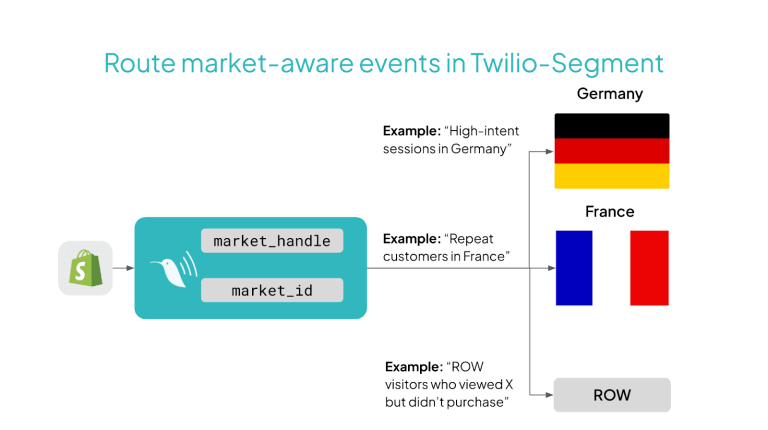
Shopify Markets is one store. But your data isnt one reality. Different currencies, pricing, promos, campaigns, and lifecycle journeys. Then your event stream hit Segment like: “Product Viewed” “Checkout Started” “Order Completed” …with no answer to the only question that matters internationally: "Which market did this happen in?" So teams build “market” using workarounds: → URL rules → Language / locale guesses → Warehouse reverse-engineering → Destination-by-destination routing hacks A month later the symptoms are… - German flows triggering for ROW customers - France audiences full of tourists browsing in EUR - Meta optimising against a blended pixel that can’t see market intent - Revenue “by country” turning into a weekly reconciliation meeting Quick test: Can you take a single event in Segment and reliably answer: DE vs FR vs ROW? If not, you’re not doing international marketing. You’re doing blended marketing. That’s why at Littledata, we push Markets context (market_handle, market_id) through Shopify → Segment so segmentation + routing matches how the business runs. If you want a quick walkthrough of how it works (and how we keep routing clean), DM me.
Edward Upton tweet media
English
0
0
0
14
Edward Upton
Edward Upton@eUpton·
Should my son be learning to code with Scratch? Or is he better kicking a football around? I’m half serious: hear me out. Scratch is the accepted best way for 7-year-olds to learn to logic and functions. His teacher told me: “Coding is the skill for the future”. But when he’s 21, will coding still be a thing?? Twenty years ago, learning to code at 7 would have set you up for a brilliant career. By 2020 you’d have been snapped up by a Google or Meta straight out of university and now be earning more than your friends that went into banking. But by 2040, I’m not so sure. The world still needs software and software developers. But even in 5 year’s time I don’t think coding will look the same as it is today. Software development is shifting ever more towards product and user experience, and away from the nuts and bolts. Who still writes CSS code? Maybe we’ll all be out of a job in 2040 and be needing entertainment. Watching football! Now if you know me, you’ll know I was never the footballer. And neither is my son (even after the addition of my sporty wife’s genes). So I’m still going to sign him up for Scratch. But I won’t place too much importance on it. I think he needs adaptability more than anything. Those human skills of learning to play with others, collaborating and imagining – they’ll be useful however the world of work looks in 2040.
Edward Upton tweet media
English
0
0
0
13
Edward Upton
Edward Upton@eUpton·
Product-market fit isn’t something you “get”. It’s something you keep. We thought we had PMF around 2020. Early adopters loved Littledata. But a lot of “PMF” in that era was tailwinds. Cheap CAC. Covid pull-forward. Everyone tolerating messy measurement. Then 2022–2024 hit. iOS changes. Attribution got messy. CPMs went weird. And brands stopped asking “what’s the ROAS?” They started asking: “Is any of this true?” That’s when it honestly felt like we’d lost PMF. Because the market started rewarding boring reliability: - Reconcile ad revenue to Shopify orders - Clean server-side signals - Fewer “it depends” answers in reporting - Markets / currency / refunds without spreadsheets So we rebuilt around what became non-negotiable: → Shopify-first. Server-side. Ridiculously easy to adopt. That’s the founder lesson: When the environment changes, PMF doesn’t stay put. You either refit the product to the new bar or you slowly drift. For ecommerce data, the bar is simple: Your marketing tools should have to explain themselves against Shopify. That’s what we’re building at Littledata.
Edward Upton tweet media
English
0
0
0
7
Edward Upton
Edward Upton@eUpton·
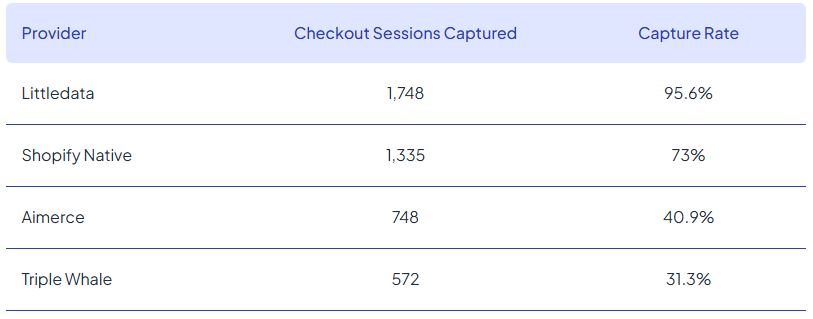
Most Shopify brands are optimizing the email when the real problem is the signal. And often the real issue is simpler than people want to admit: The flow never saw enough buyers in the first place. Pointblank Marketing tested six tracking providers for Future Kind. The biggest difference was not the copy. Not the creative. It was who actually got detected at checkout. → Littledata captured 1,748 checkout started events (95.6% capture rate) → Shopify native: 1,335 (73%) → Triple Whale: 572 (31.3%) That matters because checkout started is one of the clearest signals of buying intent on Shopify. If you miss that event, your abandonment flow does not just perform worse. It misses the chance to fire for shoppers who were already close to buying. At Littledata, we see this a lot: Before you optimize the flow, make sure the flow can actually see intent. That is usually the higher-leverage fix.
Edward Upton tweet media
English
1
0
0
17
Edward Upton
Edward Upton@eUpton·
% of ad spend + attribution reporting is a built-in conflict. Not because agencies are bad people. Because that's how their incentives work. If they get paid on spend, they’re rewarded for proving “more orders”. And the easiest place to find “more orders” is attribution settings: Longer windows. More view-through. More assists. Retargeting gets the credit. I had a founder tell me they ran an influencer collab and sales spiked. Then the paid media agency turned up saying: “We drove most of that.” Sure, you probably retargeted some of that it. But showing ads to people already in checkout isn't demand gen. It's credit capture. Thomas Gleeson says attribution sits at the top of marketing conversations. But founders aren’t trying to grow attribution. They’re trying to grow profit: → Margin → Contribution profit → Payback That’s the stuff you scale. If your agency changed your attribution window tomorrow… would your performance improve overnight?
English
0
0
0
12
Edward Upton
Edward Upton@eUpton·
I’ve been using Claude Opus 4.6 for coding for a month. And the impact is far from the ‘AI is replacing engineers this year’ hype. Certainly, using Opus is quicker than specifying a task to a junior colleague. But even with lots of prompting, and using subagents to check and test the output, it still makes rookie mistakes. There’s NO WAY it’s ready to build a full production-ready app. Example: Yesterday I asked Claude to help me monitor Event Match Quality score in Meta. It came up with what looked like a comprehensive plan for data storage. But it was late at night and I only scanned the details. Today I asked Claude how the data collection was working. Zero results. “What went wrong Claude?” Firstly, we’d discussed where to get the access tokens for access Meta EMQs from. But Claude hadn’t remembered to store them. A critical step just got left off the to do. Then I find it made a really stupid architecture decision. Littledata sends 4 different server-side events into Meta. But Claude was only storing one EMQ per ad account. So whichever event was the last one to get checked... that overwrote the other 3 events. Fixing these issues isn’t hard. But it’s that fact that I’m sitting here babysitting Claude that makes it a long way off replacing an engineer. I’m sure I could tell Claude to make some intelligent guesses and stop bothering me every 5 minutes… … but lord knows what the output would look like then! How long have you managed to get Opus 4.6 to code uninterrupted before it veers off track?
Edward Upton tweet media
English
0
0
0
22
Edward Upton
Edward Upton@eUpton·
AI doesn't kill SaaS. It just makes feature differentiation a shallow moat. Because if everyone can ship faster… shipping faster stops being a strategy. All these posts saying 'we shipped 5 new features yesterday with AI' are missing the point. We're focussed on one thing at Littledata. If our product vanished on Friday, how many people are pulling their hair out by Monday? → Do teams lose their “source of truth”? → Do they have to rebuild automation flows? → Does someone open a spreadsheet and start swearing? The product needs data gravity, workflow depth, and switching costs. There's a lot of talk about “attack adjacencies” from using AI - but that's a dangerous concept. If your product isn't inherently sticky, expanding sideways just gives customers more shallow footprint to rip out later. In our space, there are a hundred ways to build a prettier dashboard. At Littledata, the hard-to-replace data layer is the one that is most accurate at reconciling marketing signals to Shopify orders (especially once Markets, consent, returns etc make the numbers disagree). We're building a product which is the bedrock of our customers' marketing performance. So we're not worried that a startup competitor will clone our features in a weekend.
English
0
0
0
9
Edward Upton
Edward Upton@eUpton·
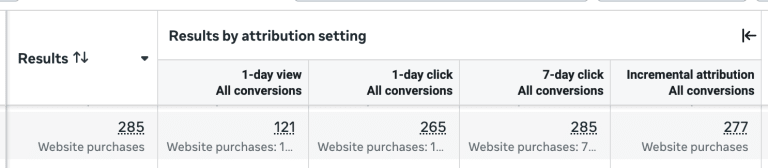
Most teams talk about Meta attribution like it’s a scoreboard. It’s not. It’s training data. So when I hear: “Meta says we’re at 4x ROAS” My next question is always: “Cool. What did we teach Meta to count as a win?” Because if view-through is doing the heavy lifting… …you’re not just “over-reporting.” You’re optimizing the system on a flattering truth. And the machine will take the shortest path to more “wins”: - More retargeting disguised as prospecting - More existing customers counted as new - More high-intent buyers getting the credit for what they were going to do anyway That’s Meta being very good at the game you gave it. Byron Marr (founder of ProfitSpring) suggests using a stricter definition of “conversion”: 1) Optimize to 7-day click Yes, ROAS drops. That’s often the first honest number you’ve seen in months. 2) Segment like you mean it Prospecting isn’t “people who didn’t buy in the last 7 days”. Give existing + lapsed customers their own lanes. 3) Use incrementality as the lie detector If your “performance” disappears when you tighten attribution… it wasn’t performance. Once you go stricter, you’re relying on fewer, cleaner signals. That’s exactly why we obsess over server-side, Shopify-first conversion tracking. Because it makes the optimization loop less dumb. If you want Meta to learn from reality, you need to make reality easier to learn from. If you're the person signing off spend, drop a comment with "Meta" for the full breakdown.
Edward Upton tweet media
English
0
0
0
13
Edward Upton
Edward Upton@eUpton·
Just back from another great Littledata meetup in Bucharest. It was unexpectedly snowy - but at least a change from the British rain! 37 years ago, the whole of Romania was ruled from the Communist party headquarters in the photo. This week Littledata's leadership team met across the road to consolidate our rule of the Shopify data domain. 🤓 This is how we make remote-first work. Spending a few days living, thinking and dining together. Immersed in what's working at Littledata and what we can improve. This meetup was for also for our product & engineering team. A number of whom are based in Bucharest. But I look forward to our whole company offsite in April when all 26 team members will fly to Malaga, Spain for a week for some precious time to plan in the sun. This year we'll be bringing more agency partners that ever to our Agency Summit (as part of the offsite) and bringing some fresh talks on how agencies can use Littledata to retain and scale brands. Remote working is fantastic for flexibility. But it only works when we can work together in person a few times a year to align around our shared vision.
Edward Upton tweet mediaEdward Upton tweet media
English
0
0
0
15
Edward Upton
Edward Upton@eUpton·
If you’re running Shop Campaigns, you just became an early advertiser on ChatGPT. No pitch deck. No new setup. Just a new place your products can show up when someone asks ChatGPT what to buy. Here’s how it works: Someone clicks your product in ChatGPT → they land in Shop to complete the purchase → you’re charged your set CAC when they buy. This looks like “free incremental demand”. But the question is: Are you buying new customers… or renting your own demand back from a new surface? Because this channel has two properties that will catch teams out: 1) It’s outcome-priced, not click-priced That sounds safer. But it also means Shopify controls more of the story about what caused the purchase. 2) It sits between discovery and your store The customer didn’t hit your PDP first. They hit ChatGPT → Shop → order. Great for friction. Also where visibility quietly dies. So the actionable takeaway isn’t “test harder”. It’s simpler: Treat this like a marketplace channel, not an ad platform. - Judge it on net new customer orders and profit after refunds, not just ROAS - Expect attribution to look “clean” even when the underlying story isn’t - Make sure you can reconcile whatever this reports back to Shopify orders This is exactly why we built Littledata the way we did: Shopify-first, server-side signals — so when new surfaces like ChatGPT appear, you can still tie performance back to reality. Photo credit: Exploding Topics
Edward Upton tweet media
English
0
0
0
27
Edward Upton
Edward Upton@eUpton·
We pulled GA4 data across 12 ecommerce verticals to see what “AI referrals” actually do on-site. Here’s the discouraging truth: AI traffic was <1% of sessions. But the behavior tells a different story: 1) Engagement often looks better They browse, read and compare. They're on “research mode”, not “add-to-cart mode” yet. 2) Conversion often looks worse Not because AI traffic is “bad”. That's because it’s frequently earlier in the journey (and includes first-time buyers). Which leads me to the real point: GA4 makes it easy to draw the wrong conclusion if you just check last-click. So the clean way to do it is: → Measure engagement at the session level (because GA4 engagement is session-based) → Measure conversion at the user level by building a cohort: “Users who had an AI session at any point in time” That one tweak stops you from assuming: “AI doesn’t convert therefore AI doesn’t matter”. What a Shopify brand should do next: 1. Create an AI traffic segment in GA4 (source/medium/referrer) 2. Compare AI sessions vs all sessions for engagement 3. Compare AI-exposed users vs other users for conversion over time 4. Treat AI like top-funnel influence until the data proves otherwise At Littledata, this is why we’re stubborn about Shopify-first, server-side signals as the source of truth. New shopping surfaces will keep showing up. If your measurement can’t survive a new surface, you’ll end up optimising a story you don’t trust. Question for you: When AI traffic goes from 0.5% to 5%… will your dashboards notice?
Edward Upton tweet media
English
0
0
0
11
Edward Upton
Edward Upton@eUpton·
235 registrations so far for: Better Data for Retention on Shopify. That tells me something. Retention is still being treated as a flow problem. It isn’t. On Shopify, retention is often limited by data quality long before offers or loyalty programmes come into play. If your Shopify-native signals are inconsistent: • Subscriptions don’t reconcile cleanly • Email and SMS events misfire or duplicate • Post-purchase journeys fragment • LTV becomes harder to trust Then optimisation doesn’t compound. It plateaus. On March 3 (11am ET / 4pm UK), I’ll break down: → What better data actually looks like on Shopify → The small number of signals lifecycle truly depends on → How clean data supports retention and operational decision-making as brands scale Thanks to Zachary McClung, founder at TaskHusky and Style&Scale, for the invitation to speak. If you’re one of the 235, see you there. If not, there’s still time. Link in the comments.
Edward Upton tweet media
English
0
0
0
8
Edward Upton
Edward Upton@eUpton·
Glen Coates joining OpenAI as Head of App Platform isn’t really about “apps”. It’s about checkout. Glen spent years at Shopify building the developer + partner ecosystem that turns a product into default infrastructure. And Shopify’s real trick wasn’t “integrations”. It was standardising the primitives: identity, payments, and the receipt. Now zoom out. Nick Turley (Head of ChatGPT) has been pretty explicit about making ChatGPT an “operating system” with third-party apps living inside the chat. Which means ChatGPT wants to become the layer where intent = transaction. - “Compare these hoodies” → buy - “Reorder my supplements” → renewal - “Book that flight” → commission - “Find the best bundle” → upsell + rev share That’s why this hire matters. Glen knows how Shopify made an ecosystem feel inevitable. How might he bring that Shopify ecosystem to ChatGPT? My guess: he’ll import the playbook that worked in ecommerce: 1. Make it insanely easy for partners to build (SDK, templates, rails) 2. Make distribution inside ChatGPT feel like “the default” 3. Then monetize the flows that matter: payments + commerce + rev share Which makes their app platform a moat. If ChatGPT becomes the “OS”, the real fight will be: who owns the receipt.
Edward Upton tweet media
English
0
0
0
27
Edward Upton
Edward Upton@eUpton·
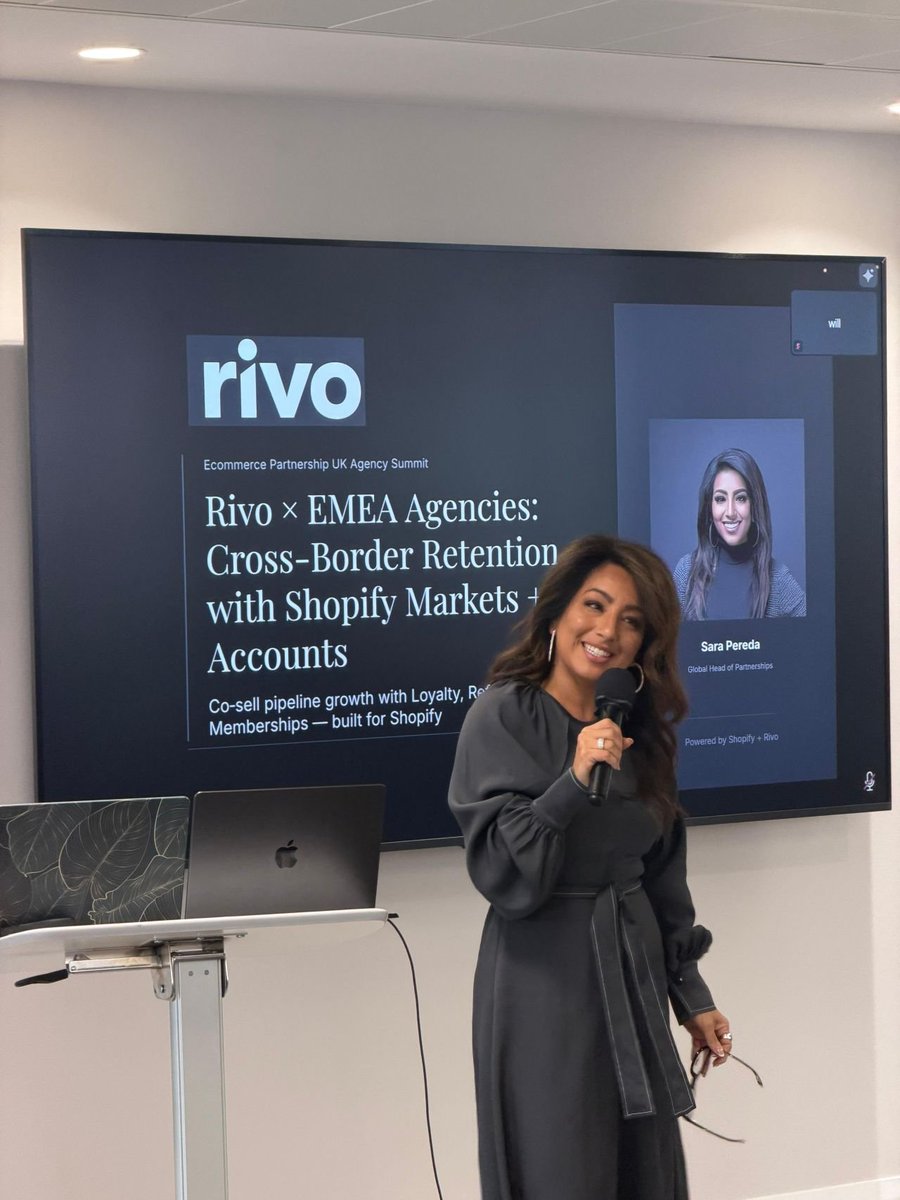
There’s a moment in every agency’s growth where the conversations change. Early on, it’s about winning work. Later, it’s about defending decisions. Last week at the Ecommerce Agency Growth workshop, that shift was clear. What I valued most wasn’t the stage. It was the space. Because in day-to-day agency work, conversations are compressed. Campaigns. Deadlines. Performance updates. There isn’t always time to step back and interrogate the bigger questions. The roundtables gave us that. Direct questions on product direction. Clear competitor comparisons. Positioning. Honest feedback. As a founder, that’s the kind of room I want to be in. A few themes were consistent. As agencies scale, growth gets more complex. More channels. More scrutiny. More competition. Higher expectations. The work is now fully cross-functional. Creative, paid, lifecycle, CRO, and finance all own the same revenue number. That should create alignment. But when ads, analytics, and marketing automations don’t align, momentum slows. Because confidence in the numbers isn’t there. What struck me most last week was how universal this felt. Whether the agency was 10 people or 100, the tracking confusion sounded the same. Massive thanks to everyone who came, challenged, and shared. And to Klaviyo, Rivo, and Tapcart for getting everyone together. Special thanks to Rachel Jacobs and Will Lynch for hosting. I’m looking forward to working even more closely with the wider EAG community in 2026. If you’re running an agency, here’s the question I’d bring to your next client QBR: “If you had complete confidence in the data, would your strategy look different?” That’s the problem we’re trying to solve at Littledata: being the core infrastructure agencies and brands can build on when they’re tired of not knowing which numbers to trust. Rooms like this matter. They create space for the conversations that don’t fit into a 30-minute status call.
Edward Upton tweet mediaEdward Upton tweet mediaEdward Upton tweet mediaEdward Upton tweet media
English
0
0
0
6