Dhanian 🗯️

60K posts

Dhanian 🗯️ banner
Dhanian 🗯️

Dhanian 🗯️

@e_opore

SoftwareDev. Roadmaps,Cheatsheets, Projects with Source Code & Resources.Learn with me.Coding Ebooks: https://t.co/g835vCPNQA.

coffee ☕ Katılım Ekim 2021
3.5K Takip Edilen62.5K Takipçiler
Sabitlenmiş Tweet
Dhanian 🗯️
Dhanian 🗯️@e_opore·
COMPLETE FULL STACK DEVELOPER ROADMAP: MASTERING MODERN DEVELOPMENT IN THE AI ERA (2026) written DAY-BY-DAY (1–365). Grab the Modern Full Stack Latest Edition Handbook: codewithdhanian.gumroad.com/l/fzqjct
Dhanian 🗯️ tweet mediaDhanian 🗯️ tweet mediaDhanian 🗯️ tweet mediaDhanian 🗯️ tweet media
English
41
111
719
48.7K
Dhanian 🗯️
Dhanian 🗯️@e_opore·
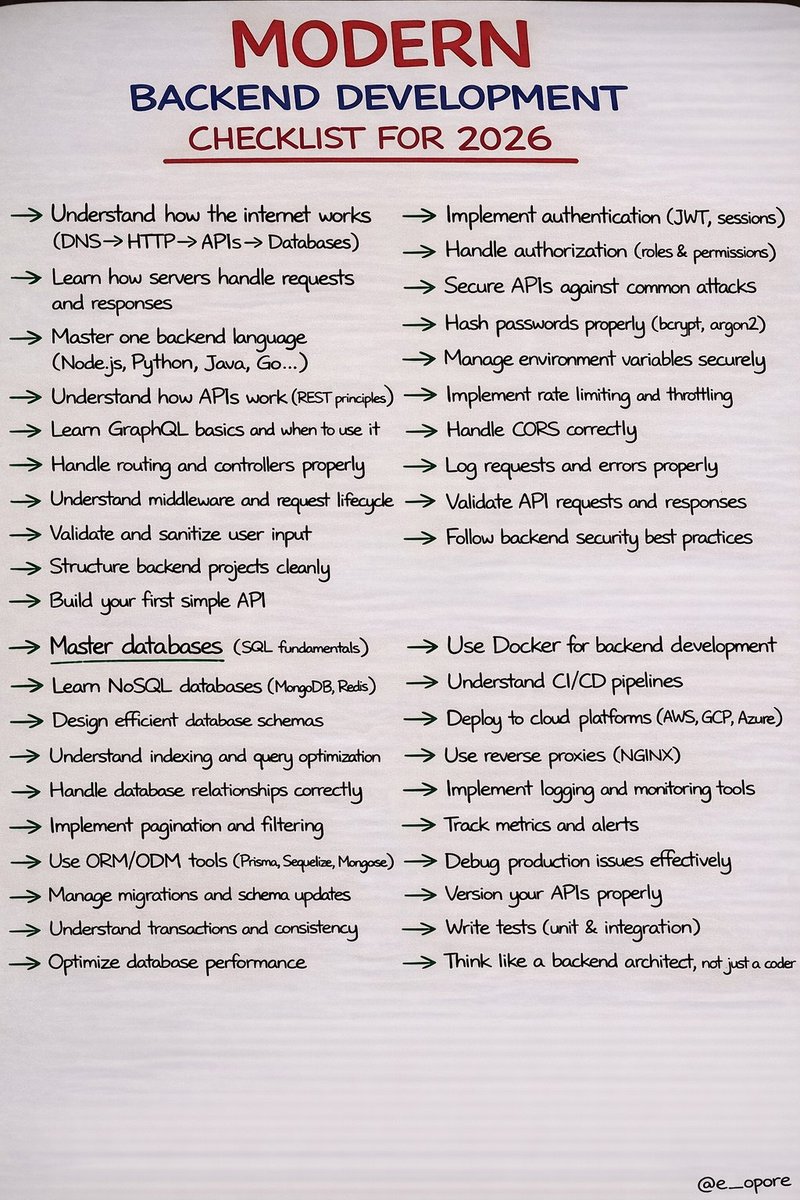
MODERN BACKEND DEVELOPMENT CHECKLIST FOR 2026 1 → Understand how the internet works (DNS → HTTP → HTTPS) 2 → Learn how servers handle requests and responses 3 → Understand client-server architecture deeply 4 → Learn how APIs work (REST fundamentals) 5 → Understand JSON and data exchange formats 6 → Learn HTTP methods, status codes, and headers 7 → Understand stateless vs stateful systems 8 → Learn how cookies and sessions work 9 → Understand CORS and security basics 10 → Build your first simple backend server 11 → Master one backend language (Node.js, Python, Java, Go) 12 → Learn how to structure backend projects cleanly 13 → Understand MVC and layered architecture 14 → Learn routing and middleware concepts 15 → Handle errors properly in your applications 16 → Validate and sanitize user input 17 → Work with environment variables 18 → Understand logging and debugging techniques 19 → Build reusable services and utilities 20 → Write clean, maintainable backend code 21 → Master databases fundamentals 22 → Learn SQL deeply (PostgreSQL, MySQL) 23 → Understand NoSQL databases (MongoDB, Redis) 24 → Design efficient database schemas 25 → Learn indexing and query optimization 26 → Handle database migrations 27 → Implement relationships (one-to-one, one-to-many, many-to-many) 28 → Use ORMs/ODMs effectively 29 → Implement caching strategies (Redis) 30 → Optimize database performance 31 → Build secure authentication systems (JWT, sessions, OAuth) 32 → Implement role-based authorization 33 → Hash passwords securely (bcrypt/argon2) 34 → Protect APIs against common attacks (XSS, CSRF, SQL injection) 35 → Implement rate limiting and throttling 36 → Secure environment secrets properly 37 → Use HTTPS and encryption 38 → Validate API inputs strictly 39 → Log and monitor suspicious activities 40 → Follow backend security best practices 41 → Learn Docker for backend deployment 42 → Understand CI/CD pipelines 43 → Use message queues (Kafka, RabbitMQ, SQS) 44 → Implement background jobs and workers 45 → Learn microservices architecture basics 46 → Monitor systems (logs, metrics, tracing) 47 → Optimize performance and scalability 48 → Deploy to cloud platforms (AWS, GCP, Azure) 49 → Build real-world backend projects (APIs, SaaS, dashboards) 50 → Think in systems, scalability, and reliability Grab the Backend Development Ebook: codewithdhanian.gumroad.com/l/ungqng
Dhanian 🗯️ tweet media
English
5
43
207
5K
Dhanian 🗯️
Dhanian 🗯️@e_opore·
HOW AI AGENTS HANDLE UNCERTAINTY → Real-world environments are unpredictable and incomplete. → AI agents rarely have perfect information when making decisions. → Uncertainty arises from noisy data, missing inputs, and dynamic conditions. → Handling uncertainty is essential for building reliable and intelligent systems. SOURCES OF UNCERTAINTY → Incomplete Information → the agent does not have full visibility of the environment. → Noisy Data → sensor or input errors distort reality. → Dynamic Environments → conditions change over time. → Ambiguity → multiple interpretations of the same input. → Model Limitations → imperfect predictions from AI models. PROBABILISTIC REASONING → Agents use probability to represent uncertainty. → Instead of fixed answers, they assign likelihoods to outcomes. → Bayesian reasoning updates beliefs as new data arrives. Example → an agent estimates a 70% chance of rain and adjusts decisions accordingly. BELIEF REPRESENTATION → Agents maintain a belief state instead of a single known state. → This belief is a distribution of possible realities. → As new observations come in, beliefs are updated. This allows agents to act even when information is incomplete. DECISION-MAKING UNDER UNCERTAINTY → Agents evaluate possible actions based on expected outcomes. → They choose actions that maximize expected utility. → Trade-offs are made between risk and reward. Example → a self-driving car slows down when visibility is low. MARKOV DECISION PROCESSES (MDPs) → Used for decision-making in uncertain environments. → Defines states, actions, rewards, and transitions. → Helps agents choose optimal policies over time. PARTIALLY OBSERVABLE MDPs (POMDPs) → Extension of MDPs for incomplete information scenarios. → Agents rely on belief states instead of exact states. → Common in robotics and navigation systems. REINFORCEMENT LEARNING → Agents learn through trial and error. → Rewards guide behavior toward optimal decisions. → Exploration helps discover better strategies despite uncertainty. HEURISTICS AND APPROXIMATIONS → Agents use simplified rules to make faster decisions. → Reduces computational complexity. → Useful when exact solutions are too expensive. Example → rule-based shortcuts in real-time systems. MULTI-AGENT UNCERTAINTY HANDLING → Agents share information to reduce uncertainty. → Collaborative reasoning improves decision accuracy. → Distributed systems can handle complex, uncertain environments better. REAL-WORLD APPLICATIONS → Autonomous vehicles handling unpredictable traffic → Financial systems managing market volatility → Healthcare AI dealing with incomplete patient data → Robotics navigating unknown environments CHALLENGES → Balancing accuracy with computational efficiency → Avoiding overconfidence in uncertain predictions → Handling conflicting or ambiguous data → Ensuring safe decisions in critical systems TIP → AI agents handle uncertainty by combining probabilistic reasoning, belief updates, and adaptive decision-making. → Instead of relying on perfect information, they operate on likelihoods and continuously refine their understanding. → This capability is what enables AI systems to function effectively in real-world, dynamic environments. For a complete deep dive into building intelligent, uncertainty-aware systems → get the AI Agent Developer's Handbook here: codewithdhanian.gumroad.com/l/gfkbh
Dhanian 🗯️ tweet media
English
3
8
35
891
Swapna Kumar Panda
Swapna Kumar Panda@swapnakpanda·
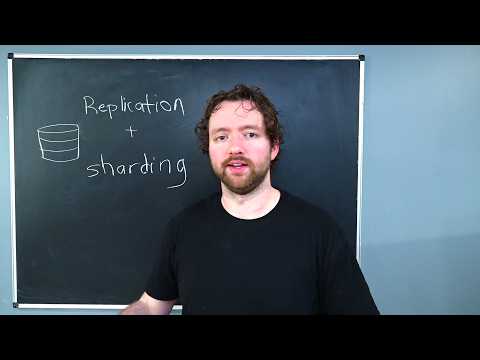
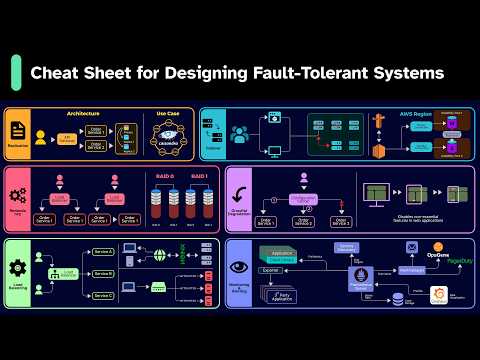
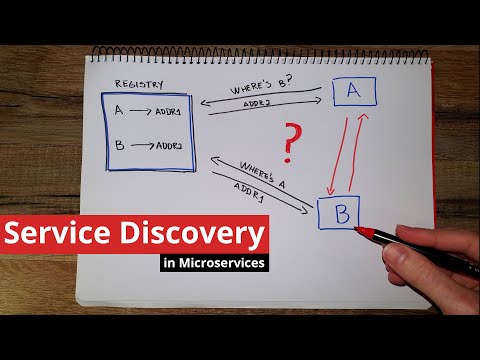
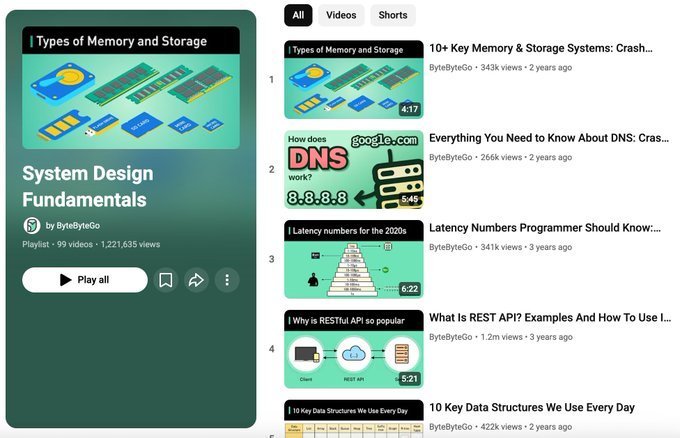
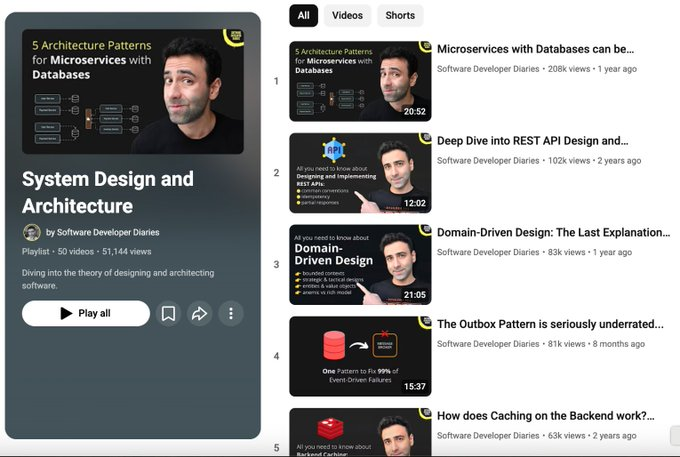
Learning System Design in 2026? Go for these completely FREE courses: 1. Fundamentals youtube.com/playlist?list=… 2. API Design youtube.com/watch?v=DQ57zY… 3. Load Balancing youtube.com/watch?v=xg7Dj2… 4. Message Queues youtube.com/watch?v=DYFocS… 5. Rate Limiting youtube.com/watch?v=MIJFyU… 6. Caching youtube.com/watch?v=1NngTU… 7. Sharding & Partitioning youtube.com/watch?v=wXvlje… 8. Database Replication youtube.com/watch?v=oh8GvL… 9. Consistent Hashing youtube.com/watch?v=vccwdh… 10. CAP Theorem youtube.com/watch?v=RexrIN… 11. Microservices youtube.com/watch?v=vTjeDW… 12. Fault Tolerance youtube.com/watch?v=3Lis4w… 13. Scalability youtube.com/watch?v=tjubQ9… 14. Event-Driven Architecture youtube.com/watch?v=Fb_0UO… 15. Service Discovery youtube.com/watch?v=v4u7m2…
YouTube video
YouTube
YouTube video
YouTube
YouTube video
YouTube
YouTube video
YouTube
YouTube video
YouTube
YouTube video
YouTube
YouTube video
YouTube
YouTube video
YouTube
YouTube video
YouTube
YouTube video
YouTube
YouTube video
YouTube
YouTube video
YouTube
YouTube video
YouTube
YouTube video
YouTube
Swapna Kumar Panda tweet mediaSwapna Kumar Panda tweet mediaSwapna Kumar Panda tweet mediaSwapna Kumar Panda tweet media
English
13
82
296
18.5K
ClarionAI
ClarionAI@ClarionAISG·
@e_opore Strong breakdown. KMS isn’t just about encryption, it’s about centralized control, auditability, and making security scalable across the entire cloud stack.
English
1
0
1
5
Dhanian 🗯️
Dhanian 🗯️@e_opore·
How AWS Handles Key Management Introduction → AWS manages encryption keys using AWS Key Management Service (KMS) → Provides secure creation, storage, and control of cryptographic keys → Fully managed with high availability and durability AWS KMS (Key Management Service) → Central service for managing encryption keys → Supports symmetric and asymmetric keys → Integrated with most AWS services (S3, EBS, RDS, Lambda) → Automatically handles key storage and lifecycle Key Types → Customer Managed Keys (CMKs) Full control over key policies and lifecycle → AWS Managed Keys Automatically created and managed by AWS services → AWS Owned Keys Fully managed by AWS with no user control Encryption Process → Data is encrypted using a data key → Data key is encrypted using a master key (KMS key) → Only encrypted data keys are stored → Decryption requires access to KMS Envelope Encryption → AWS uses envelope encryption for performance → Encrypt large data with data keys → Encrypt data keys with KMS master keys → Reduces direct KMS usage and improves speed Access Control & Security → Controlled using IAM policies and key policies → Fine-grained permissions for key usage → Supports grants for temporary access → Integrated with AWS CloudTrail for auditing Key Rotation → Automatic yearly rotation for KMS keys → Manual rotation supported for more control → Ensures long-term cryptographic security Integration with AWS Services → S3 → Server-side encryption (SSE-KMS) → EBS → Encrypted volumes → RDS → Encrypted databases → Lambda → Secure environment variables → Secrets Manager → Secure secrets storage Monitoring & Auditing → All key usage logged in CloudTrail → Monitor access and detect anomalies → Ensure compliance and security governance High Availability & Durability → Keys stored across multiple Availability Zones → Designed for 99.999% durability → No single point of failure Why It Matters → Protects sensitive data → Enables compliance (GDPR, HIPAA, etc.) → Centralizes encryption control → Reduces risk of data breaches Grab the AWS Handbook; codewithdhanian.gumroad.com/l/tbpasf
Dhanian 🗯️ tweet media
English
12
18
98
2.3K
Guptha Gudivada | DevOps & SRE
@e_opore Great breakdown. Envelope encryption is the key concept most people miss — it’s what makes KMS scalable and efficient.
English
1
0
1
22
Mohammed Tawakkal Ahmed
Mohammed Tawakkal Ahmed@Tawakkalah13_10·
HTTP (HyperText Transfer Protocol) Data is sent in plain text and anyone on the network can see or steal the data it’s not secure Ex http;//examplecom No encryption is vulnerable to attacks HTTPS (HTTP Secure) Data is encrypted and hackers can’t read or change the data it’s Very secure Ex https;//examplecom data is Protected
English
14
11
130
4.8K
Sevalla
Sevalla@sevalla_hosting·
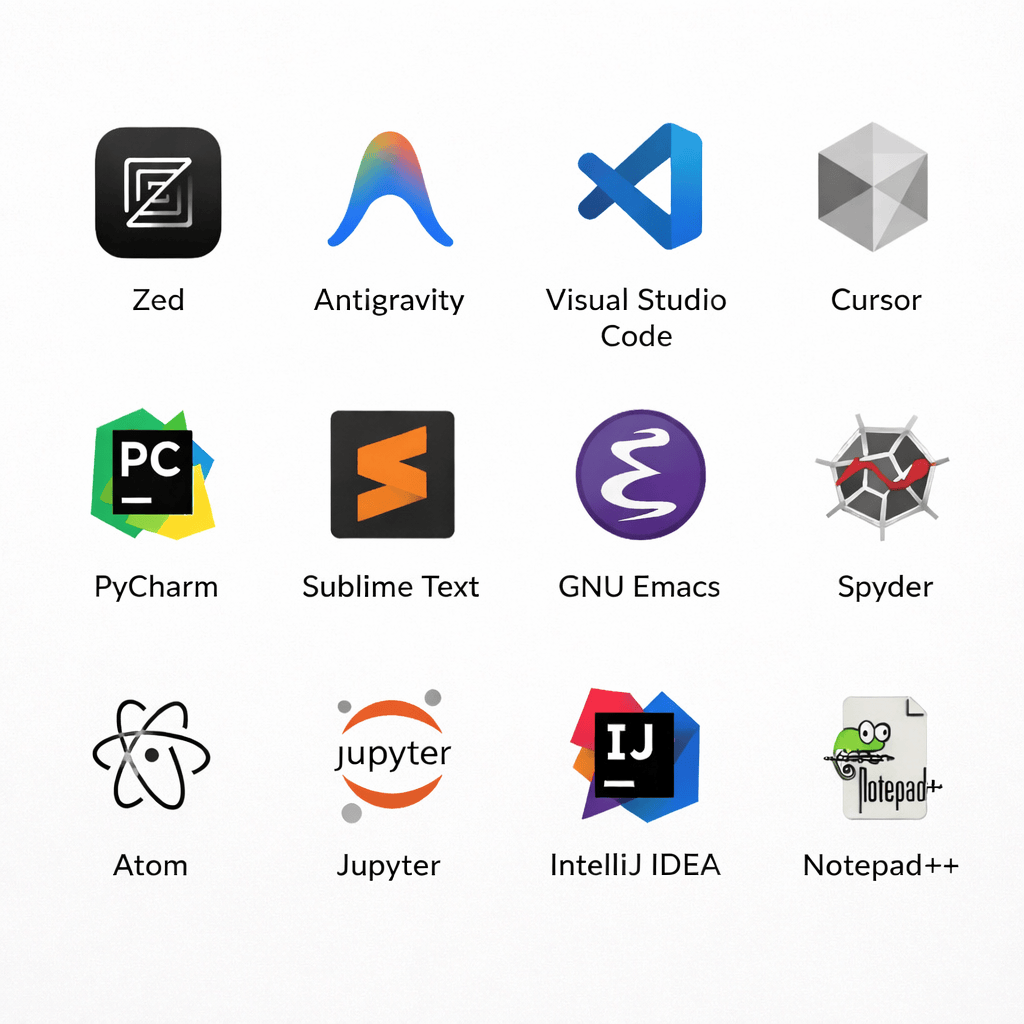
What's your preferred code editor?
Sevalla tweet media
English
20
0
12
876
Ritika Agrawal
Ritika Agrawal@RitikaAgrawal08·
push(), pop(), shift() & unshift() in JavaScript 👇 These are basic array methods used to add or remove elements from the beginning or end of an array. ✨ Important pointers : ▪️ push() → adds elements to the end of an array ▪️ pop() → removes the last element ▪️ shift() → removes the first element ▪️ unshift() → adds elements to the beginning Remember that all these methods modify the original array (they are mutable).
Ritika Agrawal tweet media
English
7
4
34
587
Jaina
Jaina@Jainadave_·
Dear Algorithm, Connect me to all gym lovers ☺️
Jaina tweet mediaJaina tweet media
English
38
3
127
1.7K
Swapna Kumar Panda
Swapna Kumar Panda@swapnakpanda·
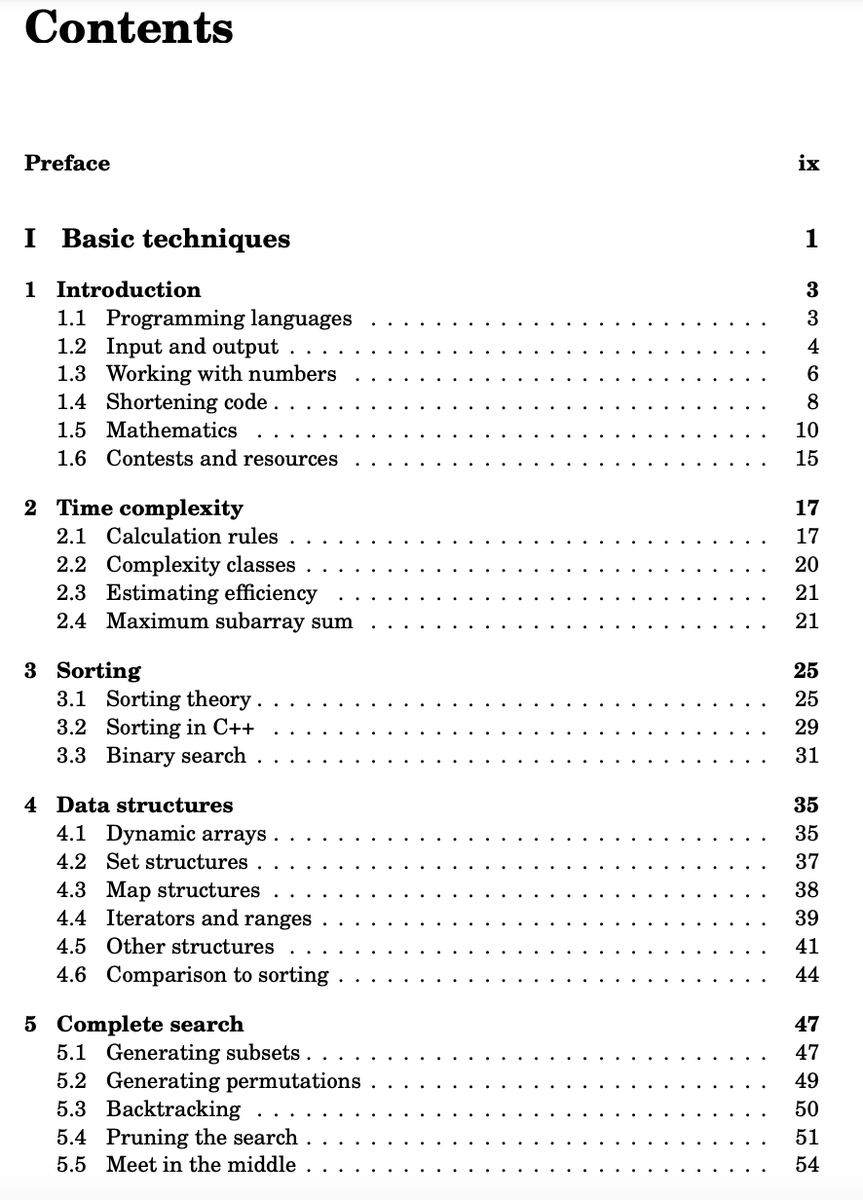
"Competitive Programmer’s Handbook" It covers 30 important topics from DSA. A MUST for tech interviews. Download this FREE book → cses.fi/book/book.pdf
Swapna Kumar Panda tweet media
English
16
76
413
26.2K