Dongkeun Choi

45 posts

Dongkeun Choi

Dongkeun Choi

@eastroot7

Econ PhD student at @UCSDEcon / Macroeconomics

San Diego, CA Katılım Kasım 2021
429 Takip Edilen49 Takipçiler
Dongkeun Choi retweetledi

MacroPru😷
MacroPru😷@MacroPru·
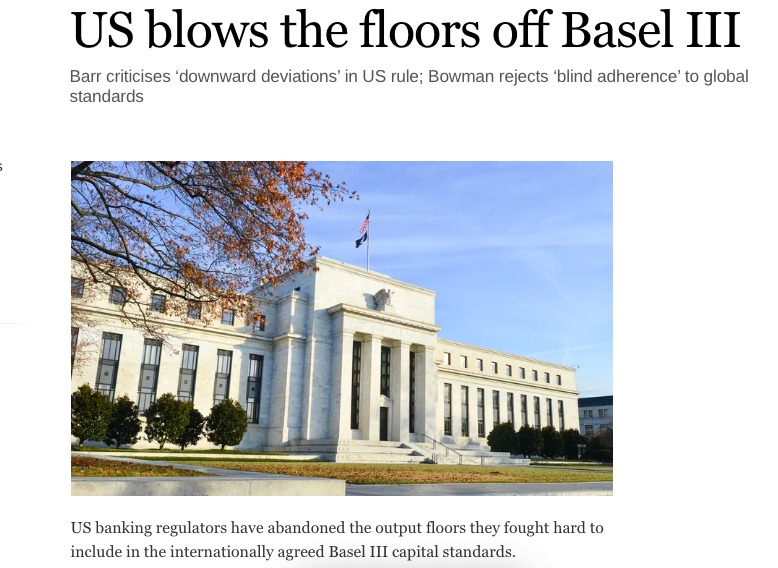
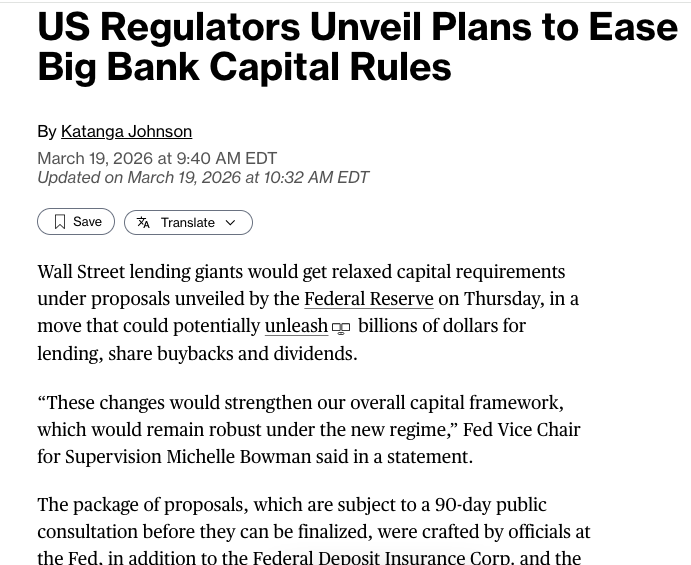
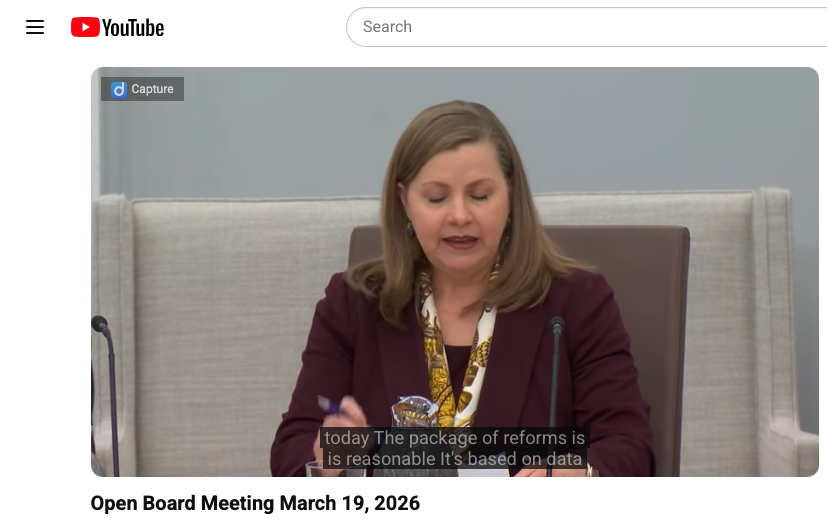
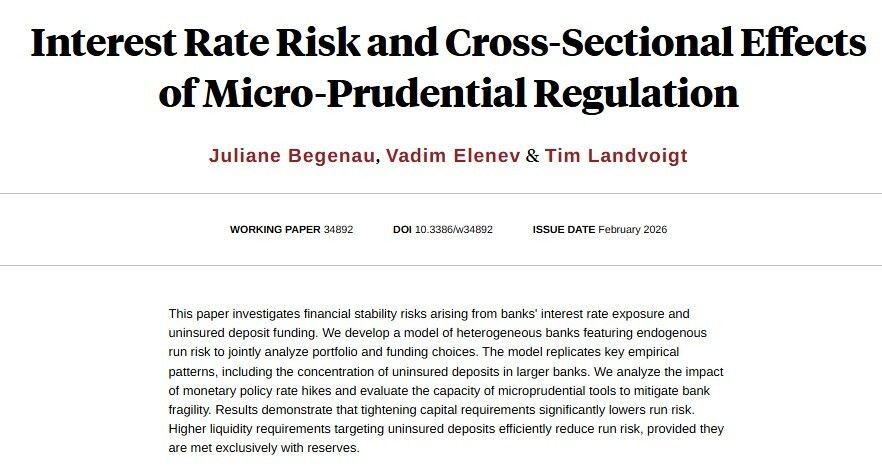
(Basel III) "US Regulators Unveil Plans to Ease Big Bank Capital Rules; ... move could potentially unleash billions of dollars for lending, share buybacks and dividends." bloomberg.com/news/articles/…
MacroPru😷 tweet mediaMacroPru😷 tweet mediaMacroPru😷 tweet media
English
0
2
4
401
Dongkeun Choi retweetledi
Markus K. Brunnermeier
Markus K. Brunnermeier@MarkusEconomist·
R.I.P. Christopher Sims (21 Oct. 1942 - 14 March 2026) - a giant in macroeconomics and one of the finest human beings I have ever met -
Markus K. Brunnermeier tweet media
English
34
452
1.8K
502.9K
Dongkeun Choi retweetledi
David Beckworth
David Beckworth@DavidBeckworth·
Ed Leamer famously argued “Housing is the Business Cycle”. This paper adds color to that claim by showing monetary policy ⇒ mortgage rates ⇒ house prices ⇒ home equity borrowing ⇒ aggregate demand. Housing also affects fertility, as @JesusFerna7026 noted on the pod this week. Housing truly sits at the nexus of many macro dynamics.
Joe Hazell@JADHazell

When interest rates fall, do people spend more? And if so why? We argue monetary policy affects consumption mostly because house prices rise when rates fall, and households borrow against their homes. With superstar coauthors Angus Foulis, @AtifRMian and Belinda Tracey. 1/5

English
1
17
74
11.4K
Dongkeun Choi retweetledi
Ralph Lütticke
Ralph Lütticke@RalphLuet·
🧑‍🔧Paper update (with David Bügel and Albert Hidalgo): Unconventional but Different After All? A Unified Series of Narrative Monetary Policy Shocks We construct the longest available narrative monetary policy shock series for the U.S. Paper + Codes 👇 ralphluetticke.com/files/BHL_2026…
English
1
9
43
4K
Dongkeun Choi retweetledi
Jon Steinsson
Jon Steinsson@JonSteinsson·
I am really not a big fan of the notion of showing how one’s model does on “untargeted moments.” Better to simply talk about how many things one’s model can fit. Distinction between “targeted” and “untargeted” moments is often dubious. 1/3
English
3
8
96
0
Dongkeun Choi retweetledi
Jon Steinsson
Jon Steinsson@JonSteinsson·
I want to take a moment to defend calibration. A common critique of macro by non-macro people centers on the supposed lack of scientific rigor associated with calibration of models. 1/10
English
7
156
696
0
Dongkeun Choi retweetledi
Emil Verner
Emil Verner@EmilVerner·
New paper on bank runs with Correia and Luck: "Bank Runs With and Without Bank Failure" Questions: - What are the determinants of runs? - When do bank runs result in bank failure? - Can runs trigger the failure of healthy banks and amplify small shocks into large crises? - Are runs themselves the initial cause of financial distress or are they a symptom of deeper fundamental solvency problems in the financial system? What we do: - Apply LLMs to historical newspapers to uncover over 4,000 runs on individual banks in the pre-FDIC US banking system from 1863 to 1934. Capture the most famous runs (Bank of the US - Merge data on runs and other bank-level events discussed in newspapers (suspensions, failures) to bank-level fundamentals (harder than it sounds!) What we find: (1) Runs are considerably more likely in weak banks, but can also occur in strong banks, especially in response to negative news about the real economy or the broader banking system. (2) However, runs typically only result in failure for banks with weak fundamentals [see figure below]. Strong banks survive runs through various mechanisms, including interbank cooperation, equity injections, public signals of strength, and suspension of convertibility (3) At the local level, poor fundamentals necessary for runs to translate into large declines in lending. Moreover, bank failures (with and without runs) translate into substantially larger declines in deposits and lending than runs without failures. Overall takeaways: - Poor fundamentals are key for whether runs pass through into failure and have severe consequences for the broader economy. - The findings temper the view that small shocks can result in large jumps to bad equilibria via runs on demandable debt. Full paper here. Comments welcome. Given the methodology and evolving AI tools, we expect to make refinements to the runs database over time. Any input is welcome. static1.squarespace.com/static/58f6b1c…
Emil Verner tweet media
English
3
54
182
51.7K
Dongkeun Choi retweetledi
Moritz Kuhn
Moritz Kuhn@kuhnmo·
In response to the many requests, we have compiled most of the data from our paper into clean, easily accessible files so others can explore and build on our work. 👉dropbox.com/scl/fo/u1en2c9… If you use the data for research or reports, please cite our paper! @XinchengQiu
Moritz Kuhn@kuhnmo

My paper with Iourii Manovskii & @XinchengQiu "The Geography of Job Creation and Job Destruction" is now out in the Journal of Monetary Economics doi.org/10.1016/j.jmon… We document novel facts on spatial labor market differences and how a textbook model accounts for them!
English
3
31
151
14K
Dongkeun Choi retweetledi
Alex Imas
Alex Imas@alexolegimas·
New post : Can a Transformer “Learn” Economic Relationships? Revisiting the Lucas Critique in the age of Transformers. with @arpitrage We simulated data from an NK model, fit a transformer, and tested out of sample fit How did it do? Pretty well! Link and thread in reply:
Alex Imas tweet media
English
11
52
286
165K
Dongkeun Choi retweetledi
Emil Verner
Emil Verner@EmilVerner·
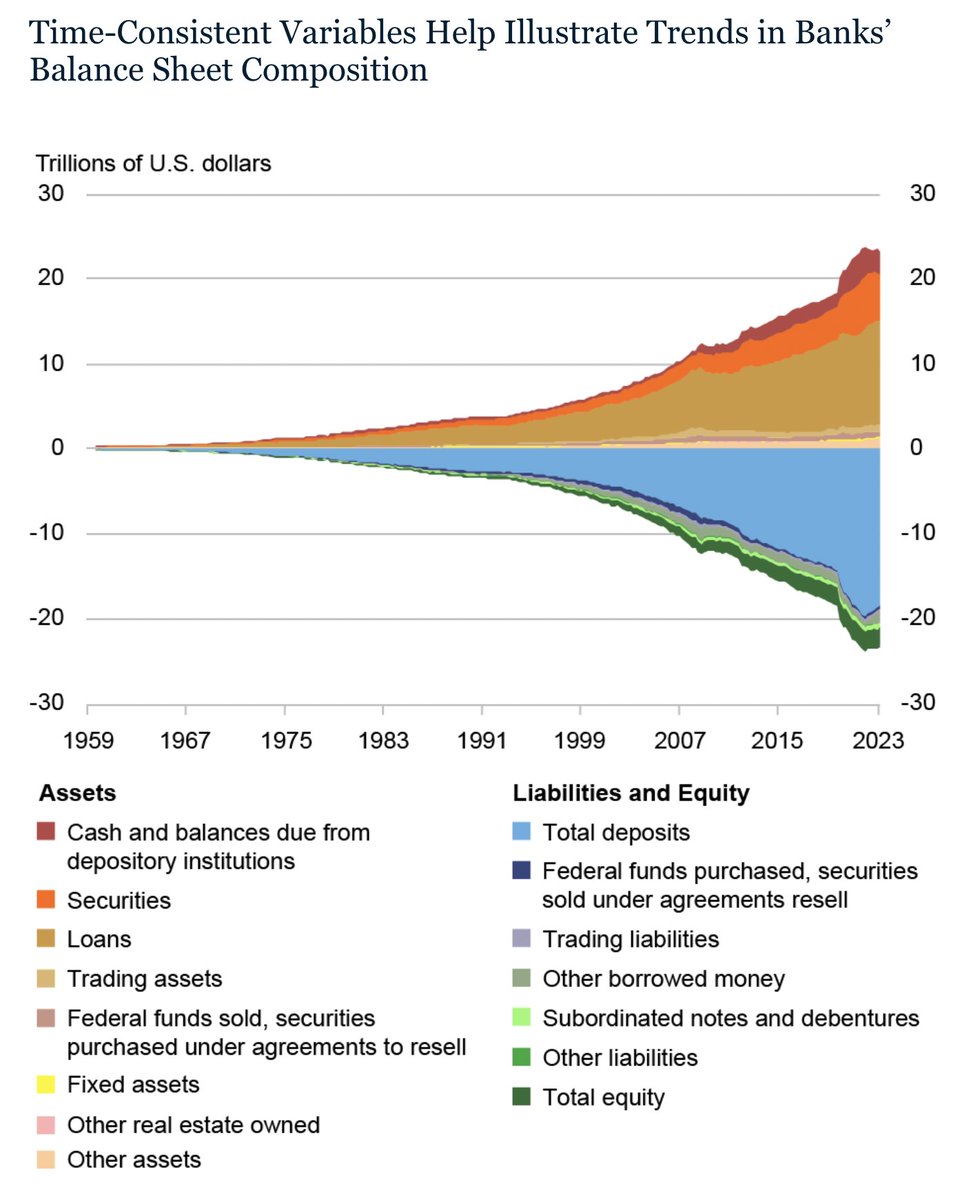
🚨New dataset🚨 Time-consistent balance sheets and income statements for commercial banks in the United States from *1959* to 2025. newyorkfed.org/research/banki… 1/
Emil Verner tweet media
English
1
32
152
19.3K
Dongkeun Choi retweetledi
Christian Matthes
Christian Matthes@cmatthes_econ·
How can we leverage existing results that use cross-sectional identification to estimate aggregate effects? Felipe Schwartzman (@MacroInPieces), Naoya Nagasaka, and I address this problem in our new paper “Estimating the Missing Intercept”. cm1518.github.io/files/MNS.pdf
English
1
21
54
9.3K
Dongkeun Choi retweetledi
Matthias Meier
Matthias Meier@MatthiasMeier1·
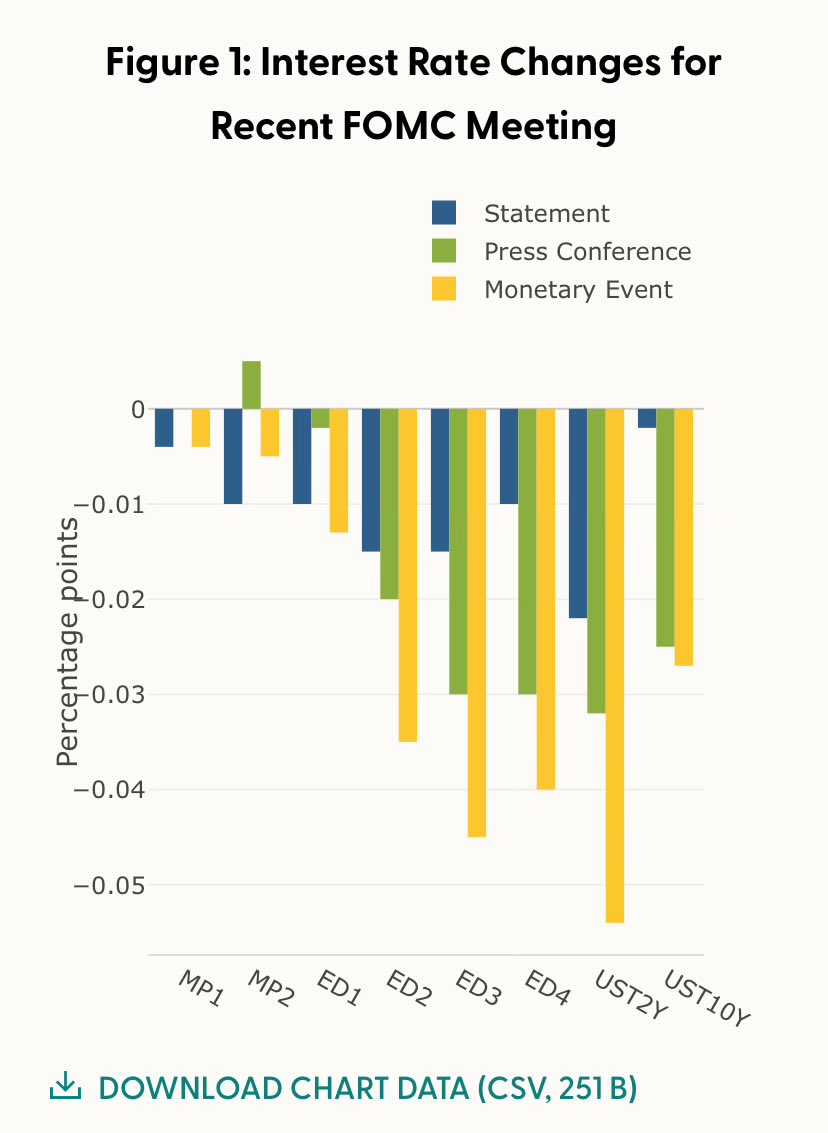
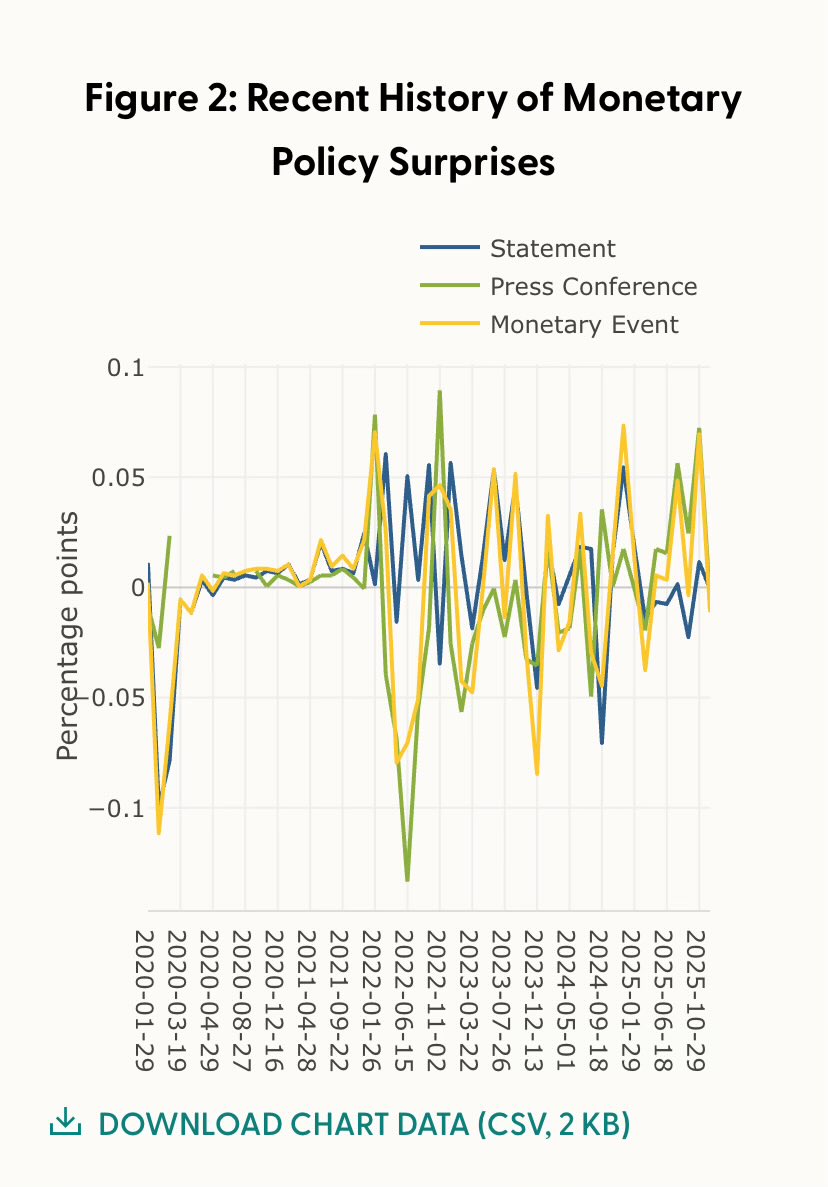
🚨Now publicly available: New monetary policy shock series Download link: matthias-meier-econ.github.io/files/HackIstr… A brief 🧵: 1/4
Lukas Hack@LukasHack_

I am very happy that my paper on the systematic origins of monetary policy shocks (joiint with @KlodianaIstrefi @MatthiasMeier1) is out as @banquedefrance Working paper: lnkd.in/eYkz7gfa We also made our new monetary policy shocks available: shorturl.at/239f6

English
1
19
73
10.5K
Dongkeun Choi retweetledi
Nick Timiraos
Nick Timiraos@NickTimiraos·
SF Fed study examines 150 years of U.S. tariffs and find that they lead to lower inflation and weaker aggregate demand (which raises unemployment) frbsf.org/wp-content/upl…
Nick Timiraos tweet media
English
265
552
2.4K
1.7M