
Eduardo CF

1.4K posts

Eduardo CF banner
Eduardo CF

Eduardo CF

@ecfk0

Economic Sociologist at @ISEG Research,ULisboa (monetary theory, evolution of human cooperation, social currencies). Headless caipira.

Lisbon, Portugal Katılım Ekim 2009
5.3K Takip Edilen280 Takipçiler
Eduardo CF retweetledi
Matthew D. Sacchet
Matthew D. Sacchet@MatthewSacchet·
Here I announce a breakthrough in the neuroscience of the highly refined meditative states known as jhānas, revealing biological mechanisms of deep states of absorption that are profound, restorative, and deeply beneficial for the mind. The jhanas are deep states of meditative absorption wherein the mind becomes deeply immersed in a meditation object and other aspects of awareness recede. These states are thought to: (1) deeply stabilize the mind; (2) serve as both a launchpad, and an inner laboratory, for investigating deep experiential aspects of the mind and perceptual reality; (3) help uproot unwholesome mental habits; and (4) offer rare glimpses into the genuine possibility a stable and reliable form of happiness. In this way, the jhānas are thought to prepare the mind for the meditative endpoint known as Nibbāna, or full Enlightenment. Now, for the first time ever in the history of science, we have used cutting-edge brain imaging (7T fMRI) in a group of advanced meditators to measure the neural correlates of jhana-type advanced concentration absorption meditation (ACAM-J), including mapping the eight ACAM-J states evolving from joyful, energized focus to profound formlessness, where sensory content and self-referential thought fade entirely to reveal expansive, boundless awareness, and ultimately nothingness. Here's what we found: – Brain regions associated with self-monitoring and internal chatter (e.g., prefrontal cortex) quieted down, while areas involved world sensing and bodily awareness (including visual and midline regions) became more active. – The brain’s usual hierarchy, from sensory-specific to high-level integrative areas, became more compressed, suggesting more unified, integrated brain function. – Patterns of brain activity (eigenmodes) showed a U-shaped shift: early absorption states compressed cortical dynamics, while later states re-expanded, refined, and organized them. – Changes in brain activity tracked closely with reported experience including equanimity, stable attention, clear awareness, and reduced suffering-related processes. – The brain can volitionally enter coherent and stable states of deep awareness that are at the opposite pole from psychological distress. Beyond potentially supporting mental health and wellbeing, these findings challenge mainstream models of consciousness with evidence that consciousness can persist in ways current models have yet to explain. Instead, the neuroscience of this ancient meditation opens an important new scientific window into the human brain’s inherent capacity to radically transform itself. My deepest gratitude to our extraordinary team: Winson Yang @winsonfzyang (first author), Ruby Potash, Grace Mackin, Isidora Beslic, Marta Bianciardi, and Terje Sparby @terjesparby. If this study resonates with you, please consider sharing it as this work thrives on our growing global community’s generosity and insights. Please find the full preprint below ⤵️
Matthew D. Sacchet tweet mediaMatthew D. Sacchet tweet mediaMatthew D. Sacchet tweet media
English
33
96
557
48.5K
Eduardo CF
Eduardo CF@ecfk0·
@pretentiouswhat Nice overview. Isn't China's low urbanization rate (compared to other middle-income countries, let alone the developed world) part of the story? In Brazil at least, most of the poverty is urban and it's also hard to translate 'peasant' - there's just no clear social equivalent
English
0
0
0
108
David Fishman
David Fishman@pretentiouswhat·
2/2 Longer, more nuanced answer: In the western context, "peasants" describe pre-industrial (or even feudal), typically non-landowning laborers, particularly agricultural. Marx wrote about peasants as a social class more than as a profession and thus 农民 was a suitable translation for the time. 农民 can mean "farmer" but is far more relevant as a social and economic class signifier than a job, which is why "peasant" continues to be used. This is quite standard in academic literature, but can also be found in China Daily, Xinhua, formal readouts of comments from Chinese leadership, etc. The headline author appears to have referred to this existing body of citations. It's considered equivalent to 农民 and doesn't carry the cultural baggage associated with "peasant" in English. Imperfect, perhaps, but it's it's honestly tricky to identify a better word. "Wait, but didn't Chinese media commentators get upset last year when US Vice President JD Vance referred to "Chinese peasants". Er...yep. They sure did. But considering JD Vance doesn't have a China Studies background, it was broadly inferred that he meant "peasant" in the more derogatory bad-faith English way, with all its cultural baggage, and not the bookish China Studies way - a good-faith effort to translate 农民 while retaining the class connotations. Couldn't Vance just say "farmer"? What's wrong with farmer? For Vance's purposes, "farmer" would indeed have been less offensive. But overall, I don't think "farmer" is a good alternative to "peasant", as apparent in cases like the media headline OP cited. People who come from the Chinese countryside are typically farmers, yes, but the goal here is to accentuate Wang Chuanfu's economic and class background, not his familial profession. Of course you could argue "farmer" in English has started to encompass certain class meanings anyway, taking on some of the connotations of "peasant". But they're not synonyms yet - which was made obvious by the people saying Vance should have said "farmer" instead. We just don't seem to have another word in English that pithily captures the meaning of 农民. Relatedly, this parallels how hard it is to render "farmer" in the English context back into Chinese. Chinese rural citizens (农民) historically didn't think of farming as a JOB per se; it's a hereditary activity one does for subsistence. This makes it hard to settle on one Chinese word that captures the exact meaning of "farmer" in English. It's even kind of tricky to ask someone in the countryside "are you a farmer?" because the exact word to use isn't clear. Consider: 农民 has strong class signifiers. 农夫 is fairly literary and describes men. 农人 is a less-common synonym for 农民. 农户 means "an agricultural household" and focuses on the economic aspect of farming, but doesn't mean "farmer" by itself. Because of this, the Chinese government has had to adopt some awkward terms to refer to people engaged in agriculture as their primary productive economic activity in a neutral and descriptive way. You'll see phrases like the formal 务农者 ("agricultural laborer") in academia or the bulky 农业从业人员 ( "person pursuing agricultural work") for census data. Beijing is also promoting the slogan phrases 职业农民 ("professional farmer") and 新兴农民 (new-type farmer) as destigmatized terms that modify the original 农民 term and duck the class and economic elements. But practically speaking, if you want to know someone's job in the countryside, it's still much easier to directly ask about their daily activities. "Do you plant fields?" 你种菜吗? or "do you tend to the cows?" 你放牛吗? Problem solved. So, just like I struggle to find a pithy Chinese word to capture "farmer" in English, the English-speaking world has struggled to find a satisfying translation for 农民, which is why we still use peasant for now.
English
8
0
123
5.2K
Eduardo CF retweetledi
Jostein Hauge
Jostein Hauge@haugejostein·
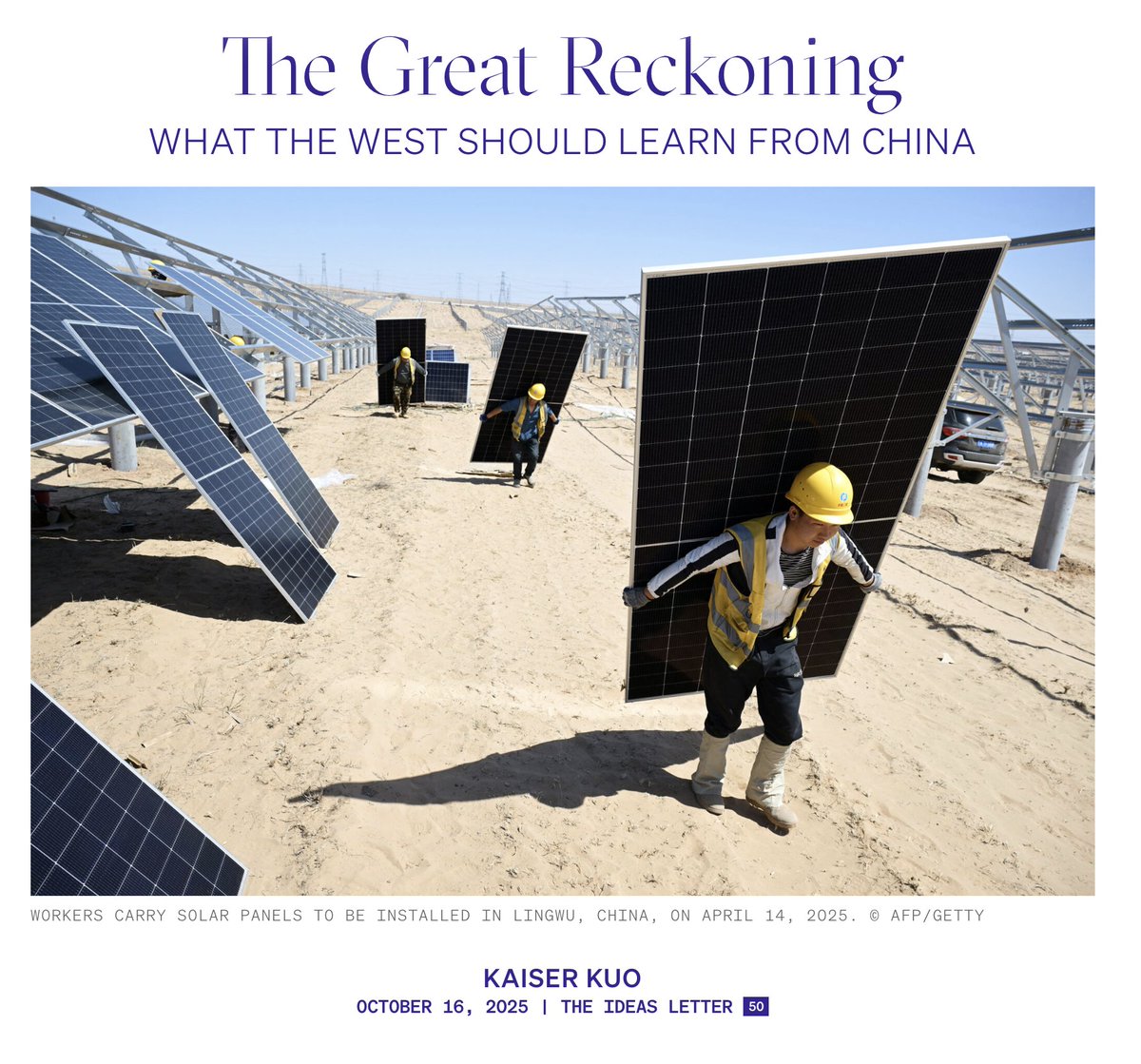
This essay by @KaiserKuo is the best piece of writing I've read on China's transformation. It invites especially Westerners to approach China's progress differently. Whatever you think about China, the essay will challenge you. Link to the full essay in replies.
Jostein Hauge tweet media
English
18
135
693
66.4K
Eduardo CF retweetledi
Jostein Hauge
Jostein Hauge@haugejostein·
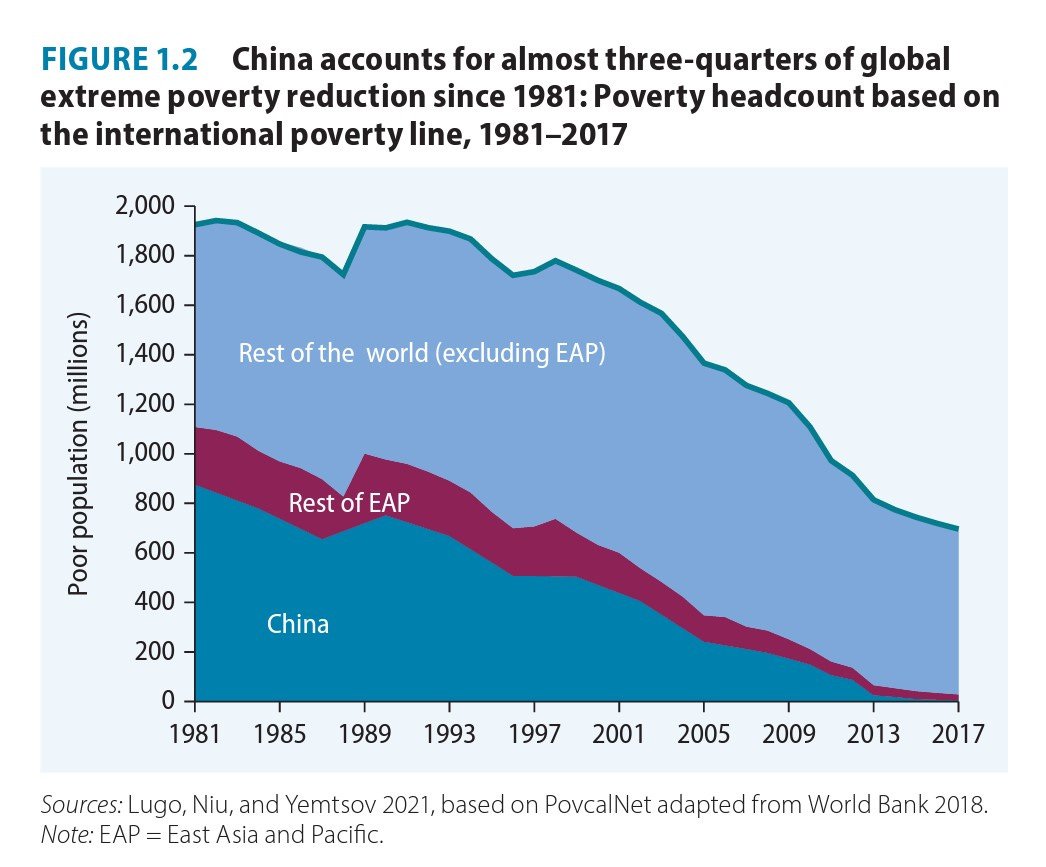
This is extraordinary: China accounts for almost three quarters of global poverty reduction since the 1980s.
Jostein Hauge tweet media
English
57
374
1.2K
61.5K
Eduardo CF retweetledi
Kaiser Kuo
Kaiser Kuo@KaiserKuo·
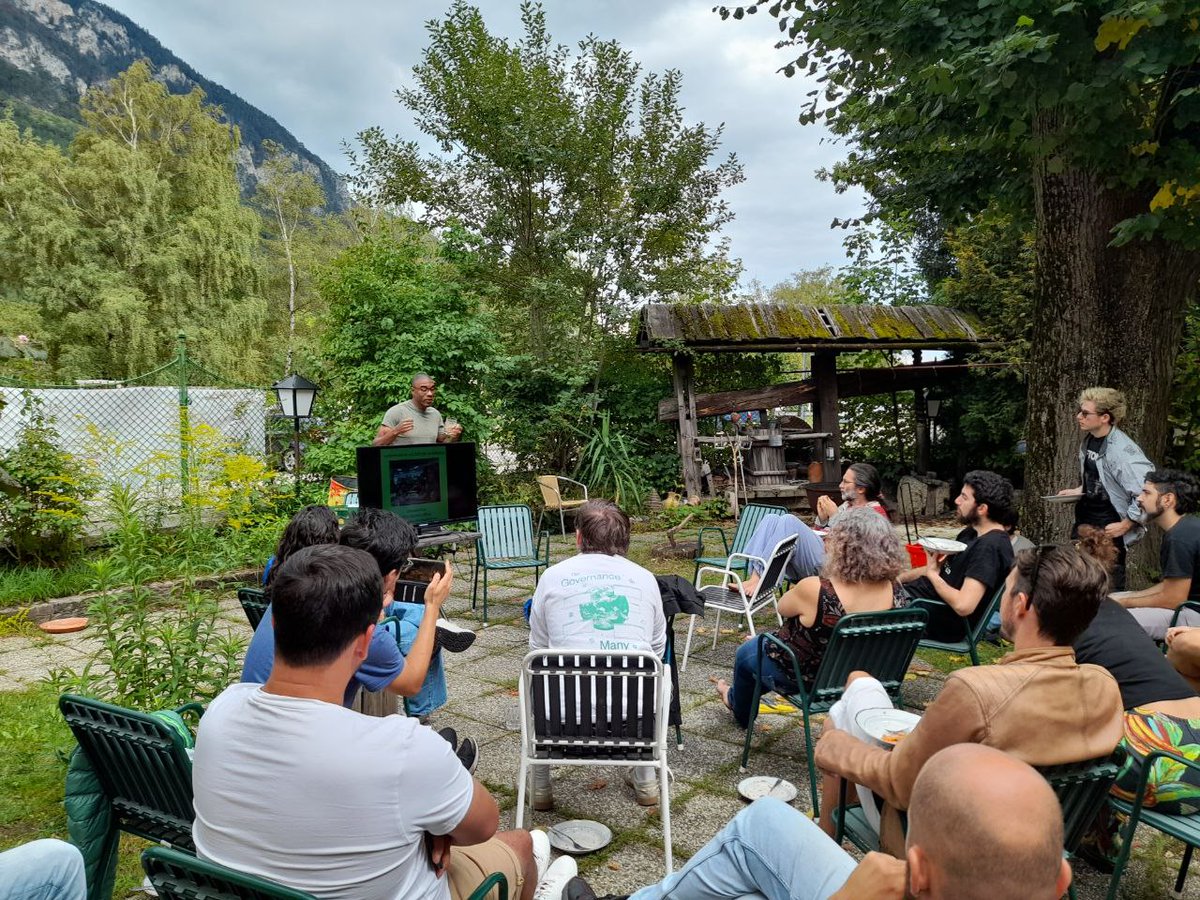
He has wonderfully heterodox ideas, enviable eloquence, a lovely and civil rhetorical style, and a voice that sounds like Viggo Mortensen. Hear @haugejostein discuss China's industrial policy, trade, and manufacturing with me on the latest @SinicaPodcast! Link in replies.
Kaiser Kuo tweet media
English
3
12
49
12K
Eduardo CF retweetledi
Lillian Cicerchia
Lillian Cicerchia@classreductress·
We are advertising a PhD position in Political Theory! Please let us know your interest. The day to day supervisors will be myself and Paul Raekstad, and Enzo Rossi will also be a part of our team. PS: Through Easter, I won't be responding to DMs here. werkenbij.uva.nl/en/vacancies/p…
English
4
93
269
31.2K
Eduardo CF retweetledi
A Trojan horse for something else
My recently minted 110 page MA thesis on #Solarpunk: Renewable Imagination via the Sun: Solarpunk, Speculative Anthropology and the Making of Regenerative Futures Long thread(s). Sharing is healing.
A Trojan horse for something else tweet media
English
2
4
7
426
Eduardo CF retweetledi
Pavlina R Tcherneva
Pavlina R Tcherneva@ptcherneva·
Money plays a fundamental role in heterodox economics and yet theories of value are not frequently discussed. I'm very pleased to share this @LevyEcon paper by Randy Wray.
Levy Institute@LevyEcon

Scholar L. Randall Wray's new paper challenges orthodox views, exploring Marx, Keynes, #MMT, and others to examine how labor, liquidity, and sovereign currency shape the logic of capitalism & its price system. Read now: levyinstitute.org/publications/t…

English
3
32
88
5.1K
Eduardo CF retweetledi
Economic thought
Economic thought@economicthought·
Review essay: Reading the History of Money: Politically or Ideologically?, by Carl Wennerlind buff.ly/3VBbtsH
Economic thought tweet media
English
0
8
17
1.1K
Eduardo CF retweetledi
Economic thought
Economic thought@economicthought·
New book: The Culture of Money: Implications for Contemporary Economics, edited by Esther Schomacher & Jan Söffner buff.ly/3ZaP9qI
Economic thought tweet media
Română
0
5
8
527
Eduardo CF retweetledi
Christian Hilbe
Christian Hilbe@chilbe3·
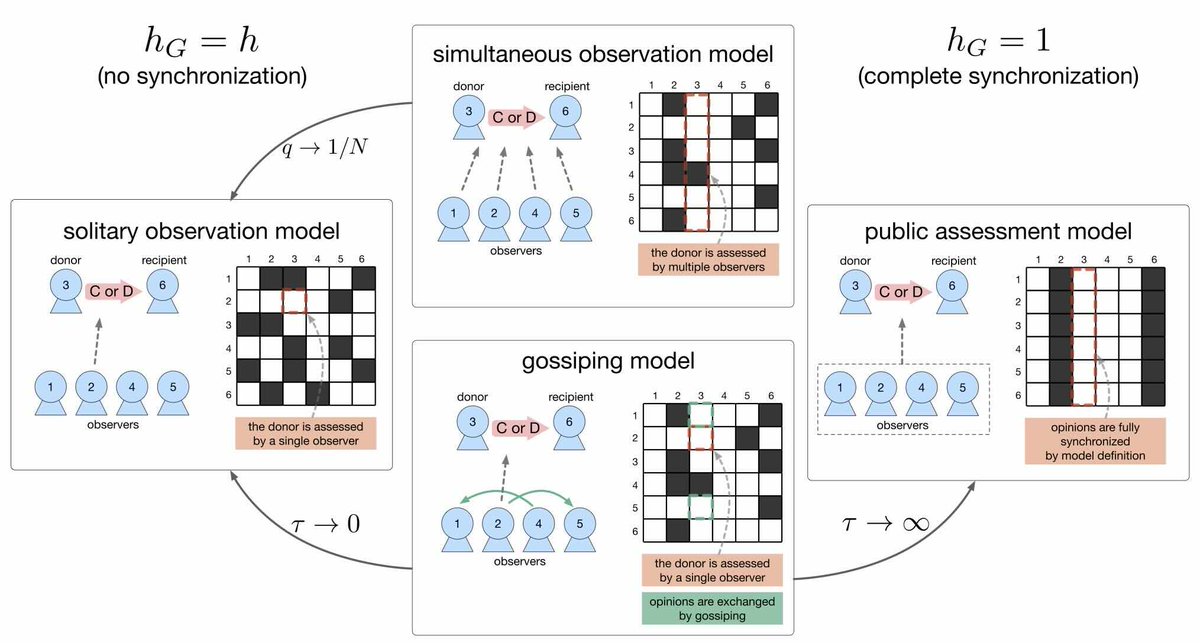
In a new paper published today in @PNASNews, @yohm13 and I discuss a general framework to make sense of social norms and different indirect reciprocity models. Below is a 🧵, here is the paper: pnas.org/doi/10.1073/pn…
Christian Hilbe tweet media
English
2
16
54
4.3K
Eduardo CF retweetledi
Philip Oldfield
Philip Oldfield@SustainableTall·
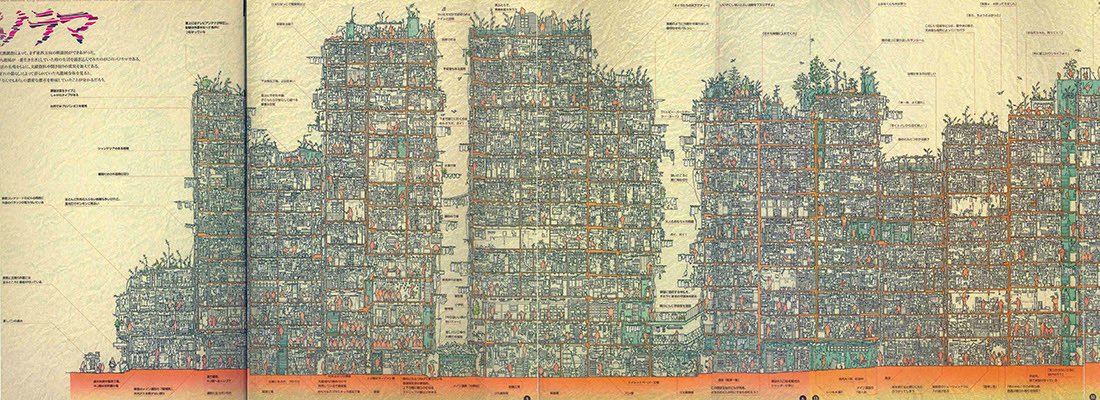
Kowloon Walled City, likely the densest place ever built (est. 1.9 million people per square km) A team of Japanese researchers spent time until the night before it was demolished measuring and drawing the building, creating this incredible section
Philip Oldfield tweet mediaPhilip Oldfield tweet mediaPhilip Oldfield tweet media
English
171
4.1K
40K
2M
Eduardo CF retweetledi
Andrew Côté
Andrew Côté@Andercot·
My last job was as Senior Stellarator Engineer at an early stage fusion startup. I was the lead design 'ideas' guy for stellarator systems - here's some things I learned about the art and science of stellarator design 🧵 First off, a stellarator is indeed a work of art:
Andrew Côté tweet media
English
170
799
6.9K
943.9K
Eduardo CF retweetledi
Jonathan Gorard
Jonathan Gorard@getjonwithit·
Complex differentiability is an absurdly strong condition: distinctions like "differentiable" vs. "smooth" vs. "analytic" etc. that exist in real analysis simply dissolve in complex analysis. There is only one condition that encompasses them all: holomorphicity. (8/9)
English
4
5
260
13.5K
Eduardo CF retweetledi
Glenn
Glenn@GlennLuk·
... between federal and state tax rebates and the sales tax exemption, I estimate an average subsidy of close to $13k per EV delivered in the United States. This compares to ~$2k per NEV in China.
Glenn tweet media
English
2
9
30
3.4K