Alejandro Rico-Guevara

328 posts

Alejandro Rico-Guevara banner
Alejandro Rico-Guevara

Alejandro Rico-Guevara

@ecophysicslab

Walt Halperin Endowed Assistant Professor @UWBiology, Curator of Ornithology @burkemuseum, Distinguished Investigator @wrfseattle, from 🇨🇴!

Katılım Haziran 2018
400 Takip Edilen675 Takipçiler
Sabitlenmiş Tweet
Alejandro Rico-Guevara
Alejandro Rico-Guevara@ecophysicslab·
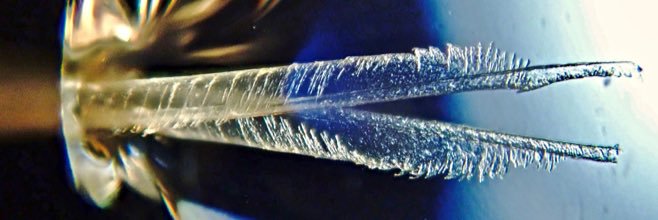
I made this to celebrate the winds of CHANGE! Enjoy!!!

Alejandro Rico-Guevara tweet media
English
0
9
60
0
Alejandro Rico-Guevara retweetledi
SICB DCB-DVM
SICB DCB-DVM@SICB_DCB_DVM·
#SICB2024 is over and we would like to say a big congrats to our 2024 Best Student Presentation Winners for DCB, David Cuban won the Mimi A. R. Koehl and Stephen A. Wainwright Award for their talk on feeding in sunbirds
English
0
7
17
3.3K
Alejandro Rico-Guevara
Alejandro Rico-Guevara@ecophysicslab·
Check out this science #dissemination article on our honeybee nectar-feeding research! Especially its connections to the importance of deepening our understanding of the details of the mechanisms for our broader understanding of ecological success: science.org/content/articl…
English
1
2
13
979
Alejandro Rico-Guevara
Alejandro Rico-Guevara@ecophysicslab·
Reaching deep: honeybees adapt their nectar extraction mechanisms to maintain feeding efficiency! Check out our data- and methods- rich paper on #mechanoethology and the importance of considering the actual behavior rather than accepting preconceptions! pnas.org/doi/abs/10.107…
English
0
3
7
443
Alejandro Rico-Guevara
Alejandro Rico-Guevara@ecophysicslab·
Hummingbirds are famous for hovering but they'd take any opportunity to avoid doing so, and this reflects in their evolution! A new highlight of our research, in a nutshell: "Clinging hummingbirds have smaller beaks and bigger feet than do honest hoverers" twitter.com/NewsfromScienc…
News from Science@NewsfromScience

Most hummingbird-pollinated flowers droop upside down, so the animals must nimbly hover to access them, frantically beating their wings up to 80 times a second. Yet some sneaky hummingbirds can cheat the system—with the help of their toes. scim.ag/3gH

English
0
15
44
6.3K
Alejandro Rico-Guevara retweetledi
News from Science
News from Science@NewsfromScience·
Most hummingbird-pollinated flowers droop upside down, so the animals must nimbly hover to access them, frantically beating their wings up to 80 times a second. Yet some sneaky hummingbirds can cheat the system—with the help of their toes. scim.ag/3gH

English
0
5
27
11.5K
Alejandro Rico-Guevara
Alejandro Rico-Guevara@ecophysicslab·
Hummingbirds may seem noble hovering fairies that trade pollination services for nectar, but more than 20 times, short-billed species evolved long toenails to cling to feed or pierce flowers to steal nectar, while long-billed species must hover to feed. journals.uchicago.edu/doi/abs/10.108…
English
2
27
88
10.2K
Alejandro Rico-Guevara
Alejandro Rico-Guevara@ecophysicslab·
Tongues are the treasures that you rarely see because they are concealed inside the chest (mouth... confusing words with multiple meanings!), and there is so much to discover about these hidden gems!! Research from folks at our lab is featured here: science.org/content/articl…
English
1
10
26
2.6K
Alejandro Rico-Guevara retweetledi
News from Science
News from Science@NewsfromScience·
Since first evolving 350 million years ago, the tongue has taken myriad forms, unlocking new niches and boosting the diversity of life. #LongReads scim.ag/2NX
English
0
5
17
6.8K
Alejandro Rico-Guevara retweetledi
Burke Museum of Natural History and Culture
Cutting edge science doesn't have to involve the fanciest, most expensive technology. In a new paper, Burke Ornithology Curator Alejandro Rico-Guevara (@ecophysicslab) shows just how much can be illuminated using a flashlight, a camera, and a tube full of sugar water.
Burke Museum of Natural History and Culture tweet media
English
2
5
15
1.5K