

Eric Bolton
452 posts
Eric Bolton
@edbltn
AI x News | Creator of https://t.co/cBO1vc4vQj | Author of https://t.co/LmXZ3XAUHI
New York, NY Katılım Nisan 2014
998 Takip Edilen276 Takipçiler
@isaac_schorr 2000 still counts as the 20th century / 1.5% in the popular vote?
English

Why does she keep lying about this? By no metric is this true.
English
@ESYudkowsky It’s more down to an imagined Zorkulon scenario — when economic activity can no longer sustain basic survival. At that point society would descend into war. The relative austerity following a crash is simply the realization that we were getting too close to that for comfort.
English

Hi, so, let's talk about the general theory of investment bubbles.
You may have heard that it's painful, when a bubble pops, because investments got wasted on non-productive endeavors.
This is physical nonsense.
If the waste were what caused the pain, everyone would be sad *while* the bubble was inflating, and a bunch of labor & materials were being poured down the drain, unavailable for real production and real consumption. Once the bubble popped, and labor & materials *stopped* being wasted, you would expect the real economy to feel better and for consumption and happiness to go up.
The real waste -- the loss of actual goods & services that get poured down the drain of bad investment -- happens *before* the bubble pops. That waste is in fact a bad thing for the economy! But if that waste was the big bad phenomenon that produced the pain of bubbles, it would feel painful *while* the bubble was inflating; and after the bubble popped and the ongoing wastage ended, everyone would breathe a sigh of relief and increased real consumption.
Instead, what we see is that while the bubble is inflating, a bunch of people feel great. They're consuming lots of goods and services. The economy as a whole seems to be doing fairly well!
Then, the bubble pops! Suddenly a lot of everyday people on the street, many of whom weren't even connected to that sector of industry, are doing more poorly. They consume less. Some of them get fired and stay unemployed for a while. The economy feels sad.
You *cannot* account for this pain as a story of real goods and services that got wasted. The timing is all wrong. The waste was real! The waste was bad! And also, it is physical nonsense to imagine that the pain of the bubble popping is the pain of this waste. People were apparently having lots of fun while the waste was ongoing. That fun involved the consumption of real goods and real services, which were *not* being produced by the investment that wasn't yet productive and later turns out to be just malinvestment.
So what actually happens? Why is it that there's more real goods and services to enjoy, while labor & material is being poured down a hole; and then, when the waste stops, everyone gets sadder instead of happier, and has less to consume and enjoy?
What happens is: Macroeconomic financial bullshit involving scary terms like "aggregate demand" and concepts like "downward wage rigidity".
The truth is stranger and harder to understand. It doesn't have the appealing simplicity of seeing the waste of labor & material being poured down the drain; and feeling how times get worse after the bubble pops; and imagining that the pain of the popping bubble is the pain of the waste.
However, the harder-to-understand ideas *do* have the advantage of not being obviously false as soon as you think about the timing of physical goods being produced and consumed.
Trying to hugely oversimplify a lot of ideas down to something that is still valid, a key idea is this:
Just like the original invention of money helped people trade who couldn't have traded with just barter, adding *more money* to an economy can sometimes animate *more real trades* than would otherwise have taken place.
A lot of the time, the economy isn't doing as much trading as it could do. The Great Depression of the 1930s was one of the clearer examples of this. You have shoemakers sitting around, because nobody is buying shoes, which means the shoemaker isn't buying leather, so now the farms aren't selling leather, so they don't have the money to pay for feed for their cows, and the blacksmith isn't selling nails to the shoemaker and doesn't earn money they can use to buy shoes.
This *could* reflect a situation where all of the iron used for nails has been consumed by Zorkulon, the Eater of Metals, and therefore the blacksmith doesn't have any nails to sell.
It can *also* be caused by weird macroeconomic financial bullshit: banks fail, so loan-created money falls, so there isn't as much money in circulation; and then prices don't fall as fast as money is being destroyed, because of "downward price stickiness" (price-setters are reluctant to lower prices and wage-takers are hugely reluctant to accept pay cuts). And then, there isn't enough money flowing to animate all the trades the economy *could* make. Some of the advancement of civilization past the barter-stage has been undone.
(The Great Recession wasn't as bad as the Great Depression, but it was basically the same species of animal.)
In principle, this happens because prices don't go down instantly, as they would among ideal cognitively-unbounded agents that could instantly and fairly renegotiate all contracts every day. So when there's less flowing money, and prices don't go down, perforce there are fewer actual trades corresponding to that diminished amount of money-flow. If people on an island are spending $1000/year all on 1000 loaves of bread that they price at $1 among themselves, and suddenly next year they start spending $500/year instead, there will only be 500 loaves of bread traded. This sounds dumb and there's a level where for unbounded agents it *would* be dumb, but it is the best story we currently have about what actually went down during the Great Depression.
Suppose your economy was previously running a bit under capacity. It's not making as much stuff as it could make; people aren't trading as much as they could trade; some people are unemployed and their potential labor is wasted; the factories are not running at capacity even though more people would want those goods if they had the money to buy the goods.
Then a bubble starts inflating. Some companies take out loans and spend the loaned money, other hopeful investors spend down bank accounts on venture rounds; this makes there be more total money that is moving around and flowing inside the whole larger system, because a dollar is not destroyed when it is spent. Labor & material is being poured down a hole and wasted, but the dollars just go on moving around.
Now there's more money flowing through the general economy. If the economy is already at capacity, more money-flow just causes inflation, with the increased spending merely competing to purchase the same amount of goods.
But if the economy wasn't already at capacity, more flowing money can mean that a bunch of people execute real trades with each other who weren't trading before.
The blacksmith expects to have his nails bought and to do well, in this booming economy; so he buys a new pair of shoes from the shoemaker; who turns around and buys leather from the farmer; who buys feed for their horses, and also a new plow and horseshoes from the blacksmith.
(In principle, those townspeople could've done that at any time, even without a financial bubble inflating in the background. But they would've needed to do it by barter, or by inventing their own town private currency. Some towns did roll out local currencies during the Great Depression, and ended up correspondingly better off. Other towns didn't roll their own currencies, because they were bounded agents rather than ideal agents and they didn't try everything a perfectly rational agent would try. And in the complicated modern world, it is harder to locally form a closed productive cycle.)
You cannot magically materialize more goods & services just by printing more money, without limit. But if your economy is collectively trading and producing less than it could -- then, there being more money flowing globally, due to loans or optimistc spending in one local sector, can accomplish more of the same good that was done by inventing money originally. The increased money-flow can animate more trades; it can cause more real production. More people can be hired whose labor was standing idle before. More flowing money can remedy a state of trading too little -- up to the point where that mistake is fixed; after which, no amount of creating or spending more mere symbolic money, will produce any more real goods than that.
The part of a bubble where a bunch of real labor & material gets shoveled into a giant waste-pit, is usually the smaller phenomenon! Usually there isn't *that* much physical stuff moving around, in the bubble sector, compared to the entire rest of the whole economy.
Instead, the effect of the physical bubble-waste is vastly dominated by the effect of more money being borrowed, and more money being spent, that then goes flowing around in loops through a larger economy, that was previously running under-capacity.
That's how people end up cheerful, and the real economy produces and consumes more, *while* a bunch of labor & material gets shoveled into nowhere within the bubble sector.
And then the bubble pops -- and the economic joy of there being *less* labor and material shoveled into a giant pit, is dominated by the economic pain of money moving around less quickly through the larger economy, resulting in fewer trades being made generally.
This is a kind of disaster that a central bank can prevent, if it is smart, by acting to keep money-flow increasing on a quietly regular track where it can undramatically animate more and more trades. Without either running so hot that there's no more production or trading to be done, and the extra money-flow just turns into more inflation; nor, letting a bursting bubble in one local sector turn into a big off-trend drop in the flow of money through the larger economy.
(There is, probably, some clever way to prevent this sort of scenario without having a central bank run by the central goverment. But that is a separate issue from how, given that we do have a central bank, there is a straightforward way to run the currency system in a way where you don't need to worry much about financial bubbles popping.)
More generally, local bubbles and ripples aside, what a central bank *should* do is adjust the money supply in a way that keeps the total flow of money growing on a steady trend. If the flow is supposed to go up by 6% per year, and last year it only went up 5%, next year you target 7%. If last year it went up 8%, next year you target 4%. If a central bank is wise, it is predictable to everyone how much money will be spent in total five years later, and no local ripples will affect that prediction.
The metric you use to measure "How much nominal money is flowing through the economy?" is "Nominal Gross Domestic Product" or its easier-to-measure converse "Nominal Gross Domestic Income". Do not get fooled by this into thinking that the Fed is supposed to be regularizing anything to do with the consumption of *real*, non-nominal, goods & services! It is the actual *nominal* flow, the numbers of sheer face-value non-inflation-adjusted dollars flowing, that a wise central bank would keep on a predictable trend; so that there isn't too much nominal money chasing the same amount of production (which causes mere inflation), nor too little nominal money to animate all the trades with downward-sticky prices (which causes loss of real production).
This rule, known as "nominal GDP level targeting" or NGDPLT, is a simpler and more straightforward rule than the Fed actually follows. So far as I know, this is for mere civilizational-inadequacy sorts of reasons. Many places in civilization, and especially governments, have various forms of wacky dysfunction; you probably agree with me on this general point, regardless of your specific politics about *what* is being done embarrassingly wrongly. The part where central banks make their lives way more complicated than the NGDPLT rule, is so far as I know a mere dysfunction of central banks; the same way that even dumber banks will print a quadrillion localbucks and then act all shocked when "corporate greed" causes prices to go up.
But the Fed does try for something *like* regularizing money flow. They do it by looking at interest rates and inflation and employment, and trying to juggle the vibes of all of them simultaneously; and when they miss their target in one year, they adjust next year's target instead of keeping it the same, so the future course is not predictable. But the Fed sometimes will, if a lot of money and loans start vaporizing, try to create more money-flow. They just often don't create *enough* money-flow to prevent a drop. Which is why a financial bubble popping can still be painful, and cause a Great Recession.
In principle, though, if you are running your central bank *correctly*, what happens when a bubble pops is that life gets immediately better because labor and material are no longer being wasted, and all of the financial ripples are canceled out by the central bank following a general policy of keeping money flow on a fixed predictable growth-track every year after year.
And how could it be otherwise, if you were otherwise doing everything right? The act of pouring labor and material into a giant pit, this year, should not be able to directly and materially make your life better, this year. Conversely, stopping the waste should not directly and materially make your life worse, next year. If this nonsensical phenomenon is actually observed in real life, your financial system must be doing something weird and wrong... which, indeed, a lot of central banks *are* doing wrong, fairly routinely.
The ability of a financial bubble to make people's lives temporarily better, is not because you can eat labor & material being thrown into a pit. It is because the central bank was undershooting how much employment and trade could be happening before then, and more real trade and consumption happened after more money started flowing.
The ability of a popping bubble to make people's lives worse, even though fewer real resources are then being wasted inside one sector, is because it cuts back how much money is flowing in the larger economy; and then, less real trade and less real production take place.
But if the central bank is keeping the flow of money on a predictable level growth track, the bubble-pop pain just shouldn't happen. Eg Australia did this correctly during the Great Recession and was basically unaffected by it. So far as I know, it's just a case of civilizational underperformance, that many central banks don't cancel out all the financial ripples that they ought to cancel. It would happen automatically and without drama, if they simply declared and kept a nominal GDP level target.
There is a sophomoric sort of sense in which the pain of a bubble popping could be said to be produced by the waste: *if* counterfactually the investment had actually paid off, maybe money would've kept flowing, and the pain wouldn't have happened. But the new financial pain of recognizing a wasted investment in asset prices, or becoming pessimistic and spending less, is not produced by a new physical waste of money and labor. The real economic sadness that happes after the waste gets *recognized*, is downstream of reduced money flow, that results from the financial sector merely recognizing the existence of waste that already happened. It is not produced by the physical waste itself.
The pain of a bubble popping cannot be the pain of the physical waste, because the physical waste happens during the bubble, not after. The pain of a bubble popping is financial destruction, not physical destruction. And that purely financial phenomenon is one that a smart central bank can cancel out.
I repeat yet again: If the pain of a bubble were the pain of wasted labor & material inside the bubbling sector, the pain would happen while the bubble was inflating, and stop once the bubble popped.
What actually happens after the bubble pops, is the financial pain of an unsmart central bank permitting a larger flow of money to falter -- after local investors recognize local waste that already happened, and locally cut back further spending -- and a central bank unwisely not regularizing NDGI, allows this factor to affect larger-economy total spending -- and less money flows, and fewer potential trades get actualized, and factories run fewer hours *outside* of the bubble sector, and people end up unemployed and with their potential labor wasted.
Is the current Fed in the USA, smart enough to cancel out most of a bubble-pop, actually in real life? Now that is a whole different category of question, and not one that I can answer merely by understanding the physics of trade.
But any wise government that is worried about "risking" "popping a bubble" ought to know: So long as you can order or persuade the central bank to react accordingly; or better yet, to just adopt a predictable long-term level target for flowing money; you can pop all the bubbles you want, without much effect on Main Street.
Eliezer Yudkowsky ⏹️@ESYudkowsky
Hey so I realize that macroeconomics is scary, but this important note: - AI is not currently *producing* tons of real goods - Huge datacenter *investments* are functionally just throwing money around - So, curbing AI wouldn't crash the economy **IF** the Fed then lowered rates.
English




People don’t shoot lasers out of their eyes to drive.
Just try Tesla self-driving today, which just uses cameras and AI, and you will understand.
ELON CLIPS@ElonClipsX
“LiDAR is a fool's errand.” Here's Elon Musk famously predicting in 2019 that LiDAR is useless to achieve self-driving.
English


@EndWokeness Her reflex isn't wrong. What he did was growth hacking, and it came from his background in tech: he applied the PayPal mafia playbook to US politics.
The $270M he spent on stunts like the $1M giveaways probably went a lot further than the billions Kamala Harris & allies spent.
English

Rep. Maxine Waters: "Elon Musk with his high-tech ass may have hacked our last election"
English
@Acyn The first words out of Zelenskyy's mouth in this meeting were "thank you so much Mr. President, thank you for your invitation."
English

@TheKevinDalton As folks like yourself know well and have shown, information warfare is far more integral to how opinions are shaped than real action.
DYOR, but it's clear to me the charge into information warfare (via opinionated TV shows, podcasts, vlogs, posts) has been led by the far right.
English

Californians: We’d like an end to rampant homelessness, the ability to buy a home, send our kids to a school to get a decent education, not get robbed or stabbed walking down the sidewalk, and water for drinking and fighting fires.
Gavin Newsom: The best I can do is podcast
Gavin Newsom@GavinNewsom
I'm launching a NEW PODCAST. We need to change the conversation. I'm talking directly with people I disagree with, people I look up to, and you -- the listeners. Egg prices? Tariffs? DOGE? We're tackling all your big questions. This is Gavin Newsom. Subscribe now ➡️ podcasts.apple.com/us/podcast/thi…
English
@mediocregolfing @SRamirez68083 Yes, and sorry if this gets lost in the subtlety of short tweets, I don't disagree with you on recent successes.
My argument isn't about where things are now – it's about the turn they took to get where they are now (the premise of the first tweet)
English

@edbltn @SRamirez68083 It’s now being reported around 35%. The 52% figure is what it what when milei came into office.
English

This meme came to me in a dream.

NewsWire@NewsWire_US
TRUMP SAYS 'PAIN' FROM TARIFFS WILL BE 'WORTH THE PRICE'
English
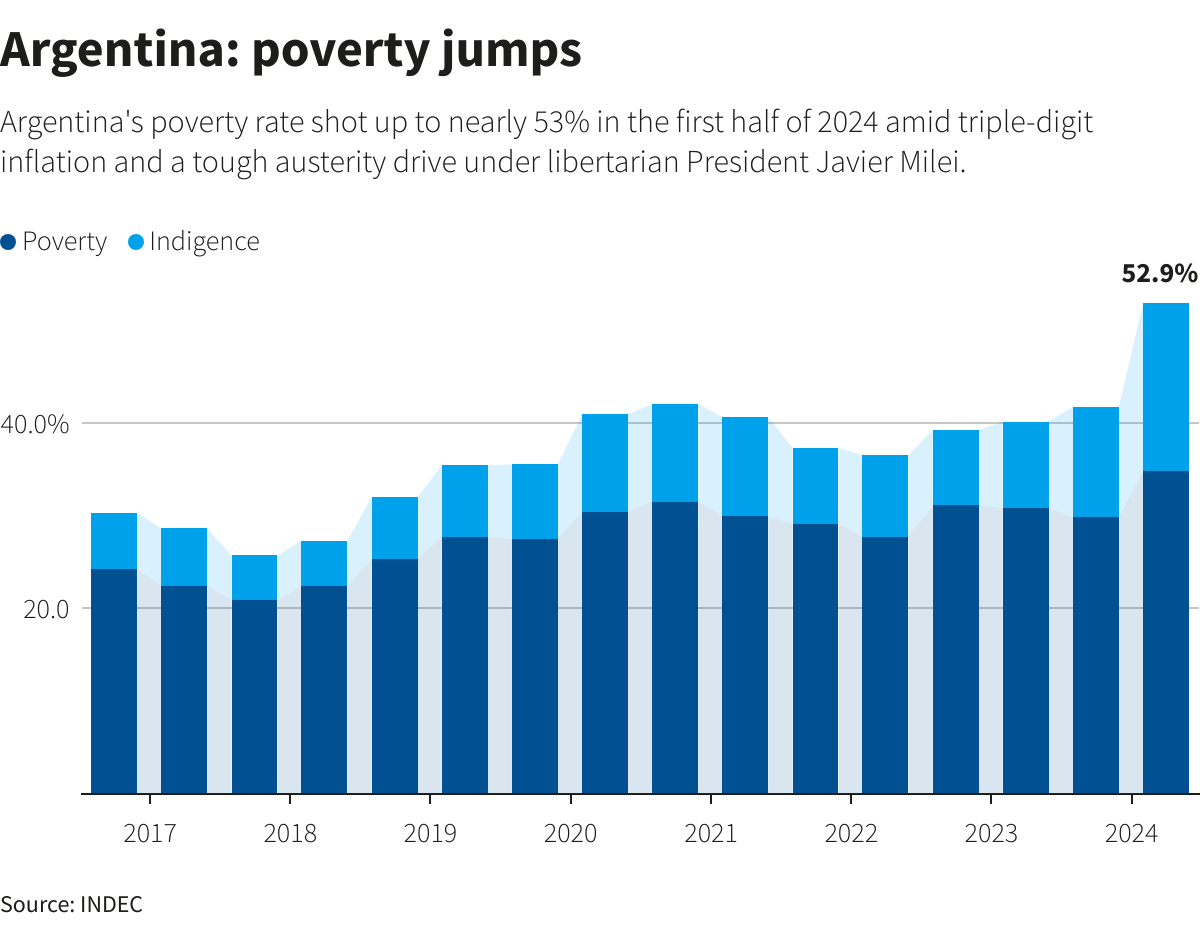
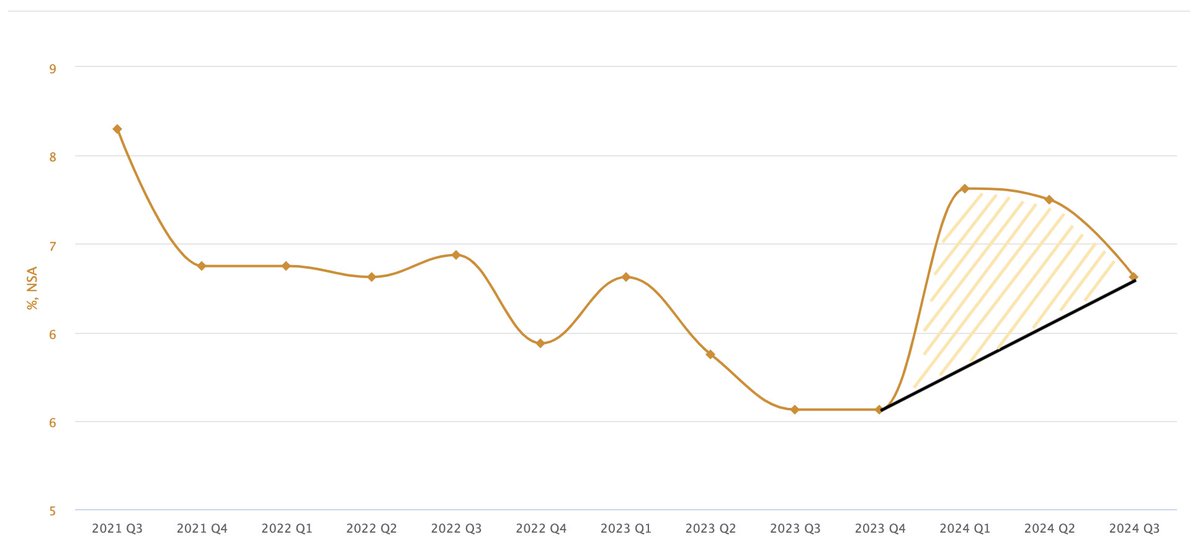
@mediocregolfing @SRamirez68083 Yes, he's done good for the Argentine peso. But for the sake of argument, here's the Argentine unemployment rate, source Moody's, crude annotation mine.
Not exactly a "billions must die" gap, but deeply harmful at the margin we are talking about (the poorest workers)
English

OpenAI just got DeepSeek'd again.
A tiny startup based out of London just dropped the world's most capable AI agent for the web.
Here's EVERYTHING you need to know:

English
AI-gen passages in executive orders confirmed.
See for yourself: whitehouse.gov/presidential-a…

English
Can AI help us understand what's 'normal' in politics? We trained language models on Trump's campaign speeches and social media posts to analyze his 2nd inauguration speech. The results were fascinating. Analysis + methodology here:
alignedforesight.substack.com/p/is-trump-nor…

English
@waitbutwhy @Aella_Girl Both sides should. Any highly politicized pronouncement made with certainty should.
What if it's a superposition of both? A bad idea popped into his head and he carried it out in the heat of the moment.
There's a spectrum: from premeditated to intentional to accidental.
English


@dustdevvil @Liv_Boeree And having dwelled on it more I'm more at P(innocent gesture) = .4 now
English
