no man's land retweetledi
no man's land
6.8K posts

no man's land retweetledi

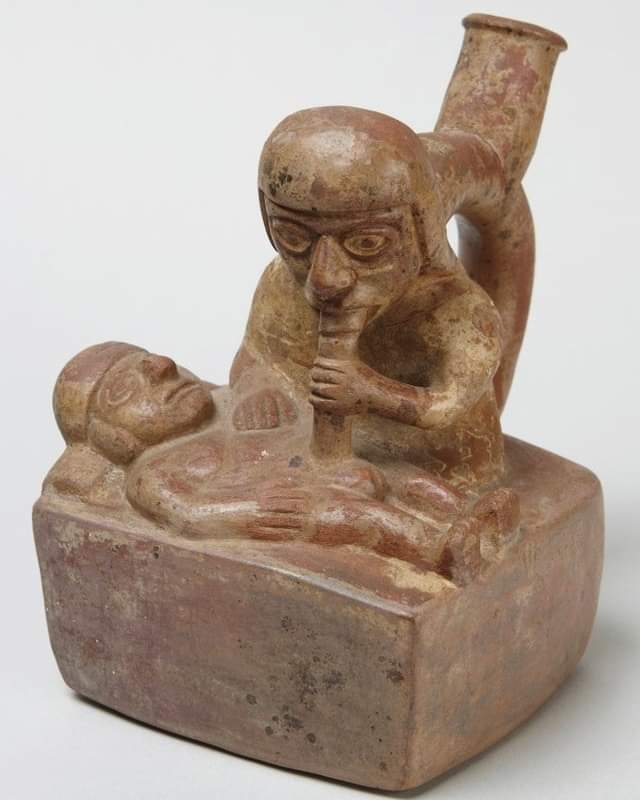
The Moche were a mysterious civilization who ruled the northern coast of Peru beginning 2,000 years ago. The Moche lacked written language, but were incredibly skilled in pottery and ceramics which they used to communicate ideas and express their lives by depicting detailed scenes of hunting, fighting, sacrifice, ceremonies, and sexual encounters in startlingly explicit detail. Little was known about the Moche civilization until 1980s when archaeologists began uncovering monuments and tombs containing detailed murals, and incredible ceramics that depicted detailed scenes of hunting, fighting, sacrifice, ceremonies, and explicit sexual encounters. The erotic pottery left behind by the Moche represent one of the most detailed accounts of sexual customs ever left by ancient people. This last item, the so called “Sex Pots”, have been the subject of much research and study of sexual values in pre-Columbian Peru.
Of the thousands of ceramic vessels that have been recovered from Moche tombs, at least 500 of them display sexually explicit imagery, typically rendered as free-standing three-dimensional figures on top, or as part of, a vessel. Moche Sex Pots are actually functional clay post, with hollow chambers for holding liquid and stirrup-shaped spouts for pouring, often in the form of a phallus. They depict men, women and animals engaging in a variety of sexual acts, the most common of which is anal sex. Many of pottery bottles thus symbolized the emission of sexual fluids and would probably have been used in ceremonies and rituals. When Spanish invaders discovered them, the unabashed depiction of sodomy and masturbation so affronted their Christian belief that they had the posts smashed.
The anal sex in particular is reproduced over and over, in a variety of styles, indicating that it was produced by different artists over a long period of time. To remove any doubt that may arise in minds of the viewer regarding the gender of the penetrated figure, the artist often carved the genitalia carefully, despite their small scale, so as to demonstrate that it is the anus, not the vagina that is being penetrated. Scenes of vaginal penetration are itself extremely rare. Sometimes, accompanying the couples, one can see an infant suckling onto the breast of the female while she is having sex. There are also figures depicting women administering fellatio or masturbating. Some depict male skeletons masturbating, or being masturbated by living women.
“These pots clearly reflect very different notions of sex and reproduction from ones that prevail in the West, and, because of this, a lot of researchers have had trouble making sense of them,” writes UNEARTHING.
The Larco Museum (Museo Larco) in Lima, Peru, displays the largest collection of pre-Columbian erotic pottery. According to Museum, it presents “a conception of sexuality and eroticism inextricably linked to an integrated understanding of the world and its animating vital forces. In the Andean worldview, life is made possible through a generative encounter (tinkuy) between opposite complementary forces (yanantin). Female and male bodies are an expression of this duality.” The images below all come from their collection.
📷 : Stirrup vessel with fellatio scene; Peru, Moche civilization, 300-600 AD. (Larco Museum, Lima 🇵🇪)
#archaeohistories

English
no man's land retweetledi

First they came for Gaza, and I did not speak out, because I was a supporter of settler colonialism and apartheid.
Then they came for Venezuela, and I did not speak out, because I hated the Venezuelan people asserting their sovereignty and building a path to socialism.
Then they came for Greenland, and I thought, “hold on you horrible man, you can’t treat white Europeans like this!”
In a bid to achieve levels of shameless hypocrisy previously assumed to be impossible, the national leaders of France, Germany, Italy, Poland, Spain, Britain and Denmark have released a joint statement in response to Trump’s threat to invade Greenland, claiming that they want to “uphold the principles of the UN Charter, including sovereignty, territorial integrity and the inviolability of borders.” These, they say, “are universal principles, and we will not stop defending them.”
Where were these “universal principles” a few days ago when the Trump regime kidnapped President Nicolás Maduro, took him hostage, and claimed that the US would “run” Venezuela’s oil industry from now on? With the honourable exception of Spain, which condemned the kidnapping, these clowns gave their (at least tacit) backing to this outrageous violation of international law and Venezuelan sovereignty.
Where are these “universal principles” when the US Navy – with active support from Britain – seizes oil tankers in international waters in order to enforce illegal unilateral sanctions against Venezuela, Russia and Iran?
It seems the only principle European leaders actually care about is holding on to their minor roles in the post-WW2 transatlantic imperialist alliance. Sadly for them, Trump clearly believes that the US – always the star of the show – doesn’t particularly need its supporting cast any more.
The Greenland threats are all about China and Russia. Trump said on Sunday: “We need Greenland from a national security situation. It’s so strategic. Right now, Greenland is covered with Russian and Chinese ships all over the place.”
As a result, “the president and his team are discussing a range of options to pursue this important foreign policy goal, and of course, utilising the US military is always an option at the commander-in-chief’s disposal”, according to a White House statement.
This proposal to transfer colonial ownership of Greenland from Denmark to the US is inextricably bound up with the broader global campaign for maintaining US hegemony and preventing the emergence of a multipolar world order. The US wants to control Arctic shipping lanes; it wants to militarise the region, expanding its military bases; and it wants to have exclusive access to Greenland’s mineral resources – including rare earths.
As such, the threat to invade Greenland is just the latest manifestation of the US’s increasingly aggressive foreign policy, aimed at getting the Project for a New American Century back on track. It goes hand in hand with the kidnapping of President Maduro; the genocide in Gaza; the war on Iran; the proxy war against Russia; the supply of billions of dollars’ worth of weapons to Taiwanese separatists; the threats against Cuba and Mexico; the subversion of democracy in Honduras and Argentina; and the bid to force NATO countries to spend even more of their taxpayers’ money on the US military-industrial complex.
The likes of Starmer, Macron and Merz can bleat all they like about sovereignty and territorial integrity, but when it comes to seriously taking a stand against hegemonism, they’re nowhere to be seen. It’s up to the progressive, left, anti-imperialist and anti-war movements in Europe and around the world to oppose Trump’s threats against Greenland, to stand in solidarity with the Venezuelan people, and to resist the whole imperialist project.

English
no man's land retweetledi

Atheist scientist Bill Bryson concluded that there’s no rational explanation for the existence of the protein collagen which requires 1055 amino acids in a specific sequence. So what are the odds it forms? Take 10 to the 230th power of grains of sand. That’s the amount of grains of sand on 1 billion earth’s. Then paint 1 grain of sand red. Put it all into a pile a light year high. You pick the single red grain of sand on the first try. God is the Creator.

English
no man's land retweetledi

For those who do not understand the image. The cartoon image is a meme that depicts a man in traditional Arab attire (thobe and ghutra) holding a stack of five large books labeled Qalun, Hafs, Warsh, Al-Duri, and Khalaf.
What the meme is referring to
These labels are not different "books" or separate versions of the Quran. They are names of authentic canonical recitations (Qirā'at) of the same Quran:
1. Hafs (full: Hafs 'an 'Asim): The most widespread recitation today, used in about 95% of printed Qur'ān worldwide (including most Muslim countries outside North Africa).
2. Warsh (Warsh 'an Nafi'): Commonly used in parts of North Africa (e.g., Algeria, Morocco, Tunisia).
3. Qalun: (Qalun 'an Nafi'): Another transmission from the same reader as Warsh, popular in Libya and parts of Tunisia.
4. Al-Duri; (Al-Duri 'an Abu 'Amr): Used in some regions of Sudan and West Africa.
5. Khalaf (Khalaf 'an Hamzah): One of the less common ones today but still authentic.
There are traditionally 7 or 10 canonical Qirā'at (depending on scholarly classification), all tracing back through unbroken chains of transmission to the Prophet Muhammad (peace be upon him). These are different styles of recitation, primarily in pronunciation, intonation, vowel lengthening, and minor word forms similar to regional accents or dialects in a language.
Why the differences exist (Islamic perspective)
The Qur'ān was revealed in classical Arabic, which had various tribal dialects. Authentic hadiths state it was revealed in seven ahruf (modes/dialects) to make recitation easier for different Arab tribes. Over time, these developed into the standardized Qirā'at, all considered fully authentic and divinely permitted. The skeletal text (rasm) of the Qur'ān remains identical across all; differences are mostly in how words are vocalized or minor synonyms that complement rather than contradict the meaning.
The meme plays on a common criticism (often from non-Muslim polemicists) suggesting these Qirā'at prove "multiple Qur'ān" or textual corruption. In reality:
a. All Qirā'at convey the same core message and doctrines.
b. Differences are subtle (e.g., pronunciation of a word like "maliki" vs. "maaliki" in Al-Fatihah, or minor grammatical forms).
c. They enrich understanding by providing layered meanings, not conflicts.
d. The vast majority of Muslims recite in Hafs today, but switching to another authentic Qira'ah is perfectly valid.
The "confusion" portrayed is satirical exaggeration, there's no genuine doubt among scholars that all these are the one Qur'ān, perfectly preserved in its authentic forms.
Take every attack they throw against Islam as an opportunity to teach Muslims about Islam. In a way, they are helping to spread Islam but they do not know it because they are not different from the beasts, unable to think, research or see things properly. In fact, they are even more astray than the breasts.
Oliver Burdick@oliverburdick
There is only 1 Bible. There are 31 different Qurans.
English
no man's land retweetledi

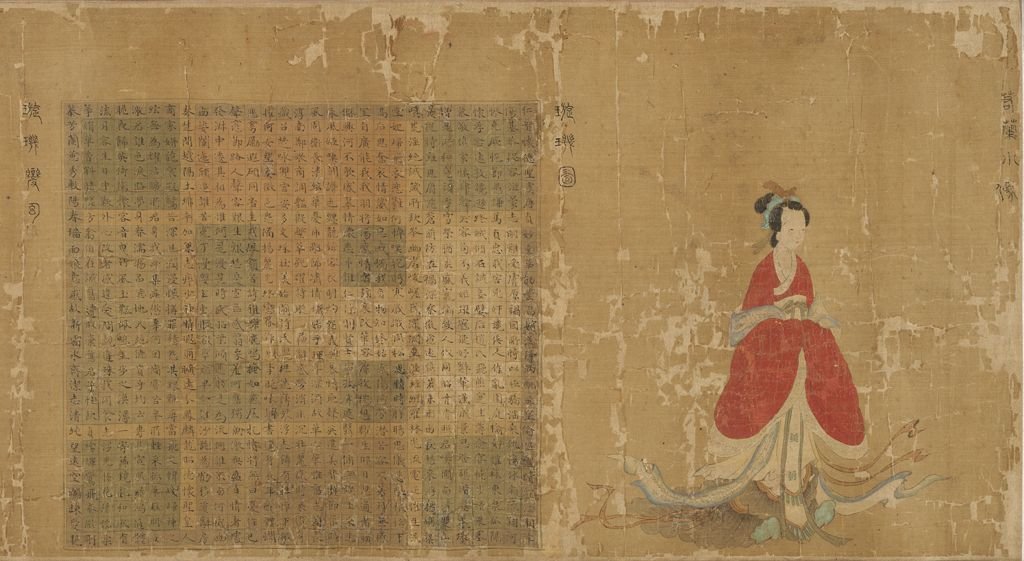
This strange square 👇 is undoubtedly the most extraordinary work of literature in human history. Yet, unfortunately, barely anyone in the West has ever heard of it.
There was this woman poet in 4th century China called Su Hui (蘇蕙), a child genius who had reportedly mastered Chinese characters by age 3.
At 21 years old, heartbroken by her husband who left her for another woman, she decided to encode her feelings in a structure so intricate, so beautiful, so intellectually staggering that it still baffles scholars to this day.
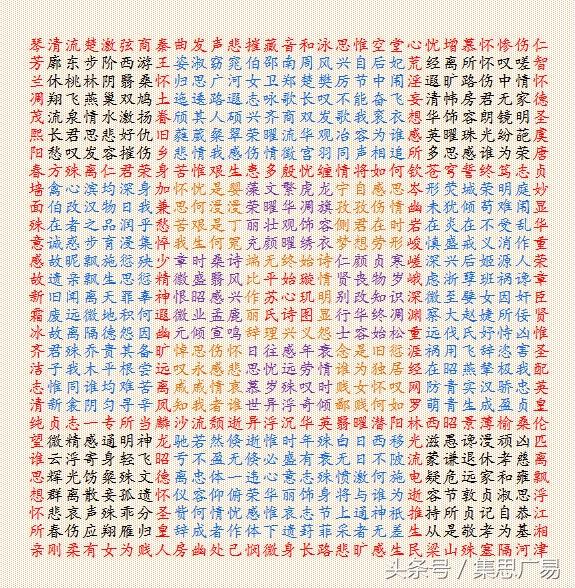
Came to be known as the Xuanji Tu (璇璣圖) - the "Star Gauge" or "Map of the Armillary Sphere" - it's a 29 by 29 grid of 841 characters that can produce over 4,000 different poems.
Read it forward. Read it backward. Read it horizontally, vertically, diagonally. Read it spiraling outward from the center. Read it in circles around the outer edge. Each path through the grid produces a different poem - all of them coherent, all of them beautiful, all of them rhyming, all of them expressing variations on the same themes of longing, betrayal, regret, and undying love.
The outer ring of 112 characters forms a single circular poem - believed to be both the first and longest of its kind ever written. The interior grid produces 2,848 different four-line poems of seven characters each. In addition, there are hundreds of other smaller and longer poems, depending on the reading method.
At the center a single character she left implied but unwritten: 心 (xin) - "heart." Later copyists would add it explicitly, but in Su Hui's original the meaning was even more beautiful: 4,000 poems, all orbiting the space where her heart used to be.
Take for instance the outer red grid of the Star Gauge. Starting from the top right corner and reading down, you get this seven-character quatrain:
仁智懷德聖虞唐,
貞志篤終誓穹蒼,
欽所感想妄淫荒,
心憂增慕懷慘傷。
In pinyin, it is:
Rén zhì huái dé shèng yú táng,
zhēnzhì dǔ zhōng shì qióng cāng,
qīn suǒ gǎnxiǎng wàng yín huāng,
xīn yōu zēng mù huái cǎn shāng.
Notice how it rhymes? táng / cāng / huāng / shāng
The rough translation in English is: "The benevolent and wise cherish virtue, like the sage-kings Yao and Shun, With steadfast will I swear to the heavens above, What I revere and feel - how could it be wanton or dissolute? My heart's sorrow grows, longing brings only grief."
Now read it from the bottom to the top and you get this entirely different seven-character quatrain:
傷慘懷慕增憂心,
荒淫妄想感所欽,
蒼穹誓終篤志貞,
唐虞聖德懷智仁。
The pinyin:
Shāng cǎn huái mù zēng yōu xīn,
huāngyín wàngxiǎng gǎn suǒ qīn,
cāngqióng shì zhōng dǔzhì zhēn,
táng yúshèngdé huái zhì rén.
It rhymes too: xīn and qīn, zhēn and rén
And the meaning is just as beautiful and coherent: "Grief and sorrow, longing fills my worried heart, Wanton and dissolute fantasies - is that what you revere? I swear to the heavens my constancy is true, May we embody the sage-kings' virtue, wisdom, and benevolence."
That's just 2 poems out of the over 4,000 you can construct from the Xuanji Tu!
At the very center of the grid, the 8 red characters wrapped around the central heart, she "signed" her poem with a hidden message:
詩圖璇玑,始平蘇氏。 "The poem-picture of the Armillary Sphere, by Su of Shiping."
Or reversed:
蘇氏詩圖,璇玑始平。 "Su's poem-picture - the Armillary Sphere begins in peace."
Many scholars, and even emperors, throughout Chinese history have been completely obsessed by Su Hui's puzzle.
For instance, in the Ming dynasty, a scholar named Kang Wanmin (康萬民) devoted his entire life to the poems (kangshiw.com/contents/461/2…), ending up documenting twelve different reading methods - forward, backward, diagonal, radiating, corner-to-corner, spiraling - and extracting 4,206 poems. His book on the subject ("Reading Methods for the Xuanji Tu Poems", 璇璣圖詩讀法) runs to hundreds of pages.
Empress Wu Zetian herself, the legendary woman emperor of the Tang dynasty, wrote a preface to the Xuanji Tu around 692 CE (baike.baidu.com/item/%E7%BB%87…).
Incredibly, there's even far more complexity to the Xuanji Tu than just the poems:
- The name 璇玑 (Xuanji) - Armillary Sphere - is astronomical in meaning and the way the poems can be read mirrors the way celestial bodies orbit around a fixed center. It's a model of the heavens.
- Her original work, with the characters woven on silk brocade, was in five colors (red, black, blue/green, purple, and yellow) which correspond to the Five Elements (五行) - the foundational Chinese philosophical system that explains how the universe operates. So it's also a model of the entire cosmic order according to ancient Chinese philosophy.
- It's also of course deeply mathematical with this 29 x 29 perfect square grid, with sub-squares, lines and rectangles, and a structure which allows for symmetrical reading patterns in all directions
- Last but not least, the content of the poems themselves contain multiple registers. On top of expressing her personal grief and longing for her husband, it's also filled with accusations against the concubine (Zhao Yangtai) he left her for, reflections on politics (with many references to sage-kings) and philosophical reflections.
So the Star Gauge is simultaneously:
- A love letter (expressing personal longing)
- A legal brief (arguing her case against her rival)
- A cosmological model (structured like the heavens)
- A Five Element diagram (encoding the fundamental structure of the world according to ancient Chinese philosophy)
- A mathematical construction with perfect symmetry and precision
And yet, for all this complexity, we should not forget this was all ultimately in service of the simplest human message imaginable: a 21-year-old woman asking the love of her life "come back to me".
Her husband did, eventually. According to what empress Wu Zetian herself wrote in her preface to the Xuanji Tu, when he received Su's brocade he was so "moved by its supreme beauty" that he sent away his concubine and returned to his wife. As the story goes, they lived together until old age.
The heart at the center was filled after all.


English
no man's land retweetledi

Scientists have discovered that ants, after collecting grains and seeds which they need to store for the winter, actually break them into halves before storing in their nests. This is because by breaking the seeds into half, it stops them from germinating despite the most perfect conditions.
But here comes the even more interesting part.
Scientists were stunned when they discovered that coriander seeds stored in the ant nest were always broken down into 4 pieces instead of 2 pieces.
After some lab research, scientists discovered that a coriander seed is the only seed that can germinate even after being divided into two, but can not germinate after it’s divided into four parts.

English
no man's land retweetledi

I just cast my VOTE for CLAIR OBSCUR: EXPEDITION 33. Who will you vote for? #TheGameAwards @TheGameAwards thegameawards.com/share/nominee/…
English
no man's land retweetledi

klo bisa ganti imac, masa gak bisa ganti kursi2 di gedung 6 yg bentukannya kyk udh dari 1905
jankajanjan 🍉@schwheetz
Damn FIB, now fix the godamn toilets
Indonesia
no man's land retweetledi