Tak180(本物)

137.9K posts

Tak180(本物) banner
Tak180(本物)

Tak180(本物)

@egu44

JAZZを聴くがここんとこPerfume(PTA)そして神はちゅねんず推しArtistは荘野ジュリ、上野香織、ERIKA、ART HIRAHARA、鈴木よしひさ、七尾旅人、AZUMI、LINON、日之内エミ、U-zhaan、そしてPerfumeに松嶋初音。好物はダーツ球撞きチーズ系に珈琲にVRARと音物等ガジェット等々

Katılım Şubat 2010
1.8K Takip Edilen1.4K Takipçiler
Sabitlenmiş Tweet
Tak180(本物)
Tak180(本物)@egu44·
チョコレイトォディスコォォォッ! (のっち風に) ノリノリでぶった斬れるっ! ビートセイバーカスタム曲 これは楽しいっ MAP作った人上手いっ
日本語
3
44
246
0
Tak180(本物) retweetledi
野党監視委員会
野党監視委員会@wZ9tUOjp5corpIo·
【これはビビるぞ‼️】 農家を守る改正種苗法すら「反対票を入れた」議員が16人も居るぞ‼️ バラします‼️ 共産党  全員 7名 れいわ  全員 5名 沖縄の風 全員 2名 社民党  全員 2名 news.yahoo.co.jp/articles/54e9d…
日本語
769
16.7K
46.2K
2.2M
Tak180(本物) retweetledi
椎井蹴人
椎井蹴人@Cait_Sith_co·
撮影してるのは日本の漁船。中国の海警船に追われているところ。すごく心細そうだが…横から割り込んできてくれたのが日本の海上保安庁!まるでヒーローのようですね😃 これ以上中国の好き放題を許すな😠
日本語
43
1.3K
6.9K
161.3K
Tak180(本物) retweetledi
バイオハザード(カプコン)公式
「バイオハザード」シリーズ期間限定最大80%OFF カプコンSUMMERセール中 詳細は公式サイトへ
日本語
0
53
424
1.2M
Tak180(本物) retweetledi
タイプ・あ~る
タイプ・あ~る@hitasuraeiga·
押井版『攻殻機動隊』のテーマ曲の元ネタになったブルガリアの伝統的な合唱曲 音響監督を務めた若林和弘さんによると「押井守監督から”ブルガリアン・ヴォイスのような歌声で”とのオーダーがあり、川井憲次さんが日本の”民謡”をアレンジして曲を作った」とのこと
日本語
60
2.8K
13.1K
573.5K
Tak180(本物)
Tak180(本物)@egu44·
@yanonp ですね〜 当時は通路もレーン分けされてましたね おかげで迷いなく行けましたw
日本語
1
0
1
8
Tak180(本物) retweetledi
ROBA
ROBA@vjroba·
卓上バキュラ!
日本語
1
6
16
636
Tak180(本物) retweetledi
【油や鹿鳴二子新地店】RockなMAYちゃん
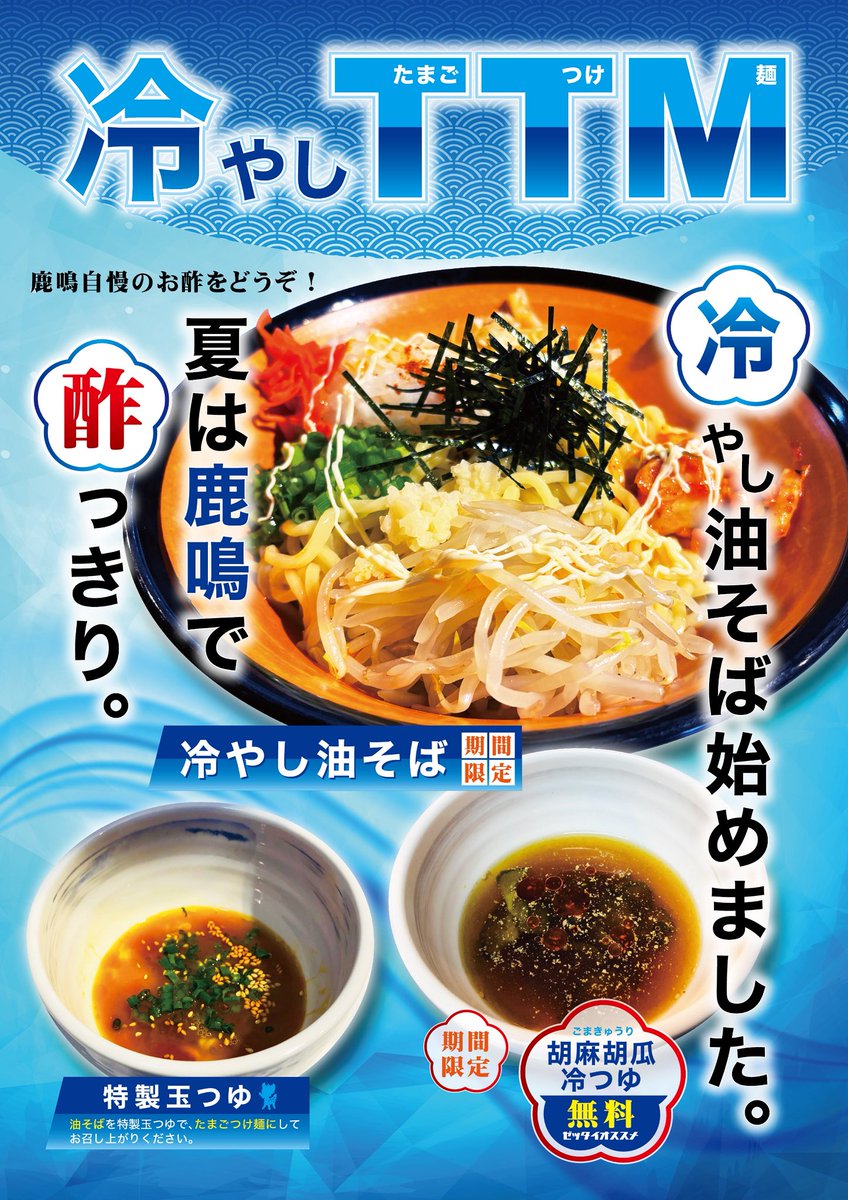
7/20(月祝)海の日も油チャージ⛽️ 本日も『生粋で革新の油そば』是非ご賞味ください! 新メニュー『ラー油飯🍚』お酢酢めで酢! #油や鹿鳴 #油そば #二子新地
【油や鹿鳴二子新地店】RockなMAYちゃん tweet media【油や鹿鳴二子新地店】RockなMAYちゃん tweet media
日本語
0
2
11
372
Tak180(本物)
Tak180(本物)@egu44·
@88masatoshi77 いえいえこちらこそですっ あの時初めてメディアドームの中に入って感動してましたっ 最近も年1回くらいは大会やってるみたいですねっ (σ´∀`)σ
日本語
0
0
1
18
Tak180(本物)
Tak180(本物)@egu44·
あれ?今日日曜日ではなくて? えもう休み最終日? おかしくね?
日本語
0
0
2
60
Tak180(本物) retweetledi
Millie Marconi
Millie Marconi@MillieMarconnni·
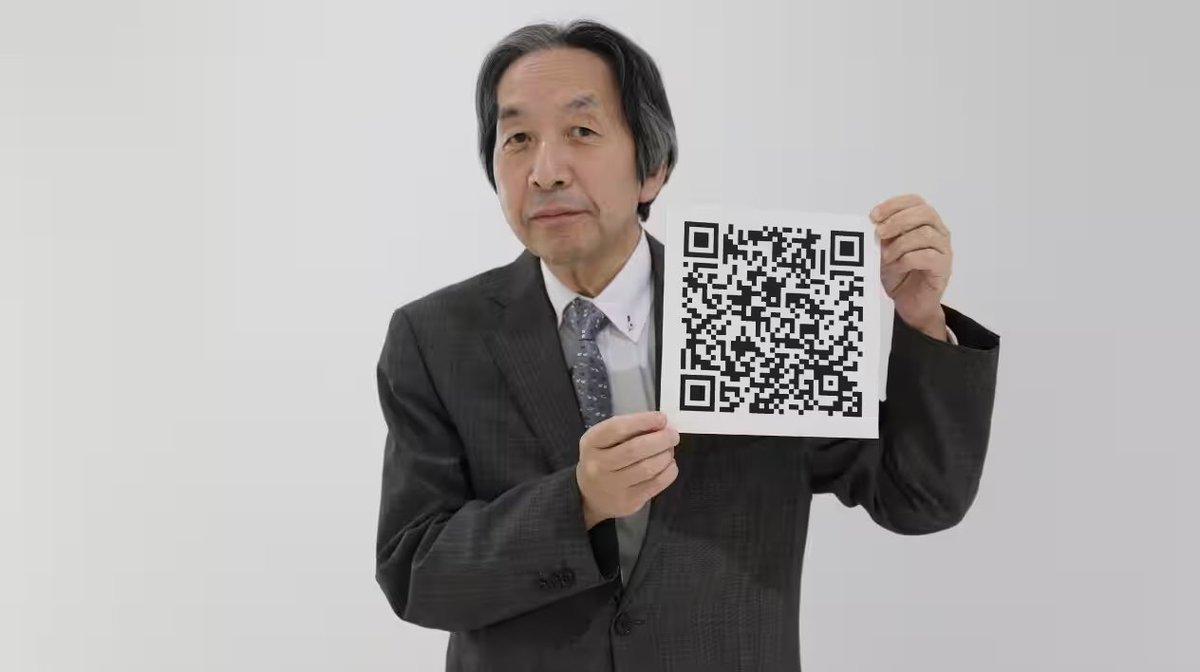
A Japanese engineer invented the QR code for one job, tracking car parts on a Toyota line, then his company chose to give the patent away for free, which is the only reason it ended up on every restaurant table on Earth. His name is Masahiro Hara. The company was Denso Wave, a parts supplier owned by Toyota. In 1992 the problem landed on his desk, and it was not glamorous. Workers on the factory floor were drowning. Every car part had a barcode, but a barcode can only hold about twenty characters, so to track one component they had to stick five or ten barcodes on it. A worker would stand there scanning a single part ten times in a row. Some of them were scanning close to a thousand barcodes a day. The job had stopped being about building cars and turned into pointing a scanner at stickers all day long. And there was a second problem nobody upstairs cared about. This was a factory. Oil got on everything. A smudge of grease across a barcode and the whole thing became unreadable, and the line stopped. Hara was asked to make the scanner faster. He looked at it for a while and realized the scanner was not the problem. The barcode itself was the ceiling. A line of black bars can only hold information going one direction, left to right. He decided to build something that held information in two directions, up and down as well as across, so it could store hundreds of times more in the same little square. Then came the part that sounds made up but is not. Hara played Go on his lunch breaks, the old board game with black and white stones sitting on a grid. He was staring at the board one day and it clicked. The grid of black and white stones was already a way to store information in two directions. That was the shape of his code. But building the code was the easy half. The hard problem was speed, because the whole point was to be fast, and a scanner wastes most of its time just trying to figure out where the code is and which way it is turned. The fix came to him on a train. He was looking out the window at buildings, and one building stood out from all the others because of its shape against the sky. That was the idea. He put three little square targets in three corners of the code. The moment a scanner sees those three squares, it knows instantly where the code is and how it is rotated, even upside down, even at an angle. Now here is the detail that shows how far he was willing to go. Those three corner squares only work if nothing else on the page looks like them. If a magazine ad or a cardboard box happened to have the same black and white pattern nearby, the scanner would get confused and grab the wrong thing. So Hara and his tiny two-person team went and surveyed printed material. Magazines. Flyers. Cardboard boxes. Piles of it, for days, reducing every picture down to its ratio of black to white area, hunting for the one ratio that almost never shows up in print anywhere. They found it. One to one to three to one to one. That exact rhythm of black and white is baked into every corner square of every QR code on Earth, and it is there because it is the pattern the printed world almost never produces by accident. Then he solved the oil. He built the code so it carries a backup of its own information, spread mathematically across the whole square. You can tear off, smudge, or scratch out up to thirty percent of a QR code and it still scans perfectly, because the code rebuilds the missing piece from the copy it kept of itself. A worker could get grease on a third of the label and the line would keep moving. This is the same math that lets a scratched CD still play and lets a spacecraft send data back across the solar system without asking to repeat itself. He finished in 1994. He named it Quick Response, after what it does for the person using it, not after what it is. And then Denso made the decision that actually mattered. They held the patent. They could have charged a fee on every single scan, and given how many billions happen now, that would have made someone unimaginably rich. Instead they announced they would not enforce their rights to collect royalties, and they published the specification openly so anyone could use it. Hara later said it was not even a big argument inside the company. That one choice is the whole story. A code that costs nothing to use is a code everyone builds on. Airlines put it on tickets. Phone makers built readers into cameras. Then a pandemic hit and the world needed a way to hand someone information without touching anything, and the free little square that a Toyota engineer built for greasy factory workers was suddenly on every menu, every payment, every door. Hara still works there. He has said, more than once, that he never imagined it would spread this far, and that the part he is proudest of is that it got used to keep people safe. The man built it to survive oil on a factory floor. It ended up surviving everything else too. You have scanned his work a hundred times this year. Now you know whose it was.
Millie Marconi tweet media
English
173
5K
18.1K
1.8M
Tak180(本物) retweetledi
ROBA
ROBA@vjroba·
宇宙!
ROBA tweet media
日本語
1
5
15
532
Tak180(本物) retweetledi
ROBA
ROBA@vjroba·
宇宙ガ マルゴト ウチノ机ニ ヤッテキタ んだけどこの角度だと屋根が邪魔で遊びづらいし地面が邪魔でパワーアップゲージが見えねえ。
日本語
0
6
18
1.4K
Tak180(本物) retweetledi
日之内エミ EmiHinouchi
こうゆう音声を一発どりといいますの
日本語
50
3
66
18K