

Eric Weitz
595 posts

Eric Weitz
@ehweitz
Founder @ The Weitz Firm, LLC | Juris Doctorate President @ Pennsylvania Association for Justice
Pennsylvania, USA Katılım Ağustos 2010
716 Takip Edilen3.6K Takipçiler
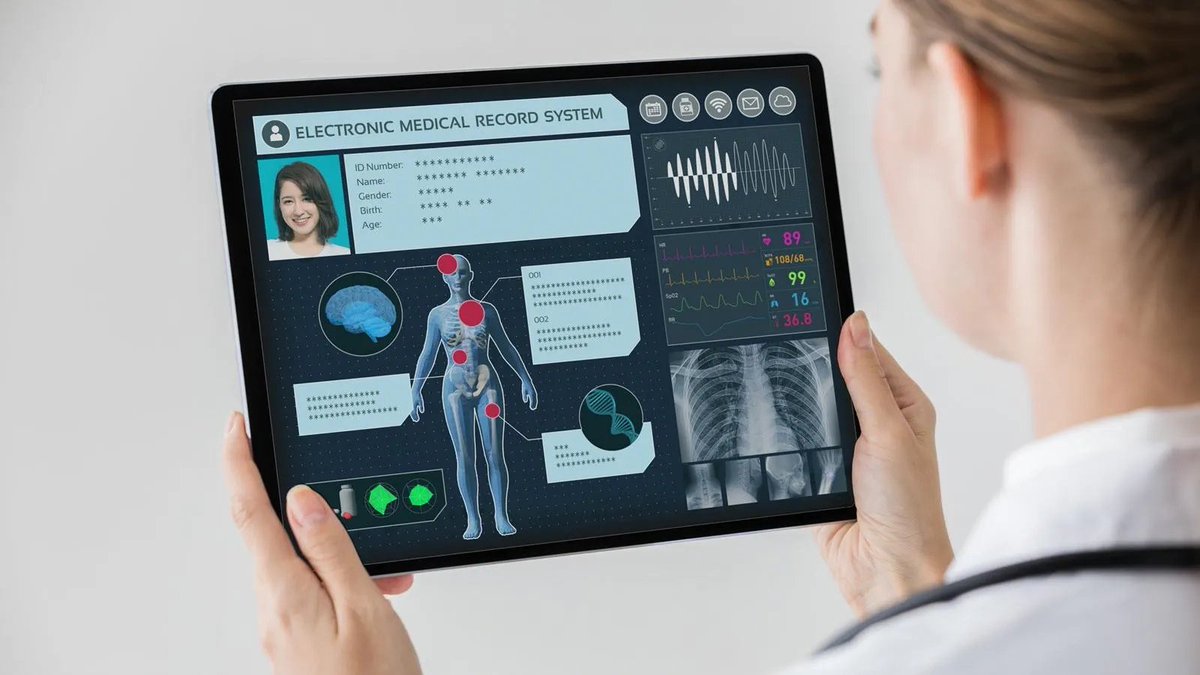
One of the quiet revolutions in patient safety has been the rise of clinical decision support systems.
These tools use patient data, diagnoses, lab results, medications, and other clinical inputs to help clinicians make safer decisions at the point of care.
Today, most hospitals rely on them.
Clinical decision support can flag drug allergies, detect dangerous medication interactions, suggest appropriate testing, and help prevent dosing errors. In many cases, these systems stop mistakes before they ever reach a patient.
That’s real progress.
But technology alone doesn’t guarantee safety.
When these systems generate too many alerts or poorly targeted warnings, clinicians can experience “alert fatigue.” Important signals begin to blend into the noise, and the system becomes easier to ignore.
Even more importantly, most decision support tools only address part of the problem.
They may prevent prescribing errors, but they don’t necessarily prevent mistakes in diagnosis, communication breakdowns, or failures in follow-up care.
In other words, the technology can improve safety at specific points in the process, but it cannot fix a broken system by itself.
The next generation of decision support systems will likely rely on artificial intelligence and machine learning, analyzing massive datasets to identify patterns and guide treatment decisions.
That potential is exciting.
But like any powerful tool in medicine, it will require transparency, rigorous testing, and careful implementation to ensure it actually improves patient outcomes.
Technology can be a powerful ally in healthcare.
But safety ultimately depends on something deeper: systems designed to support clinicians and protect patients every step of the way.
English
One of the most dangerous phrases in medicine is also one of the most common:
“I don’t see anything.”
Sometimes that conclusion comes after a scan, a lab result, or a quick exam that appears normal.
But a normal image doesn’t always mean a normal patient.
When symptoms don’t neatly align with what a test shows, the problem can quietly shift from investigation to dismissal.
Patients are told everything looks fine, even while something is very wrong.
Medicine is powerful, but it’s not omniscient.
And when uncertainty gets mistaken for certainty, people can pay the price.
English
For decades, medicine operated under a paternalistic model.
Doctors made the decisions, and patients followed the instructions.
That model is slowly changing.
Today, patient engagement is increasingly recognized as an important part of patient safety. Modern healthcare systems are encouraging patients and families to ask questions, review their medical information, and speak up if something doesn’t seem right.
In fact, studies have shown that patients often identify safety problems that traditional reporting systems miss.
Patient reports have even helped uncover adverse events after hospital discharge that were not detected through chart reviews or internal reporting systems.
Programs like the Joint Commission’s “Speak Up” initiative and the Agency for Healthcare Research and Quality’s safety campaigns now encourage patients to actively participate in preventing medical errors.
That’s an important shift.
But there is also a danger in misunderstanding what patient engagement should mean.
Patients can be partners in safety. They should never be the last line of defense.
Hospitals and health systems are responsible for designing systems that reliably prevent harm. If a safety strategy depends on patients catching mistakes or policing their own care, the system has already failed.
Patients are already carrying the emotional burden of illness.
Research shows that many patients and family members feel guilty after a medical error, even when the mistake had nothing to do with them.
Patient engagement can improve safety culture, transparency, and communication.
But accountability for safe care must remain where it belongs: with the healthcare system that provides it.
The goal is partnership, not shifting responsibility.

English
When people think about healthcare failures, they often imagine a single mistake.
More often, the problem is fragmentation.
Patients move from specialist to specialist, department to department, system to system.
Each provider looks at a narrow slice of the problem.
If the issue doesn’t fall inside that box, it gets pushed somewhere else.
Eventually, the patient becomes the messenger between disconnected silos.
That’s not coordinated care.
It’s a maze.
And when no one owns the full picture, patients are the ones who fall through the cracks.
English
Much of medicine relies on what patients report.
Pain, dizziness, fatigue, and confusion.
These are real symptoms, but they’re often labeled “subjective complaints.”
Once that label appears, something subtle happens.
The symptom becomes easier to discount.
If a test doesn’t confirm it, the complaint may be minimized or attributed to exaggeration.
But many serious medical problems begin with symptoms that are impossible to measure directly.
When medicine treats subjective experience as suspect evidence, real harm can be missed.
Listening carefully is still one of the most powerful diagnostic tools we have.
English
One of the most common claims in litigation is that a patient is exaggerating.
Pain is overstated, symptoms are embellished.
But that raises a simple question.
How do you know?
Unless you’ve experienced that exact injury yourself, you don’t actually know what it feels like.
Pain isn’t visible on an X-ray.
It doesn’t appear neatly in lab values.
Medicine depends on listening to patients because their experience is the first signal that something may be wrong.
Dismissing that signal as exaggeration isn’t science.
It’s an assumption.
English
For decades, medicine operated with a clear power dynamic.
Doctors spoke, and patients listened.
That dynamic is changing.
But not because trust is stronger. In many cases, it’s the opposite. Patients today are more skeptical of large healthcare systems and the institutions behind them.
They question motives, time pressures, and competing incentives.
That skepticism isn’t always comfortable, but it reflects a broader shift in society.
Trust is no longer automatic.
It has to be earned through transparency, accountability, and care that puts patients first.
English
People assume cases settle because “the truth comes out.”
That’s rarely how it works.
Trials are about risk, who has it, who fears it, who sees the downside first. Settlement offers reflect that calculus, not moral clarity.
Both sides have done discovery, and both sides know what the trial will look like.
But nobody knows how jurors will react, what evidence will land, or which uncertainty will matter most.
Settlements don’t signal innocence or guilt.
They signal discomfort with uncertainty, and a decision to manage exposure instead of gamble on belief.
English
I recently discussed a case where a homeless man was brought to a hospital in North Philadelphia.
He had been discharged the day before.
Police found him frozen across the street and brought him back in. He couldn’t answer questions, so the staff assumed he was being belligerent.
They put him in a corner.
Seven hours later… he was dead.
That wasn’t a documentation error, it wasn’t bad luck, it wasn’t a one-off oversight.
It was culture.
Culture determines who gets believed, who gets monitored, and who gets written off. It fills the gap when protocols are thin and supervision is absent, and it shows itself most clearly when the patient has no status, no advocate, and no voice.
Healthcare leaders often talk about a “culture of safety.”
But culture is defined by what happens when no one feels ownership, not by mission statements or policies.
The deeper problem is incentives.
When errors are reimbursed, and prevention costs money, safety becomes optional. No one wants harm to occur, but systems respond to incentives, not intentions.
I don’t see cases like this as anomalies, I see patterns.
The same rationalizations, the same silence, the same outcomes.
If an organization tolerates treating vulnerable patients as inconveniences, it doesn’t have a policy problem.
It has a culture problem.
And culture only changes when leadership decides that “someone else’s problem” is no longer acceptable.
English
Healthcare has no shortage of patient safety frameworks.
What it lacks is the perspective of someone who sees where those frameworks fail, publicly and expensively.
Most safety consultants design programs, but I’ve spent decades seeing how those programs are examined after catastrophic harm occurs.
That vantage point changes the questions you ask:
Not just “Is this policy compliant?” But “Will this hold up when outcomes are scrutinized?”
Prevention isn’t only theoretical.
It’s practical, cultural, and rooted in understanding how risk actually materializes.
English
I used to reject the idea that doctors could be “victims” too.
Then I understood how broken systems turn deeply caring professionals into collateral damage.
English
The courtroom is often treated like a place where “objective truth” finally emerges.
It isn’t.
No judge or jury ever sees everything. No one has the full record of what happened, what was missed, or what wasn’t documented.
Trials aren’t about uncovering a perfect past.
They’re about making decisions with incomplete information, guided by evidence, judgment, and human limits.
Pretending there’s a single, fully knowable truth doesn’t strengthen justice.
All it does is that it creates an impossible standard that favors denial over accountability.
English
One of the most unsettling realities today is this…
You can show people evidence, and they still won’t believe it.
Usually, because it contradicts a story they’ve already accepted, not because the evidence is unclear.
This shows up in trials, it shows up in healthcare, it shows up everywhere decisions are filtered through belief instead of evaluation.
When belief overrides proof, accountability becomes optional, and truth becomes negotiable
English
One of the hardest truths in trial work is this:
People are almost never lying, and they’re still often wrong.
Eyewitness testimony feels powerful because it’s human. Someone saw something, they remember it clearly, and they’re confident.
But confidence is not accuracy.
Memory doesn’t work like a recording. It’s shaped by stress, time, conversations, and the way questions are asked. Over time, those influences don’t just affect memory, they become the memory.
I see this constantly.
My clients aren’t trying to deceive anyone, and jurors aren’t either, but no one ever has the full picture. No one ever does.
Trials are decisions made under imperfect information. There is no omniscient camera following everyone around, capturing every moment. Pretending that standard exists is often a way to avoid accountability.
What makes this harder today is how distorted our sense of “common sense” has become.
We live in an era where people can be shown evidence and still refuse to believe it, and it’s not because it’s unclear, but it conflicts with a story they’ve already accepted.
The law doesn’t require perfect truth. It requires judgment, informed by evidence and an honest understanding of human limits.
Ignoring how memory actually works makes errors easier to explain away, it doesn’t make outcomes fairer.
English
The era of the doctor who knew your name, your family, and your story is gone.
And today’s juries feel that loss… so much so that loyalty has flipped into a desire to send a message.
English
In trials, truth isn’t discovered like an artifact.
It’s reconstructed, imperfectly.
People don’t lie as often as we think.
But memory isn’t fixed, it shifts with time, stress, and influence. By the time testimony is given, recollection has already been reshaped.
That doesn’t mean people are dishonest.
It means human memory isn’t a recording device.
Justice depends on understanding that limitation, not pretending certainty exists where it never has.
English