Sabitlenmiş Tweet

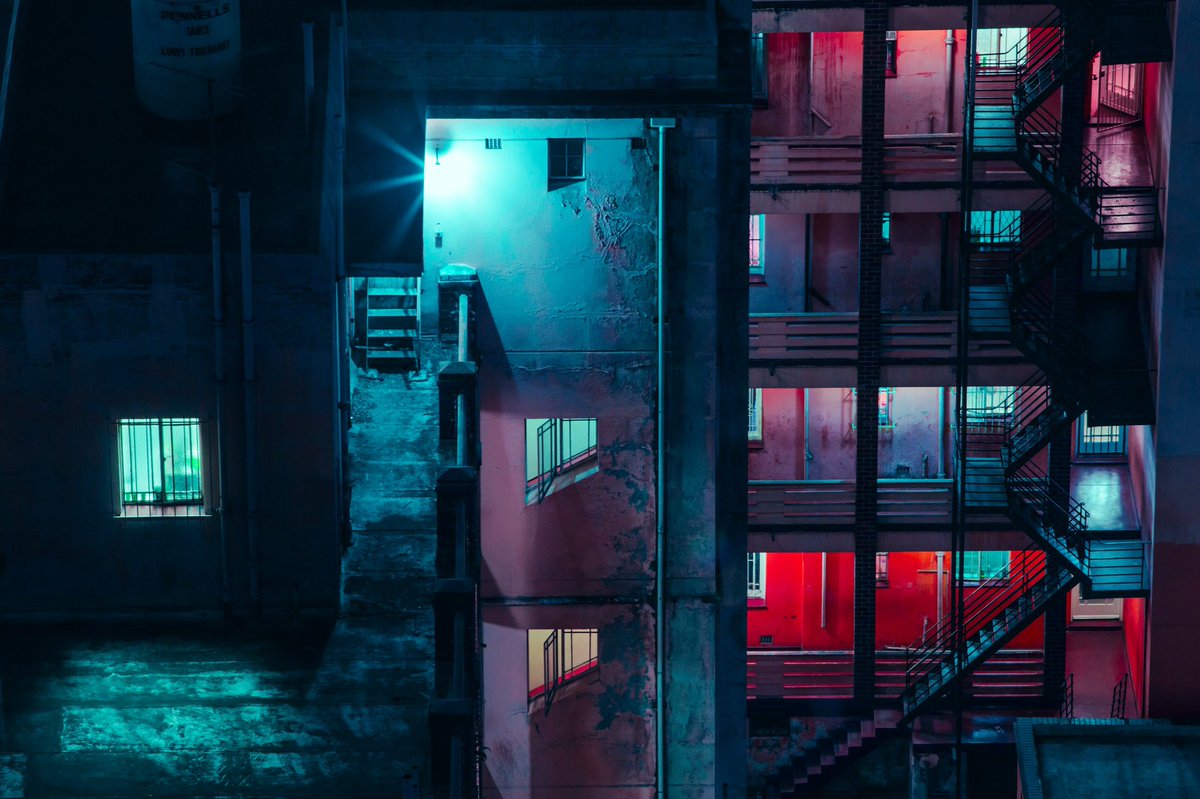
Some of my work from my Midnight Gothic series, focusing on the Johannesburg inner city, 2016.


English
elsa bleda
18.7K posts

@elsableda
The ancient past and the distant futures. An artist and a machine, learning. | Replicant at @Simulon.


Teacher in Bulgarian class today: the stereotype is that the Ottoman period was all slavery and oppression, but newer research shows it was more like the European Union.


A crab climbs out of its tray in a Japanese supermarket where seafood is often kept alive for freshness.
Islam has been so aggressively racialized in Western discourse that many people are no longer capable of looking at it as a religion, ideology, or governing system. Instead, it is treated as a kind of ethnic inheritance—something biologically fused to the people associated with it. This distortion becomes especially obvious in the case of Iran. Iranian civilization did not begin with Islam, and Iranian identity is not reducible to any religion. Yet outsiders routinely speak as though “Iranian” and “Muslim” were naturally synonymous, as if a civilization thousands of years old can simply be collapsed into the religion of foreign people who conquered it after a single battle in 636. That mistake has real consequences. Once Islam is racialized, criticism of Islam is misread as hatred of a people rather than criticism of a doctrine. Resistance to Islamist rule is then treated as identity confusion. Iranian rejection of the Islamic Republic becomes framed as alienation from “their own culture,” when in reality the opposite is often true: the rejection is rooted in the desire to recover what Islamist rule has spent decades degrading, erasing, or subordinating. This is the point many people refuse to confront. Islam—especially in its politicized and totalizing forms—has long existed in tension with Iranian civilizational identity. It imposed itself upon an older language, older memory, and older cultural instincts, and demanded submission not only in matters of worship but in law, dress, speech, art, and the structure of public life. The Islamic Republic sharpened this tension by weaponizing Islam as an instrument of state power—turning it into the vocabulary of humiliation, the architecture of censorship, and the justification for violence. For that reason, it should not surprise anyone that many Iranians are willing to risk their lives resisting Islamist rule. That willingness reflects clarity. People will fight the thing they know is suffocating their nation. They will resist the ideology that has turned beauty into guilt, joy into sin, dissent into heresy, and national life into a hostage chamber. The Western inability to process this stems from deeply flawed intellectual categories. Christianity is treated as theology, liberalism as ideology, nationalism as doctrine, and Marxism as a political project—all open to criticism and blame. But Islam, within this framework, is treated as identity. Once that happens, criticism becomes taboo and the people living under Islamist regimes become analytically invisible. Their resistance cannot be understood because the framework itself is designed to shield the ideology from scrutiny. That is why Iranian people so often break Western narratives. Their experience exposes the central error: Islam is not an ethnicity and it is not the inescapable essence of every society it has ruled. It can be rejected, criticized, and resisted—especially when fused to state power. For many Iranians, Islam is not experienced as sentimental heritage but as conquest extended through law, punishment, and forced piety. It is remembered not as mere faith, but as a structure that has repeatedly demanded the shrinking of Iran into something narrower, sadder, uglier, and more obedient. That is why so many efforts to romanticize Islam as somehow organically identical with Iranian identity ring false, even obscene. They ask a civilization to treat the ideology that has governed and constrained it as the essence of its soul. A serious analysis of Iran requires abandoning these fraudulent categories. Islam must be treated as what it is: a religion, a set of doctrines, and, in many contexts, a political program with concrete consequences for law, liberty, culture, and power. Once that happens, Iranian resistance becomes perfectly intelligible. The Western discourse that claims to value freedom, dissent, and decolonial analysis, yet suddenly goes blind when the object of critique is Islam.


This eco activist has been sentenced to 2 years in prison for throwing soup over a $90 million Van Gogh painting. What's your reaction to the sentence?


As an Iranian living inside my country during war, I will say this plainly. The chance of me being killed by masked, armed men roaming the streets, or by gunmen standing on mosque rooftops behind machine guns, is far greater than the chance of dying in an airstrike. That is the truth of life under the Islamic Regime occupying Iran. The real fear here has never come from the sky. It has always come from the men the regime unleashes among its own people. #Irán #IranIsraelWar
The tragedy of displacement in and around Nagorno-Karabakh did not begin in 2023. Between 1988 and 1994, hundreds of thousands of people on both sides were forced to flee their homes. During the first Karabakh war, the entire Azerbaijani population of the former Nagorno-Karabakh Autonomous Oblast and surrounding districts was ethnically cleansed, and many towns, villages, and religious sites were destroyed by the Armenian side. That does not justify suffering on the Armenian side in 2023. But it does mean that the region’s history is one of mutual displacement and trauma, not a one-sided story beginning recently. Regarding Iranian Azeris: they are an integral part of Iran’s society and political system. While there are cultural and linguistic ties with the Republic of Azerbaijan, identities are complex. Some feel strong attachment to their Azerbaijani heritage, others primarily identify as Iranian. Reducing them to a geopolitical talking point does not help. If one wants stability in the South Caucasus, the focus should be on long-term normalization and not competitive victimhood.


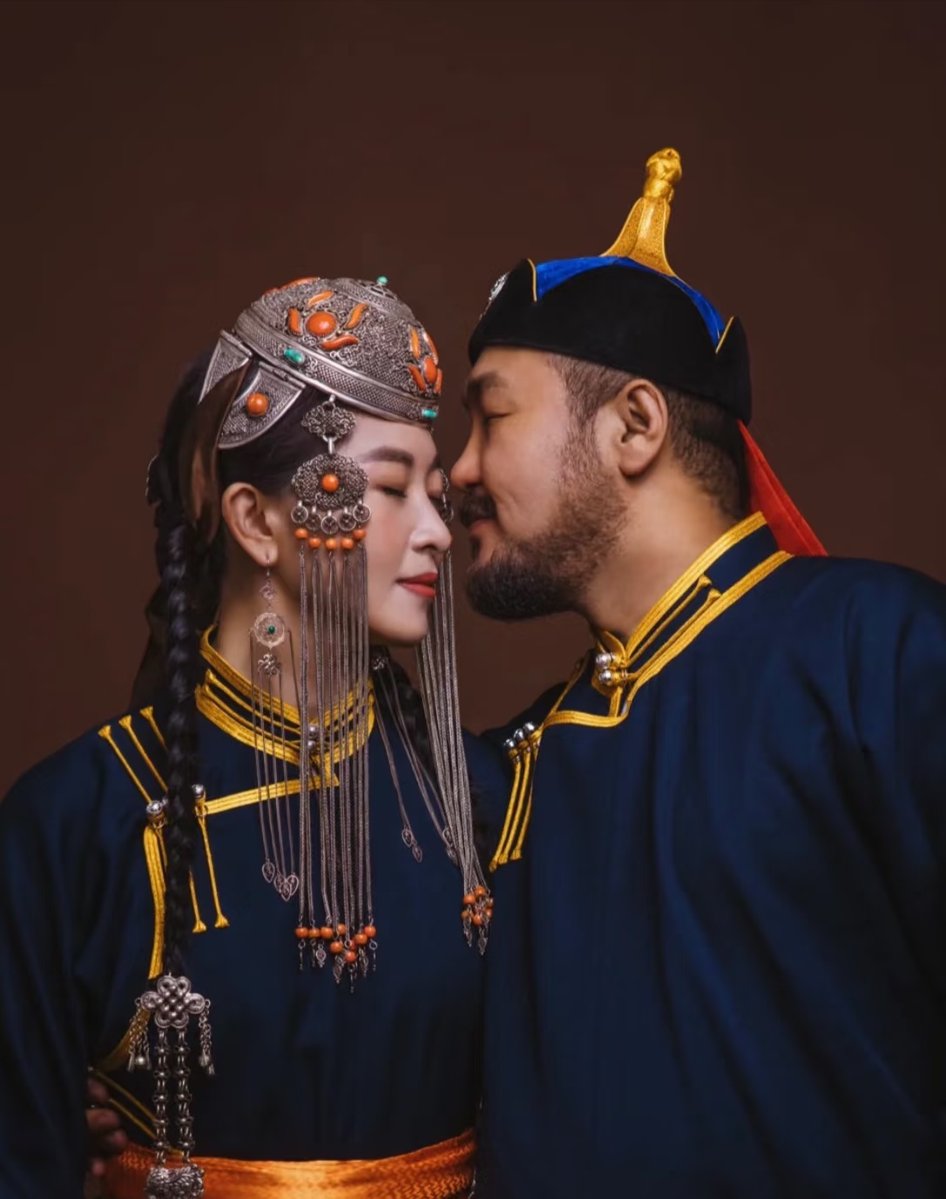
Tuvans are an indigenous people of Siberia, they speak tuvan, a turkic language. (Girls in traditional clothing)