𝗔𝗜 𝗘𝗻𝗴𝗶𝗻𝗲𝗲𝗿𝗶𝗻𝗴 𝗟𝗲𝗮𝗿𝗻𝗶𝗻𝗴 𝗥𝗼𝗮𝗱𝗺𝗮𝗽. 👇
It is created with beginners in mind but can be easily adapted if you are proficient in some of the areas already.
𝘖𝘯 𝘢 𝘩𝘪𝘨𝘩 𝘭𝘦𝘷𝘦𝘭:
𝗙𝗼𝗰𝘂𝘀 𝗼𝗻 𝗙𝘂𝗻𝗱𝗮𝗺𝗲𝗻𝘁𝗮𝗹𝘀 throughout the journey, but don't focus on mastering them early - start building first.
- Software Engineering Fundamentals: REST APIs, Testing, Async Programming.
- ML Fundamentals: Statistics (extremely useful for evals as well), Types of ML Models.
- Observability and Evaluation: Instrumentation, Observability Platforms, Evaluation Techniques, AI Agent Evaluation.
✅ Different Agentic Systems require different fundamental knowledge to implement.
Learn in order.
𝗟𝗟𝗠 𝗔𝗣𝗜𝘀:
- Types of LLMs.
- Structured Outputs.
- Prompt Caching.
- Multi-modal models.
𝗠𝗼𝗱𝗲𝗹 𝗔𝗱𝗮𝗽𝘁𝗮𝘁𝗶𝗼𝗻:
- Prompt Engineering.
- Tool Use.
- Finetuning.
𝗦𝘁𝗼𝗿𝗮𝗴𝗲 𝗳𝗼𝗿 𝗥𝗲𝘁𝗿𝗶𝗲𝘃𝗮𝗹:
- Vector Databases.
- Graph Databases.
- Hybrid retrieval.
𝗥𝗔𝗚 𝗮𝗻𝗱 𝗔𝗴𝗲𝗻𝘁𝗶𝗰 𝗥𝗔𝗚:
- Data preparation.
- Data retrieval and generation.
- Reranking.
- MCP.
- LLM Orchestration Frameworks.
𝗔𝗜 𝗔𝗴𝗲𝗻𝘁𝘀:
- AI Agent Design Patterns.
- Multi-Agent systems.
- Memory.
- Human in or on the loop.
- A2A, ACP etc.
- Agent Orchestration Frameworks.
𝗜𝗻𝗳𝗿𝗮𝘀𝘁𝗿𝘂𝗰𝘁𝘂𝗿𝗲:
- Kubernetes.
- Cloud Services.
- CI/CD.
- Model Routing.
- LLM deployment.
𝗦𝗲𝗰𝘂𝗿𝗶𝘁𝘆:
- Guardrails.
- Testing LLM based applications.
- Ethical considerations.
𝗙𝗼𝗿𝘄𝗮𝗿𝗱 𝗹𝗼𝗼𝗸𝗶𝗻𝗴 𝗲𝗹𝗲𝗺𝗲𝗻𝘁𝘀:
- Voice and Vision Agents.
- Robotics Agents.
- Computer use.
- CLI Agents.
- Automated Prompt Engineering.
I teach all of this, hands-on in my bootcamp (10% off with code LastChance): maven.com/swirl-ai/end-t…
Next cohort kicking off next week!
Did I miss anything? Let me know in the comments!
#LLM#AI#MachineLearning
No need to pay $200 to use Operator
You can create an agent that uses a web browser without writing a line of code.
Combine DeepSeek R1 and Browser Use (free and open source) and you're good to go.
(Links and prompt below)
What is 𝗥𝗲𝗔𝗰𝘁 𝗔𝗴𝗲𝗻𝘁 pattern?
As with most of the Agentic System Design patterns, it is all about flow engineering - how you construct the initial prompt and how you route your system according to the outputs produced by the LLM.
ReAct stands for Reasoning and Action. This means that the Agent is prompted to do both, reason about the actions it should take next and is provided the tools that it can use to act on the plan in the real world. After the actions are taken, they are used to reason about the next steps.
The implementations can vary, but on a high level you will see:
𝟭. The initial prompt is very important and is something that you would spend time tuning, on a high level:
➡️ You ask the LLM to solve the provided user query.
➡️ Provide the Agent with the list of tools it can use.
➡️ Ask it to print out the Reasoning and results of the Actions taken while performing a step.
➡️ Provide a list of actions and produced results so far - you start with an empty list.
➡️ You prompt the agent to ot take no more than N reasoning loops.
𝟮. This is an optional step where you can analyse the reasoning, you either check if the User Query was solved already or you can do that in the initial prompt. Here is also where you can break out of the loop if exceeding max steps.
𝟯. Reasoning output will have the next tool to be used. You execute the tool call and get the results.
𝟰. Combine the reasoning and tool call result, update the Reasoning and Action history with the data and run the updated prompt through the LLM again.
𝟱. Repeat until either the User Query is answered or N steps are reached.
ℹ️ Similar types of architectures are used to implement fully autonomous agents and agentic systems. The goal is to go beyond just CoT reasoning and allow the agent to reason continuously on actions it is taking in the real world.
❗️ While it is exciting to explore the capabilities of such architectures, it hasn’t been shown yet that something like this would produce consistently accurate results and would be viable in production.
✅ It is still exciting to see how the space of autonomous agents will evolve in the following years!
Have you tried implementing the ReAct agent pattern in your applications? What were your main observations? Let’s discuss in the comment section 👇
#LLM#AI#MachineLearning
Want to learn how to build an Agent from scratch without using LLM Orchestration frameworks? Check out my article here: newsletter.swirlai.com/p/building-ai-…
13 Software Design Principles Every Developer Should Know:
1. 𝐊𝐈𝐒𝐒 (𝐊𝐞𝐞𝐩 𝐈𝐭 𝐒𝐢𝐦𝐩𝐥𝐞, 𝐒𝐭𝐮𝐩𝐢𝐝): Design solutions as simply as possible. Avoid unnecessary complexity.
2. 𝐃𝐑𝐘 (𝐃𝐨𝐧'𝐭 𝐑𝐞𝐩𝐞𝐚𝐭 𝐘𝐨𝐮𝐫𝐬𝐞𝐥𝐟): Eliminate duplicate code. Centralize logic to make maintenance easier.
3. 𝐘𝐀𝐆𝐍𝐈 (𝐘𝐨𝐮 𝐀𝐫𝐞𝐧’𝐭 𝐆𝐨𝐧𝐧𝐚 𝐍𝐞𝐞𝐝 𝐈𝐭): Build only what’s needed now, not features you might need “someday.”
4. 𝐄𝐧𝐜𝐚𝐩𝐬𝐮𝐥𝐚𝐭𝐞 𝐖𝐡𝐚𝐭 𝐕𝐚𝐫𝐢𝐞𝐬: Hide changing parts of your code behind stable interfaces.
5. 𝐏𝐫𝐨𝐠𝐫𝐚𝐦 𝐭𝐨 𝐚𝐧 𝐈𝐧𝐭𝐞𝐫𝐟𝐚𝐜𝐞, 𝐍𝐨𝐭 𝐚𝐧 𝐈𝐦𝐩𝐥𝐞𝐦𝐞𝐧𝐭𝐚𝐭𝐢𝐨𝐧: Depend on abstractions, not concrete classes, for flexibility.
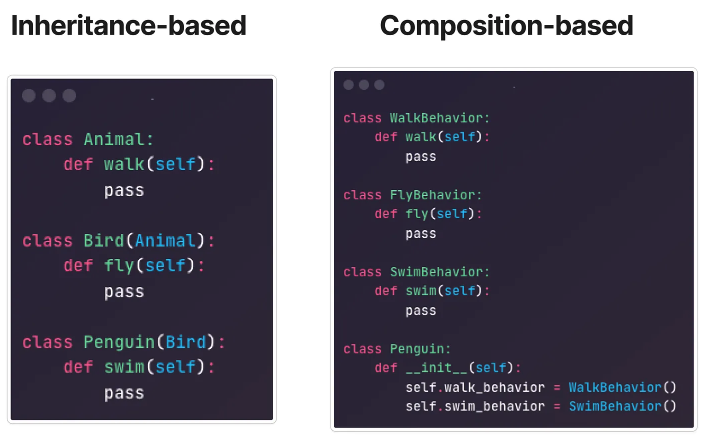
6. 𝐅𝐚𝐯𝐨𝐫 𝐂𝐨𝐦𝐩𝐨𝐬𝐢𝐭𝐢𝐨𝐧 𝐎𝐯𝐞𝐫 𝐈𝐧𝐡𝐞𝐫𝐢𝐭𝐚𝐧𝐜𝐞: Combine small, reusable components instead of relying heavily on class hierarchies.
7. 𝐒𝐭𝐫𝐢𝐯𝐞 𝐟𝐨𝐫 𝐋𝐨𝐨𝐬𝐞𝐥𝐲 𝐂𝐨𝐮𝐩𝐥𝐞𝐝 𝐃𝐞𝐬𝐢𝐠𝐧𝐬: Reduce interdependencies so changes in one part don’t break others.
8. 𝐋𝐚𝐰 𝐨𝐟 𝐃𝐞𝐦𝐞𝐭𝐞𝐫 (𝐋𝐨𝐃): Only communicate with direct neighbors. Don’t chain too many calls.
𝐒𝐎𝐋𝐈𝐃 𝐏𝐫𝐢𝐧𝐜𝐢𝐩𝐥𝐞𝐬:
9. 𝐒𝐑𝐏 (𝐒𝐢𝐧𝐠𝐥𝐞 𝐑𝐞𝐬𝐩𝐨𝐧𝐬𝐢𝐛𝐢𝐥𝐢𝐭𝐲 𝐏𝐫𝐢𝐧𝐜𝐢𝐩𝐥𝐞): One class, one job—keep responsibilities clear and focused.
10. 𝐎𝐂𝐏 (𝐎𝐩𝐞𝐧/𝐂𝐥𝐨𝐬𝐞𝐝 𝐏𝐫𝐢𝐧𝐜𝐢𝐩𝐥𝐞): Open for extension, closed for modification—add new features without changing core code.
11. 𝐋𝐒𝐏 (𝐋𝐢𝐬𝐤𝐨𝐯 𝐒𝐮𝐛𝐬𝐭𝐢𝐭𝐮𝐭𝐢𝐨𝐧 𝐏𝐫𝐢𝐧𝐜𝐢𝐩𝐥𝐞): Subclasses should seamlessly replace their parents without issues.
12. 𝐈𝐒𝐏 (𝐈𝐧𝐭𝐞𝐫𝐟𝐚𝐜𝐞 𝐒𝐞𝐠𝐫𝐞𝐠𝐚𝐭𝐢𝐨𝐧 𝐏𝐫𝐢𝐧𝐜𝐢𝐩𝐥𝐞): Create small, specific interfaces instead of large, general ones.
13. 𝐃𝐈𝐏 (𝐃𝐞𝐩𝐞𝐧𝐝𝐞𝐧𝐜𝐲 𝐈𝐧𝐯𝐞𝐫𝐬𝐢𝐨𝐧 𝐏𝐫𝐢𝐧𝐜𝐢𝐩𝐥𝐞): Depend on abstractions, not details—high-level modules shouldn’t depend on low-level modules.
♻️ Repost to help others in your network.
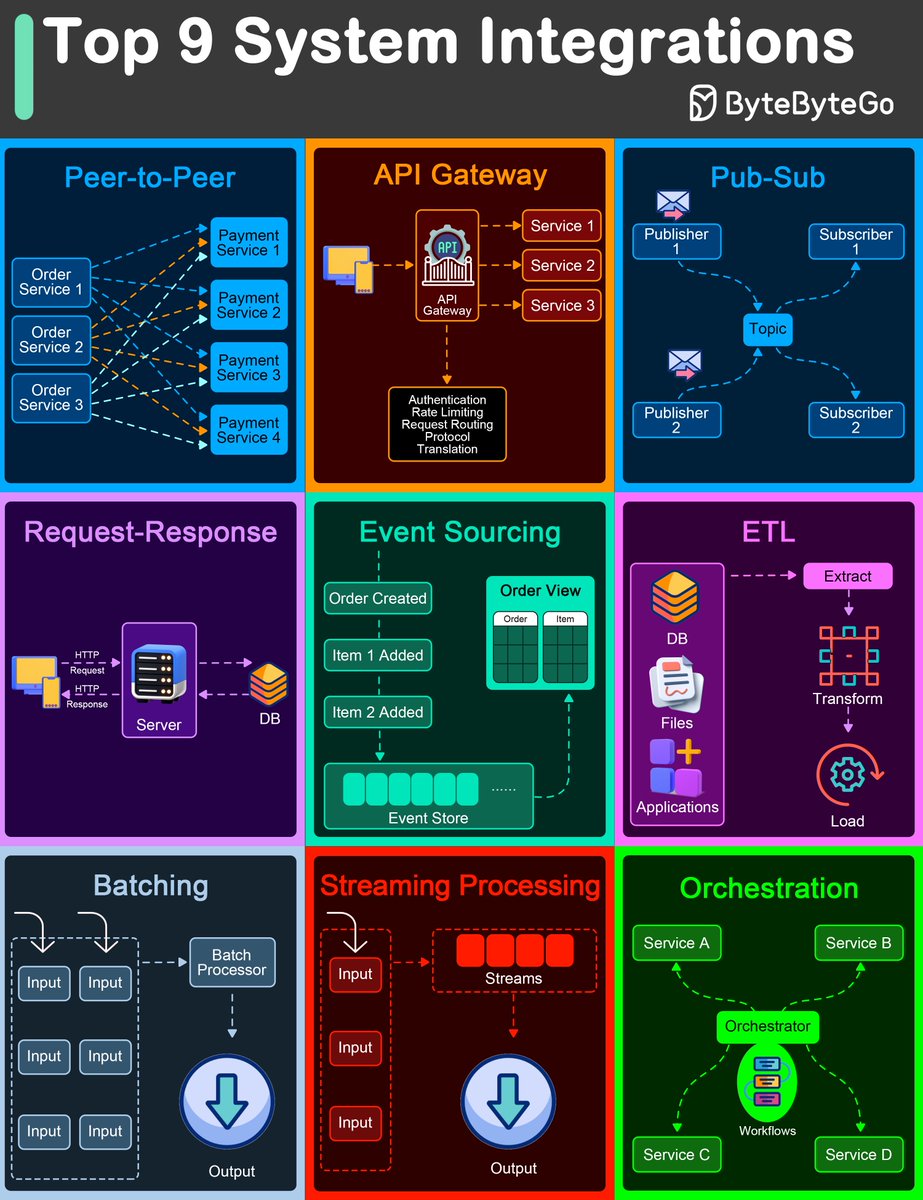
Top 9 Architectural Patterns for Data and Communication Flow
🔹 Peer-to-Peer
The Peer-to-Peer pattern involves direct communication between two components without the need for a central coordinator.
🔹 API Gateway
An API Gateway acts as a single entry point for all client requests to the backend services of an application.
🔹 Pub-Sub
The Pub-Sub pattern decouples the producers of messages (publishers) from the consumers of messages (subscribers) through a message broker.
🔹 Request-Response
This is one of the most fundamental integration patterns, where a client sends a request to a server and waits for a response.
🔹 Event Sourcing
Event Sourcing involves storing the state changes of an application as a sequence of events.
🔹 ETL
ETL is a data integration pattern used to gather data from multiple sources, transform it into a structured format, and load it into a destination database.
🔹 Batching
Batching involves accumulating data over a period or until a certain threshold is met before processing it as a single group.
🔹 Streaming Processing
Streaming Processing allows for the continuous ingestion, processing, and analysis of data streams in real-time.
🔹 Orchestration
Orchestration involves a central coordinator (an orchestrator) managing the interactions between distributed components or services to achieve a workflow or business process.
--
Subscribe to our weekly newsletter to get a Free System Design PDF (158 pages): bit.ly/bbg-social
Exploring the great outdoors and soaking up the beauty of nature. Whether it's a hike in the mountains or a stroll in the park, there's nothing quite like fresh air and sunshine. #NatureWalk#OutdoorAdventure#WeekendGetaway
مؤخراّّ محاولات الغش في الـ Interviews زادت بشكل ملحوظ (خصوصاّّ بوجود ChatGPT).
آخر 3 شهور عملت Interviews كثيرة لـ Levels مختلفة, و شفت محاولات غش كثيرة بطرق مختلفة للأسف.
مهما حاولت اشرح الضرر اللي ممكن حاجة زي دي تسببه لأي Candidate مش هقدر
بس خليني احاول في thread سريع 🧵
A @QuarkusIO web app starts in 12 ms, minimal RAM usage, integrates AI, runs on Java 17+ with proper concurrency and throughput in ~10 lines of code and can run as is. no other files required.
gist.github.com/maxandersen/3c…