Andrew Brewer

3.4K posts

Andrew Brewer

Andrew Brewer

@ennisbarton

Pasture based dairy farmer and Nuffield scholar studying attracting and retaining quality staff

Cornwall UK Katılım Haziran 2009
3.4K Takip Edilen3.1K Takipçiler
Andrew Brewer retweetledi
Sama Hoole
Sama Hoole@SamaHoole·
"50% of the world's cropland is used to feed livestock." Right. Let's have a look at that. Because this figure gets deployed like a weapon in every vegan argument about animal agriculture, usually immediately after someone points out that monocrops destroy topsoil, obliterate biodiversity, and require industrial pesticide regimes that would make a chemical weapons inspector uncomfortable. So. The claim. Yes, roughly half of global cropland by area is involved in producing livestock feed. That number is technically defensible. It is also an extraordinary piece of misdirection. Here's what it doesn't tell you. The single largest component of that "livestock feed" figure is soybean. Global soy production is approximately 370 million tonnes per year. About 80% of that gets processed into soybean oil: for human consumption, biodiesel, and industrial use. The remaining meal, after the oil is extracted, goes to animal feed. The animals are eating the industrial byproduct. The waste. The thing left over after humans have already taken what they wanted. You are not growing soy FOR the cow. You are growing soy for oil and food processing, and the cow is eating the bit you couldn't sell. Next: alfalfa. One of the most common livestock feed crops globally. It is also grown predominantly on alkaline soils, saline soils, semi-arid land, and high-altitude terrain that would fail to support human food crops. It fixes nitrogen. It stabilises degraded land. It is not competing with wheat. It is growing on land that wheat has already looked at and decided against. Then you have distillers' grains: the spent grain from ethanol and alcohol production. Corn silage: the stalks and husks after human food is removed. Cottonseed meal: the byproduct of the cotton industry. Citrus pulp. Sugar beet pulp. Oilseed residues. Livestock are, in enormous measure, running on the off-cuts of industries that exist for other purposes entirely. The "50% of cropland" figure doesn't tell you that a significant portion of that land couldn't grow human food. It doesn't tell you that much of the feed is a byproduct that would otherwise be landfilled. It doesn't tell you that the animals are often doing the most efficient possible thing with material that has nowhere else to go. It tells you a large number, in a confident voice, with no context. Which is, in fairness, the full methodology of most vegan nutrition claims.
Sama Hoole tweet media
English
19
384
1.1K
13.2K
Andrew Brewer retweetledi
Sama Hoole
Sama Hoole@SamaHoole·
"We're wasting food on cattle that could feed billions of people." Gerald eats the following, in a standard week on a British beef farm: Grass. Fresh in summer, preserved as silage or hay in winter. This grass grew on land that cannot be cropped. Clover. Nitrogen-fixing. No synthetic fertiliser required where clover is present. Gerald eats the clover and deposits the nitrogen back into the soil in his manure. Hedge browsings. Hawthorn, hazel, field maple. Things a combine harvester has never and will never express an interest in. In winter, possibly: a modest quantity of brewers' grains: the spent barley from beer production that cannot be eaten by humans and would otherwise go to landfill or anaerobic digestion. Possibly some beet pulp: the fibrous residue from sugar processing. Indigestible to humans. Gerald converts it. Possibly some distillers' grains from whisky production. A by-product of an industry, converted to beef. The thought experiment is: what else do you do with this? The grass: you cannot eat it. You cannot process it into human food. You can leave it to grow, set seed, and decompose. The silage: same. The brewers' grains: landfill, biogas, or Gerald. The beet pulp: same. The hedgerow: same. Gerald is not competing with you for resources. Gerald is processing your waste, your margins, your by-products, and your non-arable land into beef and manure. The question is not "why are we feeding Gerald?" The question is "what were you planning to do with all of this without Gerald?"
Sama Hoole tweet media
English
135
2.1K
7.7K
60.2K
Andrew Brewer retweetledi
Victoria Atkins
Victoria Atkins@VictoriaAtkins·
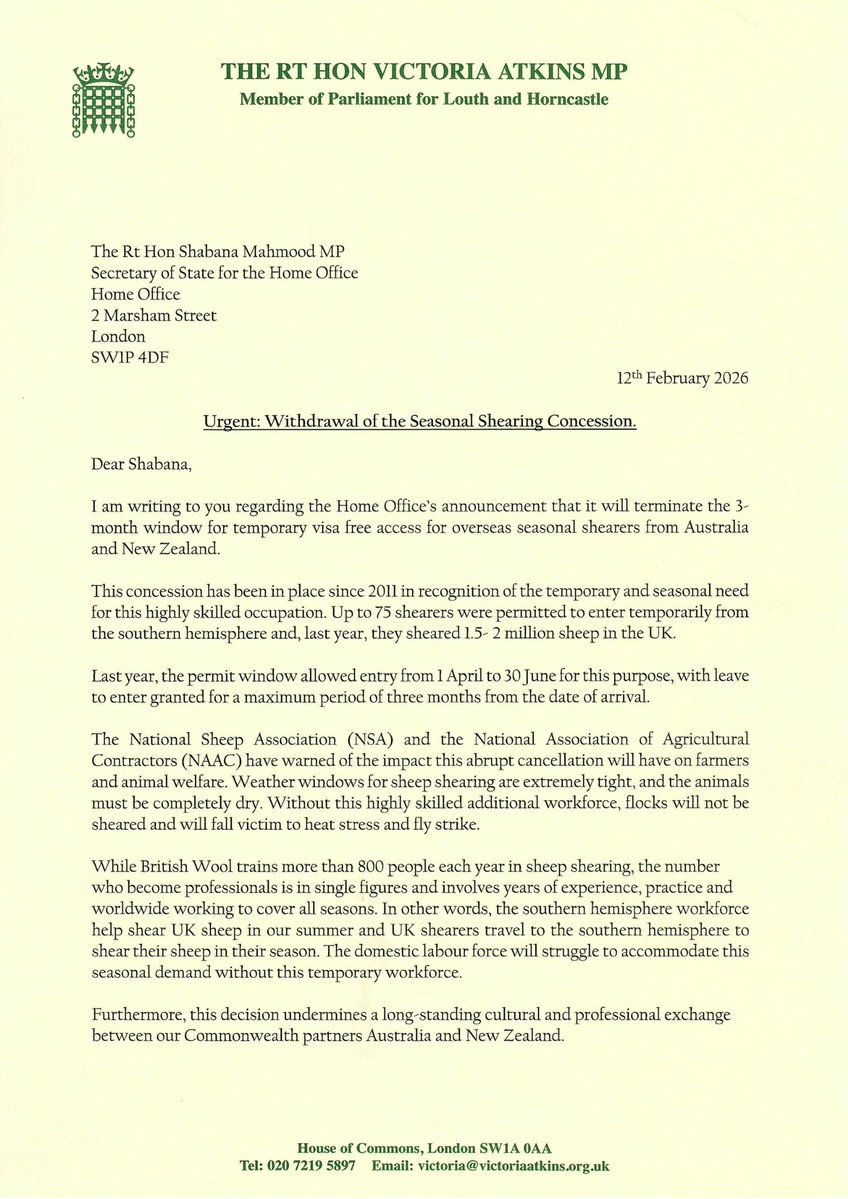
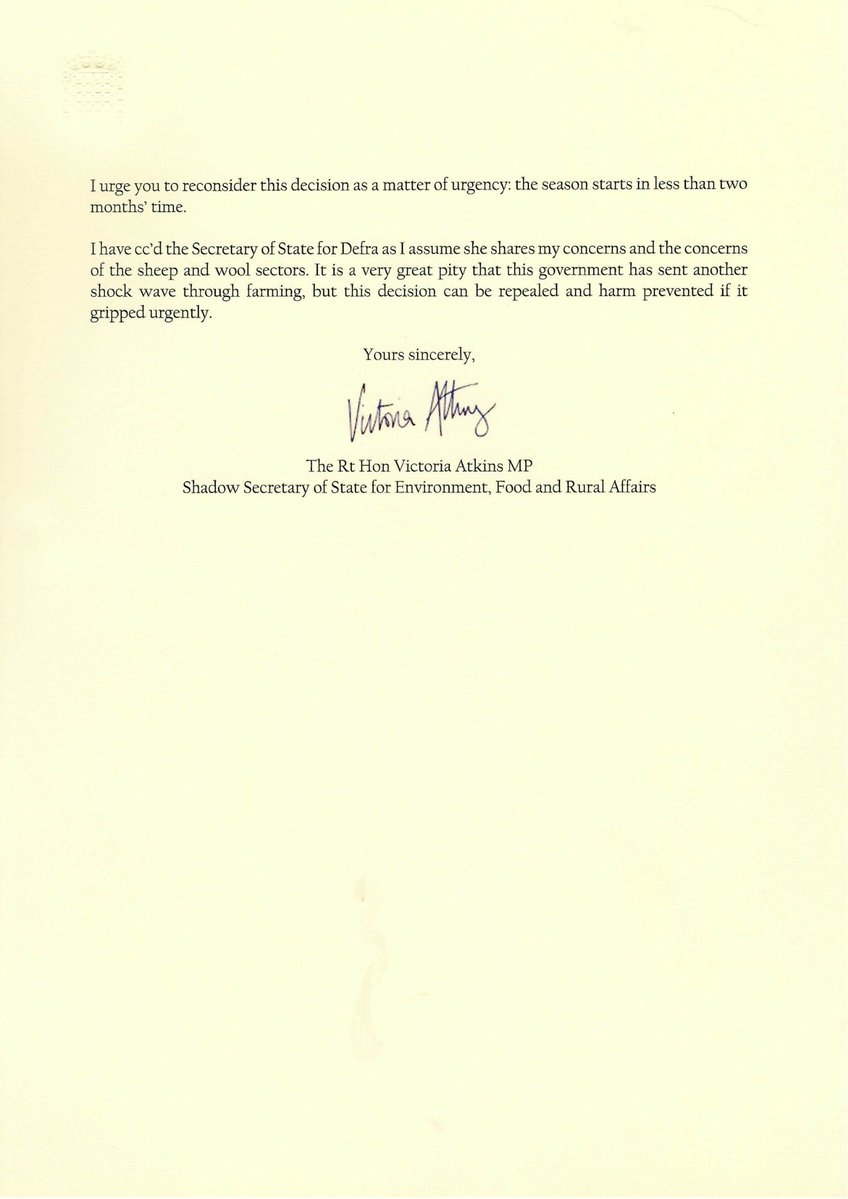
✍️URGENT letter to Home Secretary about animal welfare. @ukhomeoffice ministers have stopped 75 highly skilled sheep shearers from coming to the UK for this year’s sheep shearing season. @natsheep tell me that Australian and Kiwi shearers usually shear 1.5-2 million sheep in our warm months to prevent heat stroke and disease. The Home Office must u-turn on this decision urgently before the season starts in two months.
Victoria Atkins tweet mediaVictoria Atkins tweet media
English
142
833
1.9K
63.7K
Andrew Brewer retweetledi
Proudofus.uk
Proudofus.uk@ProudofusUK·
2,300 years ago, a Greek astronomer sailed to the edge of the known world 🇬🇧 His name was Pytheas. He sailed from Marseille through the Strait of Gibraltar and turned north. He was looking for the source of something the entire ancient world depended on. Tin. Without tin, you can't make bronze. Without bronze, there's no Bronze Age. No weapons. No tools. No armour. And the richest source of tin in the ancient world? Cornwall. For over a thousand years before Pytheas arrived, Cornish tin had been reaching Egypt, Turkey, and Greece. Tin ingots chemically matched to Cornish earth have been found in ancient tombs across the Mediterranean. Britain was connected to the ancient world 1,000 years before Rome set foot here. Pytheas visited the mines. He described a tidal island where tin was loaded onto ships at low tide. Most historians believe that island is St Michael's Mount. Still there. Still beautiful. But here's what matters most. Pytheas didn't find savages. He found a civilisation. Hospitable people. Grain farmers. Beer brewers. Kings with trade networks spanning the known world. He wrote the first ever description of Britain and its people. His book "On the Ocean" has been lost for 2,000 years, but fragments quoted by later writers tell us something extraordinary. Britain wasn't at the edge of the world. It was at the centre of it. Every bronze sword in Greece. Every bronze shield in Egypt. Cornish tin inside every one. 🏴󠁧󠁢󠁥󠁮󠁧󠁿🏳️🏴 They taught you Greece was the cradle of civilisation. They didn't mention who supplied the metal. You can walk that causeway today. The same path they carried tin across two thousand years ago. And nobody's teaching it. We are 👇 👉 proudofus.co.uk/support Be proud of us. Be proud of us. 🇬🇧
English
113
1.6K
6.3K
99.3K
Andrew Brewer retweetledi
ChefDeanBanks
ChefDeanBanks@banks_chef·
VAT in Hospitality! And why we need it changed. We buy our food in zero vat rated and as soon as we sell it within our restaurant VAT is added. So in simple terms when we buy a steak in at £20 (for example) and sell that steak at £20 we only reveive £16 as £4 goes to VAT.
English
87
39
149
56.2K
Andrew Brewer retweetledi
Sama Hoole
Sama Hoole@SamaHoole·
"Cattle produce massive methane emissions, we must reduce livestock!" Meanwhile, rice paddies produce 12% of global methane emissions. Nobody mentions this because attacking rice means confronting agricultural practices in Asia, which is politically inconvenient. Rice cultivation creates methane through anaerobic decomposition of organic matter in flooded paddies. The flooding is necessary for rice to grow. The methane is inevitable. Asia grows 90% of global rice. The methane from Asian rice paddies exceeds methane from all cattle in Europe, North America, and Australia combined. The methane from cattle is part of a biogenic cycle. Grass absorbs CO2 through photosynthesis. Cow eats grass. Cow burps methane. Methane breaks down in 10 to 12 years back to CO2. That CO2 gets absorbed by grass currently growing. It's a closed loop. No new carbon enters the system. Rice paddy methane is also biogenic, but nobody's calling for reducing rice production. Why? Because rice is culturally important and politically sensitive. Cattle are an easy target because criticising Western meat consumption doesn't risk offending Asian agricultural practices. The methane discussion is also divorced from context. Ruminants have existed for 20 million years. Wild ruminants produced methane for millions of years before humans domesticated cattle. North America had 60 million bison plus millions of deer, elk, and pronghorn. Their methane emissions exceeded modern cattle. The Earth's climate systems evolved with ruminant methane as a constant factor. It's not a new perturbation. It's been part of the atmospheric chemistry for geological timescales. Fossil fuel methane is the actual problem. Natural gas leaks from wells, pipelines, and processing facilities. Fracking releases methane. Coal mining releases methane trapped in coal seams. This methane comes from carbon buried for millions of years, adding NEW carbon to the atmosphere. But environmental groups focus on cattle methane because it supports the narrative that meat consumption is the problem. Focusing on fossil fuel infrastructure would require confronting energy companies with massive lobbying power. The methane from cattle in Britain is roughly equivalent to methane from landfills. Organic waste decomposing anaerobically in landfills produces methane that's often not captured. We could eliminate that source by composting organic waste aerobically or using it for anaerobic digestion with methane capture. But there's no campaign to ban landfills. There's a campaign to reduce cattle because livestock are easier political targets than waste management infrastructure. Rice paddies: 12% of global methane, growing, no reduction campaign. Cattle: 5 to 6% of global methane, part of natural cycle, massive reduction campaign. The difference isn't the methane. It's the politics. Blaming cattle avoids confronting rice cultivation methods, fossil fuel infrastructure, and waste management failures. It's easier to tell Westerners to stop eating beef than to suggest Asians change rice farming or that fossil fuel companies fix their leaks. Your grass-fed British beef contributes to a methane cycle that's existed for millions of years. The rice in your stir-fry contributes to methane production that could be reduced by changing cultivation methods, but nobody's suggesting that because it's politically complicated. The methane narrative isn't about emissions. It's about which emissions are politically convenient to target.
Sama Hoole tweet media
English
73
749
2K
26.3K
Andrew Brewer retweetledi
Joel Williams
Joel Williams@IntegratedSoils·
"...grasslands can function as net carbon sinks, even after accounting for methane emissions from livestock" science.org/doi/10.1126/sc…
English
1
7
11
1.1K
Andrew Brewer retweetledi
Eric Daugherty
Eric Daugherty@EricLDaugh·
🚨 WOW! Secretary Bobby Kennedy just STUNNED the Left by creating the "EAT REAL FOOD" pyramid, he followed through 100% on the promise of MAHA At the top: steak, chicken, vegetables and fruits NOWHERE to be seen: - Foods with added sugar - Ultra-processed snacks and candy 🇺🇸🇺🇸
English
1.2K
12.2K
60.3K
1.6M
Andrew Brewer retweetledi
Sama Hoole
Sama Hoole@SamaHoole·
Scotland's Rewilding Failure 2003: Environmental groups celebrate a major victory in the Scottish Highlands. Large tracts of land are designated for "rewilding." The goal is to restore the landscape to "natural" conditions. Step one: Remove the sheep and cattle that have been grazing there for centuries. The theory is simple. Livestock are "unnatural." Remove them and nature will recover. What actually happens next is documented extensively, though rarely discussed outside specialist ecology circles. Year 1-2: Without grazing, the grass grows tall and rank. Coarse species dominate. The flower diversity that existed under grazing pressure begins declining. Year 3-5: Bracken invasion. Bracken is toxic to most herbivores, so it faced no natural check once livestock were removed. It spreads aggressively, shading out other plants. Biodiversity drops. Year 5-10: Scrub encroachment. Without grazing to control it, woody shrubs spread rapidly. This sounds good - "more trees!" - except it's the wrong kind of succession. Ground-nesting birds that need open grassland lose their habitat. Species like curlew, lapwing, golden plover - all declining. The tick population explodes. Without livestock to host on, they wait in vegetation for deer or birds. Lyme disease cases in surrounding areas increase. Fire risk increases dramatically. Ungrazed vegetation creates massive fuel loads. Summer fires become a serious problem where they were previously rare. Meanwhile, the soil isn't improving. Plant matter isn't being trampled in. No dung to feed soil microbes. The carbon sequestration that grazing provides isn't happening. Year 10+: The land is assessed. Biodiversity has decreased. The landscape is dominated by a few aggressive species instead of the diverse grassland that existed under grazing. The "rewilding" failed to restore what was there before livestock. It created something else - and something worse for most species. Ecologists quietly start reintroducing grazing. Sometimes with native breeds of cattle. Sometimes with Highland cattle specifically selected to mimic wild herbivore behavior. The land begins recovering. The diverse grassland returns. Birds come back. Flowers reappear. The lesson is clear: The British uplands evolved with large herbivores. Before cattle, there were aurochs. Before aurochs, there were other large grazers for millions of years. Removing grazing doesn't restore nature. It disrupts the process that built the ecosystem in the first place. But this story doesn't fit the narrative. So it's not publicized. Environmental groups continue campaigning to remove livestock from hills while the ecological evidence shows this makes things worse. "Rewilding" sounds natural. Until you realize the land evolved being grazed and removing that process is the actual disruption.
Sama Hoole tweet media
English
206
2.5K
6.9K
137.5K
Andrew Brewer retweetledi
Sama Hoole
Sama Hoole@SamaHoole·
If you invented a machine that: - Runs on grass - Produces high-quality protein - Fertilises soil while operating - Builds topsoil - Requires zero electricity - Self-replicates - Provides 100+ byproducts (leather, tallow, gelatin, etc.) You'd win every environmental award. We call it a cow and want to ban it. Genius.
English
258
4.7K
29.4K
580.6K
Andrew Brewer retweetledi
Robbie Moore MP
Robbie Moore MP@_RobbieMoore·
If Labour truly believe that food security is national security, they would axe the Family Farm Tax. Until then, our farming families will keep coming back🇬🇧👇
English
194
700
3.5K
28.8K
Andrew Brewer retweetledi
Positive Farmers
Positive Farmers@POSITIVEFARMERS·
🎤𝖲𝗉𝖾𝖺𝗄𝖾𝗋 𝖢𝗈𝗇𝖿𝗂𝗋𝗆𝖾𝖽 𝐇𝐞𝐫𝐝 𝐖𝐚𝐬𝐭𝐚𝐠𝐞: 𝐭𝐡𝐞 𝐡𝐢𝐝𝐝𝐞𝐧 𝐥𝐞𝐚𝐤 𝐢𝐧 𝐨𝐮𝐫 𝐦𝐢𝐥𝐤 𝐭𝐚𝐧𝐤𝐬; W𝖾’𝗋𝖾 𝖽𝖾𝗅𝗂𝗀𝗁𝗍𝖾𝖽 𝗍𝗈 𝖼𝗈𝗇𝖿𝗂𝗋𝗆 𝐃𝐨𝐫𝐞𝐞𝐧 𝐂𝐨𝐫𝐫𝐢𝐝𝐚𝐧 𝖺𝗌 𝖺 𝗌𝗉𝖾𝖺𝗄𝖾𝗋 𝖺𝗍 𝗍𝗁𝖾 𝖯𝗈𝗌𝗂𝗍𝗂𝗏𝖾 𝖥𝖺𝗋𝗆𝖾𝗋𝗌 𝖢𝗈𝗇𝖿𝖾𝗋𝖾𝗇𝖼𝖾 𝟤𝟢𝟤𝟨. 𝖳𝗁𝗂𝗌 𝗌𝖾𝗌𝗌𝗂𝗈𝗇 𝗐𝗂𝗅𝗅 𝖾𝗑𝗉𝗅𝗈𝗋𝖾 𝗁𝗈𝗐 𝗌𝗂𝗅𝖾𝗇𝗍 𝗅𝗈𝗌𝗌𝖾𝗌 𝗂𝗇 𝗁𝖾𝗋𝖽 𝗁𝖾𝖺𝗅𝗍𝗁 𝖺𝗋𝖾 𝗊𝗎𝗂𝖾𝗍𝗅𝗒 𝖽𝗋𝖺𝗂𝗇𝗂𝗇𝗀 𝗉𝗋𝗈𝖿𝗂𝗍𝖺𝖻𝗂𝗅𝗂𝗍𝗒 𝖿𝗋𝗈𝗆 𝗈𝗍𝗁𝖾𝗋𝗐𝗂𝗌𝖾 𝗁𝗂𝗀𝗁-𝗉𝖾𝗋𝖿𝗈𝗋𝗆𝗂𝗇𝗀 𝗁𝖾𝗋𝖽𝗌, 𝗐𝗂𝗍𝗁 𝖺 𝗌𝗁𝖺𝗋𝗉 𝖿𝗈𝖼𝗎𝗌 𝗈𝗇: • 𝖢𝖾𝗅𝗅 𝖼𝗈𝗎𝗇𝗍 • 𝖫𝖺𝗆𝖾𝗇𝖾𝗌𝗌 • 𝖫𝗈𝗇𝗀𝖾𝗏𝗂𝗍𝗒 𝖠 𝗉𝗋𝖺𝖼𝗍𝗂𝖼𝖺𝗅, 𝖾𝗏𝗂𝖽𝖾𝗇𝖼𝖾-𝖻𝖺𝗌𝖾𝖽 𝗌𝖾𝗌𝗌𝗂𝗈𝗇 𝖺𝗂𝗆𝖾𝖽 𝖺𝗍 𝗁𝖾𝗅𝗉𝗂𝗇𝗀 𝖿𝖺𝗋𝗆𝖾𝗋𝗌 𝗉𝗋𝗈𝗍𝖾𝖼𝗍 𝗈𝗎𝗍𝗉𝗎𝗍, 𝗋𝖾𝖽𝗎𝖼𝖾 𝗅𝗈𝗌𝗌𝖾𝗌, 𝖺𝗇𝖽 𝗂𝗆𝗉𝗋𝗈𝗏𝖾 𝗅𝗂𝖿𝖾𝗍𝗂𝗆𝖾 𝗉𝖾𝗋𝖿𝗈𝗋𝗆𝖺𝗇𝖼𝖾. 📍 𝖢𝗈𝗋𝗄 🗓 𝟣𝟦 𝖩𝖺𝗇𝗎𝖺𝗋𝗒 𝟤𝟢𝟤𝟨 👉 𝖡𝗈𝗈𝗄 𝗇𝗈𝗐: positivefarmers.ie #𝖯𝗈𝗌𝗂𝗍𝗂𝗏𝖾𝖥𝖺𝗋𝗆𝖾𝗋𝗌 #𝖲𝖾𝗌𝗌𝗂𝗈𝗇𝟥 #𝖧𝖾𝗋𝖽𝖧𝖾𝖺𝗅𝗍𝗁 #𝖣𝖺𝗂𝗋𝗒𝖯𝗋𝗈𝖿𝗂𝗍 #𝖭𝖾𝗑𝗍𝖦𝖾𝗇𝖾𝗋𝖺𝗍𝗂𝗈𝗇𝖯𝗋𝗈𝖿𝗂𝗍𝖺𝖻𝗂𝗅𝗂𝗍𝗒 ________________________________________
English
0
1
3
2.6K
Andrew Brewer retweetledi
Camus
Camus@newstart_2024·
Mikhaila Peterson Fuller stepped onto the historic Oxford Union stage and silenced the entire room with an 8-minute speech. The motion being debated: “This House Would Move Beyond Meat.” She spoke against it — and started with this: “At age 7 I was diagnosed with juvenile rheumatoid arthritis in 37 joints. By 17 both my hip and ankle had been replaced. 16 years of immunosuppressant injections, crippling depression, and a body that was falling apart. Doctors called it incurable.” Then, at 23, she tried the one thing no doctor ever suggested: She ate only meat. 2 months later → almost every symptom gone. Off SSRIs, Adderall, and all immune drugs. Pregnancy brought symptoms roaring back… so she went 100% carnivore (beef, salt, water). 6 months later → full remission again. 8+ years later she’s still symptom-free and flares every single time she tries adding plants. She’s not alone: her whole family is carnivore for autoimmune issues, and her community has 7,000+ people with identical stories. Then she dropped the receipts: A Harvard-published survey (Oxford University Press) of 2,000+ carnivores (6+ months): → 90–95% saw major improvement or complete resolution of autoimmune, mood, metabolic, gut & skin issues → 92% of type-2 diabetics discontinued insulin entirely → Almost zero adverse effects Her closing line at Oxford: “We’re being told to eat less of the one food that puts ‘incurable’ diseases into remission for thousands of people… while 1 in 5 North Americans have autoimmunity and 68% are overweight or obese. Maybe we got the food pyramid completely upside down.” Watch the full 8-minute Oxford Union speech below. It’s raw, personal, and will make you question everything you’ve been taught about meat. What chronic health struggle would you do anything to fix? Share your story below — no judgment, only support.
English
313
5.2K
17.2K
1.1M
Andrew Brewer retweetledi
ClarksonsFarm
ClarksonsFarm@ClarksonsFarm1·
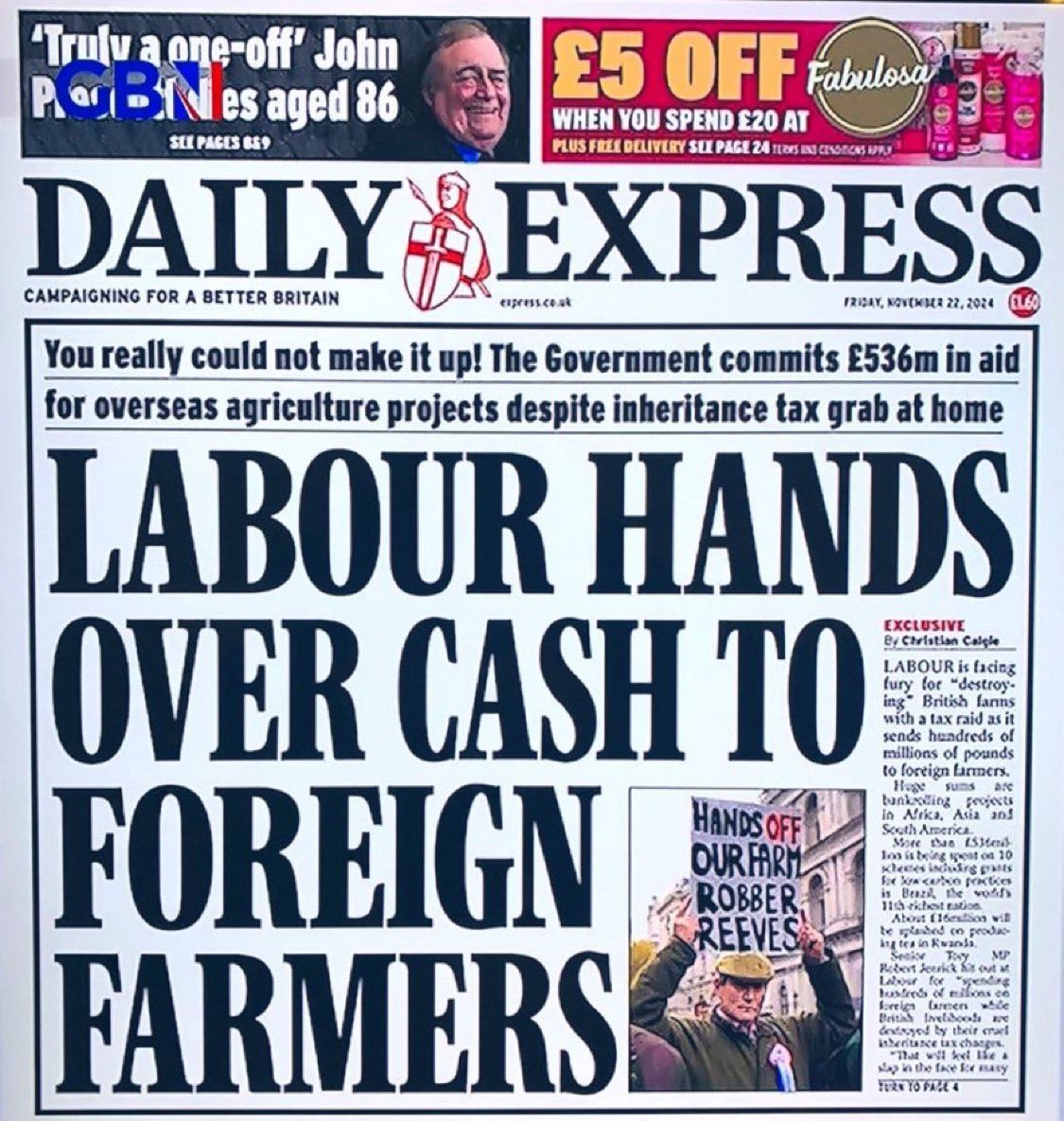
Despite imposing an inheritance tax raid on UK family farms—purportedly due to the fabricated "£22bn black hole"—the Labour government is allocating £536m in aid to foreign agricultural initiatives. Speechless.
ClarksonsFarm tweet media
English
735
5.7K
18K
242.6K
Andrew Brewer retweetledi
Private Eye Magazine
Private Eye Magazine@PrivateEyeNews·
Six months after being commissioned by the government to carry out a “farm profitability review” (something of an oxymoron, given the dire returns made by most UK farms), former National Farmers’ Union (NFU) president and now crossbench life peer Baroness Batters has delivered her findings.   Having sought views from across the farming industry, her 50,000-word document proposes a farm policy “reset” that will focus on encouraging farmers to increase food production. But will the government pay any attention? Full story online and in the latest issue: private-eye.co.uk/columnists For the rest, including cartoons, Pseuds, Dumb Britain and all the other regulars, you’ll have to buy the magazine.
Private Eye Magazine tweet media
English
4
69
222
58.2K
Andrew Brewer retweetledi
Ronald K. OBrien II
Ronald K. OBrien II@rko2milk·
Nutrition research continues globally. It appears that most all research shows a positive impact with diary consumption. Will this continue to help build the dairy industry? milkpay.com/resource/how-t…
English
0
4
7
1K
Andrew Brewer retweetledi
Robbie Moore MP
Robbie Moore MP@_RobbieMoore·
Heartless. A year of anxiety, uncertainty and desperate pleas from our farming community. And yet continued ignorance to those pleas from the Prime Minister and Chancellor, who have actively chosen to oversee the decline of British food and farming with their family farm tax and the wider damaging measures to cash flows. All whilst the government is set to spend £1.8 billion on a digital ID policy no-one wants…
English
25
68
311
5.7K