
Ras-I Mhofu #One Drop Media
2.9K posts

Ras-I Mhofu #One Drop Media
@erasmasunga
Father,brother. Printing,media,advertising,Design, Branding,Faith,Hustler,Rich,Fearless,Against the flow,Start up.LFC.YNWA
Windhoek, Namibia Katılım Ağustos 2011
2.5K Takip Edilen605 Takipçiler
Happy birthday Eng.Tapiwa Henry Motsi Gutu🎂
May The Most High continue to guide & bless you with many more years of excellent health, happiness, peace & prosperity!
🎉🎊🍾

English

If you want the free supplier list I shared in the thread,
type IMPORT below and I’ll send it.
It has 10 verified contacts I’ve personally used.
English
Most people in Zambia have never seen actual supplier prices for phones from China.
Here are some real wholesale prices for iPhones and Samsung devices 👇
English
@RexMidzi Mhofu dzese dziri paNyanda idzinza rangu regardless of different surnames.🥰🥰
Latviešu
@erasmasunga Manje Nhuka pa nyanda apa pane hama dzangu , saka muri hama yangu
Zimbabwe 🇿🇼 Indonesia
Ras-I Mhofu #One Drop Media retweetledi
We the descendants from the Hwata Dynasty MUFAKOSE vana Mhofu :
As far as im concerned my Chief is Hwata the 14th Leslie Gwindi 🔥 and if you live around Harare ndo mambo vacho ivava
OUR LAND HARARE
In the 18th century We came from Buhera ( Va hera ) our Ancestors Shayachimwe , Nyakudya and Gutsa joining our uncle Seke Mutema in Chitungwiza
They where introduced to Chief Mbare in now Harare who was a Shumba Gurunduro and we lived on Barapata Hill now the Mufakose Surburb
We liked Harare so we un alived Chief Mbare and took over the land and we started running this town , saka its ours hanti ?
When mdara died our Great aunt Tete Minge became Chief. Achihera special you know how the ladies roll
Some of us moved on upto Mazoe , Chiweshe , Goromonzi, Chishawasha you know ? The places around Harare Metropolitan Province
Seke is still the land of Museyamwa , Rusike in Goromonzi etc etc
Some went to Chivhu , Masvingo etc etc we went all over what is now Zimbabwe now so did our cousins when they left Vahera Land
But since we left Buhera what is distinctly our home is the land we conquered which is Harare
So next time you see a mhofu uchira👏🏿 and thank them for welcoming you in their home 👏🏿 😂😂
Jokes its all our Home, the Hwatas are welcoming folks 😂
Zimbabwe 🇿🇼 English
Teach dem
Andile Gogoda@AfricaisBlack
Funny how the Country is going to the dogs crowd is so quiet today. 🤫 When a R450m cocaine shipment links an Australian kingpin to a global cartel using our airports, you’re suddenly all out of data. No long threads about culture? No calling for mass deportations of "the Australians"? 🇦🇺 Your outrage seems to have a very specific pigment filter. You’ll write 50 tweets attacking a Black street vendor, but when a multi-million rand white collar narco ring is exposed, you become the Dalai Lama of peace and silence. Keep that same energy you have for the Africans for the international smugglers. Or just admit you don’t actually hate crime, you just hate seeing Black people breathe. #DoubleStandards. #BigFiveCartel
English
@FinLitBae The Chinese respect those who respect themselves
English

When you think someone is your all weather friend then they exclude you from their party get the message pls 😂
cc : Africa
Mao Ning 毛宁@SpoxCHN_MaoNing
Starting from the 2026 Spring Festival, visitors from 50 countries can enjoy visa-free access to China. China’s door is opening wider to the world. #FeelingTheChinaVibe
English
Ras-I Mhofu #One Drop Media retweetledi

Mukoma, I think you have failed to address the issues I brought up. Firstly, no one said Western colonialism was good, but I said Chinese looting is “WORSE THAN” Western colonialism. The operative phrase being “WORSE THAN.” This connotes a comparison of two evils.
You yourself acknowledge that Westerners developed infrastructure to exploit, extract, and ship back resources to their countries. This alone is you acknowledging my point: the West built infrastructure to extract, but that infrastructure has and still benefits the natives through internal trade and economic activities. The growth of our services industry—banking, real estate, education, skills training, insurance, etc.—uses this same infrastructure as its backbone today.
The coloniser built buildings, warehouses, factories, and business centres to facilitate extraction, but these also have become the centres of commerce, business, hospitality, accommodation, and informal markets that lifted our Human Development Index in this system we adopted .
It’s also not true that they took 100 years to develop infrastructure because the first railway to Bulawayo from Cape Town was completed by 1897, three years after the Pioneer Column reached Zimbabwe. The telegraph superseded the railway line, providing vital trade infrastructure that benefited all, alongside the coloniser. What infrastructure have the Chinese built in 20 years of looting our country? Why haven’t they built railways or improved our communication networks for their extraction?
The main difference is the coloniser intended to stay permanently in the colonies; hence, they invested in infrastructure for their own comfort. In doing so, this infrastructure benefited them and the natives alike. Unlike the Chinese, who come to take and extract in order to develop China, then return to China after depleting the resources.
This is why the Chinese damage our environment without any remorse, because they have no intention of settling in our countries and integrating with us. As such, in developmental terms, the coloniser is better THAN THE CHINESE because they wanted to stay and make Africa home thus benefits cascade. Do they hate us, of course they do but they have benefited us too.
The Chinese, like a parasite on a host, extract without developing infrastructure, particularly in Zimbabwe. Instead, they continue extracting through the same infrastructure made by the coloniser. So when we compare the benefits to the natives between Western colonisers and China, the fact is we have benefited more from the West than from the Chinese, even though these developments were not benevolent—they left intrinsic benefits.
Additionally, as I said, Western colonialism developed skills, local companies, and value chains that served their charter companies, and this gave rise to local businesses. The reason is that the Westerners wanted to retire and enjoy leisure in our countries, so they began to impart skills so that we could work for them. Whereas the Chinese supply themselves with all their services through Chinese labour and companies, leaving no development for locals.
Today, corporates—many of which are Chinese—pay less tax than the fewer Western corporates we had in the 1980s–90s. Under colonialism and during our first twenty years of independence, Western companies paid enough taxes to build railways, roads, bridges, schools, and hospitals. They invested in our stock market, making it the second biggest in Africa by 1997. But under 20 years of the Chinese being the dominant players in our economy, we struggle to generate the same corporate taxes because the majority of Chinese companies operate informally, without governance systems, which makes it easier for them to evade taxation. They don’t invest in our money markets either, and they don’t buy our bonds.
This is why Rhodesia and newly independent Zimbabwe were able to achieve more under Western corporations than they are achieving now with the Chinese.
Dereck Goto@dereckgoto
Mukoma Rutendo, to argue that colonial extraction was superior because it left behind cities is to embarrassingly normalise - even elevate - subjugation. It mistakes the architectural residue of empire for benevolence. Railways, mines and settler cities were not gifts; they were instruments of removal. Their purpose was not African industrialisation but imperial extraction. The urban footprints that remain were by-products of a system designed to externalise African wealth, not entrench African prosperity. Serious economic analysis begins with incentives. No capital - Anglo-Saxon, Chinese, Indian or otherwise - moves as charity. Investment flows where return is possible. The British South Africa Company did not mine for philanthropy; Anglo American did not construct shafts out of altruism. Likewise, China’s engagement is grounded in trade and strategic interest. That is not moral failure; it is the grammar of global capitalism. The relevant question is not whether investors seek benefit - they always do - but whether the host state secures reciprocal advantage. Historical scale also matters. Western capital entrenched itself in Southern Africa for over a century. China’s modern engagement spans barely two decades in intensity. Structural transformation is generational. Shenzhen did not emerge in twenty years; it was the product of sustained policy, industrial discipline and infrastructure layering over decades. Comparing a 100-year colonial footprint with a 20-year trade partnership is analytically shallow. Moreover, development in the 21st century does not require foreign powers to build settler cities. It requires platforms: energy, logistics corridors, ports, industrial parks and digital backbones upon which domestic enterprise can compound. Across Africa - and in Zimbabwe - Chinese financing and engineering have expanded power generation, modernised highways, upgraded telecommunications, rehabilitated border posts and built public infrastructure. Infrastructure is the skeleton of industrialisation. Cities are its eventual musculature. One does not construct skylines before stabilising the grid. On trade, China’s removal of tariffs for the majority of African exporters is not symbolism; it is structural access to one of the world’s largest consumer markets. Diversified demand expands bargaining space and reduces overdependence on any single bloc. That strategic widening of options is economically significant. If mineral value chains remain shallow, the constraint is domestic capability - refining capacity, skills and policy coherence - not the nationality of the buyer. China processes lithium because it invested in downstream ecosystems for decades. Industrial depth is built, not granted. China is neither saviour nor villain; it is a rational actor pursuing interest. The same is true of the West. The decisive variable is African governance - the ability to regulate, negotiate, tax and channel capital into structural transformation. The choice before Zimbabwe is not nostalgia for empire, nor naive enthusiasm. It is strategic agency. On balance, China’s engagement - market access, infrastructure scale and policy non-interference - has expanded Africa’s room to manoeuvre rather than constrained it. Production precedes prosperity. Infrastructure precedes industry. Sovereignty lies not in romanticising former masters, but in mastering present partnerships.
English
@Maletsapa1 Thank you my sister for standing up for humanity.Love and light 🕯️
English

I don’t care if he was Nigerian or European. He didn’t deserve to die like that💔. This is inhuman 😩😭
The quicker as a nation we learn that not all Foreigners are illegal or drug dealers will get us somewhere in Life.
Go on and insult me for posting this but, remember that God loves us all.
Rest in Peace Isaac 🕊️

English
Ras-I Mhofu #One Drop Media retweetledi
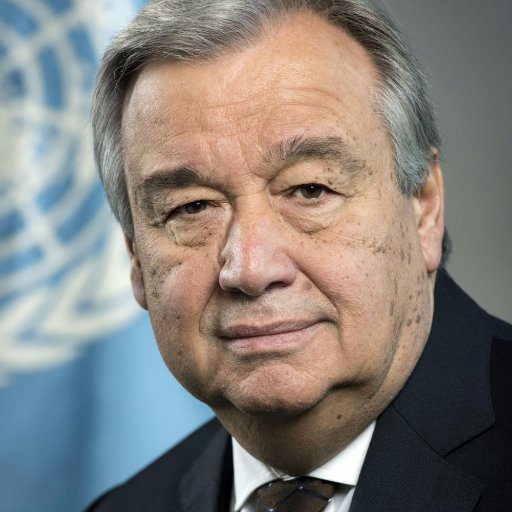
We must ensure African countries benefit first & fully from their critical minerals through fair, sustainable value chains & manufacturing.
No more plundering. No more exploitation.
The people of Africa must benefit from the resources of Africa.
English
Ras-I Mhofu #One Drop Media retweetledi

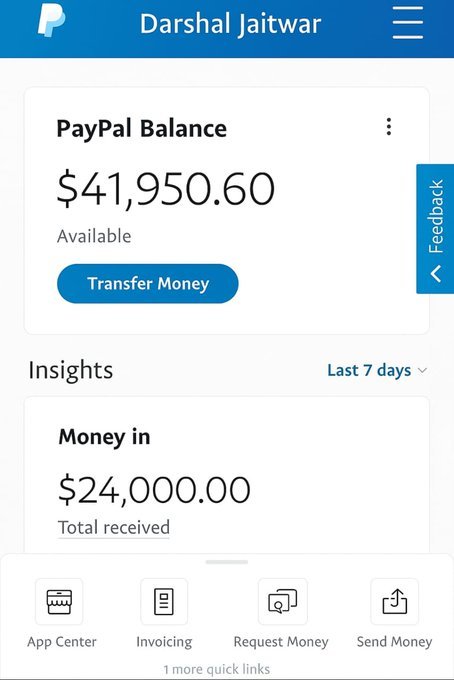
ChatGPT + laptop + internet connection + 60 minutes per day = $9500 every month.
I normally sell this guide for $81, but for the next 48 hours, it’s yours 100% FREE.
To get: -
1. Follow me (So I can DM you )
2. Retweet
3. Reply " Ai "
Must follow me to get DM. Free for 48 hours
English
Forget TikTok.
Forget YouTube.
Forget Instagram.
Amazon can pay you $3,000/month to start AI publishing.
It’s boring... but if you start today, you could make $3,000 by the end of March.
I’ll send you a free course showing exactly how to do it.
Just like this post and comment “Send.”
(Make sure you follow.)

English
Ras-I Mhofu #One Drop Media retweetledi

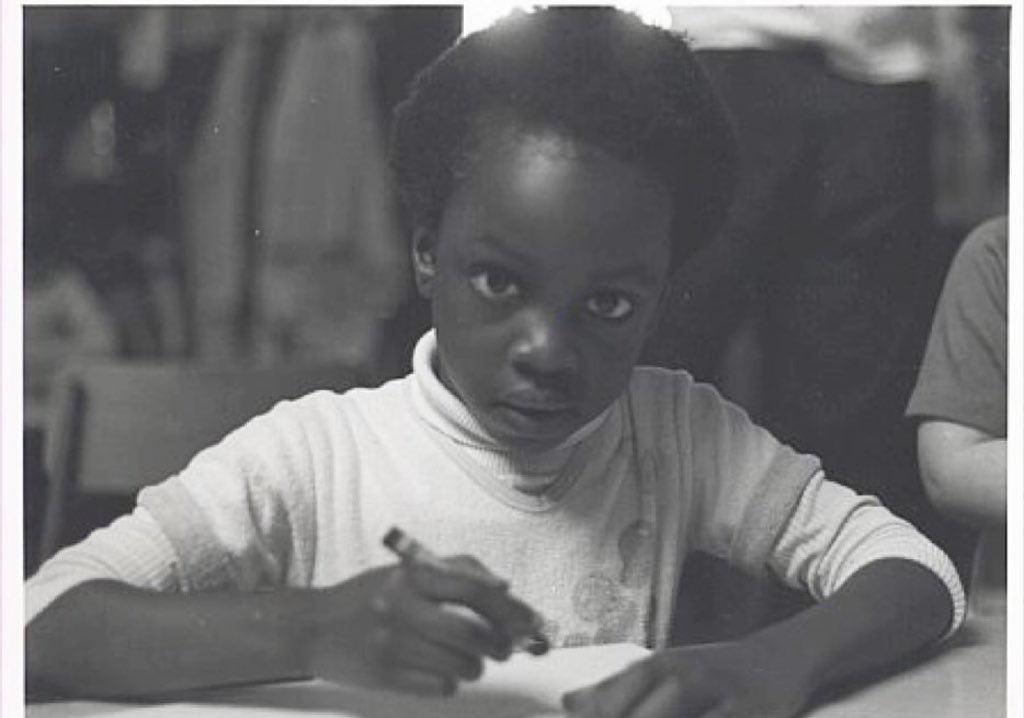
“[…] my father named me Danai, in commemoration of my birth on this day of love and romance; Danai, in our native tongue, Shona, means to be in love or to love one another.” - Danai Gurira
#HBD 🤍❤️

English