
Sabitlenmiş Tweet
SR
24.5K posts

SR
@erasmus7187
🎗️Compte citoyen. Prof HG EMC en détachement.. «la loi défend la foi aussi longtemps que la foi ne prétend pas faire la loi" A. Briand🎗️
Limousin, France Katılım Eylül 2014
796 Takip Edilen331 Takipçiler

SR retweetledi

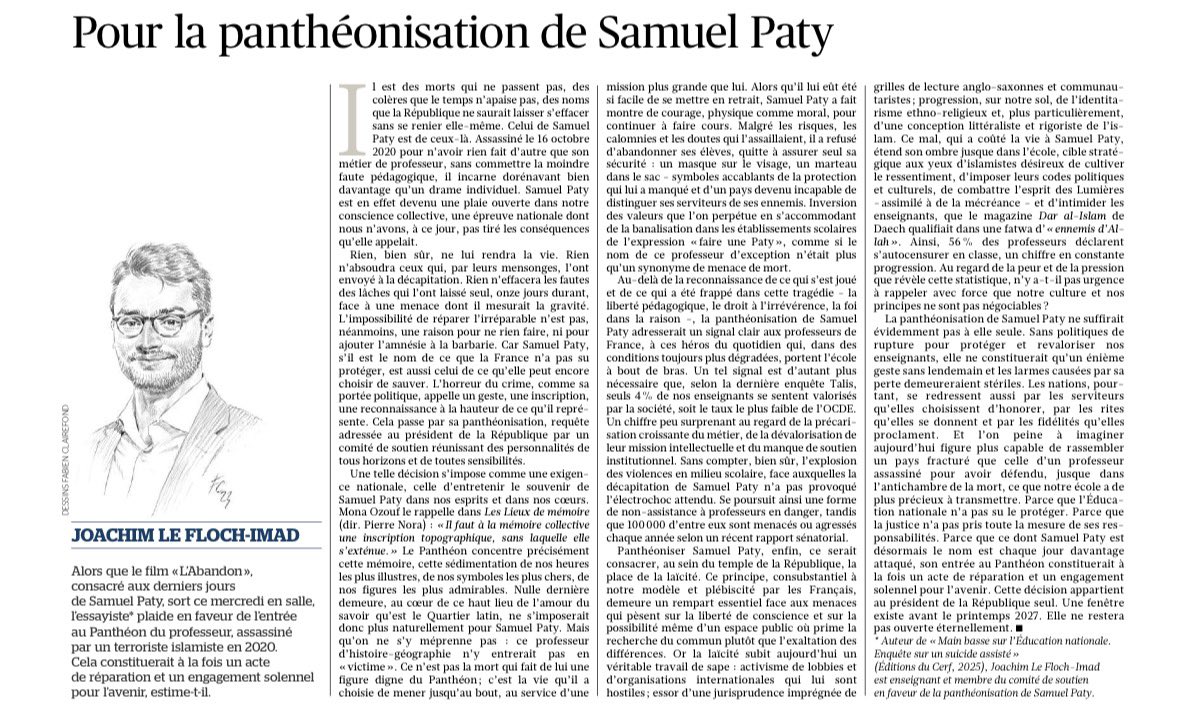
🔴« La panthéonisation de Samuel Paty ne suffirait évidemment pas à elle seule. Sans politiques de rupture pour protéger et revaloriser nos enseignants, elle ne constituerait qu’un énième geste sans lendemain et les larmes causées par sa perte demeureraient stériles. Les nations, pourtant, se redressent aussi par les serviteurs qu’elles choisissent d’honorer, par les rites qu’elles se donnent et par les fidélités qu’elles proclament. Et l’on peine à imaginer aujourd’hui figure plus capable de rassembler un pays fracturé que celle d’un professeur assassiné pour avoir défendu, jusque dans l’antichambre de la mort, ce que notre école a de plus précieux à transmettre.
Parce que l’Éducation nationale n’a pas su le protéger. Parce que la justice n’a pas pris toute la mesure de ses responsabilités. Parce que l’islamisme gagne du terrain et que ce dont Samuel Paty est le nom est chaque jour davantage attaqué, son entrée au Panthéon constituerait à la fois un acte de réparation et un engagement solennel pour l’avenir. Cette décision appartient au président de la République seul. Une fenêtre existe avant le printemps 2027. Elle ne restera pas ouverte éternellement. »
Alors que le film « L’Abandon », consacré aux derniers jours de Samuel Paty, sort aujourd’hui en salle, j’ai tenu à plaider, dans les colonnes du @Le_Figaro, en faveur de sa panthéonisation. L’occasion de saluer le travail du comité de soutien à cette démarche, lancé par Gaëlle Paty, @AlazardJ, @Ch_Capuano et @ValerieIgounet, qui réunit des personnalités de tous horizons, de @BCazeneuve à @davidlisnard, en passant par Élisabeth Badinter et bien d’autres défenseurs de l’école et de la laïcité.
📎 lefigaro.fr/vox/societe/jo…
Français
SR retweetledi

Les dégâts de l’idéologie sur l’esprit humain, illustration :
Jo Zefka@JZefka
Résumé de cet article stupéfiant du @Huffington sur L'Abandon, le film sur les derniers jours de Samuel Paty : le film est d'une honnêteté scrupuleuse, son scénario est irréprochable et sa distribution impeccable... mais il suscite "un malaise profond", non pour ce qu'il est, mais à cause des motivations forcément suspectes qui ont présidé à sa production... Je n'ai pas encore vu le film, mais je dois avouer que ce néostalinisme bien-pensant me donne envie d'y courir. huffingtonpost.fr/culture/articl…
Français
SR retweetledi

SR retweetledi

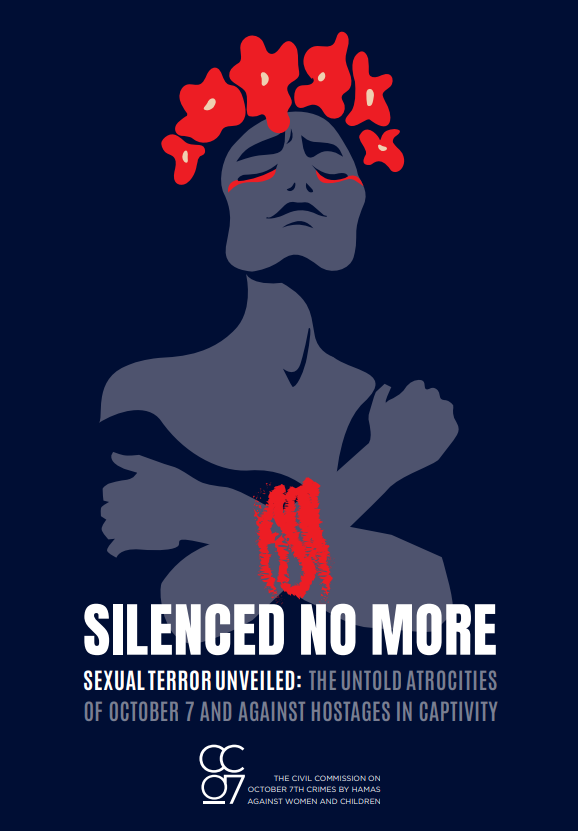
🔴 Ceux qui ont "génocide" sur les lèvres H24 liront-ils les 300 pages de la Commission Civile du 7 Octobre qui conclut que les atrocités commises par le Hamas & co. 7/10 constituent des actes génocidaires au regard du droit international ?
Un petit 🧵
1/10⬇️
Français
@e_i_l_i_m_e_ @AgagBoudjahlat Un livret pédagogique doit être en préparation pour pouvoir utiliser intelligemment certaines scène du film afin de faire réfléchir les élèves sur la liberté d’expression et la laïcité.
Français
SR retweetledi

Je sors de la séance matinale de #LAbandon. Petite salle mais quasi comble.
Je me souviens que nous n’étions qu’une petite centaine de personnes à la manifestation en l’honneur de Samuel Patty à République.
C’est la première fois que je mettais un point d’honneur à voir un film au cinéma la première semaine de sa sortie. Je considère que c’est un acte citoyen et républicain que d’aller voir ce film, qui plus est bien réalisé et magnifiquement interprété.
Je pense aussi que l’Education Nationale devrait mettre ce film au programme obligatoire des collèges. Et vous, qu’en pensez-vous ?

Français
SR retweetledi

🎥J’ai vu le film “L’abandon” (l’assassinat de Samuel Paty). C’est remarquable dans la retenue et par le récit méticuleux des faits. Avec le recul, on mesure mieux les manquements de certaines institutions et la folie meurtrière de l’idéologie islamiste. À montrer partout.

Français
@phwatrelot Quelle est l’intérêt de relayer ce genre d’article malhonnête qui n’ose pas dire ce qui derange ce journaliste? On aimerait bien en savoir plus…
Français

[OPINION]
Festival de Cannes : « L’Abandon » sur la mort de Samuel Paty, nous a gênés, et pas pour le scénario
Maxime Birken - Le Huffington Post France le 13 mai 2026
huffingtonpost.fr/culture/articl…
Français
SR retweetledi

NOUS NE T’OUBLIERONS PAS.
L’abandon n’est pas un film.
C’est un manifeste.
Un cri d’alerte à diffuser dans tous les établissements scolaires.
Pour que plus jamais un professeur ne soit laissé seul.
#SamuelPaty
Français
SR retweetledi

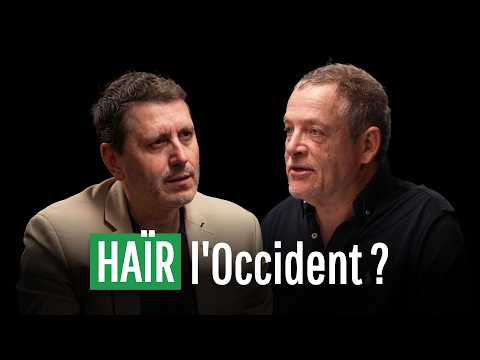
Portrait d’un homme pro-gay et pro-Hamas par @martelf auteur de Occidents
Lignes de Force @LignesForce épisode complet ici: youtu.be/1H0jpfaS5Tw
YouTube
Français
SR retweetledi

L’Abandon Les 11 derniers jours de Samuel Paty est plus qu’un film : c’est un hommage à Samuel Paty, à sa famille, et à tous ces professeurs, ces femmes et ces hommes qui continuent de tenir debout face à l’islamisme, à l’intimidation et à la haine.
C’est aussi un soutien à tous les enseignants qui transmettent, protègent la liberté d’expression et refusent de céder.
Allons voir ce film.
Parce que la mémoire, le courage et la résistance ne doivent jamais être abandonnés. #SamuelPaty #LAbandon 🙏❤️

Français
SR retweetledi

«Je regarde la Russie avec les yeux d’un Balte car je regarde les États-Unis avec les yeux d’un Québécois. Les empires voient les cultures périphériques comme des résidus à l’échelle de l’Histoire», développe @mbockcote dans Le Club Le Figaro Idées au micro de @EugenieBastie.
Français
SR retweetledi

Samuel Paty n’est pas un symbole abstrait. C’est un professeur français assassiné pour avoir enseigné. Allez voir ce film.
Français
SR retweetledi
«Par haine de soi, par haine du capitalisme, l’extrême gauche est complaisante avec ses ennemis. Sartre avec Mao ou Castro, Foucault avec Khomeini, Judith Butler avec le Hezbollah ou le Hamas…», dénonce @martelf dans Le Club Le Figaro Idées de @EugenieBastie.
Français
SR retweetledi

Ich hätte nie gedacht, dass ich so etwas einmal öffentlich äußere.
Ich kann gerade nicht mehr.
Ich reiße mich sehr zusammen, dies zu schreiben.
Eine Kommission zur Untersuchung des Massakers vom 07. Oktober 2023 im Hinblick auf den sexualisierten Terror – auch an den Geiseln – hat ihren Bericht veröffentlicht.
In einigen Kommentaren hatte ich schon dazu gelesen. Die meisten von ehemaligen Soldaten, die im OSINT- oder akademischen Bereich in der Richtung öffentlich auftreten. Alle waren erschüttert, selbst Soldaten, die „in der Scheiße“ waren.
Mein Wille war – und ist es noch – zumindest einen kurzen Überblick über das 300-seitige Dokument zu geben, für das über 10.000 Fotos und Video-Segmente und 1800 Stunden Videomaterial ausgewertet wurden. Welches die Palästinenser zumeist selber veröffentlicht haben.
Und das ist auch nicht irgendwie halt eine jüdische Kommission und Hasbara. Sie ist eine Non-Profit-Organisation und wird unterstützt durch die deutsche Botschaft Tel Aviv, Kanada, Microsoft, usw. Mit dabei sind u.a. eine französische Botschafterin für Menschenrechte, ein Professor und Gründer des UN-Gerichts für Sierra Leone, ein ehemaliger Kommissar für Menschenrechte der UN, ein ehemaliger Stabschef des Weißen Hauses, und und und.
Ich wollte zumindest erklären, was dieser Bericht ist, von wem er kommt und einige Zeugenaussagen zitieren. Denn, so grauenvoll wie das ist, halte ich es für meine und unsere Pflicht, sich dem auszusetzen.
Wenn wir nicht in der Lage sind das zu ertragen, wie können wir dann erhobenen Hauptes von den Opfern erwarten, dass sie es erdulden und sich fügen? Ohne ihnen das allzu menschliche zuzugestehen womöglich?
Die Opfer waren nicht nur Juden. Es waren auch Thailänder, Amerikaner, Argentinier, Franzosen, Briten… Und die Deutschen haben es in einer sozialpsychologisch bemerkenswerten Leistung vermocht zu verdrängen, dass auch 22 Deutsche getötet und 17 als Geiseln genommen wurden.
Es geht nicht alleine darum, diese Unmenschlichkeiten zu lesen. (Fotos sind nicht drin, ich kenne eh viele.) „Unmenschlichkeiten“ ist ein absolut treffendes Wort, dass jedoch durch zu häufigen Gebrauch seinen tatsächlichen Inhalt verloren hat.
Das kann ich ab. Ich bin MilBlogger, ich habe viele Stunden Videos erduldet, in denen Menschen von Drohnen getroffen, erschossen und von Minen zerrissen wurden. Und ich habe sehr viele Videos und Bilder des 10/7 gesehen. Mehr als jedem Menschen eigentlich lieb sein sollte.
Es geht darum, nicht in zu lange den Abgrund zu blicken, weil der Abgrund sonst in dich blickt.
Auch vorher schon habe ich öffentlich deutlich gemacht, dass ich keinerlei Empathie mehr für die Palästinenser empfinde. Oder nicht darüber nachdenke, wie sehr sie sich auf das eh nutzlose Völkerrecht berufen.
Denn mein Gedanke ist eigentlich sehr leicht, auch wenn er für viele schwer zu erfassen scheint:
Wir Europäer haben unsere Werte, auf denen das Völkerrecht unbestreitbar basiert, in langen Kriegen untereinander erstritten und mit Churchills Blut, Schweiß und Tränen teuer erkauft. Nicht so sehr basierend auf den christlichen Glauben – dessen Teil ich gar nicht abstreiten will – sondern auf die griechische Philosophie und die Aufklärung.
Es ist aber nur schwer nachvollziehbar, warum wir diese Werte auch auf diejenigen anwenden, sie sogar auf sie projizieren und ihnen die gleichen Werte unterstellen, die so offensichtlich einen Scheiß auf sie geben.
Nach nur wenigen Stunden der Arbeit an diesem Bericht kämpfe ich mit Dämonen.
Ich möchte auch weiterhin für eine Zweistaatenlösung sein können. Ich möchte auch weiterhin nicht von der passiven Empathielosigkeit in offene Aggression verfallen. Ich möchte auch weiterhin nicht den Hass als einfachste Lösung bevorzugen. Ich will nicht alles auf den Islam projizieren.
Doch mit jeder Seite, mit jeder Zeugenaussage und mit jedem Bericht eines Helfers, in der nüchternen, fast wissenschaftlichen Zusammenfassung und Forensik, fällt es zunehmend schwer. So unglaublich schwer, dass ich mich dabei erwischt habe, alleine im Büro laut Debatten zu führen. (Normalerweise eine gute Schreib-Technik um Argumentationen zu üben.)
In unserem europäischen Hirn sortieren wir die Hamas gerne als Terrororganisation ein, die losgelöst von der palästinensischen Bevölkerung agiert. Dieses Bild beginnt zu bröckeln in dem Moment, in dem wir uns klar machen müssen, dass mindestens die Gaza-Palästinenser sich ja in dieser Gesellschaft eingerichtet haben. In der sie mit Cousins verheiratet werden, ihren Kindern in UNRWA-Schulen der Hass auf Juden beigebracht wird und jeder Angestellte eines Krankenhauses oder einer Uni die Hamas als Arbeitgeber auf der Lohnabrechnung hat. Das geht weit über Nazi-Mitläufer hinaus.
Wie lange kann jemand in einem solchen System tatsächlich unschuldig sein?
Und mehr noch: Wie muss eine Gesellschaft gestrickt sein, in der es als Machtdemonstration gilt, wenn junge Männer im Kreis um eine Geisel stehen, ihre sexuelle Frustration und soziale Inkompetenz kompensieren und sie reihum vergewaltigen? Selbst wenn sie tot ist, noch den rotten Pimmel unter dem Gelächter der Umstehenden in die Rotze des Vorgängers stecken?
Wenn diese Formulierung Ihnen zu hart war, sind Sie nicht ansatzweise bereit für die Realitäten. Damit müssen Sie klarkommen, nicht ich. Sich bei mir über die Formulierungen zu beklagen ist das deutlichste Zeichen dafür, sich den Realitäten nicht stellen zu wollen.
„Die Männer zerrten eine Frau aus dem Fahrzeug... entfernten gewaltsam die Kleidung und vergewaltigten sie... Sie stachen wiederholt auf sie ein und töteten sie... und vergewaltigten sie weiter, nachdem sie tot war.“
Raz Cohen, Überlebender des Nova Festivals
Wir können ja noch nicht einmal deutlich darüber debattieren. Weil unsere Regularien und unser sozialer Konsens es unterbinden auszusprechen, was die Realität ist. Ich kann noch nicht einmal Fotos posten, weil ich befürchten muss, dass die Social Media Plattformen mich dafür blockieren. Ich kann teilweise nicht einmal Links zu Fotos anderer Plattformen posten.
Wir bekommen eine heile Welt aufgezwungen, während um die Ecke das passiert, was wir als „unmenschlich“ aus unserer Welt entfernen wollen. Und leisten damit denen Bärendienste, die diese Realität verschwinden lassen wollen, während sie sie vorher noch stolz veröffentlicht haben.
Mir braucht keiner mehr mit Völkerrecht und Empathie gegenüber den Palästinensern kommen. Ich erlaube mir den menschlichen Reflex zumindest soweit.
Aber ich will nicht in diesen Abgrund. Und das ist anstrengend. Ich hatte Wuttränen.
Und ich musste mir Luft machen.
Der Artikel wird kommen.
Ich habe nicht das Recht wegzusehen.
Aber jetzt gerade kann ich einfach nicht mehr.
youtu.be/2p3rtnQ_7y4?si…
Anmerkung: In den Datenbanken mit Pressebildern gibt es nur sehr wenige Bilder des 10/7 aus Israel, da dort Persönlichkeitsrechte und Opferschutz geachtet werden. Weshalb ich auch für die meisten auf Social Media gesperrt würde. Aber dafür sehr viele aus dem Gazastreifen, schon am ersten Tag.
Aus meinem Archiv…
Foto 1: Getötete Zivilisten auf der Straße nach Sderot
Foto 2: Israelische Truppen versuchen Sderot wieder unter Kontrolle zu bringen
Foto 3: Palästinenser überqueren zum Morden und Vergewaltigen die eingerissene Grenze nach Israel

YouTube

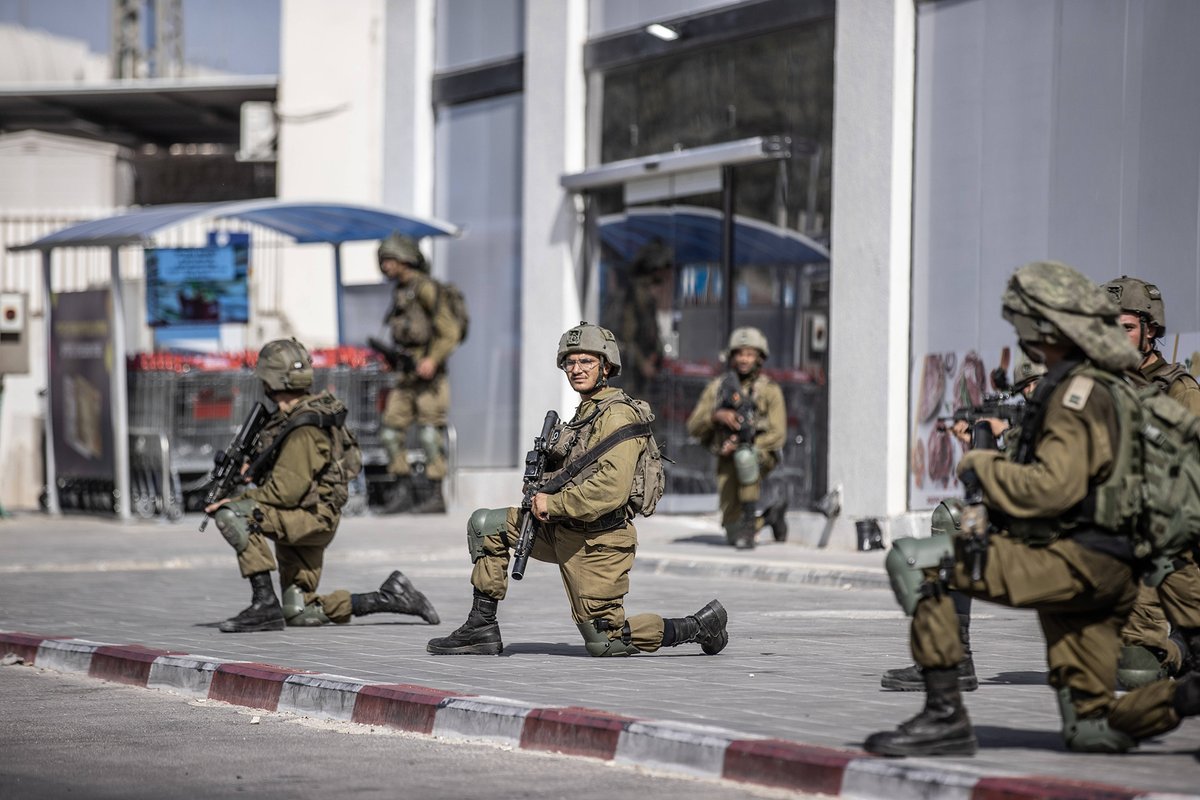
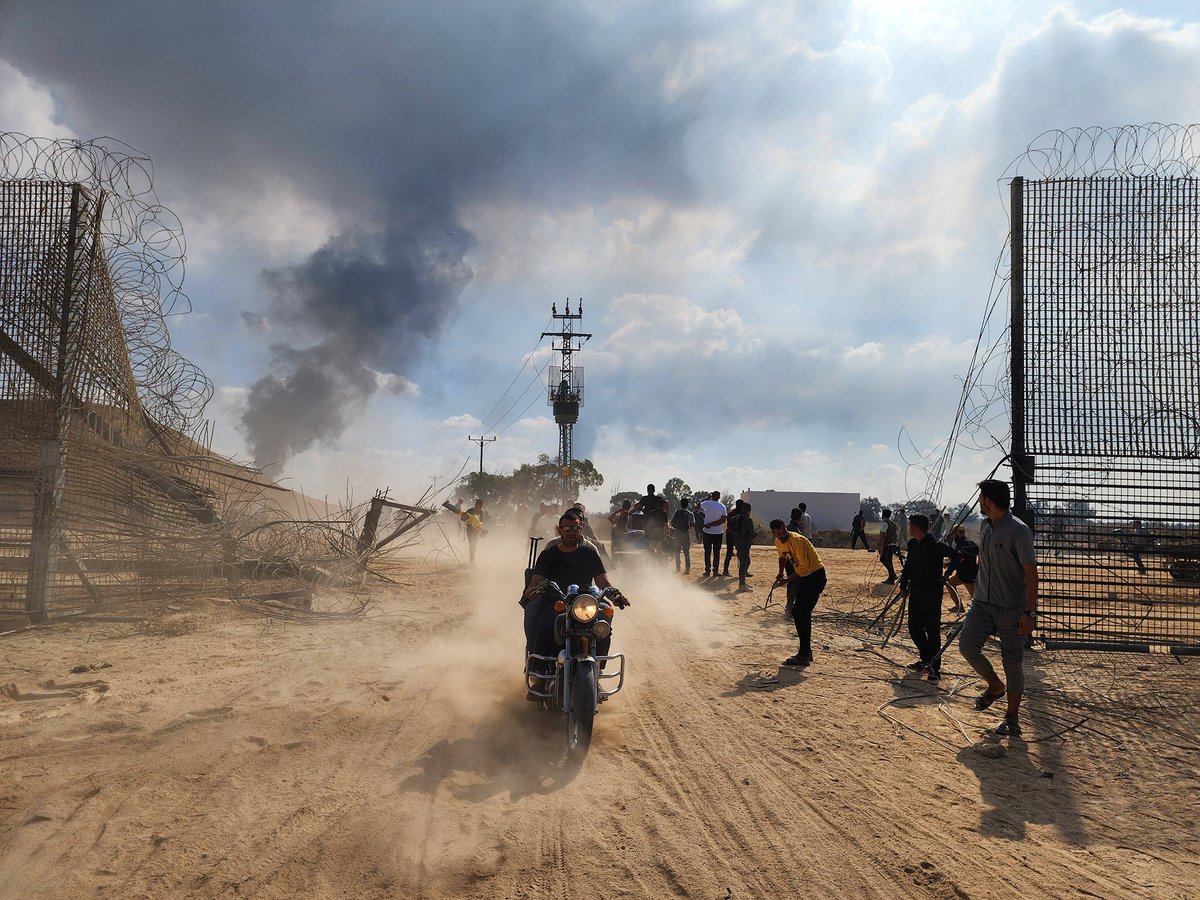
Deutsch
SR retweetledi

Le 11 mai 2026, le New York Times titre en fanfare un texte sur des « chiens israéliens dressés pour violer les Palestiniennes ». Pierre Rehov (@rehoov) démonte cette fable dans son article impitoyable, exposant l’absurde en pleine lumière. Lire ci-dessous.
Intéressant, @RimaHas a relayé ce fake le 26 juin 2024, et @vincent_chebat l'a fact-checké le 28 juin : tout ça vient de l’ONG Euro-Med Human Rights Monitor, dont le directeur est Rami Abdu, champion des façades du Hamas. L’internationale des hoax se structure à vue d’œil. Il faut juste que Rima améliore son anglais.
Cette ONG, Abdu et Rima ont fait des progrès vertigineux, un vrai bond en avant dans la grande saga palestinienne du gore fantastique. En 1983, selon les meilleurs auteurs, les Israéliens se contentaient d’empoisonner les gamines pour les stériliser
jcfa.org/article/poison….
Aujourd'hui ça paraît old school aux progressistes des réseaux. Abdu, Rima et New York Times upgradent au dressage canin pour viols en série des Palestiniens. On se pâme devant cette créativité débridée !
What’s next ? Paris ouverts.
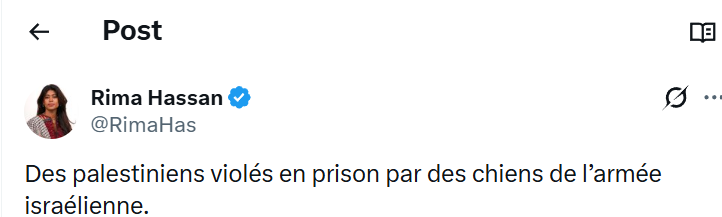
Pierre Rehov@rehoov
The New York Times and Israel: Anatomy of a Long Decline On Monday, May 11, 2026, The New York Times published in its opinion pages a column by Nicholas Kristof, a two-time Pulitzer Prize winner, titled “The Silence That Meets the Rape of Palestinians.” The piece asserts that sexual violence against Palestinians is part of Israel’s “security apparatus.” It draws on fourteen testimonies. It describes, among other allegations, rapes committed with batons, metal rods, carrots. And then, buried in a paragraph, comes the sentence that pushed the article from contestable reportage into obscene fable: Kristof, citing “reports,” writes of dogs trained by Israeli forces to rape Palestinian prisoners. Kristof himself concedes, in his own text, that “there is no evidence that Israeli leaders order rapes.” He adds that when it is suggested to him that Palestinian witnesses might fabricate accusations to smear Israel, this strikes him as “far-fetched.” Here, then, is the evidentiary standard of a piece published by America’s most prestigious daily: no physical evidence, no forensic expertise, no independent corroboration, and an explicit presumption of truth granted to testimonies whose sources include, as NGO Monitor has documented, Euro-Med Human Rights Monitor, whose founder Ramy Abdu has been photographed repeatedly alongside senior Hamas officials, including Ismail Haniyeh in 2011 and Osama Hamdan in 2013. Israel’s Ministry of Foreign Affairs, on its official account, called the article “one of the worst blood libels ever to appear in the modern press.” Deborah Lipstadt, former U.S. special envoy for combating antisemitism—a Holocaust historian, not a barroom pundit—asked the Times publicly: “Have they no sense of decency and journalistic responsibility?” “Blood libel,” that old medieval antisemitic fantasy according to which Jews used the blood of Christian children for their rituals, is not a term Israeli diplomacy uses lightly. It is reached for when a narrative crosses the line separating political criticism, however fierce, from dehumanization. Dogs trained to rape humans—can a man of sound mind publish such a thing in the opinion section of a paper of record? The answer is yes. And the editor can, the very next day, defend the article on X by arguing that it is “backed by independent studies,” when those “independent studies” are, for the most part, reports issued by an NGO whose ties to Hamas have been publicly documented for more than a decade. The timing of publication, on its own, is worth pausing over. On Tuesday, May 12—the day after the Kristof column—came Silenced No More, a nearly 300-page report by the Civil Commission on October 7 Crimes Against Women and Children. The document draws on more than 430 interviews and testimonies, the review of more than 10,000 photographs and videos, to establish the systematic nature of sexual violence committed by Hamas on October 7, 2023, and against hostages held in Gaza. Twenty-four hours before that report was released, The New York Times published a column placing on the same plane, in the same paragraph, the documented rapes of October 7 and the “rape dogs” drawn from the reports of a Hamas-linked NGO. Professor Gerald Steinberg, founder of NGO Monitor, asked the question publicly on X: what are the odds the timing was coincidence? He answered himself: “I’d say zero.” One may judge the accusation excessive. One may also ask, more modestly, what editorial sequence leads a newspaper to publish that text, on that day. A Pattern, Not an Accident The Kristof episode is not isolated. The Times’s record of errors, corrections, and apologies on Israeli and Jewish subjects has thickened at an accelerating rate in recent years, to the point that it traces not a string of accidents but a trajectory. Let us run through the markers. September 2000. A wire photo distributed by the AP and reprinted by the Times shows a bloodied young man on his knees, and an Israeli policeman with a baton in hand. The caption identifies the young man as “a Palestinian victim of the new intifada.” His name, in fact, is Tuvia Grossman. He is an American Jewish student from Chicago, and he has just been beaten by a Palestinian mob. The Israeli officer was protecting him. Grossman’s father wrote to the paper immediately. It took several corrections, spaced out over time, before the caption was set right. April 2019. The international edition publishes a cartoon in which Benjamin Netanyahu appears as a guide dog, a Star of David hanging from his collar, leading a blind Donald Trump wearing a kippah. The paper will speak of an “error of judgment,” then issue a fuller apology, take internal disciplinary action, and eventually eliminate political cartoons from its international edition altogether. No one at the Times has explained how such a cartoon was approved in the first place. The iconographic codes it deployed—the Jew pulling the strings of power, the animalization—belong to a register every serious journalist is supposed to recognize at a glance. October 17, 2023. A few days after October 7, the Times publishes—as a mobile alert, in a banner headline, across social channels—the claim that a Gaza hospital, al-Ahli, has been hit by an Israeli airstrike with hundreds killed. The source is Hamas. Within hours, U.S. intelligence, then French military intelligence, then a Human Rights Watch investigation, then open-source analysis converge on a different conclusion: this was, in all likelihood, a failed Palestinian rocket launch. The Times eventually publishes an editor’s note, reproduced in full by Nieman Lab, acknowledging that its initial coverage “relied too heavily on claims by Hamas” and “left readers with an incorrect impression” of what was known and how credible the account was. The correction comes after the false information has already traveled the world, fueled protests, triggered the cancellation of a regional diplomatic summit. In modern journalism, the first headline is almost always the final headline. The Times knows this. It published anyway. December 22, 2023. A Times headline: “Gaza Deaths Surpass Any Arab Loss in Wars in Past 40 Years.” False. Trivially false. Anyone with a passing knowledge of recent Middle Eastern history—the Iran-Iraq war, the Syrian civil war, Iraq, Yemen—knows that Arab casualties over the past four decades run into the hundreds of thousands. A correction was published on December 28: it should have read “the heaviest loss on the Arab side in any war with Israel in 40 years.” The correction came too late to undo what the headline had already done: produce the impression that Israel’s war in Gaza was, by itself, more lethal than anything the region had seen since 1983. That is false, and the falsehood is precisely what was useful. July 2025. Front-page photograph, maximum emotional mobilization: a skeletal Gaza child in his mother’s arms. The image becomes the global emblem of famine in Gaza. It will go on to win a Pulitzer Prize. A few weeks later, the child’s doctors and medical records make clear that he suffered from pre-existing congenital conditions, omitted from the original presentation. The Times ultimately appends a note. But the image had already done its work. And the Pulitzer remained. Stack these cases now: Grossman, the 2019 cartoon, al-Ahli, the December 2023 headline, the July 2025 child, and now the rape dogs of May 2026. Six cases, more than twenty-five years, but with a clear acceleration since 2023. Every time, the same pattern: a spectacular first-instance claim, unfavorable to Israel, thinly sourced or stripped of context; a quieter correction later, after the damage is done. This is what common-law lawyers call a pattern of practice. It is no longer a series of errors. It is a method. The Precedent: Sulzberger and the Universalizing of Genocide This method has a history. And that history is unsettling, because it traces back to the moment when, more than any other, the American paper of record should have been equal to the task. Under the leadership of Arthur Hays Sulzberger, owner of the Times during the Second World War, the paper made choices on the persecution of Europe’s Jews that today rest on an overwhelming scholarly consensus. The work of the historian Laurel Leff, in particular her book Buried by The Times, has established that the paper did not, strictly speaking, argue for the exclusion of Jewish refugees from the United States. It did something subtler, and in some respects graver: it systematically de-Judaized the persecution. Its editorials spoke of the “refugee problem” as a “test of civilization,” as “a problem of mankind,” and went so far in July 1939 as to insist it was “neither a Jewish problem nor a Gentile problem.” But it was precisely a Jewish problem. Jews were being persecuted as Jews. Refusing to say so stripped the argument for rescue of its own moral force. The intellectual mechanism is exactly the one we find today, mirrored: where in 1939 the goal was to dissolve Jewish specificity into the “problem of mankind,” the goal now is to inflate Palestinian suffering until it becomes the deadliest event of the modern Middle East, or to draw it close, by way of the baton and the dog, to the horror of October 7. In both cases, one does not exactly lie. One distorts the frame. And in a paper whose every word sets precedent for millions of readers, that is infinitely more effective than a frontal lie. Honesty requires acknowledging—and the historical record acknowledges—that the Times of 1939–1945 also published editorials sympathetic to the refugees of the St. Louis, and in March 1943 called for revision of the “chilly formalism” of American immigration law. Not everything was dark. But Sulzberger, himself a Jew, had one fixation: never to appear “a Jewish paper.” Out of that fixation came an editorial policy that, in practice, contributed to burying news of the extermination on inside pages, diluting its specific character, depriving the case for rescue of the urgency without which no policy is possible. There is a direct line between that refusal to write “Jews are being killed because they are Jews” and the intellectual ease with which, today, one publishes a column placing in the same sentence October 7 and a canine fantasy. The Warning from Bari Weiss In July 2020, Bari Weiss—the opinion journalist recruited by the Times precisely to broaden its range of voices after the paper’s predictive collapse in 2016—resigned with an open letter. That letter is today an essential document for understanding what is happening inside the 8th Avenue building. Weiss describes a paper that has become “a performance space,” where stories are chosen and told “to satisfy the narrowest of audiences” rather than to allow a curious public to draw its own conclusions. She writes, in so many words, that she had learned to “brush off comments about how I’m writing about the Jews again.” She describes internal Slack channels where, under the gaze of masthead editors, colleagues posted axe emojis next to her name. She describes an implicit norm by which Twitter—not the editor in chief—has become the paper’s true editor. Reread that letter in the light of Kristof, of the December 2023 headline, of the July 2025 photograph, and one understands better how such texts make it through the editorial process. They make it through because the newsroom no longer has, internally, any friction mechanism. The voices that might have asked, in a meeting, the awkward question—“Is this source really independent?”; “Is it biologically possible to train a dog to do this?”; “Does this headline say what we actually want it to say?”—those voices have left, or have learned to keep silent. What the Times No Longer Is One must conclude with measure, because measure is the only effective weapon against a newspaper that has lost the use of it. The New York Times still has excellent journalists. Its economic, scientific, and cultural reporting remains, often, of the first rank. This is not a militant pamphlet. What it is, is more disquieting: an institution that, on certain subjects—Israel chief among them, but not Israel alone—has lost the ability to distinguish itself from activism. It no longer knows, or no longer wishes, to tell the difference between a testimony and a piece of evidence, between an NGO source and a political actor, between legitimate emotion and a framing that distorts. And when a paper of this stature renounces that distinction, the social cost is not small. Demonstrations gather around headlines that will be corrected three days later. New York synagogues find themselves surrounded by crowds quoting, sometimes verbatim, sentences that appeared in its pages. The Times is not an antisemitic newspaper. To say otherwise would be easy and would be false. What it has become is a newspaper for which the idea that Jews, and the state they have built, might have their own legitimate account of their own history is now, at best, a hypothesis treated with permanent suspicion. That suspicion, accumulating article after article, headline after headline, caption after caption, ends up producing something that looks a great deal like bias. And bias in a newspaper that styles itself as objective is not a respectable opinion. It is a breach of contract with its readers. On Monday last, that contract was torn in two by a text in which someone dared write, in the columns of the paper Adolph Ochs founded with the promise that it would welcome “all shades of opinion,” that dogs were being trained to rape prisoners. At this point only one question remains. How many more such episodes will it take before the word “of record,” attached to The New York Times, becomes, simply, a joke?
Français
SR retweetledi

Radio Nova : le caprice de la compagne de Pigasse et la dérive complotiste font exploser la baraque
Depuis avril 2026, le groupe de Matthieu Pigasse, ce banquier de gauche qui donne des leçons à la terre entière, traverse une crise interne qui sent le roussi. Une enquête de Libération a levé le voile sur un climat de pression et d’humiliations verbales au sein de Radio Nova, la station jadis culte de la musique alternative, aujourd'hui devenue le terrain de jeu toxique d'une petite cour.
Au cœur des tensions, Wassila Meddas, 32 ans, la compagne affichée du patron. Une jeune femme dont le CV médiatique tient sur un ticket de métro, zéro expérience dans l'audiovisuel, zéro légitimité dans le journalisme, et qui se retrouve bombardée en mai 2025 "directrice des marques", un poste taillé sur mesure pour elle, comme on taille un caprice à la femme du milliardaire.
Et elle le fait payer cash aux équipes. Selon les témoignages, cette Madame Sans-Gêne impose un management de cour de récré version tyran : « vous êtes nuls », « vous ne savez rien faire », le tout assaisonné de menaces de licenciement et d'humiliations par messageries interposées. Le genre de « manageuse » qui confond compétence et proximité de plumard avec le propriétaire. Pendant ce temps, le couple se la joue roucoulades et petits surnoms affectueux dans les couloirs, comme pour bien rappeler à tous qui porte la culotte dans la boîte. Le favoritisme ? Un euphémisme. C'est du népotisme de canapé, pur et dur. Pigasse, grand pourfendeur des médias fascistes, s'offre une gouvernance à la Dan Bilzerian : je couche avec, donc je la case.
Et ce n'est pas tout. La ligne éditoriale suit la même pente savonneuse. L'arrivée de Guillaume Meurice, l'humoriste viré de France Inter pour une blague qu'on qualifiera pudiquement de mal calibrée sur Netanyahu, et d'Akim Omiri a enfoncé le clou. Sous couvert d'humour militant et de transgression décoloniale, des chroniques trash se mettent à flirter allègrement avec les stéréotypes antijuifs, le complotisme anti-Crif et une défense à éclipses du Hamas. Des salariés, pourtant peu suspects de sympathies droitières, tirent la sonnette d'alarme : on banalise l'antisémitisme en salle de rédaction, et gare à celui qui ose le remarquer. Pigasse, lui, botte en touche avec sa ritournelle préférée : « liberté d'expression ». Les audiences grimpent, alors circulez, y a rien à voir, surtout pas les contradictions du banquier rouge qui finance ce qu'il prétend combattre chez les autres.
Car voilà le fin mot de l'histoire, et il est croustillant : Pigasse, qui se pose en rempart progressiste contre l'ogre Bolloré, qui donne des leçons de morale médiatique à la terre entière, tolère dans sa propre boutique ce qu'il vomit ailleurs. Un management toxique et clientéliste ? Check. Une ligne éditoriale qui tangue vers la haine ? Check. Un mépris total pour les équipes ? Check. La seule différence avec ce qu'il dénonce, c'est que chez lui, c'est emballé dans du papier crépon alternatif et présenté comme de la contre-culture. En réalité, c'est le même autoritarisme petit-bourgeois, juste repeint au rouge délavé des dîners en ville du 6e arrondissement.
Les équipes, elles, ne s'y trompent plus. Autrefois fières de l'esprit Nova, elles se sentent trahies et parlent ouvertement de rébellion : mails internes, fuites dans la presse, malaise qui suinte de partout. La radio qui incarnait la liberté est devenue le symbole de l'hypocrisie d'un milliardaire qui se croit au-dessus des règles qu'il édicte pour les autres.
Pour l'instant, la porte reste close, et derrière, c'est Madame qui fait le ménage à coups de talons. Les semaines à venir diront si cette rébellion portera ses fruits ou si le couple Pigasse-Meddass continuera à régner sans partage, planqué derrière le paravent commode de la liberté d'expression, celle qui permet de placer sa compagne et d'insulter ses salariés, évidemment.
Vidéo : @ojim_france
Français
SR retweetledi
🔴✍️⚡️ | À la veille de la publication d’un nouveau rapport israélien documentant les violences sexuelles systématiques commises par le Hamas le 7 octobre, le New York Times a choisi de lancer une accusation explosive contre Israël : viols, torture sexuelle, « chiens violeurs », sévices systématiques contre des prisonniers palestiniens.
Mais plus l’on examine l’enquête de Nicholas Kristof, plus une réalité dérangeante apparaît : derrière le vernis du prestige médiatique, le récit repose sur des sources militantes, des témoignages mouvants et des relais idéologiques soigneusement blanchis par le journal.
◾️Sami al-Sai, présenté au lecteur comme un simple « journaliste indépendant », glorifiait publiquement des terroristes du bataillon de Tulkarem et célébrait les combattants armés après le 7 octobre.
◾️Euro-Med Human Rights Monitor, cité comme une organisation crédible, a été fondé par Ramy Abdu, ancien cadre du Hamas ayant publiquement salué les terroristes après le massacre du 7 octobre.
◾️Pour soutenir certaines des accusations les plus grotesques de l’article, Kristof s’appuie sur Shaiel Ben-Ephraim, ancien universitaire ayant quitté UCLA après plusieurs accusations de comportements sexuels inappropriés impliquant des mineurs, devenu ensuite activiste anti-israélien sur X. Lui-même a admis ne disposer d’aucune preuve directe solide pour certaines affirmations relayées par le Times.
◾️Et pendant que le New York Times consacrait sa une mondiale à des accusations construites sur des sources idéologiquement compromises, le journal refusait dans le même temps de traiter le nouveau rapport israélien documentant les crimes sexuels du Hamas le 7 octobre. Le contraste est vertigineux : d’un côté des crimes documentés, expertisés et corroborés ; de l’autre, des récits militants transformés en vérité médiatique.
📌Le New York Times ne s’est pas contenté de rapporter une histoire. Il a choisi le récit qu’il voulait imposer pour blanchir des actes génocidaires du Hamas. C’est un journalisme de plaidoyer maquillé en enquête d’investigation.
Source : honestreporting.com/how-the-new-yo…
#NewYorkTimes #Israel #Hamas #Médias #Propagande #SWNews

Français
SR retweetledi

📺On me pose rarement la question, mais oui je vis accompagnée de policiers depuis 3 ans, depuis la sortie de mon livre le Frérisme et ses réseaux. Je suis la seule chercheuse du CNRS dans ce cas, sur le territoire national et hors territoire de guerre.
Cette situation, peu enviable, a eu pour conséquence l’abandon pur et simple des quelques rares études menées dans les universités françaises sur les islamismes légalistes dans les démocraties.
Alors j’ai créé, en marge de mon travail au CNRS, le CERIF, le Centre Européen de Recherche et d’Information sur le Frérisme. Là sont diffusées les dernières recherches sur le sujet, par quelques-uns des meilleurs experts chercheurs du monde.
cerif.eu
Merci à @TonyPittaro et son assistant pour cet entretien tourné dans les rues de Paris, voici le premier extrait.
Tony Pittaro@TonyPittaro
🔴🚔EXCLUSIF - Pour la première fois, @FBBlackler, chargée de recherche CNRS (HDR) accepte de se livrer sur son quotidien sous protection policière. 👆Une protection qui intervient après la sortie de son enquête sur le frérisme et ses réseaux.
Français
SR retweetledi
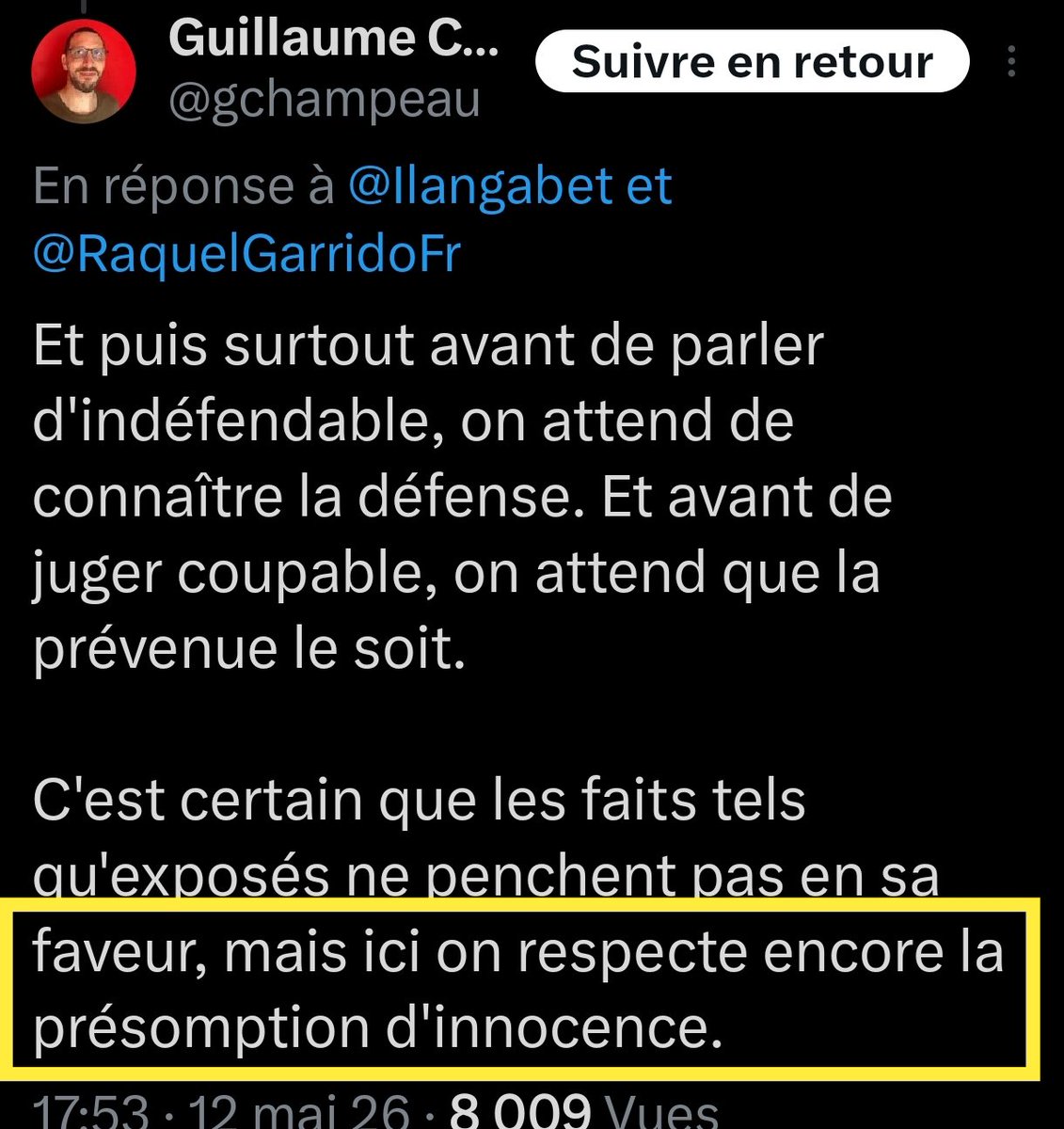
🔴 Réclamer le respect de la chose jugée et de la présomption d'innocence pour Chikirou☝️ET préjuger d'un génocide à Gaza en méprisant CIJ et CPI...
@gchampeau dans ses œuvres, sous le regard bienveillant d'Incohérence et de Chutzpah
1/2⬇️

Guillaume Champeau@gchampeau
@Ilangabet @RaquelGarridoFr Et puis surtout avant de parler d'indéfendable, on attend de connaître la défense. Et avant de juger coupable, on attend que la prévenue le soit. C'est certain que les faits tels qu'exposés ne penchent pas en sa faveur, mais ici on respecte encore la présomption d'innocence.
Français