Rishabh Mehrotra

1.8K posts

Rishabh Mehrotra banner
Rishabh Mehrotra

Rishabh Mehrotra

@erishabh

stealth || ex-Head of AI @sourcegraph || PhD in ML from UCL, London ex-{Sharechat, Spotify, Microsoft Research, Goldman Sachs, BITS Pilani}

London, England Katılım Nisan 2009
810 Takip Edilen2.1K Takipçiler
Sabitlenmiş Tweet
Rishabh Mehrotra
Rishabh Mehrotra@erishabh·
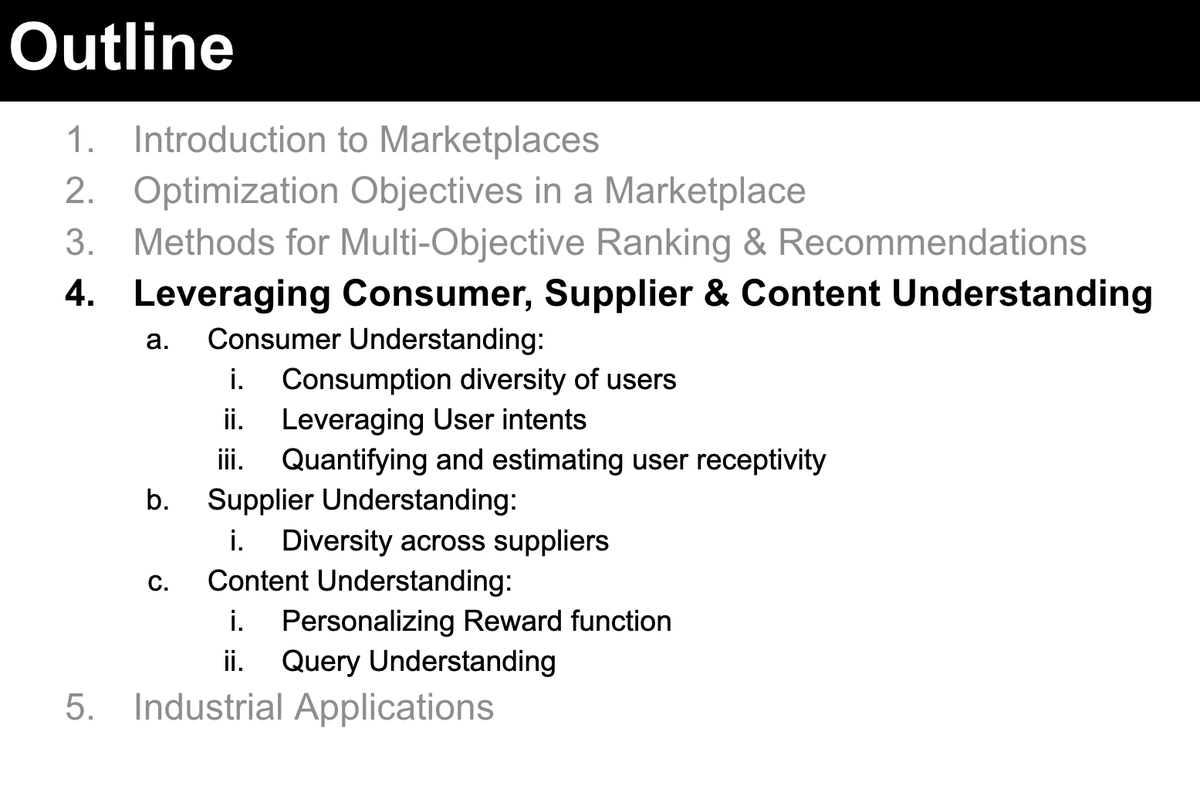
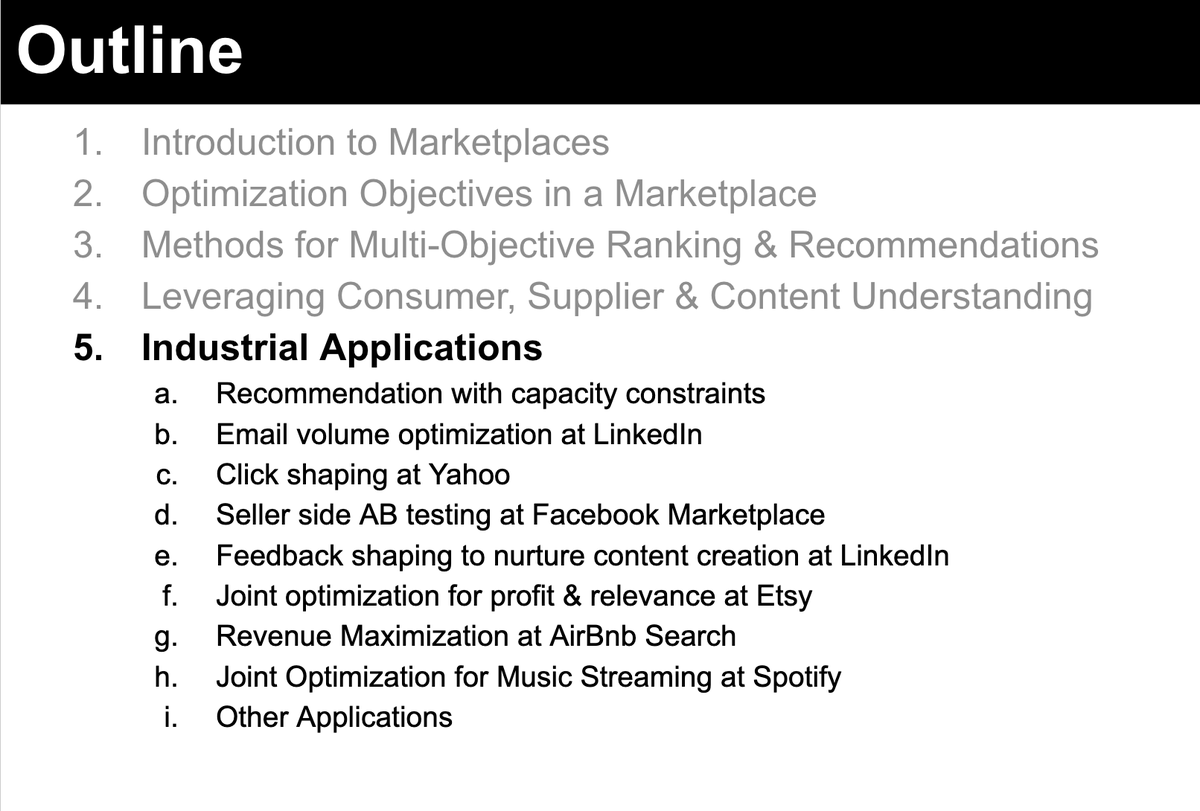
Slides for our #KDD2020 marketplace tutorial now online:sites.google.com/view/kdd20-mar… 4 hours | 336 slides | 5 parts Amazing participation from an interactive audience, with over 215 people attending through to the end. Pls send us links to your relevant works on the topic @kdd_news
Rishabh Mehrotra tweet mediaRishabh Mehrotra tweet mediaRishabh Mehrotra tweet mediaRishabh Mehrotra tweet media
English
0
12
62
0
Lucknow Public School - C.P. Singh Foundation
Euphoria-2025 : Celebrating Creativity, Culture & Innovation Together A spectacular fusion of creativity, culture & innovation at Lucknow Public School (C.P. Singh Foundation). From powerful debates & elocutions, mesmerizing dance & art performances, to tech brilliance in Scratch Game Jam & “Grandma vs AI”—students lit up the stage with imagination and talent across 38 dynamic events. Truly a grand celebration of youthful brilliance and boundless ideas. #euphoria2025 #LPSFamily #cpsinghfoundation #Lucknowpublicschool #lps #lucknow
Lucknow Public School - C.P. Singh Foundation tweet mediaLucknow Public School - C.P. Singh Foundation tweet mediaLucknow Public School - C.P. Singh Foundation tweet mediaLucknow Public School - C.P. Singh Foundation tweet media
English
1
0
2
76
Nathan Benaich
Nathan Benaich@nathanbenaich·
just about a week til @londonai with @rosstaylor90 @Youssef_A_Mejj and 100 ai friends from ai labs, startups, big cos and universities a great opp to meet peers, learn some things and shop talk a lil join —> london(dot)ai
Nathan Benaich tweet media
English
2
4
20
4.2K
Rishabh Mehrotra
Rishabh Mehrotra@erishabh·
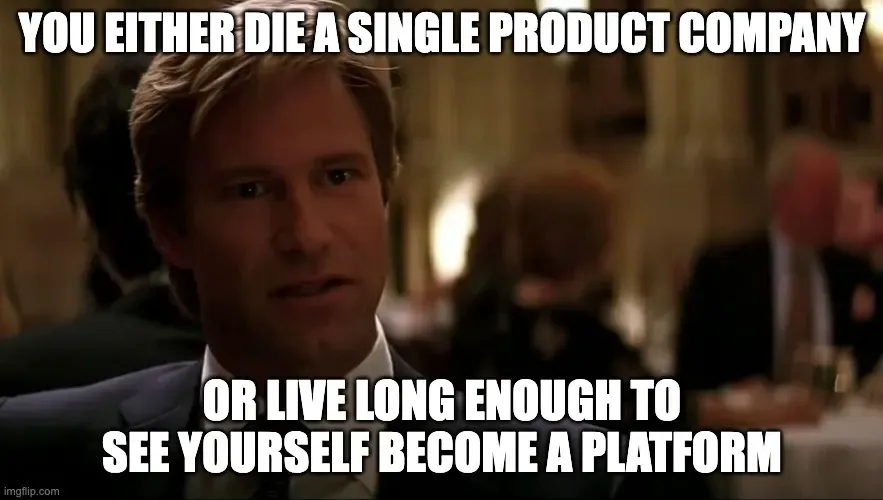
great article! do you think 2025+ enterprise software companies are better off starting with platform view / multi-product view from get-go; primarily being driven by the agentic development velocity? probably don't need to publicly launch as a platform, but internally see themselves as catalyst/compound/composite platform as they build and launch their first product(s)
English
0
0
0
41
hari raghavan
hari raghavan@haridigresses·
PLATFORMS VS. NOT-PLATFORMS Enterprising Software, Part I Parker Conrad, the founder of Rippling, coined the term “Compound Startup.” He proposes the idea of a B2B software platform that intentionally takes a platform approach to build a series of related products, rooted in the following principles: — Customers like everything in one place — You can build a product that is top tier (but not obviously #1); and still win the deal because you offer centralization — Being multi-product this way is a more efficient way to build (certain types of) companies — cross-selling makes go-to-market more efficient, and building shared infrastructure and components makes product & engineering more efficient This perspective flies in the face of traditional wisdom, which is to focus and to build a wedge that customers gravitate to. This “lean” strategy also lends itself to iteration; building a compound startup is a much bigger risk. If the founder’s vision is wrong, the company is probably done. So why do a Compound startup? If you have the credibility to raise a boatload of money, a Compound startup is the most straight-line path to build a generational company. 1. Generational companies are usually platforms. 2. Building a product (contrasted with a platform) runs the risk of getting trapped at a local maximum — and never graduating to a platform. 3. And if you really want to swing for the fences, targeting the untapped customer need to solve several problems in one place is a very good way to build a category-defining platform. However, it’s not the only way. —— NOT-PLATFORMS (AKA PRODUCT COMPANIES) Before we get to the different ways to build a platform, I should clarify the distinction between platforms and not-platforms. Conventional wisdom: — Start with a “wedge,” or initial product that is quick to get adoption. — Build a “better mousetrap” — a new solution to an existing market, or identifying a narrower, better sliver to unbundle an existing solution. — If the new solution solves some critical aspect of the problem 10x better, it will get adoption. The risk here is that the low barrier to entry. If you can do it, someone else can, too. The first-mover’s success will draw others, and probably result in a feature arms race. This makes a massive success harder. The most probable result, then, is a Product Company. A product company is synonymous with its singular or primary offering. Additional product lines are negligible to their revenue, and don’t necessarily compound or cement each other in a way that defends well against competition. As a result, Product Companies typically operate in a competitive market. If the category is large enough, a product company can still be big; Dropbox, Box, Mailchimp, and Qualtrics are good examples. Cloud storage is a particularly good example of a category that induces product companies. — Hard technical problem to solve well → which consumes all their development attention (meaning no bandwidth to build multiple products). — Feature arms race on the core product (specifically, storage and latency). — Shoe-horning a platform in is always hard; so, unsurprisingly, later attempts to extend into a platform are harder because they didn’t start out that way (e.g., Dropbox Paper). — The result is a competitive category: Dropbox, Box, Google Drive (and OneDrive, I guess). This is not forever; product companies will seek repeatedly to make the leap to a platform. In the case of file storage, recent attempts include a) acquisitions (e.g., HelloSign & Docsend for Dropbox) and b) allowing users to run LLM workflows on top of documents. —— PLATFORMS Contrasted with a Product Company, a Platform Company is a business that achieves durability through multiple reinforcing products or integrations There are three paths to achieving this: Compound, Catalyst, and Composite. Each path implies different day 1 choices, core competencies, buyer personas, and failure modes. — A Catalyst Startup solves a novel problem, creating a “paradigm shift” — A Compound Startup build a multi-product suite from the get-go — A Composite Startup builds connective tissue across fragmented data / workflows These archetypes are intermediate, not final states. Just as Product Companies seek to become Platform Companies, each flavor of Platform will naturally seek to nail multiple of these over time. For example, a company may start as a Catalyst, then build network effects in the market to become more Composite over time. Another may start by building Composite use cases, then adding additional modules to go Compound. Enduring technology companies (e.g., Microsoft, Google, Salesforce) have done all 3 in some order; and the best companies in the last 10 years are onto their 3rd act (Stripe, OpenAI). —— NEXT UP Tomorrow, we’ll dive into each of the three types of companies, and the day after, we’ll analyze how market environments are more or less hospitable to each style of building.
hari raghavan tweet mediahari raghavan tweet media
English
10
5
47
6.4K
Rishabh Mehrotra
Rishabh Mehrotra@erishabh·
makes sense -- anything we have felt the need to have a system for, will probably end up being "learnt" as a model system --> model --> bigger system --> wider model --> ... dance continues
swyx 🐣@swyx

after about a year of searching, i finally understand why LTM-1 was the wrong approach tldr i think the @cognition team have just figured out how to kill long context -and- traditional coderag at test time with a new model. results will be increasingly obvious as you scale up to 100m toks. team is at work today writing up the results, will present next week. it's not rocket science, but it will be retroactively obvious. which i've always said is the best kind of obvious.

English
0
0
0
336
Rishabh Mehrotra retweetledi
Mayank Singh
Mayank Singh@mayansingh09·
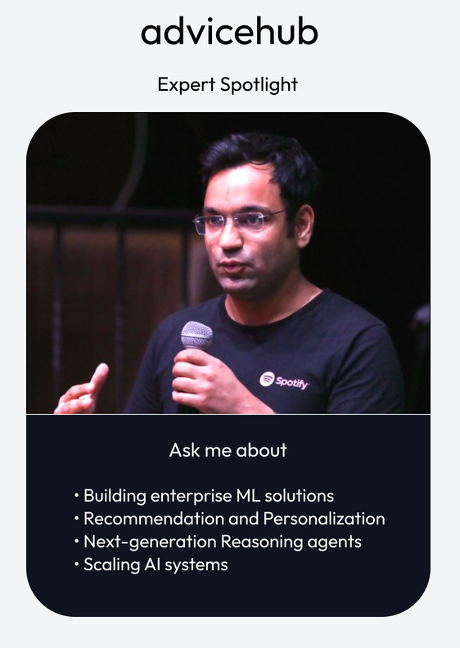
Extremely excited to introduce @erishabh on advicehub.ai! Rishabh has led AI/ML teams at Sourcegraph, ShareChat, and Spotify, published 50+ research papers, and holds 10+ patents. Book a session with Rishabh today at: advicehub.ai/expert/erishab…
Mayank Singh tweet media
English
0
1
1
245
Rishabh Mehrotra
Rishabh Mehrotra@erishabh·
most agentic surfaces are ugly as shit. we are working on adding aesthetic value and beauty back to how we work so excited about a new change we just spec'd out
English
1
0
3
287
Rishabh Mehrotra
Rishabh Mehrotra@erishabh·
Deep comprehension results in effective intervention
English
1
0
0
201
Rishabh Mehrotra
Rishabh Mehrotra@erishabh·
The ultimate luxury isn’t money; it’s permission. Capital buys a rarer asset: permission for risk-free thinking. Permission to explore ideas reality can’t yet fund -- granted to very, very few. The rest must earn this freedom intellectually: by first seeing the walls of their own thinking, then methodically dismantling them.
English
0
0
5
341
Rishabh Mehrotra
Rishabh Mehrotra@erishabh·
stability is the enemy of revolution
English
0
0
2
214
Rishabh Mehrotra retweetledi
Rishabh Kaul
Rishabh Kaul@rishabhkaul·
I like to joke that summer is when the world realises that London exists. We need folks from SF and India to spend more time in London!
Rishabh Kaul tweet mediaRishabh Kaul tweet mediaRishabh Kaul tweet mediaRishabh Kaul tweet media
English
4
1
11
2.8K
Rishabh Mehrotra retweetledi
Siddharth Bhatia
Siddharth Bhatia@siddharthb_·
Hey Puch, how to introduce AI to billions?
English
347
267
2.3K
523.3K
Rishabh Mehrotra
Rishabh Mehrotra@erishabh·
passionate dialogues are how good things ultimately happen
English
1
0
1
205
Rishabh Mehrotra
Rishabh Mehrotra@erishabh·
ICs often over-respect a problem. Disrespecting a problem is an important checkpoint in making progress on the right problems. Unmasking the lizards posing as dragons is part of the job
English
1
0
3
234
Rishabh Mehrotra
Rishabh Mehrotra@erishabh·
You can't shape what you can't see. The ability to shape the future of technology is directly proportional to the clarity with which you can see it. Neutrality is a liability. Building innovative products means shaping the evolution of technology, not just responding to it.
English
0
0
3
266
Rishabh Mehrotra
Rishabh Mehrotra@erishabh·
I feel happy when the reasoning model takes 2 mints 35 seconds to come up with an answer to the question i asked 🥶 add a delay for certain queries to give the mental happiness to some users -- kinda like a dark pattern for engagement hacking🤣
English
0
0
3
211
Rishabh Mehrotra
Rishabh Mehrotra@erishabh·
there are times when you feel so prepared and so unprepared all at the same time 🫠
English
0
0
1
173