A73AT0418

427 posts

A73AT0418 banner
A73AT0418

A73AT0418

@Estocastica

arteparamarte/trato de saludar a la verdad y que me devuelva el saludo/me pregunto todo lo que tiene que ver con la realidad, te lo recomiendo.

Barcelona Katılım Temmuz 2013
96 Takip Edilen48 Takipçiler
A73AT0418 retweetledi
Bluntly Put Philosopher (BPP)
WarpX sim shows a Field-Reversed Configuration forming: magnetic fields self-organize to confine fusion plasma, then collapse when overdriven. A glimpse of nuclear fusion control: tiny changes decide whether plasma holds or blows apart. @HennighOliver
English
10
48
255
13.6K
A73AT0418 retweetledi
Mathematica
Mathematica@mathemetica·
A donut (torus) has the exact same volume and surface area as a cylinder with radius r and height 2πR! Watch every swivel preserve both perfectly... Geometry just got delicious!
English
15
75
1.1K
204.6K
A73AT0418 retweetledi
All day Astronomy
All day Astronomy@forallcurious·
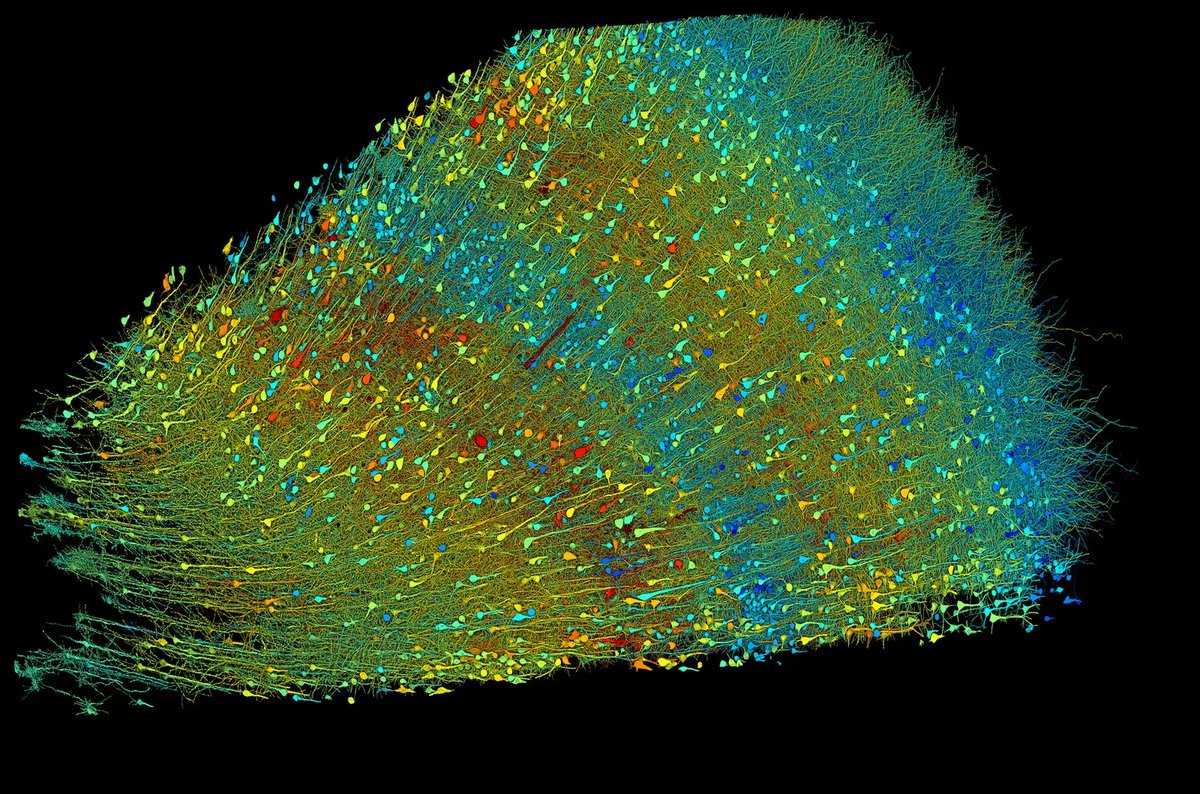
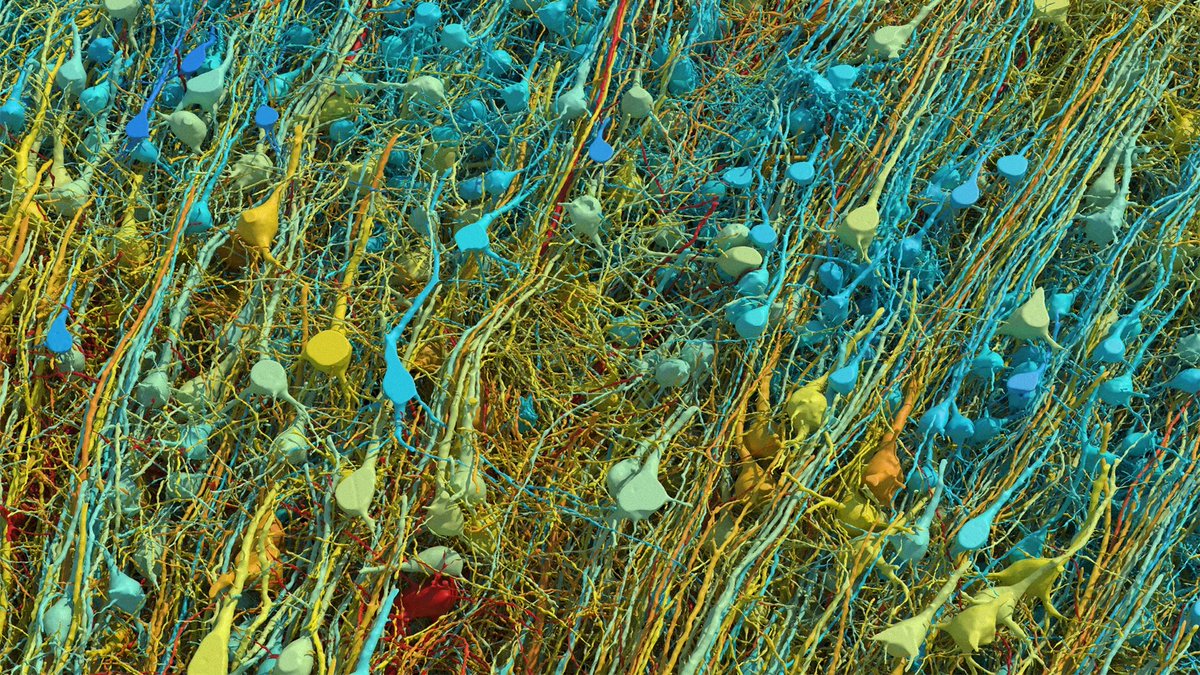
🚨: Scientists mapped 1 mm³ of a human brain ─ less than a grain of rice ─ and a microscopic cosmos appeared.
All day Astronomy tweet mediaAll day Astronomy tweet media
English
520
3.8K
31.1K
8.4M
A73AT0418 retweetledi
Alerta Mundial
Alerta Mundial@TuiteroSismico·
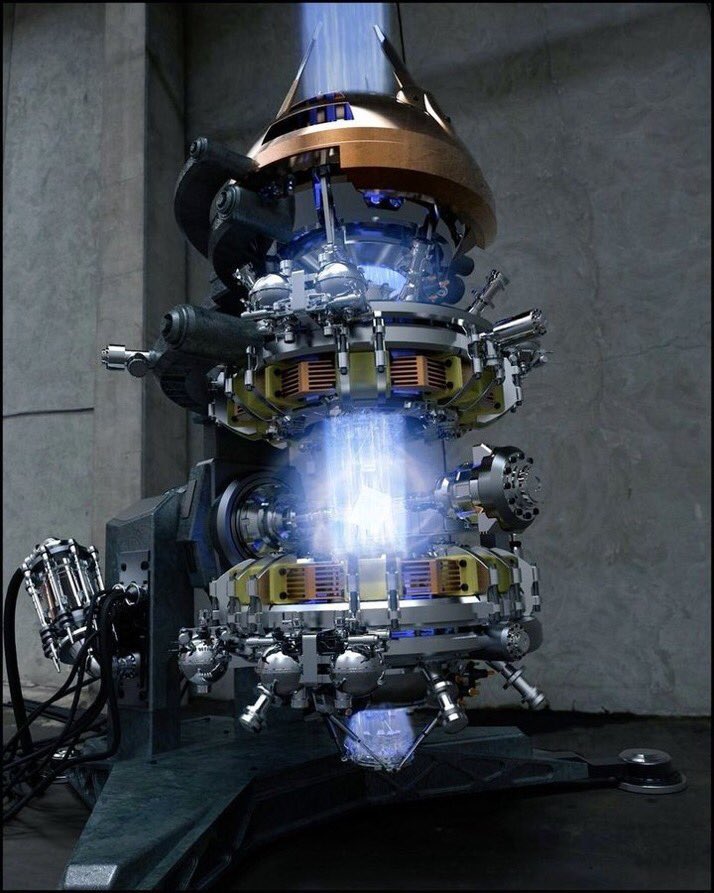
RUSIA 🇷🇺 Presentó El motor de plasma de Rosatom, un prototipo que acelera partículas a 100 km/s, con pruebas de hasta 2.400 horas de operación. Los viajes a Marte a demorarían 30-60 días, y en teoría solo 12 horas a la Luna! Más en info en world-nuclear-news.org.
Alerta Mundial tweet media
Español
129
1.3K
5.4K
175.7K
A73AT0418
A73AT0418@Estocastica·
@AlBuffalo2nite Solo lo funcional sobrevive. Es irreal entenderlo desde el punto de vista actual, pero es evidente cuando sabes todo lo que ha muerto para que lo perfectamente adaptado viva.
Español
0
0
0
4
A Gene Robinson
A Gene Robinson@AlBuffalo2nite·
Watch closely. This is not random. This is not chaos. This is engineering… precision… design operating at a scale most people never slow down enough to see. A spider doesn’t just “make a web.” It deploys multiple spinnerets on its abdomen… each producing different types of silk with distinct tensile strength, elasticity, and adhesion properties. Structural lines… anchor threads… capture spirals… all laid down with mathematical efficiency. No blueprints. No rehearsal. Just instinct written into biology itself. And yet the result rivals human engineering. Silk stronger than steel by weight. Geometry optimized for vibration sensing. Energy efficiency built into every movement. This is the glory of God’s Biology… where even the smallest creature reveals intelligence woven into creation. The more you look… the more impossible it becomes to call this accidental. Slow down. Watch. Witness the masterpiece happening in real time. #SilentMajoritySpeaks #AStoneGroove
English
192
1.5K
7.8K
360.3K
A73AT0418 retweetledi
Clash Report
Clash Report@clashreport·
Spanish PM Pedro Sánchez: Starting next week, my government will implement the following actions: First, we will change the law in Spain to hold platform executives legally accountable for many infringements taking place on their sites. Second, we will turn algorithmic manipulation and amplification of illegal content into a new criminal offense. Third, we will implement a hate and polarization footprint system to track, quantify, and expose how digital platforms fuel division and amplify hate. Fourth, Spain will ban access to social media for minors under the age of 16. Platforms will be required to implement effective age verification systems — not just checkboxes, but real barriers that work. Fifth and last, my government will work with our public prosecutor to investigate and pursue the infringement committed by Grok, TikTok, and Instagram.
English
9.9K
16.6K
78.4K
42.4M
A73AT0418 retweetledi
Science girl
Science girl@sciencegirl·
The University of Hong Kong created the world’s first soft, 3D, biocompatible semiconductor made from hydrogel that mimics tissue and interacts with living cells.
English
217
1.1K
10.9K
1.5M
A73AT0418 retweetledi
Black Hole
Black Hole@konstructivizm·
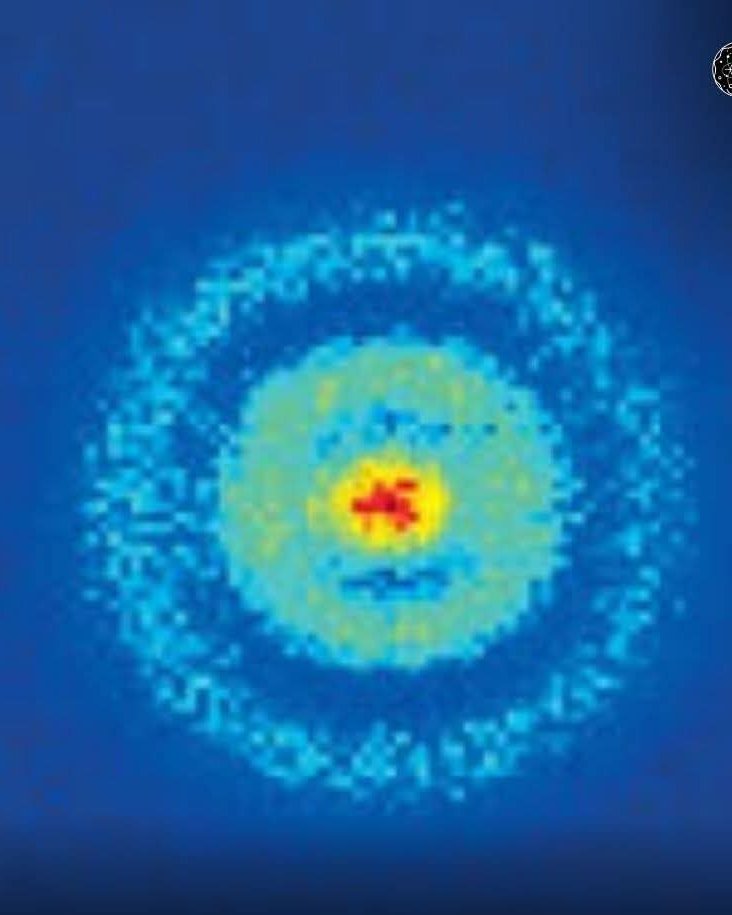
Humanity has, for the first time, captured a direct visual glimpse of an electron's orbital within a hydrogen atom—literally peering inside the simplest building block of the universe.This feels almost dreamlike, even impossible. For over a century, electrons existed as mathematical ghosts: probability waves, abstract clouds, never something you could actually see. They were ideas, equations, patterns of likelihood—not pictures. Now, that boundary between theory and tangible reality has been crossed in a way that feels deeply personal, as though the subatomic world has finally looked back at us.For decades physicists spoke of electron behavior, not electron paths. Textbooks offered elegant probability distributions, but no portrait. This image shatters that emotional distance. It sculpts the invisible into form, turning the most fundamental unit of matter from a distant concept into something intimate, almost recognizable—like catching sight of the scaffolding beneath everyday existence.Hydrogen may be the universe's simplest atom—one proton, one electron—yet its significance is cosmic. It powers the fusion furnaces of stars, forms the backbone of water, and underpins all chemistry. Gazing into its heart is akin to opening the very first page of reality's book. It whispers a profound truth: complexity springs from profound simplicity, and even the smallest structures pulse with extraordinary meaning.Don't expect the tidy, planetary orbit of old Bohr models. What this image reveals is a delicate, ethereal cloud—a probability haze sculpted by quantum rules that defy classical intuition. The surprise is the revelation itself. Nature rarely conforms to our intuitive sketches; it favors subtle elegance, layered mystery, and quiet defiance of expectation.Discoveries like this don't tie up loose ends—they unravel new ones. They stretch curiosity rather than satisfy it. Seeing an electron's orbital laid bare doesn't conclude the story; it multiplies the questions, deepens the enigma. True wonder lives not in neat final answers, but in these fleeting, humbling glimpses that urge us to lean in closer—with awe, patience, and an open-hearted readiness to be astonished again.
Black Hole tweet media
English
85
106
597
38.4K
A73AT0418 retweetledi
Pixel Symphony
Pixel Symphony@Pixel0Symphony·
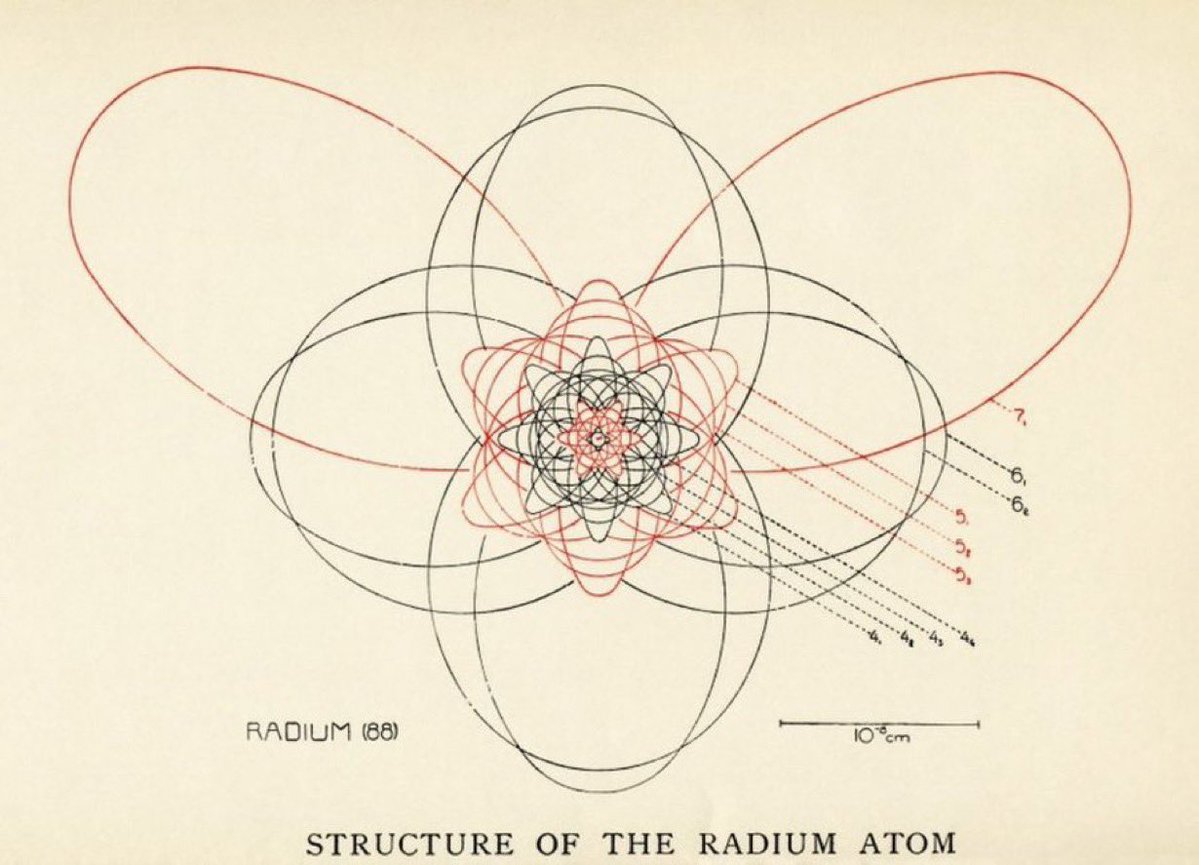
Niels Bohr, Structure of the Radium Atom. 1922. Printed in The Theory of Spectra and Atomic Constitution (Cambridge University Press). Bohr’s early atomic model, mapping electron orbits as overlapping geometric paths, drawn as a system of harmonies rather than probabilities.
Pixel Symphony tweet media
English
9
90
571
13.2K
A73AT0418 retweetledi
Comunidad Biológica
Comunidad Biológica@Bio_comunidad·
Cuando un óvulo humano es fecundado emite un diminuto destello de luz, conocido como la “chispa de zinc”, una liberación de átomos de zinc que marca el inicio de la vida.
Español
79
1.8K
9.9K
212.1K
A73AT0418 retweetledi
Cliff Pickover
Cliff Pickover@pickover·
Mathematics, chaos theory, complexity. A glimpse of the "Thomas Attractor." Imagine creating a roller coaster with these dynamics. Visualization by @tobyhoward, Used with permission.
English
26
192
878
22.5K
A73AT0418 retweetledi
Massimo
Massimo@Rainmaker1973·
Dynamic Digital Radiography (DDR) allows you to observe movement like never before. This novel low-dose X-ray imaging technique enables visualization of anatomy in motion.
English
97
2.4K
20.3K
3.5M
A73AT0418
A73AT0418@Estocastica·
Si algún día me olvido de ti, es porque me habré olvidado de mi.
Español
0
0
0
6
A73AT0418 retweetledi
Massimo
Massimo@Rainmaker1973·
For the first time, we're watching plants breathe in real time. Plants "breathe" through minuscule openings on their leaves known as stomata—a term derived from the Greek word for "mouths." These tiny pores perform a critical balancing act: they open to allow carbon dioxide (CO₂) to enter for photosynthesis, while simultaneously permitting water vapor to escape into the atmosphere through transpiration. This ongoing compromise influences a plant's growth rate, water requirements, and overall resilience, especially in challenging environments. Historically, scientists faced significant limitations in studying this dynamic process directly. They could either observe stomatal movements under a microscope (often in artificial or uncontrolled settings) or measure overall leaf gas exchange (which reflects aggregate behavior but obscures microscopic details). A recent breakthrough from the University of Illinois Urbana-Champaign overcomes this divide with an innovative system called Stomata In-Sight. This integrated tool combines three key technologies in real time: - A live confocal microscope (specifically laser scanning) that captures high-resolution, three-dimensional images and videos of living stomatal cells and pores without damaging the tissue. - Precise gas exchange sensors that quantify CO₂ uptake and water loss (stomatal conductance, photosynthesis, and transpiration) from the same leaf section. - A controlled environmental chamber that maintains specific levels of light, humidity, temperature, and CO₂ to simulate real-world conditions. By linking microscopic stomatal aperture changes (tracked via machine-learning image analysis for dozens of pores simultaneously) with whole-leaf physiological responses, researchers can now observe how individual stomata behave and contribute to the plant's overall performance under varying scenarios. The implications are profound, particularly for agriculture. Water scarcity remains the primary constraint on crop yields worldwide. By identifying the genes and mechanisms that govern stomatal efficiency—such as opening/closing speed, density, or aperture size—scientists can develop breeding strategies for crops that conserve water more effectively while maintaining or boosting photosynthesis. This could lead to varieties better equipped to withstand drought, heat, and other effects of climate change, ultimately supporting higher food production with fewer resources. Stomata In-Sight represents a major advance in plant science, transforming our ability to study—and ultimately engineer—plants that not only endure environmental stress but actively help humanity adapt to a changing climate. [Crawford, J. D., Mayfield-Jones, D., Fried, G. A., Hernandez, N., & Leakey, A. D. B. (2025). Stomata in-sight: Integrating live confocal microscopy with leaf gas exchange and environmental control. Plant Physiology, 199(4), kiaf600. DOI: 10.1093/plphys/kiaf600]
English
78
793
3.2K
97.5K
A73AT0418 retweetledi
Kekius Maximus
Kekius Maximus@Kekius_Sage·
If you could watch your brain learn, it would look like this, tiny sparks linking up, forming new paths, changing you in real time
English
180
807
4.7K
172.8K
A73AT0418 retweetledi
Curiosity
Curiosity@CuriosityonX·
🚨: You are looking at NOBLE PRIZE WINNING work. This is timelapse of stars orbiting the supermassive black hole that lies at the heart of the Milky Way over a period of nearly 20 years.
English
212
1.5K
18.6K
993K
A73AT0418 retweetledi
Massimo
Massimo@Rainmaker1973·
Mental imagination reconstructed from Brain activity using fMRI
English
177
468
7.1K
742.8K