Sabitlenmiş Tweet
Cliff Pickover
82.2K posts

Cliff Pickover
@pickover
Increase your sense of wonder. (Author of 50 books & 800 patents. Yale Ph.D.) "Pickover contemplates realms beyond our known reality." ~NY Times
New York Katılım Eylül 2008
51 Takip Edilen228.1K Takipçiler

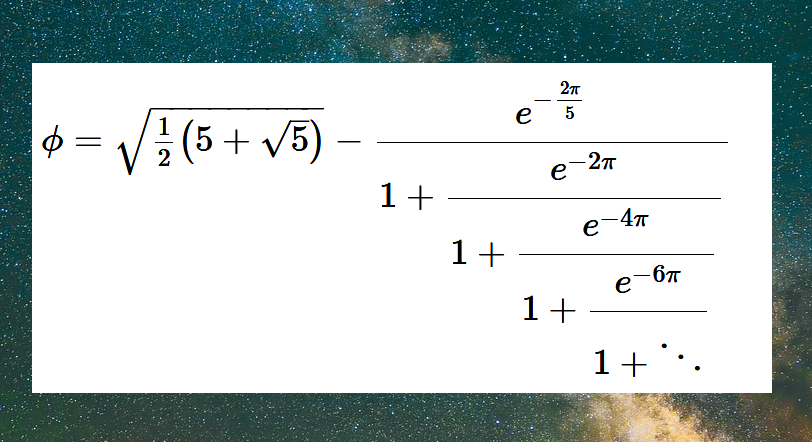
Which "God" decided this was the best way to set up the universe?
"The Triangle of Everything is a log-log chart of everything that has existed since the Big Bang or could ever have existed. All existing objects are bound by three lines: the Compton Limit, the Schwarzschild Radius, and the Hubble Radius. The vertices are the Big Bang on the left, the Observable universe on the top right, and the heat death of the universe / true vacuum / zero-point energy universe on the bottom right.
[Select image to magnify.]
In this mass–radius plot, the Schwarzschild radius is shown as a lower limit on radii of isolated objects, and below the Compton limit quantum effects become significant. The Hubble radius gives a very rough sense of the scale of the observable Universe.
Mass and energy are converted through Einstein's formula, while energy and temperature are correlated through Boltzmann's constant. Since mass is energy, this chart also represents temperature, and since the Big Bang is essentially a rapid drop in density, it also charts events since the beginning of time. All Planck Units are represented on the chart."
Source: Avsa/Wikimedia, CC BY-SA 4.0, tinyurl.com/3pfre83n

English

FREE Math Book. Could our universe be a simulation?
"Cellular Automata Machines" by Toffoli and Margolus. This 1987 MIT Press classic pioneered dedicated hardware that could simulate vast grids of simple local rules thousands of times faster than ordinary computers. It frames cellular automata as the computer scientist’s version of a physicist’s “field”: massively parallel, physics-like universes where complex phenomena (fluids, reversibility, self-reproduction, computation itself) emerge from tiny neighbor interactions. This turned abstract theory into an existing, real-time laboratory for modeling the world.
Link (PDF): people.csail.mit.edu/nhm/cam-book.p…

English

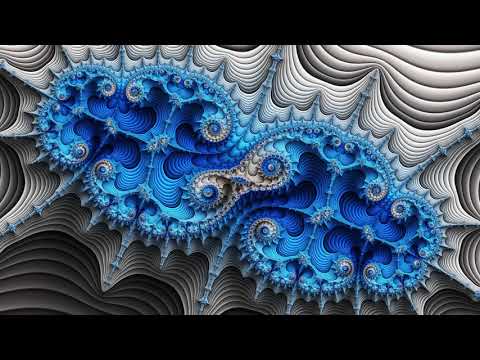
Stepping toward infinity, in a journey to eternity.
Mathematics comes alive, via a set of rigid linkages.
By 上木 敬士郎 / Keishiro Ueki, @KeishiroUeki, Used with permission.
English

Mathematics.
"Guitar Pick Equation."
By John D. Cook, @JohnDCook, Used with permission, johndcook.com/blog/2026/05/0…

English

The physicist Max Planck said:
"New scientific ideas never spring from a communal body, however organized, but rather from the head of an individually inspired researcher who struggles with his problems in lonely thought and unites all his thought on one single point which is his whole world for the moment."
Quote Source: Address on the 25th anniversary of the Kaiser-Wilhelm Gesellschaft (January 1936), as quoted in Surviving the Swastika: Scientific Research in Nazi Germany (1993)
Image Source: A pivotal moment in the history of science: the 1927 Solvay Conference on Physics. The meeting is often referred to as the most intelligent photo ever taken due to the high concentration of revolutionary thinkers present. (Public domain photo)

English

Mathematics. Reality. The Outlier's Rebellion.
By Pedro Veliça, @pedromics, Used with permission.

English

FREE BOOK: "Cybernetic Serendipity: The Computer and the Arts," edited by Reichardt.
In high school, I won a free book and was asked what book I wanted. This was the book, and it changed my life. This photo shows my personal copy.
The 1968 book documented the 1st major international show on the intersection of computers, cybernetics, and creative activity, featuring computer-generated graphics, music, poetry, and robotic art. It showed how artists, scientists, and engineers were collaborating to explore new forms of expression, acting as a manifesto for human-machine creative potential. [Published as a special issue of Studio International.]
I notice that it is free at several locations, and you can choose which version you like best:
1) archive.org/details/cybern…
2) monoskop.org/images/2/25/Re…
3) archive.studiointernational.com/SICS1968/Studi…

English

Math
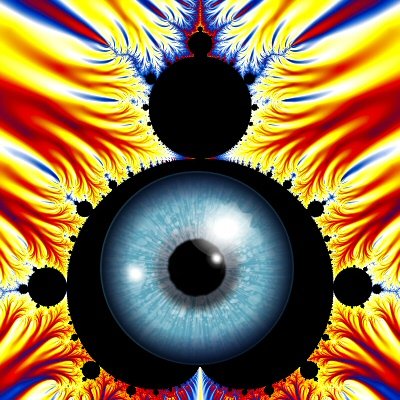
The Mandelbulb is a 3D fractal constructed by generalizing the 2D Mandelbrot set using spherical coordinates. The 3D construct exhibits incredible, infinite complexity and "bulb-like" details.
Visualization by @lukas_trips, linktr.ee/lukas_trips, Used with permission.
English


Mathematics. Sangaku.
First problem from the Zenkoji Temple, Japan.
We have a regular n-sided polygon, with side lengths "a." Find the sphere radii in terms of "a."
Image by Francesco de Comité, Used with permission, flickr.com/photos/fdecomi…, CC BY 2.0

English

Mathematics.
The number 69,696 is a remarkable number and certainly my favorite of all the integers. A monk once presented this number to a student and said: "What do you find significant about 69,696?"
The student thought for a few seconds and replied, "That is too easy, Master. It's the largest undulating square known to humanity.” The teacher pondered this answer, and he started to undulate in a mixture of excitement and perhaps even terror.
To understand the monk's passionate response, we must digress to some simple mathematics. “Undulating Numbers” are of the form: ababababab.... For example, 171717 and 28282 are undulating numbers. A square number is of the form y=x². For example, 25 is a square number. So is 16. An undulating square is simply a square number that undulates.
When I first conceived the idea of undulating squares many years ago, it was not known if any such numbers existed. It turns out that 69696 = 264² is indeed the largest undulating square known to humanity, and most mathematicians believe we will never find a larger one.
-- From my book: Pickover, C., "Keys to Infinity," Wiley.

English

Mathematics.
All those beautiful square roots, but 7 is overlooked.
Which "God" decided this would be the best way to set up the universe?
Art adapted from Daniel Mentrard, @dment37

English

Dream with me. Actual view of Sunset on Mars.
Credit: NASA/JPL-Caltech/Texas A&M/Cornell
Source: science.nasa.gov/resource/a-mar…

English