Ethan Bernstein

429 posts

Ethan Bernstein

Ethan Bernstein

@ethanbernstein

Edward W. Conard Associate Professor of Leadership and Organizational Behavior @HarvardHBS. In past lives: @CFPB @BCG @Harvard_Law @HBSAlumni @AmherstCollege

Boston, MA Katılım Temmuz 2009
190 Takip Edilen2.3K Takipçiler
Sabitlenmiş Tweet
Ethan Bernstein
Ethan Bernstein@ethanbernstein·
Why don't open offices engender more face-to-face collaboration--and what should managers do about it? Long-time friend @bwaber and I try to answer those questions in our latest HBR (in the Nov-Dec issue). Let us know what you think! @HarvardBiz hbr.org/2019/11/the-tr…
English

8
11
36
0
Ethan Bernstein retweetledi
Ethan Mollick
Ethan Mollick@emollick·
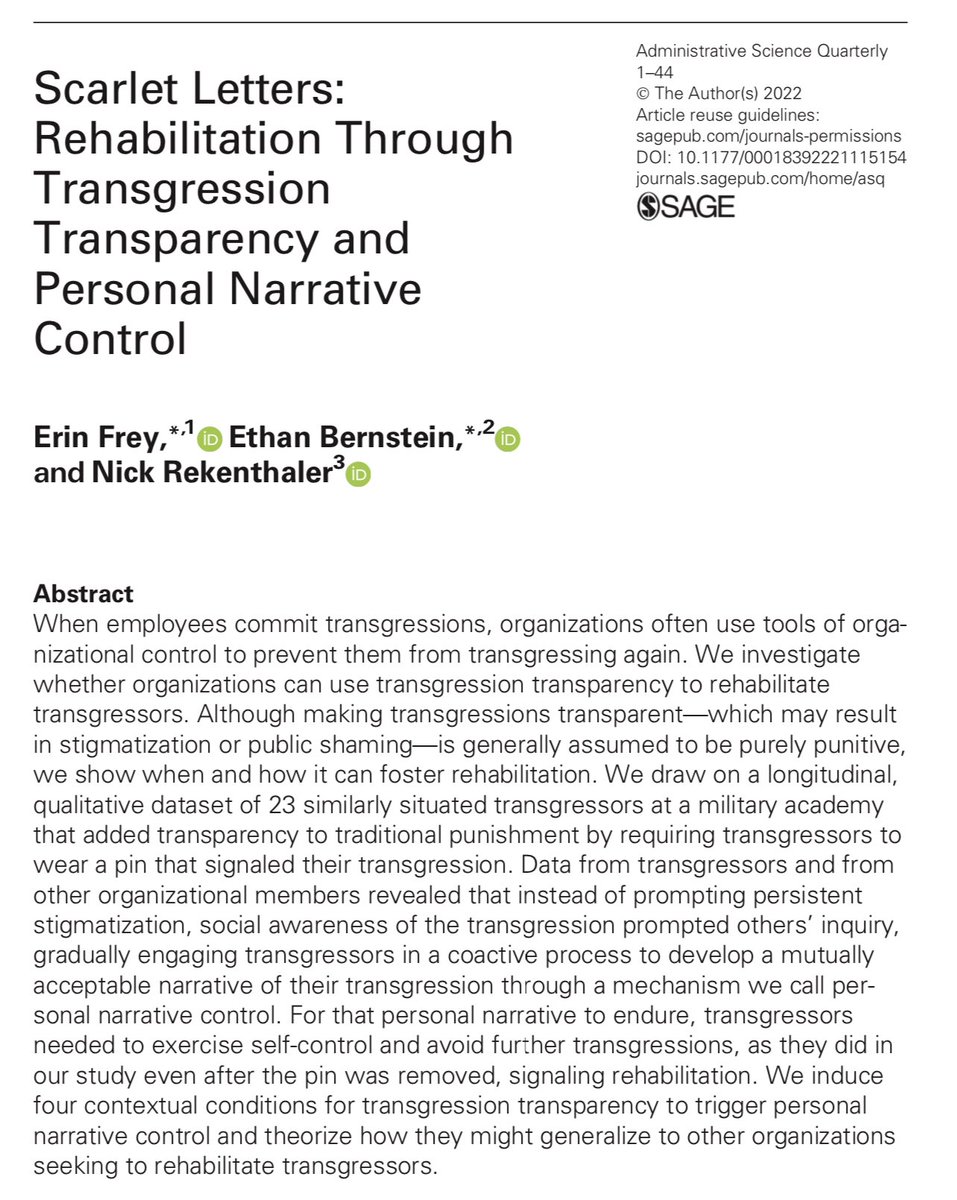
The Scarlet Letter works, sometimes: a military academy made people who broke rules wear a pin. This both empowered & rehabilitated the transgressor, since, rather than be shunned, they were asked about the pin, & could tell a story about how they changed. journals.sagepub.com/doi/full/10.11…
Ethan Mollick tweet mediaEthan Mollick tweet media
English
0
9
46
0
Ethan Bernstein retweetledi
Palgrave Business
Palgrave Business@PalgraveBiz·
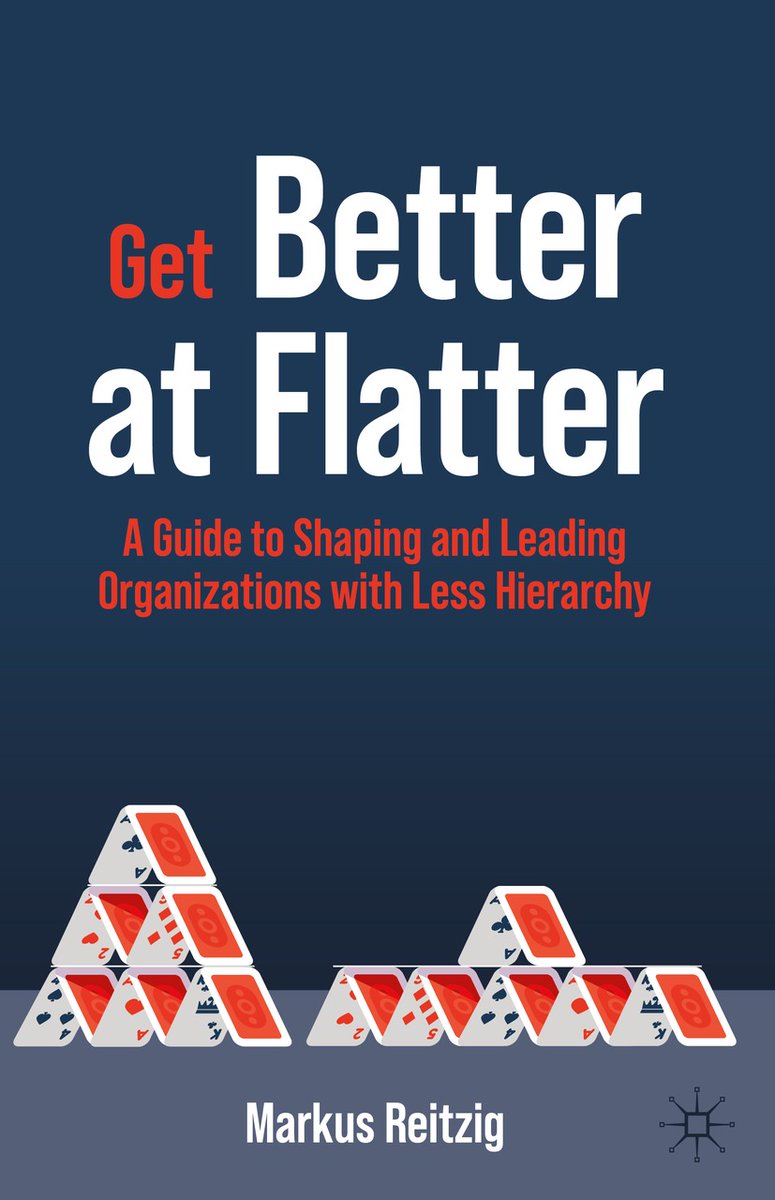
We are very excited to announce the release of 'Get Better at Flatter' by Prof Markus Reitzig. In it, you'll learn when flat structures work, and when they’re a bad idea for #business. Order or download your copy now: bit.ly/3AoNHnO
Palgrave Business tweet media
English
1
2
3
0
Ethan Bernstein
Ethan Bernstein@ethanbernstein·
Such a pleasure to have joined @KellyCNBC on @CNBCTheExchange as we talked about 'The Great Resignation' and 'The Great Attraction' -- and how a human-centric (versus organization-centric) approach to career "progress" might address it. cnb.cx/3zeKM0m
English
0
3
9
0
Ethan Bernstein
Ethan Bernstein@ethanbernstein·
@ariegoldshlager @OpsProf But you raise a very good point, and I agree that just because there isn't data doesn't mean we shouldn't look (hard) for it!
English
1
0
0
0
Ethan Bernstein
Ethan Bernstein@ethanbernstein·
@ariegoldshlager @OpsProf It means that I'm not aware of data that the content of conversations born of "random serendipity" is productive for organizational purposes (as opposed to discussing sports outcomes, Netflix episodes, office gossip, etc). So should it justify ending Work-From-Anywhere policies?
English
1
0
0
0
Ethan Bernstein
Ethan Bernstein@ethanbernstein·
@bwaber @scotthaylon @ellenchisa @natematias @zanmuny and (2) to achieve engineered serendipity, don't we have better technologies than the "water cooler"... and aren't many of those technologies effective remotely such that "water cooler conversations" shouldn't be an excuse for managers to force employees back to physical offices?
English
0
0
2
0
Ethan Bernstein
Ethan Bernstein@ethanbernstein·
@bwaber @scotthaylon @ellenchisa @natematias @zanmuny When I said that *random* serendipity might not be productive, it was in contrast to engineered serendipity (to quote Jackie, Karim, et al). So here are the two questions I have for you: (1) if engineered serendipity is more productive for content, why should random be the goal?
English
1
0
1
0
Ethan Bernstein
Ethan Bernstein@ethanbernstein·
@bwaber @scotthaylon @ellenchisa @natematias @zanmuny Happy to weigh in. @bwaber, we've done too much work together for me to ever say that social structure is not affected by proximity. You are correct that Claire's focus was on whether the *content* of water cooler conversation was productive. I'm still looking for that evidence.
English
0
0
3
0
Ethan Bernstein
Ethan Bernstein@ethanbernstein·
@vanishingcorp @terrigriffith @nytimes And if engineered might be better (and tech allows for successfully engineered serendipity), then should water cooler conversations be the excuse managers use for refusing to support Work From Anywhere policies?
English
0
0
1
0
Ethan Bernstein
Ethan Bernstein@ethanbernstein·
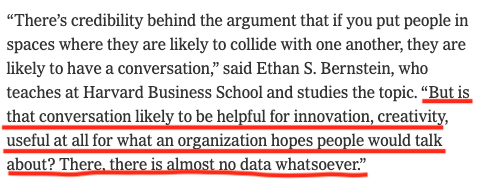
@vanishingcorp @terrigriffith @nytimes Of all the people in the world, there is no one I would rather be proven wrong by. That said, Claire's focus with me was on the *content* of water cooler conversation, not how water cooler conversation might affect social structure and therefore innovative capacity of the org.
English
2
0
1
0
Ethan Bernstein
Ethan Bernstein@ethanbernstein·
@vanishingcorp @terrigriffith @nytimes So here's the question: is "random serendipity" our most productive option, or is "engineered serendipity" (which is much more possible with the technologies we've adapted to over the past 15 months) perhaps better?
English
0
0
0
0
Ethan Bernstein
Ethan Bernstein@ethanbernstein·
@klakhani @inaganguli @mattsclancy @LISHarvard Don't you think there is a difference between the value of serendipitous F2F interactions in your context vs. in an ordinary, physical office space that employees are forced to return to post-pandemic?
English
0
0
0
0
Ethan Bernstein
Ethan Bernstein@ethanbernstein·
@klakhani @inaganguli @mattsclancy @LISHarvard @klakhani, as you know, I love that paper (that I saw from early draft to final publication). In my interview with the NYTimes, I distinguished between the office and other settings (like offsites or a medical research symposium)--her focus was on a return to physical offices.
English
2
0
0
0