EvaDB: Database for AI Apps
31 posts

@evadb_ai
🐙 Github: https://t.co/VCy8gbNp1M 📟 Slack: https://t.co/cKnaKfCmA1 🌐 Website: https://t.co/IRmNTouqyS 📝 Blog: https://t.co/kXHSB04oWm


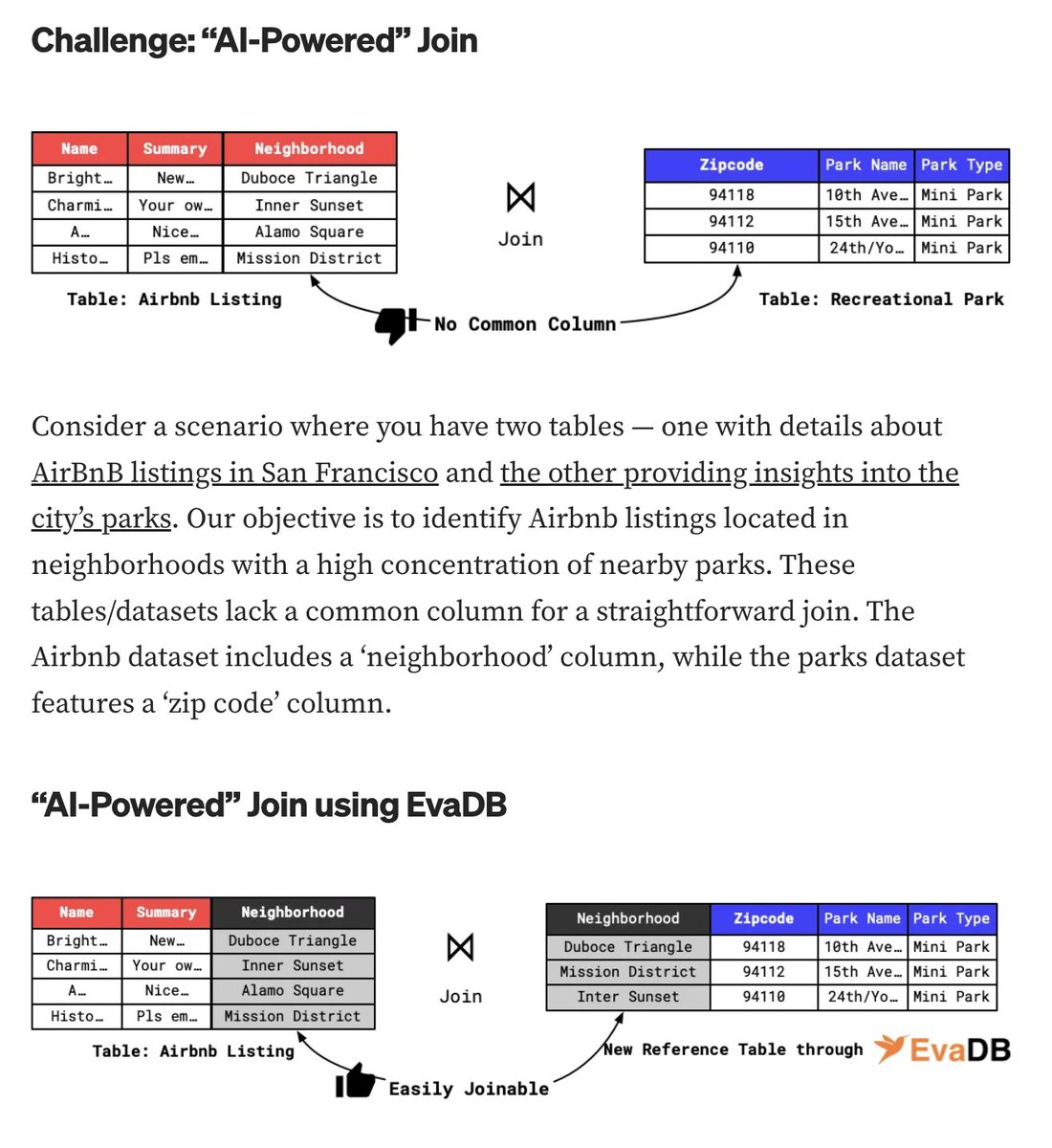
Something I've always wanted 🔥 A "soft join" between SQL tables for when a correspondence is only implied (e.g. different address formats, etc.) Powered by EvaDB @evadb_ai Data engineers rejoice ✨ medium.com/evadb-blog/aug…


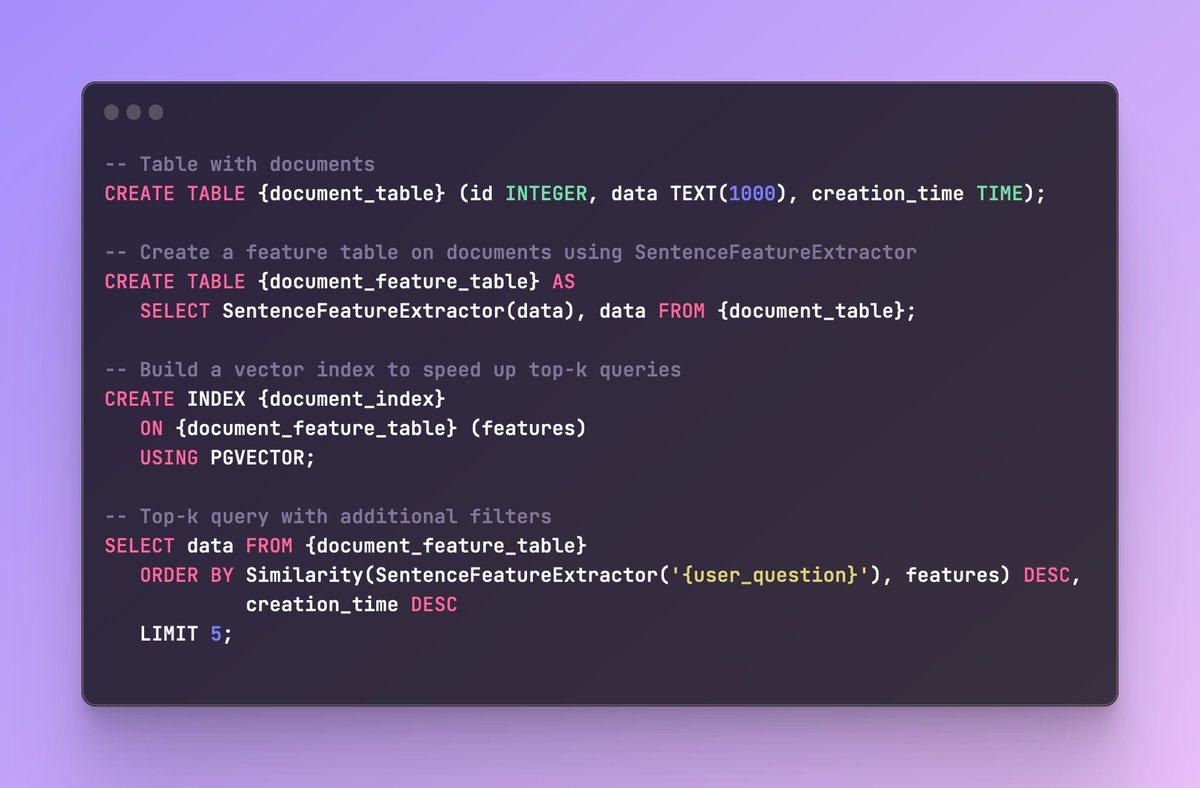
It's interesting that everyone seems to be so obsessed with ChatGPT/LLM, joining either "lovers" or "haters" camp, that the fact that pgvector and pg_embedding, with HNSW support, give an absolutely new perspective to text search is not appreciated yet, it seems. Instead of tsquery @@ tsvector with old-school snowball or ispell and synonym dictionaries, you can now use search on *meanings*. Or you can combine both (yet to explore how exactly). You can love or hate ChatGPT/LLM hysteria – I totally get it – but let's appreciate the fact that now we all have a new type of text search in @PostgreSQL, and it's something mind-blowing itself. "Give me all the documents that match this query by meaning, not by text" might become a new approach how we work with data. And I suspect that the old well-known (and not fully solved for full text search, unfortunately, – RUM indexes were huge, not super fast, and hence not very popular) problem of ordering by timestamptz or int8 column, with search by *meaning*, might become a big challenge again. For example, I might want to quickly find Top-N documents that match my query by meaning, but I want to order them chronologically (all new at the top) – this is an interesting problem to solve, again. If we find a good way how to do it with a single index scan, it's huge.

AI joins with @evadb_ai on PostgreSQL. Works with @Yugabyte DB as well