
Evelyn retweetledi
Evelyn
29.7K posts


Evelyn
@evandboiii
(she/her) /🇮🇩 🏳️⚧️ Gameoverse arc rn
Marineville Katılım Haziran 2022
1.9K Takip Edilen328 Takipçiler

Evelyn retweetledi

Evelyn retweetledi

Evelyn retweetledi


Evelyn retweetledi






Evelyn retweetledi


Evelyn retweetledi

Evelyn retweetledi


Español

Evelyn retweetledi

Finally done!! It took so long pls don’t flop (I love my queen Kit)
#gameoverse #gameoversekit #glitchstudios #glitchproduction

English
Evelyn retweetledi


Evelyn retweetledi

Evelyn retweetledi


Evelyn retweetledi

Sorry for being radio silent lately.
I've been receiving backlash for my infatuation for an ANIMATED CAT.
A LITERAL CAT.

English
Evelyn retweetledi


Evelyn retweetledi


Evelyn retweetledi


Evelyn retweetledi

...is it actually happening?
Roblox Events Leaks 🥏@LeaksEvents
👑 NOVA DOMINO CROWN?! Roblox acaba de carregar DOIS novos itens, uma asa e um que chama muito atenção por ser a icônica Domino Crown. O que Roblox está aprontando? Algo relacionado com Redcliff bundle?🤔 Crown:roblox.com/catalog/128739… Wings:roblox.com/catalog/140223…
English
Evelyn retweetledi
The Record That Still Stands:
How the GE Stratford Works Built a Locomotive in Under Ten Hours
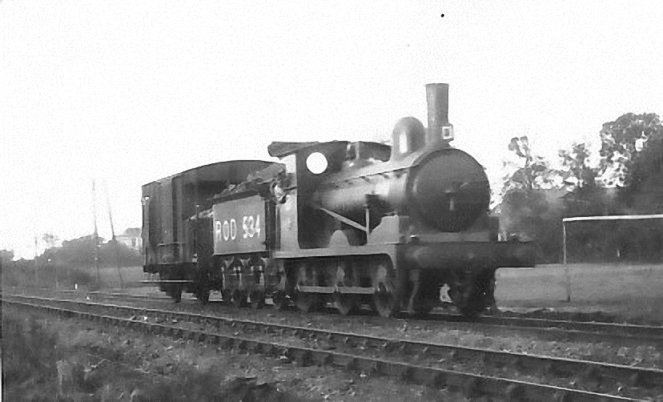
Imagine the scene inside the large, busy erecting shop at Stratford Works on a chilly Thursday morning in December 1891. The Great Eastern Railway’s vast locomotive works in East London were already a byword for efficiency, but on 10 December something extraordinary was about to unfold. At nine o’clock sharp, the frames for a brand-new 0-6-0 goods engine were laid down, and the clock started ticking. Just over nine and three-quarter hours of actual working time later, including the usual lunch break, the finished locomotive, complete with tender, rolled out of the works under its own steam, finished in grey primer. That locomotive was a Y14 No. 930. This build remains a world record for steam locomotive construction to this day. The Y14 was the archetypal “maid of all work” for the Great Eastern, a handsome, purposeful and powerful loco.
Designed by T. W. Worsdell and introduced in 1883, these efficient, inside-cylinder 0-6-0s had 4 ft 11 in driving wheels, 17½ in × 24 in cylinders, and a 160 psi boiler. They weighed a tad over 37 tons in working order and could handle both heavy goods and lighter passenger turns across the GER’s often lightly laid branches. Their simple, robust layout and the high degree of standardisation introduced under Locomotive Superintendent James Holden made them ideal candidates for rapid assembly.
By 1891, Holden had turned Stratford into one of the most organised railway shops in the UK. Components were worked to fine tolerances in the machine and fitting shops, then held in stores ready for use. Jigs, templates and interchangeable parts meant that fitters did not waste precious minutes chasing tolerances or making one-off adjustments. The build of No. 930 was therefore less a frantic scramble from raw castings than a more choreographed high-speed erection.
In the erecting shop, a long, high-roofed hall filled with overhead cranes, traverser pits and rows of engines in various stages of completion, teams of skilled engineers moved with confident precision. Frames were aligned and levelled. Cylinders were offered up and secured. The motion, connecting rods, coupling rods, valve gear and eccentrics, was fitted and timed with the care that only experienced loco engineers possess. Axles and wheels were dropped into place, springs attached, and the boiler and firebox assembly lowered and connected. The smokebox, chimney, cab and footplating followed in rapid succession. Meanwhile, in an adjacent area, the tender was being prepared with equal speed so that the two units could be coupled almost as soon as the engine itself was ready.
Contemporary accounts noted that every major component had been prepared in advance, yet the speed and coordination still astonished observers. At 9.15 a.m. on Friday, 11 December, the engine moved under its own power for the first time. It had taken 9 hours 47 minutes from the moment the frames were positioned to the moment a fully functional locomotive left the works. For comparison, the previous British record, set at Crewe by the LNWR, had stood at around 25 hours. Stratford had effectively halved it. No. 930 did not receive its final livery immediately. Instead, it was dispatched straight into revenue-earning service on the demanding Peterborough to London coal trains.
Over the next five thousand miles, 930 ran normally, returning to Stratford for nothing more than routine attention. Only then did it come back for its proper livery. The locomotive went on to give forty years of hard service and amassed more than 1.1 million miles before withdrawal, proof indeed that the record-breaking build speed had not been achieved at the expense of quality. What made the achievement possible was not just the pre-machined parts or the simple design of the Y14 itself. It was the entire culture Holden had fostered at Stratford: clear organisation, highly trained gangs who knew their jobs back to front, and a production system that treated locomotive building almost like a well-rehearsed industrial ballet.
The works employed thousands of men across specialised departments, boiler shop, machine shop, wheel shop, smithy, all feeding components into the hungry beast better known as the erecting shop with clockwork regularity. On that December day, the system performed at its absolute best. The record was not beaten in the steam era, and attempts elsewhere, even with more modern methods, could not match the combination of preparation, teamwork and sheer craftsmanship displayed at Stratford. Today, only one Y14 survives, and for that we must be grateful; it is preserved on the North Norfolk Railway, giving enthusiasts and tourists alike a lucky reminder of the class that once dominated East Anglian goods and branch-line work.
Standing in front of that preserved engine, or studying old photographs of Stratford’s busy erecting shop, it is possible to feel the pride and understand the sheer mechanical theatre of that December morning in 1891. In an age before mass-production lines and computer-aided everything, a group of Victorian railwaymen proved that with the right design, the right organisation and the right people, a complete steam locomotive could be built, steamed and sent out to earn its living in less time than most of us take to complete a long working day. That remains one of the most remarkable engineering achievements in railway history.


English