
Élie Michel 🍪
1K posts

Élie Michel 🍪
@exppad
Research Scientist at @AdobeResearch. PhD in Computer Graphics. Dev of #OpenMfx and Learn #WebGPU C++. Opinions are my own. ⏩ https://t.co/lDVZsdOOuw
Paris Katılım Kasım 2015
670 Takip Edilen4.1K Takipçiler

Spot on! The "maximally forkable repo + skills" meta is going to eat traditional plugin architectures alive.
Ha, I bought my Mac mini a month ago specifically for this, called the sell-out risk early. Haven't even unboxed it yet though because we got everything running nicely on a VPS first and have been deep in the trenches there. Sometimes the best hardware purchase is the one collecting dust while you ship 😂
You're spot on about the security concerns being real BUT temporary. This is what early days of every major open source wave looks like, remember early npm? Wild west, supply chain chaos, exposed instances everywhere. Then the community hardens it faster than anyone predicts. The fact that it's the fastest growing GitHub repo in ages isn't hype, it's thousands of builders stress-testing, patching, and improving in real time. The critics comparing today's flaws against tomorrow's expectations will be surprised imo
skills-as-configuration instead of config-file hell is genuinely a paradigm shift. Instead of drowning in YAML and if-then-else spaghetti, you just let the AI agent modify its own code. That's the kind of AI-native thinking that separates the repos that last from the ones that don't.
English

Bought a new Mac mini to properly tinker with claws over the weekend. The apple store person told me they are selling like hotcakes and everyone is confused :)
I'm definitely a bit sus'd to run OpenClaw specifically - giving my private data/keys to 400K lines of vibe coded monster that is being actively attacked at scale is not very appealing at all. Already seeing reports of exposed instances, RCE vulnerabilities, supply chain poisoning, malicious or compromised skills in the registry, it feels like a complete wild west and a security nightmare. But I do love the concept and I think that just like LLM agents were a new layer on top of LLMs, Claws are now a new layer on top of LLM agents, taking the orchestration, scheduling, context, tool calls and a kind of persistence to a next level.
Looking around, and given that the high level idea is clear, there are a lot of smaller Claws starting to pop out. For example, on a quick skim NanoClaw looks really interesting in that the core engine is ~4000 lines of code (fits into both my head and that of AI agents, so it feels manageable, auditable, flexible, etc.) and runs everything in containers by default. I also love their approach to configurability - it's not done via config files it's done via skills! For example, /add-telegram instructs your AI agent how to modify the actual code to integrate Telegram. I haven't come across this yet and it slightly blew my mind earlier today as a new, AI-enabled approach to preventing config mess and if-then-else monsters. Basically - the implied new meta is to write the most maximally forkable repo and then have skills that fork it into any desired more exotic configuration. Very cool.
Anyway there are many others - e.g. nanobot, zeroclaw, ironclaw, picoclaw (lol @ prefixes). There are also cloud-hosted alternatives but tbh I don't love these because it feels much harder to tinker with. In particular, local setup allows easy connection to home automation gadgets on the local network. And I don't know, there is something aesthetically pleasing about there being a physical device 'possessed' by a little ghost of a personal digital house elf.
Not 100% sure what my setup ends up looking like just yet but Claws are an awesome, exciting new layer of the AI stack.
English
@johndpope @fhahlbohm That 2400 fps is overclaim, it's measured on a degraded version that ignores any sort of transparency. The actual FPS reported in the paper is 97.
English

@fhahlbohm 2400 fps -trianglesplatting.github.io Triangle Splatting
English

Thought I'd share this WebGL viewer that uses a combination of ray tracing and depth testing to render 3D (or 2D) Gaussians.
github.com/fhahlbohm/dept…
Runs smoothly (>120 Hz) on an M1 MacBook Pro at 1080p. Quality is decent. Gaussians truncated at 2σ. No higher degree SH support.
English


English

Interactive rug shader - A @threejs port of @_Dervishh's Unity shader. Done in #r3f with Physics via Rapier. Fun project over coffee
Live: faraz-portfolio.github.io/demo-2025-inte…
Code: github.com/Faraz-Portfoli…
#creativecoding #threejs #webgl
English
@Eng_Hemdi Please stop forgetting to mention that the 2400FPS is *not* rendered with the same quality as the CUDA renderer used for quality comparison! Far from it actually, since there is no transparency at all. It's more an example of graceful degradation imho.
English

The triangle soup is compatible with any mesh-based renderer (after baking), enabling seamless integration into standard pipelines,
rendering at over 2400 FPS at 1280×720 resolution on an RTX 4090.
Or optionally even on a laptop with 200 FPS
5/n
English
I also gather some related toughts in this appendix of the #LearnWebGPU programming guide:
"Keep in mind lower-end devices" eliemichel.github.io/LearnWebGPU/ap…
English
We're very much interested in your opinion and interpretation of these results!
More info about the upcoming talk:
🔹SIGGRAPH program: s2025.conference-schedule.org/presentation/?…
🔹Webpage: eliemichel.github.io/sustainable-gp…
with @emxtyu Octave Crespel @Axel_Paris and @FelixHahnlein
English
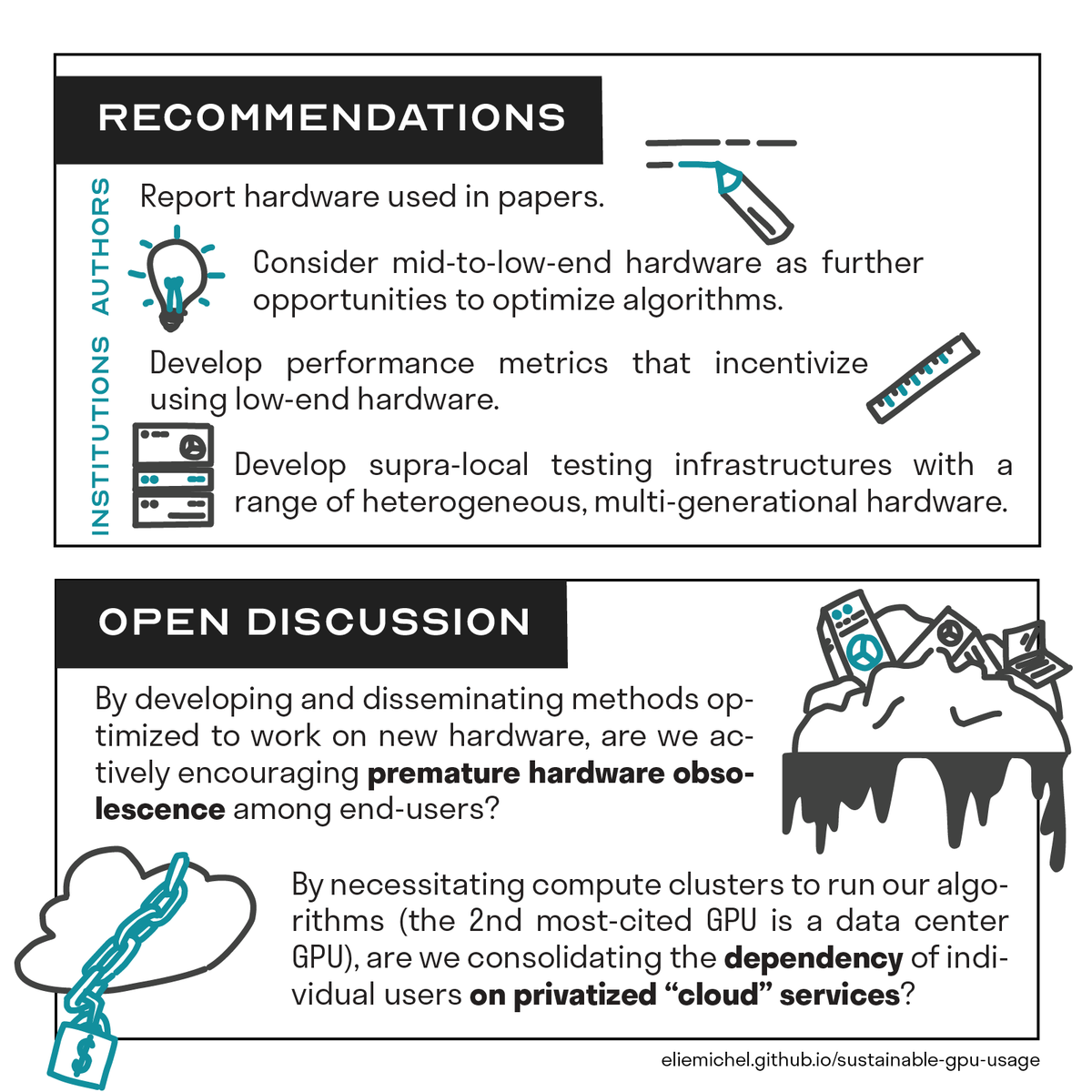
Is it because researchers only work with recent high end #GPU that everybody has to renew their hardware so fast or is the other way around?
Causality is hard to prove, but the correlation is a fact! And we have plenty more figures to show at our #SIGGRAPH2025 talk next summer!

English
@rvandeghen I definitely understand the will to tease the paper, communication is important, but to my eyes at least it would have more impact if it was more consistent. The 2800FPS figure is fancy for sure, but you want to communicate with researchers, who pay attention to details!
English

@exppad No, the game engine does not give the same visual results (yet). I understand your confusion, but the goal of the project page is to tease the work we have done. Every should be clear in the research paper. Again the game engine is a byproduct, not the end goal of the work.
English
2) How does it work?
We introduce a differentiable renderer that directly optimizes triangle parameters.
We achieve this by rendering each triangle as a differentiable splat, using a novel window function to control the shape’s density.


English
@rvandeghen All right but maybe I still don't fully get it: does the 2400 FPS game engine give the same visual result than the benchmark? The web page presents accuracy figures, it should give the render time that corresponds to this accuracy
English
@exppad Thanks for the comment. Table 2 refers to standard NVS benchmark, where rendering time refers to the cuda implementation. For the web page, it is written that the 2400+ FPS are for a game engine.
English
@rvandeghen (I don't want to minimize the good work, congrats again, just mean to make things a bit less misleading!)
English
@rvandeghen Would be nice to report this actual FPS as well in the web page, so that it doesn't steer towards overclaim territory, because you show accuracy comparison with 1 renderer and FPS with a different one.
English
@janusch_patas (I'm gonna ask on the original author post actually🙂)
English
@janusch_patas Hey nice work! I'm just a bit puzzled with point (iv): directly compatible w/ existing renderer means there is no sorting, right? So not so much semi-transparent and volumetric effects?
English

Triangle Splatting for Real-Time Radiance Field Rendering
Contributions:
(i) We propose Triangle Splatting, a novel approach that directly optimizes unstructured triangles, bridging traditional computer graphics and radiance fields.
(ii) We introduce a differentiable window function for soft triangle boundaries, enabling effective gradient flow.
(iii) We demonstrate qualitatively and quantitatively that Triangle Splatting outperforms concurrent methods in terms of visual quality and rendering speed, and achieves superior perceptual quality compared to the state-of-the-art Zip-NeRF on indoor scenes.
(iv) The optimized triangles are directly compatible with standard mesh-based renderers, enabling seamless integration into traditional graphics pipelines.
English
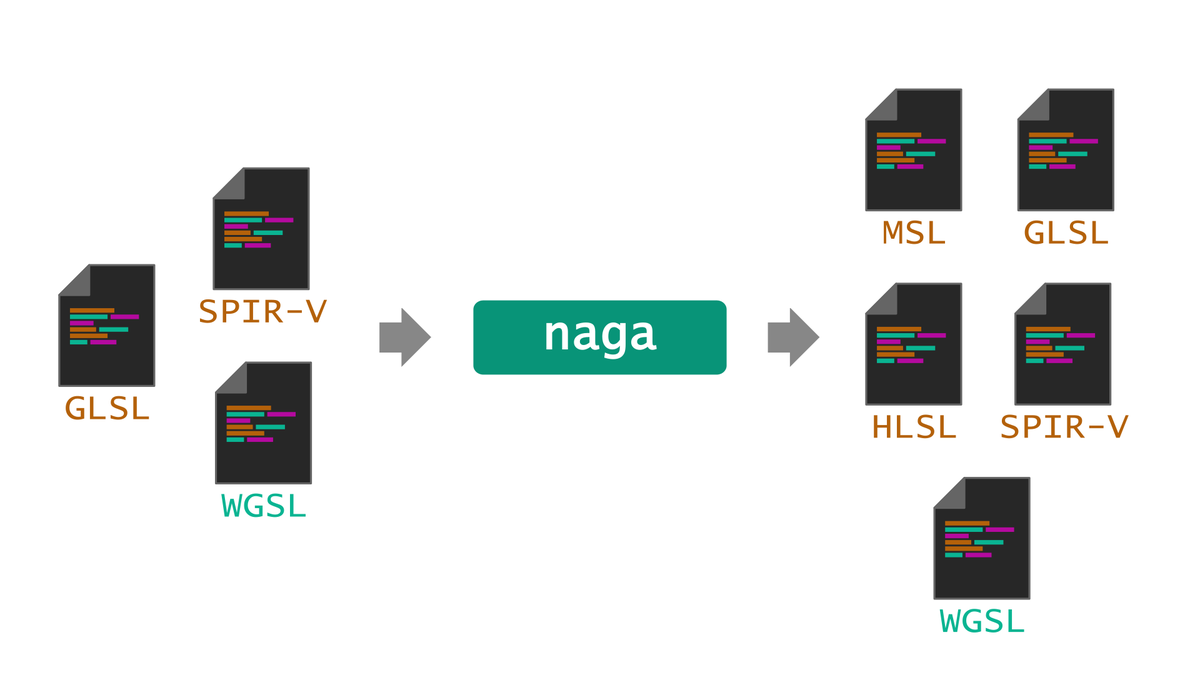
Note that 'naga' is the equivalent tool developed by Firefox. It can easily be installed using cargo (the rust build manager): github.com/gfx-rs/wgpu/tr…
English
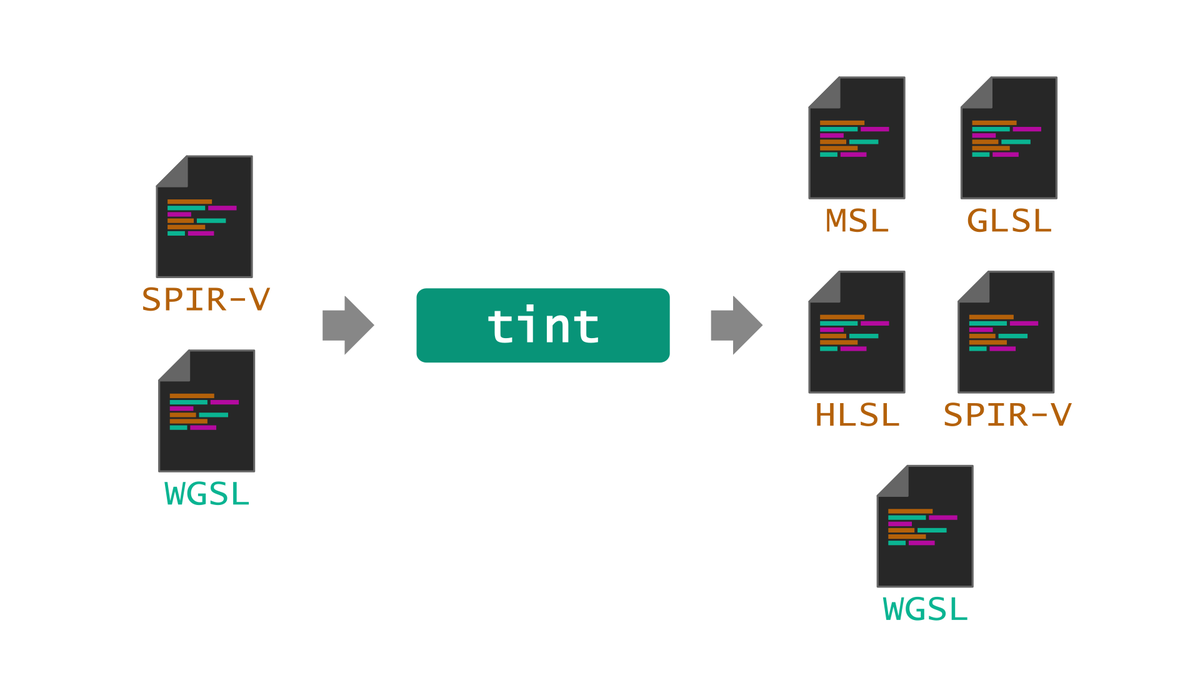
'tint' is the shader compiler developed by Chrome to implement #WebGPU. It has a nice command line interface, but so far there is no official build out...
Wait no more! I share here precompiled binaries of tint CLI: github.com/eliemichel/daw…
English
Important notes:
🔹This rewrite is *WIP*, refer to the main section (w/o "next" in the URL) for further chapters.
🔹This only works with Dawn for now because it is closer to what the v1.0 of WebGPU will be.
🔹The accompagnying code "stepXXX-next" is not up to date yet.
English
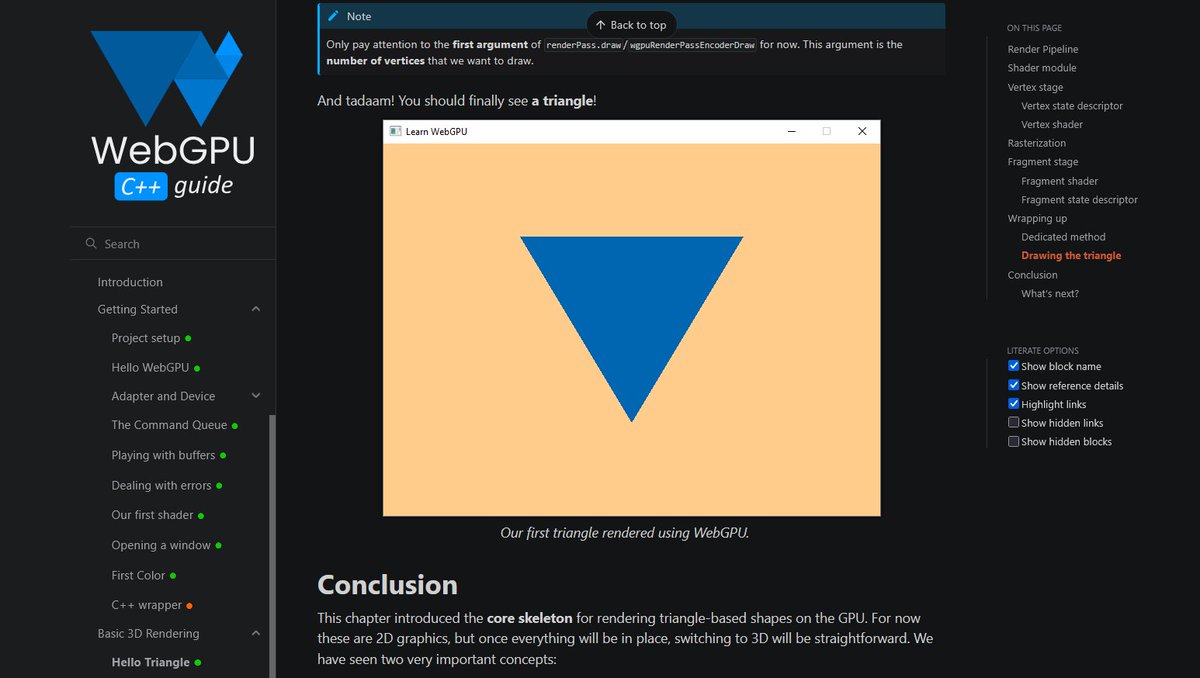
I've just realized something. It makes much more sense to have the "hello triangle" pointing upside down when learning #WebGPU!
👉 The ongoing "Next" rewrite of my guide reached the Hello Triangle chapter 🥳 eliemichel.github.io/LearnWebGPU/ne…
English