

Alex Warren
676 posts
Alex Warren
@exrhizo
Design Engineering & Research into Emotion Understanding with AI @typesafeai
SF Katılım Ekim 2009
458 Takip Edilen202 Takipçiler

“Reasoning is just training the model to prompt itself so it can extract the knowledge that’s already there”
- @CompleteSkeptic of @typesafeai
English

loops should be renamed to GOTO statements
- everything is global state (no scoping / isolation)
- anything can happen at any time (impossible to reason about where you are in an execution + debug)
- constraints are loose guidelines (rather than programmatic guarantees)
English
Alex Warren retweetledi
Alex Warren retweetledi



Alex Warren retweetledi

Alex Warren retweetledi

We're launching something new to help investigation & automation teams🤠
When the @LOUIE_AI team went from announcing the first agentic AI speed-run of Splunk's annual Boss of the SOC investigation CTF at #RSAC → then helping 100+ hackers build their first AI agents at #BlackHatUSA with @Cyb3rWard0g , it was clear:
How to do agentic AI well needs to reach more of the investigation & automation community.
So, I'm happy to share we're starting a 2-day online masterclass "From AI Copilot to Commander" (16 CPE credits)
Think big picture views on what works today and what's next, and going hands-on with an AI cyber range for RAG, evals, investigation agents, OSS tools, MCP, semantic layer, etc on your choice of @splunk , @databricks , #kusto @AzDataExplorer .
Link in comments, and stay tuned for a @LOUIE_AI announcement on the software side of this same community direction. Fall is heating up! 🔥
cc @vicfcs @dawnsongtweets @cosh23 @Cyb3rWard0g @JohnLaTwC @ram_ssk

English
It's exciting building with this wave of AI and disheartening how quickly the startup community is ready to disregaurd human capacity
We are only beginning to understand human complexity - terra incognita, no training data, the frontier of understanding is right here.
English

I'm going to start tpot tucson chat. If you are not in Tucson, like this post so that people in Tucson can see it. If you are in tucson, reply. If you are in Phoenix, leave.
English
Alex Warren retweetledi

Government is going to change in 2025 and good tools can help us do it right.
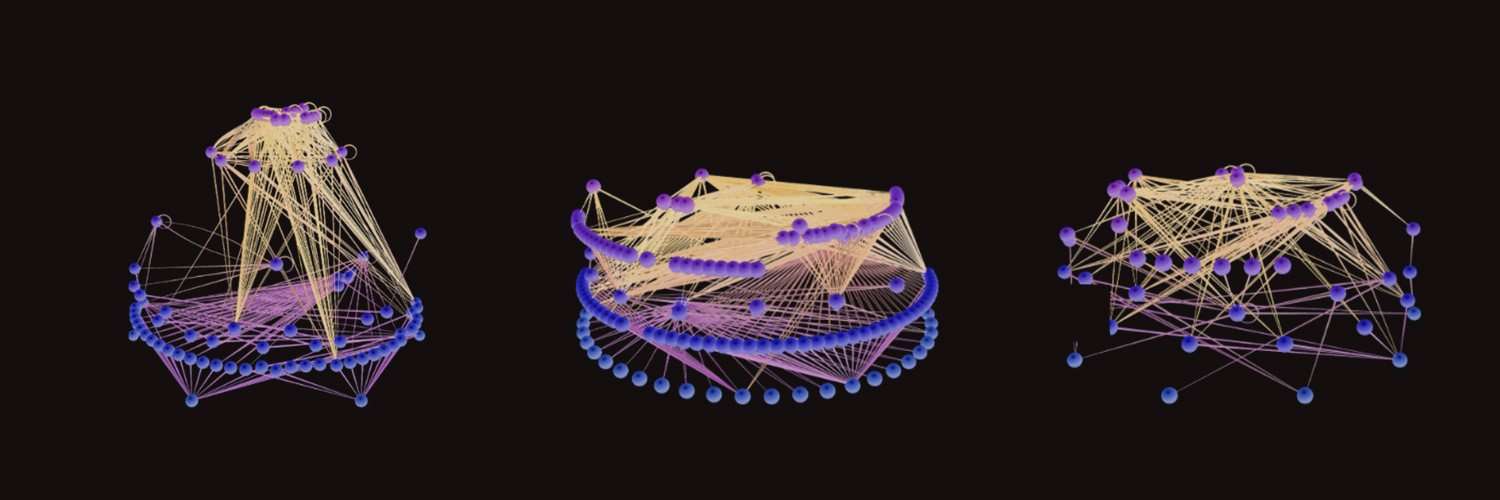
Introducing v2 of the SF Government Graph - a complete map of San Francisco’s government 🌉📈
English
@algekalipso `Interaction Ritual Chains` is a good explication for this sort of idea
English

I once talked to someone at a party in college that made one brilliant point after another at the intersection of philosophy of mind and economics.
He was crystal clear in his thinking and he had an elaborate (but not overfit as far as I can tell) model of how society was not made of individuals, but rather of attention streams. Rather than carving the social ontology at the individual, he would break it down in terms of attention types and degrees of signal to noise ratio in verbal actions. He viewed economic activity in terms of attention streams recruiting each other for information processing and resource extraction. And so on. He said he was putting this into writing and emailing professors about it, and I wished him luck. He apparently got into a fight with someone at the group house hosting the party later that night but I never learned what exactly happened.
About a week later I found him at the cafeteria and asked him how his theory was going.
"Oh, that? I was going through a manic episode. I just came back from the hospital, and currently being stabilized with meds. Doctors suspect bipolar II."
Months later I talked to him again over dinner. Fully stabilized and "back to normal", he said he thought his theory was just bullshit coming from a manic mind. And now he was just recited full mainstream neuroscience ideas together with a Dennettian deflationary view of consciousness: "yeah, I guess it's all just my prefrontal cortex organizing sensations" or something to that effect.
I thought his manic self was brilliant; his normal self a complete normie without any interesting point to share.
Last time I saw him was at another party where he said he had stayed up all night on Vyvanse trying to induce a manic episode again. Didn't work out very well. Not that he he hurt himself (to my knowledge), but he just never was able to recreate the mental state of his episode, something which he dearly missed. I do remember he graduated and found a job, and I hope things work out for him.
Part of me is still hoping to see a book on "Economics as Attention Management" on the shelves one day.
English
Alex Warren retweetledi

Nutrient Levels in Retail Grocery Stores, or Why You Should Be Buying Your Groceries from Walmart
I've done some digging into nutrient levels in retail grocery stores (specifically where I should shop if I want nutritious food) and learned some insane things. Longest post I’ve done yet, so for readability this is also linked in my bio.
1) It's a well-documented phenomenon that nutrient levels in produce have been declining for decades. The average mineral content of calcium, magnesium, and iron in cabbage, lettuce, tomatoes, and spinach has dropped 80-90% between 1914 and 2018. (Image by Workinger et al., 2018)
There are several reasons for this, but most of them are due to modern agricultural practices. These reasons include: selective breeding, soil depletion, synthetic fertilizers that provide basic nutrients necessary for plant growth but not others that would make them nutrient-dense, higher CO2 levels in atmosphere diluting nutrient content in plants, over-irrigation washing away nutrients from soil, and long storage times.
2) If all you care about is nutrient content, SPEED is the only factor that matters. That means time between being picked and ending up in your mouth. Price doesn't matter, organic doesn't matter, marketing hoo-ha about how fancy the produce is doesn't matter. Literally just speed. Fresh spinach loses almost ALL of its vitamin C within 7 days of harvest when stored at 68°F (20°C). When stored at 39°F (4°C) which is about fridge temp, it loses 75%. The apples you buy at the grocery store can be up to a *year* old since they've been harvested, especially if you are not buying them in season.
Taste, texture, and smell are not good indicators of nutrient content, because you can't tell how long it has been since it's been harvested. Modern shipping and storage methods can be deceptive, combined with practices like spraying strawberry fragrance on otherwise bland strawberries so you think you're buying the good stuff (yes some places actually do this).
In general, it can help to eat in season, but due to the globalized supply chain...it's always in season *somewhere*. But how long did it take to get to you? You don't know. Even if it's in season where you are, how do you know if that's not from *last* season? Again, you have no idea.
3) Think for a moment: what store do you think sells the most nutritious produce? Your local farmers’ market? Whole Foods? Trader Joe’s must be decent, right? Nope, it’s Walmart. Because of their scale and insanely efficient supply chain, they can get things from the farm (wherever it is in the world it's growing in season) to the store where you can buy it, really really fast. Oh, and for the lowest cost.
I wanted to believe every time I splurged on fancier produce, I was actually getting something better. But this is what the data comparing 18 major US retailers showed – Walmart consistently outperformed.
I learned this from talking to Brent Overcash, co-founder of a startup called TeakOrigin, which specialized in testing nutrient content in groceries from retail grocery stores. For years, every week, his team would walk into grocery stores, buy thousands of produce items the way normal consumers would, and bring them back to the lab to assess nutrient content. They’d go to Whole Foods, Trader Joe’s, Costco, Wegmans, Sprouts, Waitrose, farmers’ markets, and many more retailers. The “winner” varied depending on the specific type of produce/brands/exactly what week it was, but Walmart tended to come out on top. The more important point is that price and taste and organic certifications had no impact on the actual nutrient density.
They raised ~$5M and did a decade of research with labs full of analytical chemists where they used a combination of molecular spectrometry, HPLC, GC/MS, TGA, and wet chemistry methods. With 800+ million data points, the USDA and FDA at one point told them they had the world’s largest dataset of dynamic nutrition data. They’re no longer around, but had branches in California, Boston, and the UK just a couple years ago.
It went out of business because no major grocery store wanted to partner with them, because the transparency would hold these retailers accountable for *so many things* the consumers aren't even currently aware of. Things like how Whole Foods centers their entire branding around fresher, higher quality produce that's better for you, but when he actually tested some expensive apples they were selling from a local orchard advertised with handwritten chalkboard signs, it had so little nutrient content it was barely detectable on their lab-grade machines. He called the orchard because he was curious, under the guise that he was interested in picking some apples for the season. They said, "Oh sure, you can do that, but our first harvest isn't for another 6 weeks." That means it had been a year since the apples he bought were actually picked. This is actually industry standard, made possible by storing them at low temperatures and spraying a gas called 1-MCP which blocks ethylene (a gas naturally produced by the apples that makes them ripen) by binding to the same receptors.
I asked him: Are farmers’ markets any better, since we're getting the produce directly from local farmers? And he said basically there's huge variance. If you walk into a booth and that vendor is selling over 5 types of produce, there's no way they all ripened at the same time. They may not even all be grown by them. Once, he actually saw a vendor at Boston farmers’ market selling carrots from Target! He could tell from the packaging because he used to work for them. Turns out when a produce delivery is refused by the grocery store, the truck owner is then responsible for getting rid of that produce, and they usually drive to a “food hub” where bulk produce is bought and sold just to recoup some of the costs. That is one possible source of the mysterious farmers’ market carrots they were pawning off as homegrown.
Now, I'm not saying you should *stop* shopping at non-Walmart places. There are a lot of factors other than nutrient density that influence a purchasing decision. The fancy, expensive produce might taste better, smell better, and be better for cooking. It may come from farms where there are better wages and working conditions. There might be fewer pesticides. But again, for nutrient content, speed is the only thing that matters.
I want to do something about this, but it’s an issue way bigger than I can tackle alone. From the way we do modern farming, to the complete lack of transparency on the retailer's end (and vested interests in keeping it that way), to the government's lack of interest in enforcing this transparency for the sake of consumers...the problem runs deep and I'm tired man. And so is Brent, who’s retired and doing woodworking in his studio these days, living the good life.

English
@leecronin What definition of intelligence are you using?
Posts like this seem about intra field status jockeying - what quality would you attribute to LLMs, they have capacities, you must admit.
English

The brute force reduction of data to ML models provides good feedback for questions that are in distribution BUT this cannot work with out of distribution or unseen questions. Brute force ML ≠ intelligence. Even in principle.
English
@FU_joehudson I was just listening to Krishnamurti and Bohm say what if there was movement without time, awakened people say that strangest things..
English

Here’s another old comic I drew in my twenties. I guess you could call it drawing 😜
The handlebar mustache on the clock is my favorite

English
As someone who likes tracking biometrics, intrigued by this
superpower.com/a37rjf2w
English
Alex Warren retweetledi

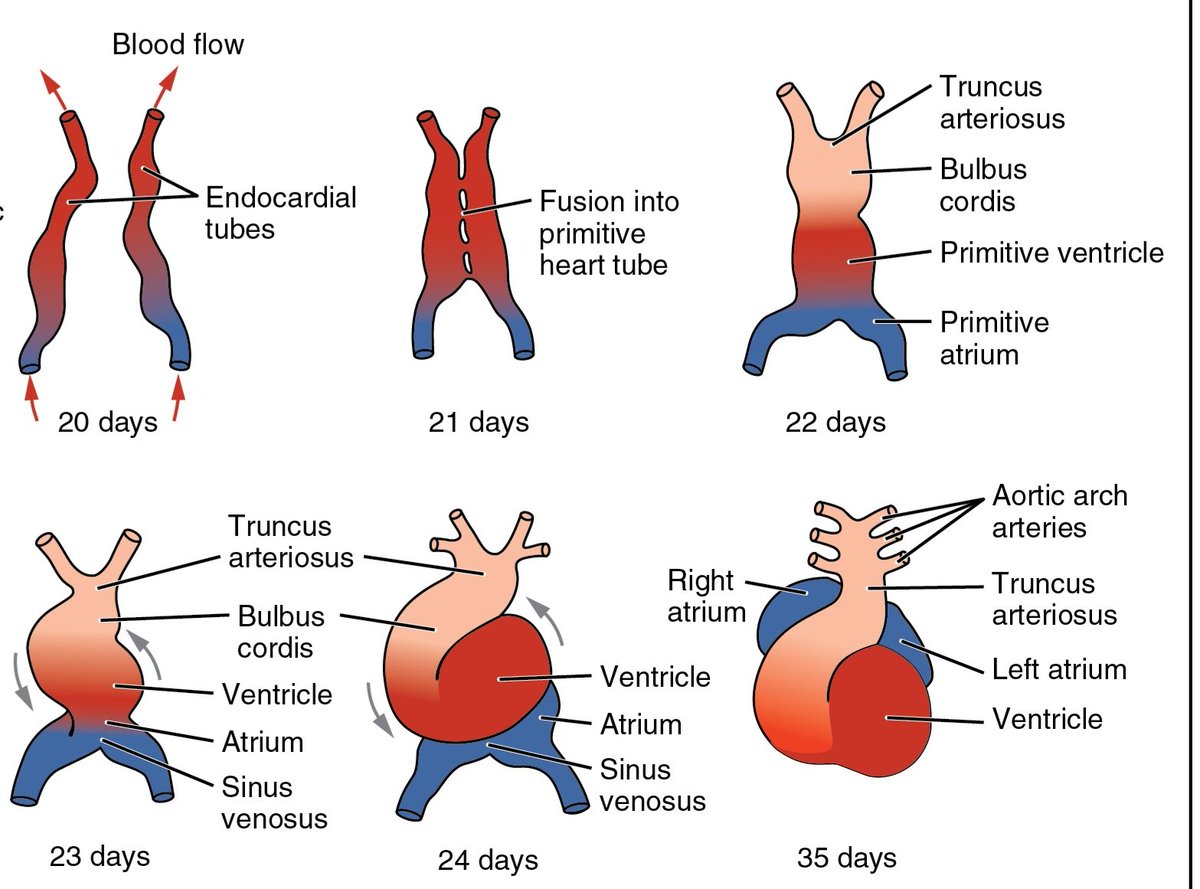
So absolute essentials start at the caudal end (which makes sense), but now you have an issue:
Your heart is not on the top of your head.
That means it needs to move.
And it does, twisting down into your chest. 6/13
English
@AirKistler This is great, self discovery as a phenomenological journey
English

1/ It's incredibly tempting and easy to reduce the journey of self-discovery to a set of subject-object relationships with our physical form:
English
@jonnym1ller Jane Jacobs is well represented in the training data, I assume it would degrade if outside well trod thought trajectories
English

Can imagine this being insanely valuable for both non-fiction authors (creating draft courses from their work) and online educators looking to spin up drafts of new pilot trainings
Steven Johnson@stevenbjohnson
Input: Jane Jacobs quotes and YouTube interview; handwritten outline; education standards doc. Output: high-quality, standards-aligned urban planning lesson plan. Plus audio overview to promote the class. 10 minutes to create, all thanks to NotebookLM and Gemini. This video is a new demo of NotebookLM that I shared earlier this month at the AI + Education Symposium with @MeshEdActionLab, @xqamerica, and @betaworks. This is an educational use-case, but the general structure of what I’m doing in the demo—take a curated collection of sources and quickly transform them into a detailed document that obeys strict guidelines—is generally applicable to many fields. Note how I am not just using the sources as ground truth for the project, or as the content for the lesson plan. The Jacobs quotes and interview are the content, but my handwritten notes provide the structure, and the HQPBL.org framework source provides the values or guidelines for the finished project. With some simple prompting, NotebookLM and Gemini can draw on information from the sources using those different modes simultaneously: content, format, values. (I even forgot to explicitly tell the model to use the structure outlined in my notes, but it figured that out anyway.) This is remarkably sophisticated knowledge work. Building a draft lesson plan like this would normally take hours if not days. But crucially I’m in control of the document that is being generated here — it’s based on the information that I have curated, and on the instructions I’ve given NotebookLM for adapting that information into the lesson plan I want to create. Co-intelligence, as @ethanmollick would call it. For more info on the great organizations that helped me put this demo together--orgs that are shaping the future of learning and increasing access to innovative approaches to curriculum design--visit meshedco.org and xqsuperschool.org I’ve pasted the full text of the lesson plan below. As you can see in the video, the original version also included citations to the source material so with one click I could verify that NotebookLM was faithful to the original documents I uploaded. High-Level Lesson Plan: Urban Planning and Jane Jacobs This lesson plan outlines a project-based learning course on urban planning, designed for high school seniors. It centers on the influential ideas of Jane Jacobs and aligns with the HQPBL standards. Session 1: Introduction to Cities and Jane Jacobs • Begin by exploring the question: "What kind of problem is a city?" • Introduce Jane Jacobs' key ideas about urbanism, focusing on: • The importance of diversity in uses, buildings, and populations for vibrant city life. • The role of sidewalks and "eyes on the street" in ensuring safety and fostering a sense of community. • The value of old buildings in supporting diverse economic activity and fostering innovation. • The dangers of "single-use" zoning and the importance of mixed-use neighborhoods. • The limitations of top-down planning and the need for bottom-up, community-driven approaches. Use examples from Jacobs' book, "The Death and Life of Great American Cities," and excerpts from her interviews to illustrate these concepts. Encourage students to think critically about the challenges and opportunities presented by cities. Alignment with HQPBL: This session establishes the intellectual challenge, as required by the HQPBL framework, by prompting students to consider the complexities of cities. Introducing Jane Jacobs' ideas provides students with a theoretical framework for their projects. Session 2: Neighborhood Exploration Project Introduction: Students choose a local neighborhood to study. This allows for authenticity by connecting their learning to their own community and their lives. Research and Analysis: Students conduct a "close reading" of their chosen neighborhood, focusing on: • Observing the built environment, including streetscapes, building types, and public spaces. • Identifying areas where Jacobs' principles are evident or lacking. • Analyzing the neighborhood's strengths and weaknesses. • Documenting their findings through photography, sketches, maps, and written observations. Guiding Questions: Throughout the project, use guiding questions to promote intellectual challenge and help students connect their observations to Jacobs' ideas. Alignment with HQPBL: By choosing a local neighborhood, students undertake a project rooted in authenticity, directly connecting their learning to their own community. The "close reading" of their chosen neighborhood encourages intellectual challenge by requiring them to analyze the built environment and identify areas where Jacobs' principles are applicable. The use of photography, sketches, maps, and written observations allows for diverse forms of documentation, catering to various learning styles. Session 3: Proposing Interventions Brainstorming Solutions: Based on their analysis, students brainstorm potential interventions or improvements to their chosen neighborhood, applying Jacobs' principles. Project Proposal Development: Students develop their interventions into more concrete project proposals, incorporating elements of project management. Proposals should include goals, strategies, potential challenges, and realistic timelines. Encourage students to consider the perspectives of different stakeholders in the neighborhood. Peer Review and Feedback: Students present their project proposals to classmates for critique. This fosters collaboration and allows students to learn from each other's perspectives and refine their ideas. Alignment with HQPBL: This session emphasizes project management, as students transform their analyses into concrete proposals. They define goals, outline strategies, anticipate challenges, and establish realistic timelines, reflecting a systematic approach to project development. Collaboration is fostered through peer review and feedback, enabling students to learn from different perspectives and improve their proposals. Session 4: Final Presentations and Reflections Public Product: Students finalize their projects and present their proposed solutions to a wider audience, such as: • A panel of local urban planners, architects, or community members. • A public forum or community meeting. • An online platform or exhibition space. Reflection: Students engage in reflection throughout the project, documenting their learning, challenges, and insights. This could take the form of journals, blog posts, presentations, or group discussions. Encourage students to reflect on how their understanding of cities has evolved and the role they can play in shaping their future. Alignment with HQPBL: Presenting to a wider audience, such as local planners or community members, results in a public product, showcasing student learning and engaging the community. The emphasis on reflection throughout the project, as mandated by the HQPBL framework, encourages metacognition and deeper learning. Students document their learning process, challenges, and insights, fostering a sense of accomplishment and personal growth. Throughout the course, emphasize the relevance of urban planning to students' lives and future careers. Connect Jacobs' ideas to contemporary urban issues and encourage students to think critically about how to create more livable, equitable, and sustainable cities. This project-based learning approach, grounded in the work of Jane Jacobs and aligned with HQPBL standards, can empower students to become engaged and informed citizens, capable of contributing to the betterment of their communities.
English
Alex Warren retweetledi

Datamapplot 0.4 is out now, and has far more powerful and effective interactive plots.
Here is an example of a Data Map of 2.4 million papers on ArXiv, ready to be explored.
English
@jonathandubin I haven't heard him talk about instinctual behavior like this,
It's amazing ,I wonder how behavior like this can be generated by development
English

assuming this is real, this is model-breaking for me.
like, I get how genes could express phenotypically, but blows my mind as to how "behavior" could be encoded in genes
Wow Animals@WOW__animals
This beaver was orphaned and rescued as a newborn, Watch the incredible instinct to build a dam, even though it’s never seen it’s parents build one.
English