SAPEVATELO
📌 #RUSSIA
LE IMMAGINI DI #MOSCA IN FIAMME NON SONO STATE TRASMESSE DALLE TV RUSSE.
I cittadini hanno dovuto informarsi accadendo a siti stranieri.
Nessuna notizia sui moscoviti in panico per la pioggia tossica che si abbatte sulla capitale.
@Radio1Rai
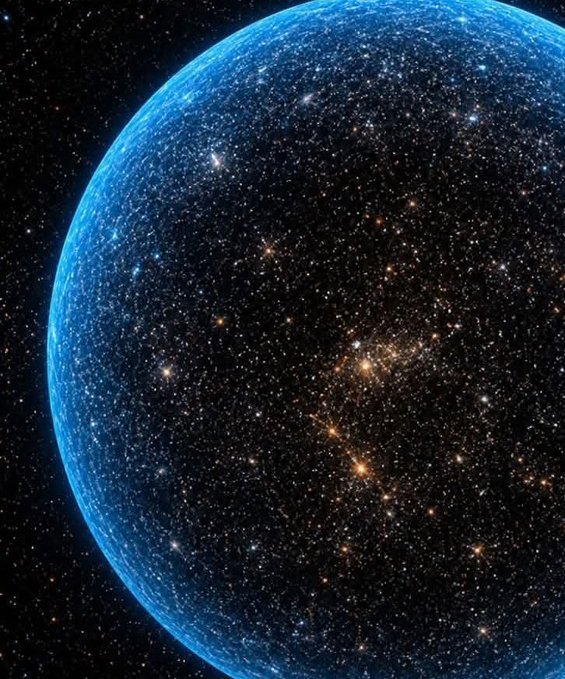
The observable universe spans more than 93 billion light-years from end to end.Humans have ventured just 1.3 light-seconds from Earth.That tiny gap—the distance between our planet and the Moon—remains the absolute farthest any human has ever traveled into space. Every astronaut who has left Earth’s orbit has stayed within a bubble so small that light itself crosses it in little more than a heartbeat.Beyond that fragile shell lies a reality so immense it borders on the incomprehensible.The observable universe, the only part we can see, stretches roughly 93 billion light-years across. Yet this colossal sphere is not the whole story. It is merely the volume from which light has had time to reach us since the Big Bang. Most cosmologists believe the true universe extends far, far beyond—perhaps infinitely—though the relentless expansion of space means light from those distant regions may never arrive.Every pinpoint of light captured by our most powerful telescopes is rarely a single star.It is almost always an entire galaxy—home to hundreds of billions of suns, along with trillions of planets, moons, and worlds we can scarcely imagine. The total number of stars in the observable universe exceeds all the grains of sand on every beach on Earth, combined.And yet, everything we can see and touch makes up only a whisper of reality.According to our best models, ordinary matter—every galaxy, star, planet, and living creature—accounts for just 5 percent of the cosmos. About 27 percent is dark matter, the invisible scaffolding that holds galaxies together. The remaining 68 percent is dark energy, the mysterious force accelerating the expansion of space itself.Even our swiftest machines barely scratch the surface of these distances.NASA’s Parker Solar Probe, the fastest human-made object ever built, screams along at nearly 690,000 kilometers per hour during its closest solar passes. At that blistering speed, a journey to Proxima Centauri—the nearest star beyond our Sun, a mere 4.24 light-years away—would still take roughly 6,000 years.We have barely stepped off the porch.The cosmos waits, ancient and immense, daring us to find a way forward.
“I cannot teach anybody anything; I can only make them think.” —Socrates
A teacher asked his students to take the orange out without spilling any water.
The Sea al Parlamento Europeo! Grazie a questa proiezione siamo riusciti a rompere il silenzio delle istituzioni europee sull'occupazione illegale di Israele in Cisgiordania e sul genocidio in corso a Gaza.
Le proiezioni in tutta Italia sono ancora tante: theseafilm.it
DJI Transmission + RS 4 Pro + FPV in action. Built for creators chasing speed, stability, and low latency monitoring in motion.
🎥: xiaoleifpv #DJIRonin#DJITransmission#DJIRS4Pro
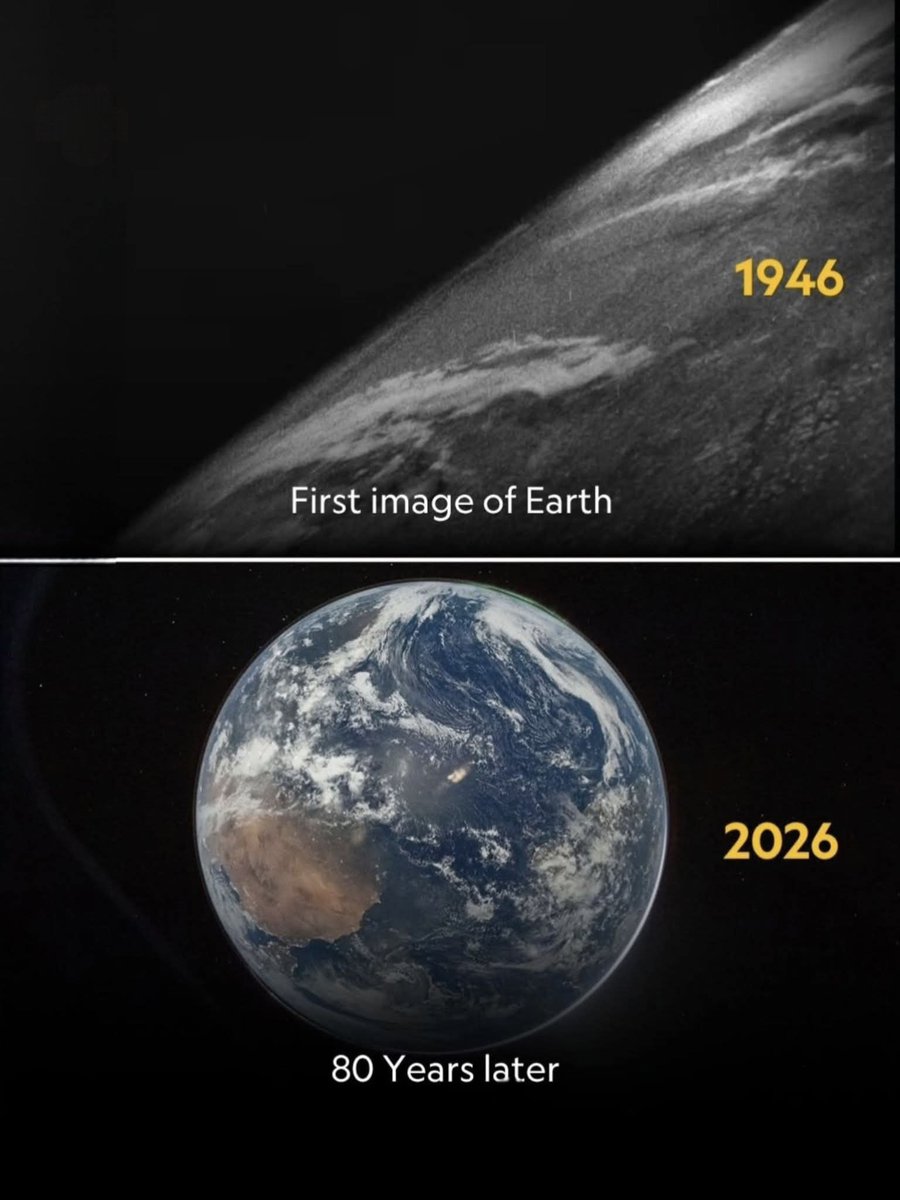
🌍 In 1946, the first photo of Earth from space showed only a small curved part of the planet in black and white.
Today, 80 years later, satellites can capture the entire Earth in stunning color and detail.
This comparison shows how far space technology has advanced from a blurry glimpse of Earth to a clear view of our whole world.
Aveva la borsa di studio, il visto italiano, il lasciapassare e l'autorizzazione di sicurezza rilasciata giorni prima. Il 2 giugno, al valico di Kerem Shalom, Mahmoud Al Najjar, ingegnere di Jabalia e docente all'Università islamica di Gaza, è stato portato via mentre il gruppo di studenti proseguiva verso Roma, a Tor Vergata.
L'esercito israeliano lo definisce a Repubblica "un terrorista operativo di Hamas" che "ha partecipato all'invasione di Israele il 7 ottobre 2023". Nessun capo d'imputazione, nessuna prova resa pubblica. La famiglia, raggiunta dalla testata Kritica, dice l'opposto: oppositore di Hamas, critico del gruppo anche sui social, unico superstite dei suoi, moglie e quattro figli uccisi in un raid israeliano dell'ottobre 2024. Ora, secondo i familiari, è nel carcere israeliano di Asqalan.
Il programma è di Antonio Tajani: 229 studenti palestinesi portati in Italia dallo scorso autunno, sempre per il valico israeliano di Kerem Shalom, sempre, scrive la Farnesina, "in raccordo con le Autorità israeliane". L'occupante, che la Corte internazionale di giustizia ha dichiarato illegale col parere del 19 luglio 2024, autorizza l'uscita e poi, al proprio cancello, decide chi è studente e chi terrorista, e fa sparire un civile. A maggio l'esercito israeliano ha ucciso a Gaza almeno 119 persone, 19 bambini, il mese più letale dell'anno secondo il ministero della Salute.
Intanto restano a Bengasi da undici giorni i due italiani del convoglio di terra, Domenico Centrone e Leonarda Alberizia: il 2 giugno il procuratore libico ha prorogato la custodia senza fissare udienza, il 3 presidio alla Farnesina. Tajani: «Speriamo tornino presto».
I compagni di Mahmoud sono arrivati. Lui no. Tajani aveva promesso di portarli «in sicurezza verso un'opportunità di studio e di futuro».
#LaSveglia per La Notizia