

@DrMcFillin This Indian man seems ready to continue telling lies forever, with a big smile.
English
a
2.5K posts

Dear Dr Roger @DrMcFillin, let me explain how this actually plays out in my hospital. Me or my team member sit with each patient for a full, interview, often an hour or more. We go through their story, symptoms, trauma & family context. Do a mental status exam and basic labs to rule out medical causes like thyroid issues or anemia. We don’t order brain scans for every case of depression not because the brain isn’t involved, but because scans are not diagnostic at an individual level. That is true across much of medicine. Across research studies, we do consistently see changes: hippocampal volume loss, overactive amygdala & disrupted circuits. There is also a clear genetic signal. For many patients, life stress doesn’t just “feel bad”, it alters how the brain functions. In my hospital, I have seen people who were barely holding on, some actively suicidal, gradually recover with the right combination of therapy, support, medication & ECT. Telling someone in that state to “just awaken” may sound appealing, but it does not help the person sitting in front of you in crisis. If that same mother walked into your office, overwhelmed, hopeless, thinking about ending her life, what would you offer her, concretely, in that moment?

🚨: Forgiving someone changes how your brain processes emotion and stress, research shows.





ليه مسمين الطقوع ضعيف الشخصية الاناني شخص تجنبي؟ رجاءًا سمو الأشياء باساميها

When #1 is a lie. Propaganda. Misrepresentaions of science. Everything else that follows is built off that lie. When a person goes through incredible life challenges, loss, a traumatic event, hopelessness... what we label as "depression"... I can assure you it's not a "real brain illness" but a real human problem that has existed throughout human history and not "treated" by the medical system. AWAKEN
Which Would You Prefer: Electroshock or a Safe Taper? By Jennifer Giordano How could a man in his seventies could get diagnosed with a psychiatric disorder he never had before, prescribed more and more drugs that didn’t work, and end up facing ECT? buff.ly/WV3I2Gk

أغرب شي صاير اختفاء شعبية البيك كان من أكثر المطاعم زحمة وشهرة، واليوم الوضع تغيّر بشكل واضح عند كثير من الناس
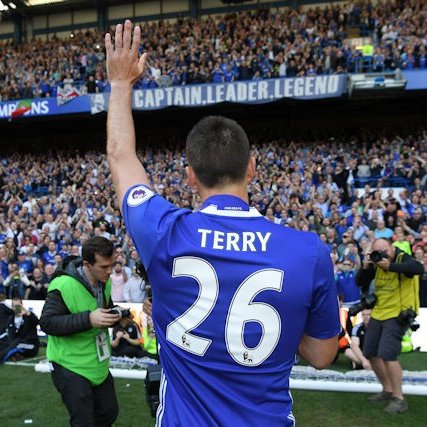
Liam Rosenior in danger of losing his job with Chelsea owners weighing up dramatic change of direction - but it might not be easy #cfc telegraph.co.uk/football/2026/…
Dr McFillin’s @DrMcFillin thread is clever satire, but here’s the actual evolution of evidence-based psychiatry on antidepressants, not the caricature: 1. Depression is a real brain illness: Yes. Genetics, neuroimaging, inflammation & stress research prove it. It is medical problem, not “just sadness.” 2. We treat it like insulin for diabetes: Analogy shows it’s chronic & manageable, not weakness. No one ever claimed literal biochemical match. 3. “Deficiency in serotonin causes depression”: That was a 1960s simplified public model. Science updated itself. 4. SSRIs increase serotonin availability & treat it: SSRIs block reuptake, trigger BDNF, neurogenesis & neuroplasticity. Large meta-analyses (Lancet 2018) show they beat placebo in moderate-severe depression. 5. Antidepressants are safe, effective & non-habit forming: Effective yes. Safe for most yes. 6. Not addictive like street drugs: No craving or high. Discontinuation syndrome is real & we now taper slowly. 7. “Cause MAY be related to imbalances of key brain chemicals": Updated language. It’s multifactorial: serotonin, glutamate, inflammation, genetics + environment. Never claimed one single imbalance. 8. Antidepressants work best for severe depression: Exactly. Guidelines (@APApsychiatric, #NICE) say strongest evidence is moderate-to-severe. Mild cases often need therapy first. 9. Safe for most people: Absolute serious risk is low. Benefits > risks when indicated. Shared decision-making is standard. 10. They increase suicide risk in adolescents: Black-box warning is for ideation (not completed suicides) in short-term trials. Untreated depression has far higher suicide risk. We monitor closely. 11. Serotonin theory was oversimplified: progress, not scandal. We moved to better models: circuits, plasticity, inflammation. That’s how real medicine advances. 12. “We don’t know how they work… they just do”: We know the initial mechanism & downstream effects. Many great drugs (lithium, metformin) aren’t fully understood either. Efficacy matters. 13.They create dependency: Discontinuation syndrome acknowledged for 25+ years. We now give informed consent & slow tapers. Early marketing downplayed it; clinicians fixed it with data. 14. They help a portion of severely depressed people… we don’t know which ones: Response rates~50-60% in severe cases (way above placebo). Precision psychiatry is refining predictors. Heterogeneity exists in every field. May cause violence, mania, PSSD — rare but real risks we discuss. Same transparency as any med. 15. Untreated depression carries higher violence/suicide risk. Calling them antidepressants is wrong, blame GPs: Developed & proven for depression. Overprescribing is real (access & time issues). Psychiatry pushes evidence-based, time-limited use + therapy. 16. Let’s try ketamine: yes! Esketamine/IV ketamine are evidence-based for treatment-resistant depression. We embrace proven innovations. Science evolves. Early messages were simplified; data refined them. Antidepressants help many, save lives when used right. Therapy + meds when needed is still gold standard. Satire is easy. Treating patients is harder. Evidence > memes


