Paul Farhi

3.4K posts

Paul Farhi banner
Paul Farhi

Paul Farhi

@farhipaul1

Founder & CEO at Solidus AI Tech ~ AITECH Pad ~ AITECH Labs ~ Web 3 Startup Advisor & Early-Stage Investor

Dubai, United Arab Emirates Katılım Eylül 2021
103 Takip Edilen14.5K Takipçiler
Paul Farhi
Paul Farhi@farhipaul1·
Did you hear a shoe company move into AI compute infrastructure? That headline should tell you everything about where this market is going. When a consumer brand starts investing in GPUs and planning on-demand compute services, it’s not random. It’s a response to a very real gap. Demand for compute is outpacing supply, and more companies are starting to recognize it. The interesting part isn’t the company itself. It’s what this represents. Access to compute is becoming one of the biggest constraints in AI. Not models. Not ideas. Execution. The market reacted immediately. A 580% move off a single announcement. That kind of reaction doesn’t happen unless capital is already looking in that direction. From where I stand, this only reinforces what we’ve been seeing for a while. The opportunity around AI infrastructure is getting bigger, not smaller. And it’s no longer limited to traditional tech players.

Paul Farhi tweet media
English
1
6
13
303
Paul Farhi
Paul Farhi@farhipaul1·
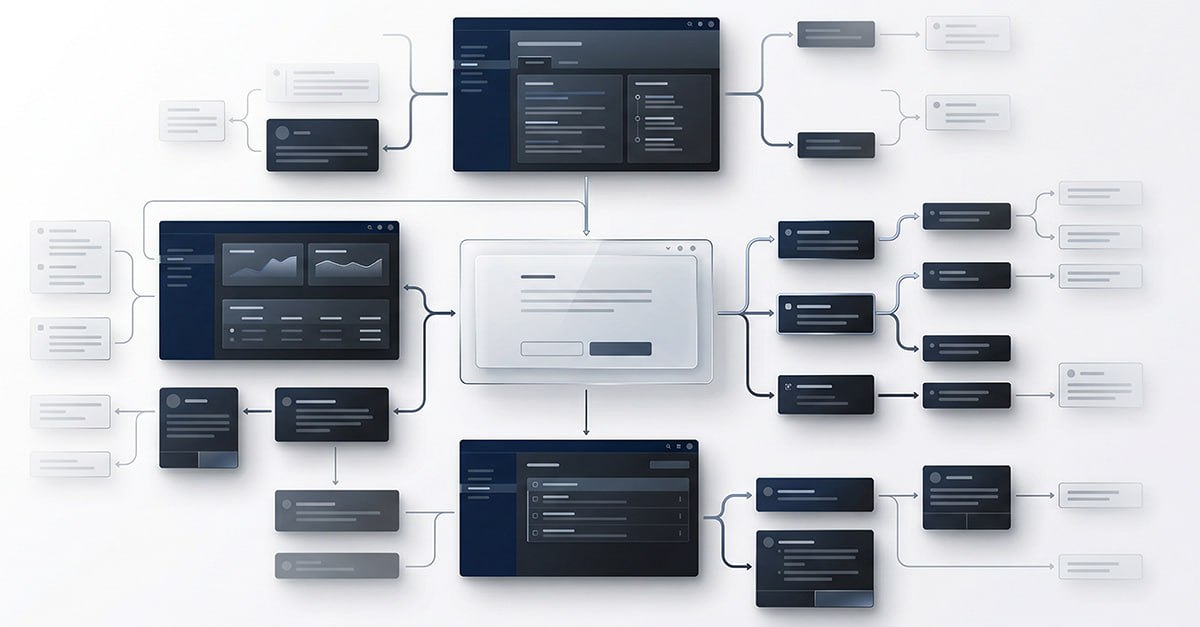
As a founder in 2026, if you don’t have at least one AI workflow running for you, you’re already behind. Not because AI is hype, but because execution has changed. The highest-performing founders are not doing more They’re deciding less Every business has the same hidden drag Repetitive decisions that don’t move anything forward Checking dashboards Replying to the same types of emails Pulling reports Researching the same things Coordinating simple tasks across tools Individually, it feels small Together, it drains hours every week That’s what AI workflows remove You define the logic once It runs in the background without you thinking about it again One workflow saves time A few workflows remove entire categories of work At scale, it compounds into speed I’ve noticed most founders don’t adopt this, not because they don’t see the value, but because they assume it’s technical, complicated, and not worth the setup That’s exactly why we built Agent Forge 2.0 You write one line, like you’re talking to ChatGPT It turns that into a working workflow within seconds You plug it into your daily routine, and now one annoying task just runs without you ever touching it again.
Paul Farhi tweet media
English
3
12
33
3.5K
Paul Farhi
Paul Farhi@farhipaul1·
You decide to build something in AI and at first it feels easy. You get the free credits from AWS, Google Cloud, or Microsoft Azure, spin things up, test models, everything runs. No pressure. Then the credits run out. That’s when it hits. I’ve been there. You look at the bill and it makes no sense. You haven’t even properly tested anything yet and somehow you’re already getting charged like you’re running production scale workloads. Instances sitting idle but still billing Random spikes you didn’t plan for Data transfer quietly adding up You spend more time trying to control costs than actually building. That’s the part nobody tells you at the start. Over the last year alone, more than 1M+ developers have moved away from that model and started using compute marketplaces instead. Not because it’s new. Because it fixes the problem. We built our own at Solidus AI Tech. No, we’re not giving out free credits like the big providers. We’re doing something better. Access to GPUs and compute at pricing that actually makes sense No hidden costs No billing surprises You’re not going to open your dashboard and think: “how am I paying this much when I haven’t even used 10 tokens yet” You just pay for what you use. That’s it. Send me a DM with the word CALC and I’ll send you the link to the comparison calculator to see the difference yourself.
Paul Farhi tweet media
English
2
11
40
2.4K
Paul Farhi
Paul Farhi@farhipaul1·
In my previous post, I shared some early feedback we received after privately introducing Agent Forge 2.0 to a small group of professionals. Since then, I’ve had a number of people across my network reach out, asking how they can access the platform and start testing it themselves. Off the back of that interest, I’ve decided with the team to open early access to Agent Forge 2.0 to a limited group of users. Agent Forge 2.0 is designed to move beyond basic automation, enabling autonomous workflows where agents can operate across systems, handle execution, and adapt based on outcomes with minimal manual input. Alongside early access, we’re also forming the Agent Forge 2.0 Alpha Users Group. This will bring together a small number of builders, operators, and teams who are actively exploring how agent-based systems can be applied in real-world environments. Members will get early exposure to new features and play a direct role in shaping how the platform evolves. The focus here is not broad access, but working closely with the right people who are serious about building and experimenting with AI-driven workflows. If you’re interested in early access and joining the Agent Forge 2.0 Alpha Users Group, apply here: shorturl.at/REZfU
Paul Farhi tweet media
English
6
12
40
2.2K
Paul Farhi
Paul Farhi@farhipaul1·
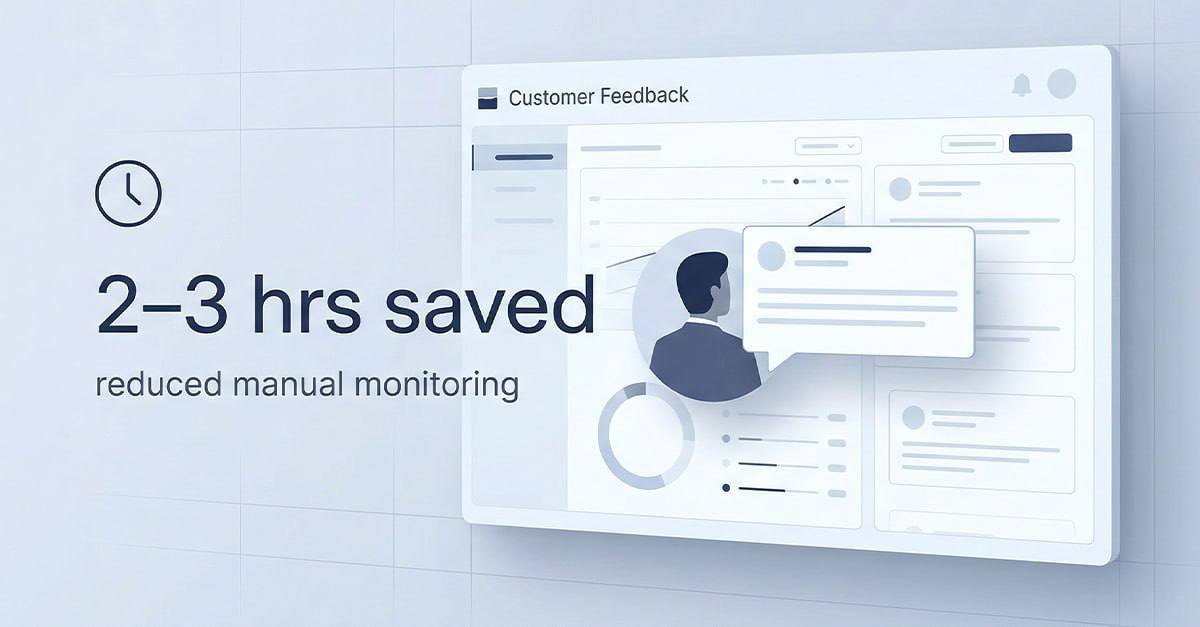
We’ve started sharing Agent Forge privately with a small group, and some of the feedback has genuinely caught my attention. One such stood out to me. We shared it with an admin officer at a company here in Dubai. His day-to-day is pretty straightforward but time consuming, managing incoming emails, routing them to the right departments, and replying where he can. He told the team, he just typed what he needed. and no, it isn't the greatest workflows or use of such a platform but... No technical setup, no back and forth. From that, a workflow was created that logs every incoming request into a live spreadsheet, tracks where it was sent, whether it’s been responded to, and records timestamps. Then at the end of the week, it automatically sends a report to his manager, so he can update leadership without having to put anything together manually. Simple, yet saves atleast 2-3 hours of his work and manual monitoring. Three years ago, this would have needed a developer. A custom build, multiple iterations, probably a few weeks just to get something usable. Now it’s being done by someone with no technical background, just by describing what they want. And this is just one example of what was built using Agent Forge 2.0.
Paul Farhi tweet media
English
5
10
35
2.6K
Paul Farhi
Paul Farhi@farhipaul1·
I don’t believe in hyped launches. I’ve seen what happens when you push something out too early just to get attention. You bring people in before the product is ready. They try it, hit issues, and leave. And at that point, it becomes: "Your product has issues." You never hear: "Your marketing has problems." That’s the part most founders underestimate. Once that perception is set, it sticks. Even if you fix everything later, getting those users back is a different challenge. That’s why I prefer taking it slower. Put it in front of a smaller group first. See how it actually performs. Fix the parts that don’t hold up. That’s exactly what we’re doing with Agent Forge 2.0. We’ve been sharing the latest version privately, and the feedback and reactions so far have been strong. In my next post, I’ll share some of the feedback we’ve been receiving.
Paul Farhi tweet media
English
2
7
36
2.1K
Paul Farhi
Paul Farhi@farhipaul1·
Everyone wants to build in AI. Most hit the same wall early: compute. Not the ideas. Not the people. Just the ability to run, break something, and run it again without a cloud bill that ends the experiment. I keep thinking about who actually ships products that matter. It's rarely the well-funded teams. It's the two-person group that tests obsessively, the solo dev who iterates on weekends, the SME that can't throw money at infrastructure but has a real problem to solve. Those builders get squeezed out when access is expensive. That's why I'm opening up high-performance GPU access at discounted rates. Hourly. No commitments. You use it when you need it. If the cost of running stops being the reason something doesn't get built, more things get built. That seems worth doing.
Paul Farhi tweet media
English
0
6
31
2.6K
Paul Farhi
Paul Farhi@farhipaul1·
Most teams don’t question their compute bill. They just accept Amazon Web Services, Google Cloud Platform, or Microsoft Azure as the default. But that default comes at a cost. Here's what I keep seeing: teams running GPU workloads on hyperscalers are paying 30–40% more than they need to. That gap isn't because hyperscalers are ripping anyone off. It's just that their pricing reflects a general-purpose cloud, legacy infrastructure, bundled services, overhead for customers who need everything. If you're only running AI workloads, you're paying for a lot you're not using. Specialized compute marketplaces don't carry that weight. The pricing is closer to the metal. At small scale, 30–40% is an annoyance. At production scale, it's the number that makes a deployment financially viable or not. I've talked to teams that didn't realize this until they were already underwater. If you are serious about what you are building and your compute bills are becoming a constraint, send me a DM. We will help you access NVIDIA H200 and NVIDIA H100 capacity on an hourly basis, at significantly more efficient pricing.
Paul Farhi tweet media
English
4
10
35
2.3K
Paul Farhi
Paul Farhi@farhipaul1·
Elon Musk’s Terafab concept signals where AI infrastructure is heading. A $20B chip facility tied to Tesla, SpaceX and xAI reflects one shift: controlling design, manufacturing and deployment to remove bottlenecks.
Paul Farhi tweet media
English
1
1
12
311
Paul Farhi
Paul Farhi@farhipaul1·
Bitcoin is ~95% already in circulation, with the rest unlocking slowly over time. No new supply shocks ahead. That leaves demand, capital allocation, and real usage as the drivers of long term value.
Paul Farhi tweet media
English
1
0
7
300
Paul Farhi
Paul Farhi@farhipaul1·
$25B generated by crypto protocols in 2025. Not hype. Real usage. Stablecoins hold dollars. Chains move them. DEXs charge on trades. DeFi lends. Platforms process volume and take fees.
Paul Farhi tweet media
English
0
0
12
339
Paul Farhi
Paul Farhi@farhipaul1·
Boris Johnson compared Bitcoin to a scam. • Institutions are integrating Bitcoin into portfolios • Financial infrastructure is evolving around it • Capital is actively allocating into the asset The conversation has shifted from validity to positioning.
Paul Farhi tweet media
English
0
0
6
296
Paul Farhi
Paul Farhi@farhipaul1·
An important read, this update outlines key structural changes within Solidus AI Tech. The information has been compiled to provide a transparent overview of the latest developments across the ecosystem along with the detailed next steps for the company and mentions the major upgrade currently in progress.
AITECH@AITECHio

x.com/i/article/2032…

English
0
2
22
1.3K
Paul Farhi
Paul Farhi@farhipaul1·
A quiet signal in equities. Corporate insiders are selling stock at the fastest pace in months. Not traders. Executives. Insiders sell for many reasons: • Taxes • Diversification • Liquidity But when selling rises across many companies at once, investors pay attention.
Paul Farhi tweet media
English
2
1
6
448
Paul Farhi
Paul Farhi@farhipaul1·
Very soon there will be more AI agents than humans making transactions. Brian Armstrong recently pointed out a simple reality: AI agents cannot open bank accounts, but they can operate through crypto wallets. That difference quietly unlocks something much bigger than most people realize. It means autonomous software can participate directly in digital economies. This is one of the core shifts we are building around with Agent Forge. The focus is not just on creating AI tools, but on enabling agents to exist as independent actors that can perform tasks, deliver services, and transact autonomously. Turning an agent into something economically active is becoming increasingly straightforward. Developers can design workflows, deploy them into production environments, anchor the logic through decentralized storage, and establish ownership and identity through on-chain registries. But the real transformation sits underneath all of this. For agents to function economically, they need native payment rails. By integrating protocols like x402, agents can receive payments for services, cover their own compute costs, and interact with other systems without human intervention. Once software can hold wallets, earn revenue, and pay for infrastructure, machine-to-machine commerce becomes possible at scale. This is the foundation of the emerging agent-driven economy.
Paul Farhi tweet media
English
1
2
13
387
Paul Farhi
Paul Farhi@farhipaul1·
Markets price geopolitics like noise. Energy markets don’t. • US easing Venezuela sanctions • World’s largest oil reserves reopening But the chain remains: • Oil lifts inflation • War pushes oil higher • Inflation keeps rates elevated
Paul Farhi tweet media
English
0
1
9
325
Paul Farhi
Paul Farhi@farhipaul1·
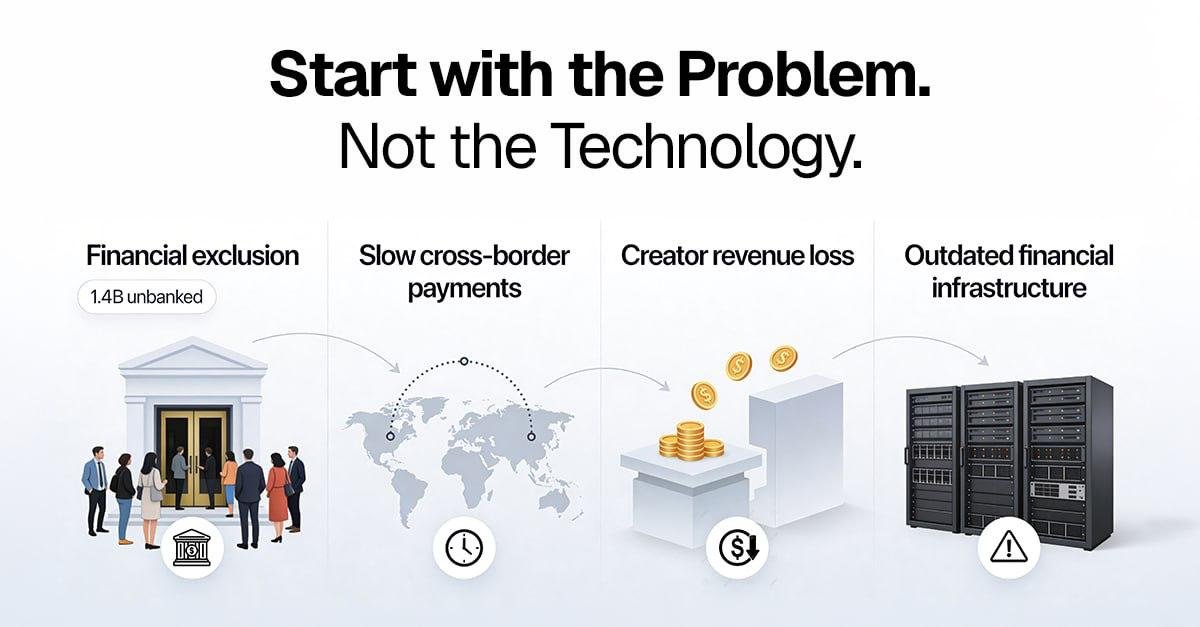
Crypto’s biggest mistake is building technology before the problem. Billions went into NFT loyalty programs and tokenized products. Meanwhile 1.4B people remain unbanked and cross-border payments are still expensive. The projects that last solve real problems.
Paul Farhi tweet media
English
0
0
9
284
Paul Farhi
Paul Farhi@farhipaul1·
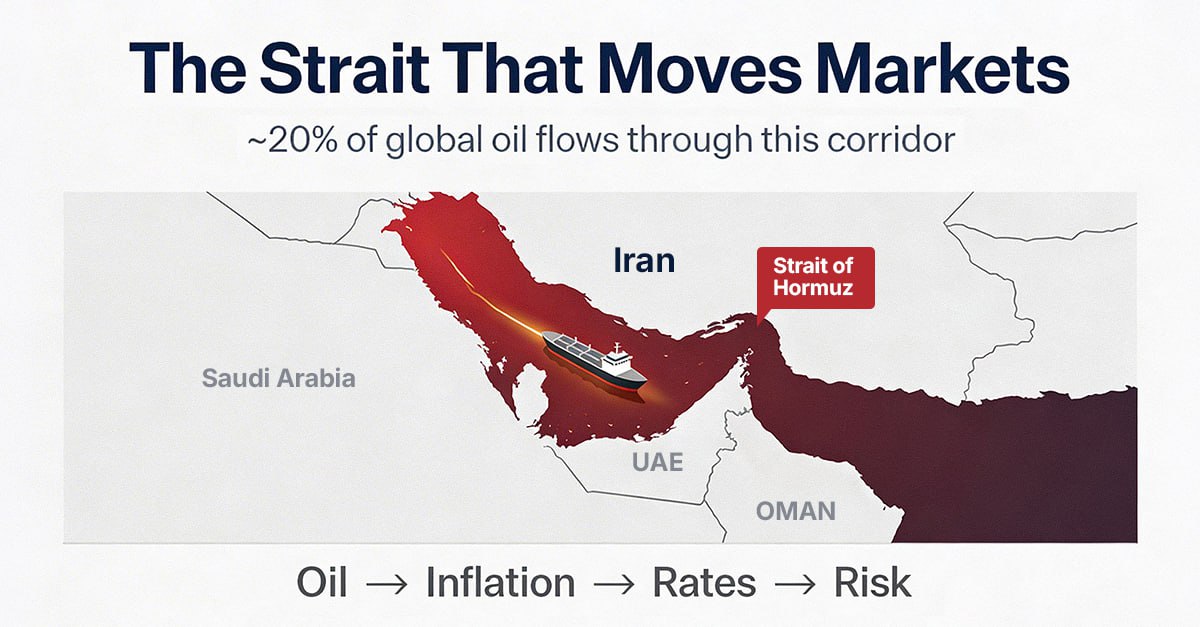
The real pressure point is the Strait of Hormuz, where about 20% of global oil flows. If disruption escalates, $100 oil becomes realistic. Oil drives inflation. Inflation drives rates. Rates drive risk markets. When that chain moves, capital starts shifting.
Paul Farhi tweet media
English
0
0
8
296
Paul Farhi
Paul Farhi@farhipaul1·
The costliest mistake in leadership isn’t a bad hire. It’s delayed action. Misalignment compounds quietly. Standards erode gradually. Momentum slows before anyone notices. Most leaders hesitate because change feels disruptive. In reality, tolerating friction is more expensive than correcting it. Execution improves when expectations are clear and enforced. Culture isn’t defined by what you say. It’s defined by what you allow.
English
0
0
10
366
Paul Farhi
Paul Farhi@farhipaul1·
Ethereum is entering a structural reset. Vitalik Buterin questioned how scaling is unfolding. More L2s does not equal more decentralization. Fragmentation and operator reliance are rising. Layer 2 is not the issue. Design trade-offs are. This phase will filter for durability.
Paul Farhi tweet media
English
0
1
8
351