UC admissions officers never see your SAT/ACT scores. The settlement agreement requires them to be withheld from readers entirely. Submitting scores is pointless now, but that policy may soon change. eliteprep.com/blog/the-unive…
Get a Grace-branded Hydro Flask tumbler + a box of swag — just like and share our posts and either:
- Visit a local high school or Christian school.
- Host a homeschool event in your area.
- Connect with your church’s youth group.
Sign up today! go.grace.edu/Champion
Don't ask your highest-grade teacher for a rec letter. Pick the one who really knows you. Ask in spring of junior year; give them plenty of time. admissionsmom.college/letters-of-rec…
What started as a vision is now impacting 20,000+ students worldwide 🌎
Liberty University Online Academy is shaping the next generation through flexible, Christ-centered education — meeting families wherever they are and helping students thrive.
liberty.edu/news/2026/03/2…
Test submissions rose 10% last year, but most families still think 'test-optional' means skip the test. It doesn't. Strong scores now separate candidates in a grade-inflated pool. Take both SAT and ACT early. pdadmissionsconsulting.com/post/college-a…
Applications to the most selective colleges have nearly tripled: from 800,000 two decades ago to 2.3 million today. Seats haven't kept up. The competition is worse than ever, and most families are still planning like it's 2015.
The 2026 admissions playbook is not what it was two years ago. Test scores, rank, and legacy carry less weight now. Go Putney maps out what colleges are actually prioritizing: goputney.com/guides/new-col…
Admit rates are up at some schools, but top programs are tougher to crack than ever. Don't let the headlines fool your student's planning: admittedly.co/are-college-ad…
Summer before senior year is the most underused window in college prep. This checklist walks rising seniors through exactly what to do before fall: saraharberson.com/blog/summer-ch…
Harvard's waitlist acceptance rate is just 1-2%, but it's not zero. What you do in the next few weeks could make the difference. Your action plan: selectiveadmissions.com/blog-posts/har…
Anthropic's Jack Clark studied English Lit, not computer science. Now he says asking the right questions matters more than knowing how to code. Worth hearing before your student picks a major: fortune.com/2026/04/14/bil…
State flagships used to be the safe backup plan. Not anymore. Acceptance rates are dropping fast — treating them as safeties is one of 2026's biggest application mistakes. acceptu.com/blog/college-a…
May 1 is College Decision Day — and most families are less prepared than they think. Deposits, waitlists, enrollment steps: here's exactly what to do before the deadline: appily.com/guidance/artic…
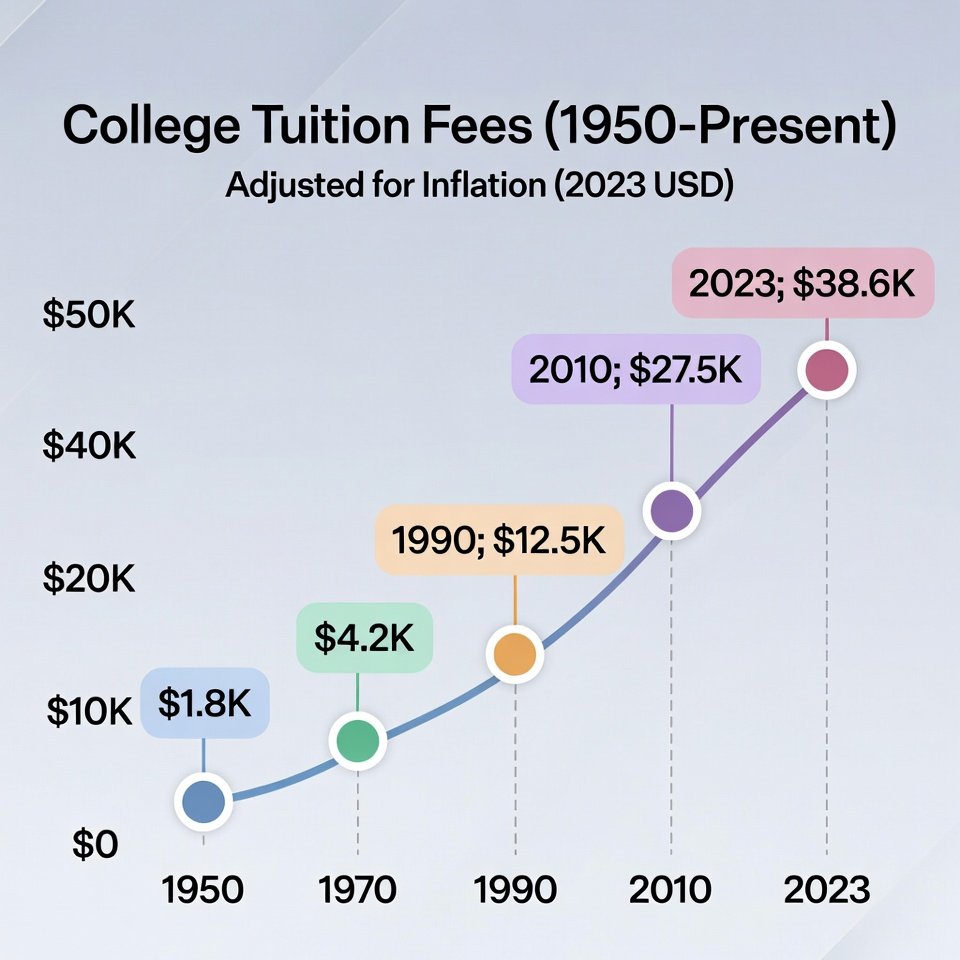
College tuition has exploded 1,200% since 1980 while wages rose just 213%. In 1963, a student could work a minimum-wage summer job and pay for a full year at the average public university. Today, that same job covers roughly one month of tuition. The culprit isn't corporate greed or underfunding. It's government intervention distorting every price signal in higher education.
Federal student loans created artificial demand that universities exploited ruthlessly. When government guarantees endless credit to teenagers with zero income or assets, colleges face no market constraint on pricing. Why charge $3,000 per year when students can borrow $30,000? The money flows regardless of educational quality or job prospects. Universities responded predictably: they jacked up prices and hired armies of administrators to capture this guaranteed revenue stream.
Easy credit always inflates asset prices, whether houses in 2005 or degrees today. Free market economists warned this would happen, just as they predicted the housing bubble. When you subsidize demand without increasing supply, prices skyrocket. Colleges simply absorbed every dollar of increased lending capacity into higher tuition, fancy dorms, and bloated bureaucracies.
The 1950s model worked because students paid real prices with real money; either their own or their parents'. This created immediate feedback between cost and value. If Harvard charged too much, students went elsewhere. Today, that price mechanism is completely severed. Students don't feel the true cost until years later when loan payments hit, and by then universities already pocketed the cash.
Every additional dollar of federal aid generates roughly 60 cents of tuition increases. The government created this monster, feeds it annually through increased lending limits, then acts shocked when colleges behave exactly like the rent-seeking cartels they've become.
SAT/ACT is quietly coming back — test-optional is no longer the safe bet it once was. Your 2026-2027 testing strategy needs a reset: summitprep.com/blog/the-ultim…
Your financial aid offer is not final. Schools expect families to negotiate — and most don't. Here's how to appeal, what to say, and when to push: scholarshipowl.com/blog/paying-fo…
More AP classes don't equal better admissions odds. A college admissions expert explains why students are overloaded with APs — and what actually moves the needle. techinsider.io/college-admiss…