Filip Dousek

1.9K posts

Filip Dousek

Filip Dousek

@fdousek

Building https://t.co/5tJtX6UbyK, agentic AI for autonomous R&D. Previously https://t.co/zQdC7zN9Xl (acq. Workday).

Katılım Aralık 2008
405 Takip Edilen946 Takipçiler
Vaclav Krajnak
Vaclav Krajnak@krajnak·
@michalillich @fdousek Sdílet seznam markerů už by bylo moc, že 🫠 Ale taky mi otevřela oči až pořádná objednávka v Synlabu. Macromo chci zkusit na DNA
Čeština
2
0
3
1K
Michal Illich
Michal Illich@michalillich·
Pro fanoušky longevity - nechal jsem si porovnat Macromo s na míru připraveným seznamem markerů... (cc @fdousek)
Michal Illich tweet media
Čeština
12
2
45
12.1K
Filip Dousek
Filip Dousek@fdousek·
@PetrKelin @tangero @michalillich to jsou takove reci. ale rozumim spravne, ze jste puvodne chtel rict, ze zdravi nema smysl venovat pozornost, protoze nakonec stejne umrete?
Čeština
1
0
1
17
Petr Kelin
Petr Kelin@PetrKelin·
@fdousek @tangero @michalillich Mám dobrou a špatnou zprávu. Život jako takový je věčný, takže není třeba se o život bát. Jeho jednotlivé instance nikoliv.
Čeština
1
0
0
24
Filip Dousek
Filip Dousek@fdousek·
@tangero @michalillich ze zacatku asi ano, kdyby clovek zacal rovnou takto. po par letech uz ne, postupne ta biologie zacne davat smysl. a 200 markeru je top of the funnel. chci je merit, ale aktivne resim treba 10 z nich - jen vim, ze jsem vybral tech spravnych 10.
Čeština
0
0
2
60
Patrick Zandl
Patrick Zandl@tangero·
@fdousek @michalillich díky, super, ale nerozumím z toho ani slovo. Neumím si to představit, sledovat 200 markerů atd - to musí být strašně zahlcující...
Čeština
1
0
0
76
Patrick Zandl
Patrick Zandl@tangero·
@michalillich @fdousek no a řešíš podle toho něco, nebo si to jen přečetl tvůj AI agent a řekl ti, kdy asi tak umřeš a na co? (ptám se vážně, takových papírů mi kdysi doktoři vygenerovali a řešení to moc nemělo)
Čeština
4
0
2
2.6K
Filip Dousek retweetledi
Tom Krcha
Tom Krcha@tomkrcha·
Pencil just crossed 100,000 users! Today we are introducing SWARM mode. A team of AI design agents working with you in parallel. Your autonomous design agency. Download now.
English
203
248
3.2K
338.2K
Filip Dousek
Filip Dousek@fdousek·
@AnnaLeptikon corrosion costs are estimated at 3–4% of global GDP. that number did it for me. the Golden Gate Bridge is a verb.
English
0
0
3
95
Anna Riedl
Anna Riedl@AnnaLeptikon·
Somehow it was learning how many people are fulltime employed to maintain the Golden Gate Bridge that flipped something inside of me in my understanding of the entropic force civilization has to constantly fight against. Before that moment I thought — I had not applied real conscious thought — you simply build a building or anything really and then you just … have it. After that I understood everything is constantly at the brink of being lost.
Anna Riedl tweet media
English
771
1.3K
14.1K
2.6M
Filip Dousek
Filip Dousek@fdousek·
@algekalipso a functional map of the inner landscape. a way to point at inner constructs so that it comes across clearly. and how many degrees of freedom those structures contain and unlock. e.g. inner tension; "do you see how you construct this gestalt from your beliefs and a bit of fear?"..
English
0
0
1
104
Captain Pleasure, Andrés Gómez Emilsson
What is something you understand deeply but have difficulty communicating? As in, something you genuinely believe you "get" at a whole other level than other people, and yet struggle to get anyone to understand? Perhaps there is a lot of alpha in believing you and trying to help you get it out somehow!
Signal Hill, CA 🇺🇸 English
48
3
87
7.5K
Carlos E. Perez
Carlos E. Perez@IntuitMachine·
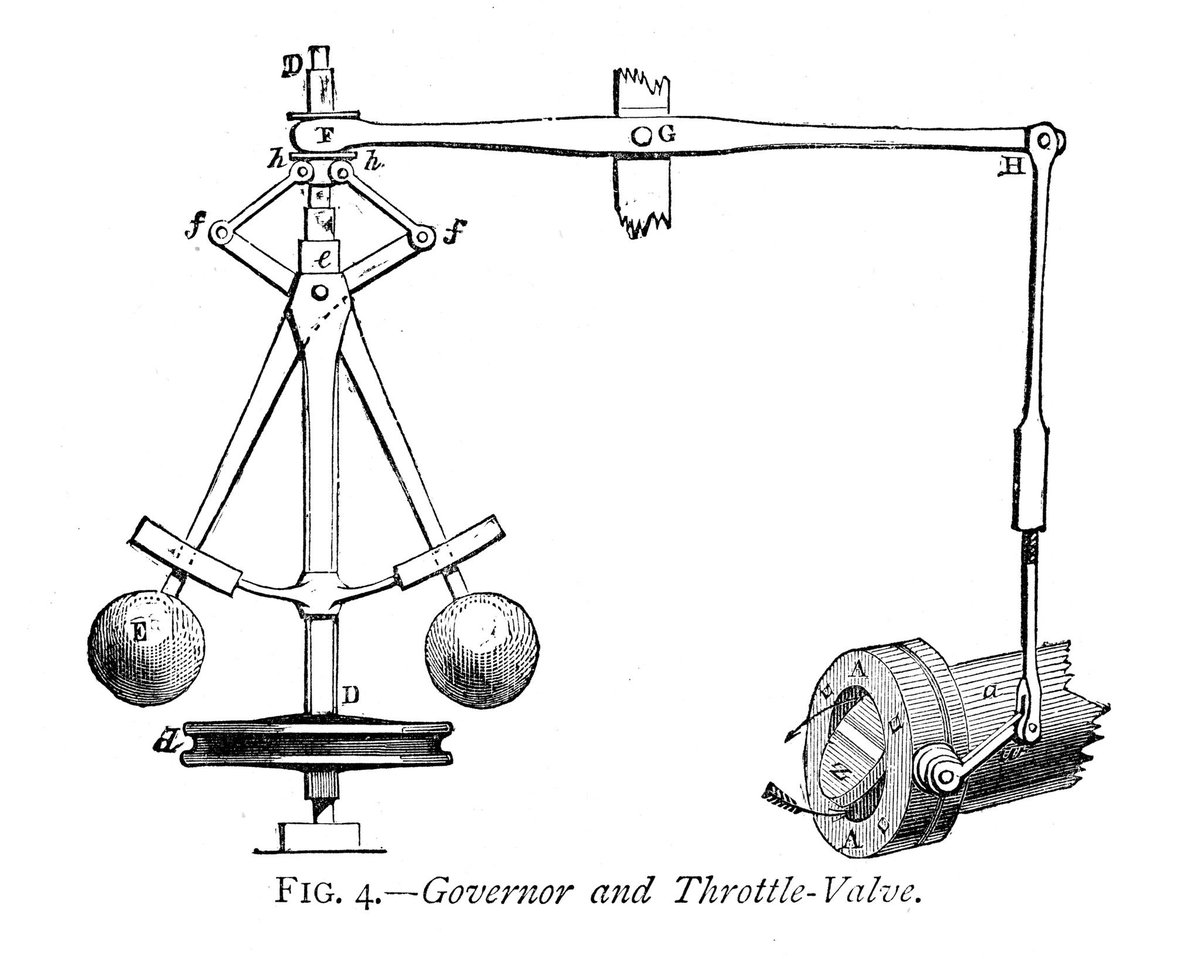
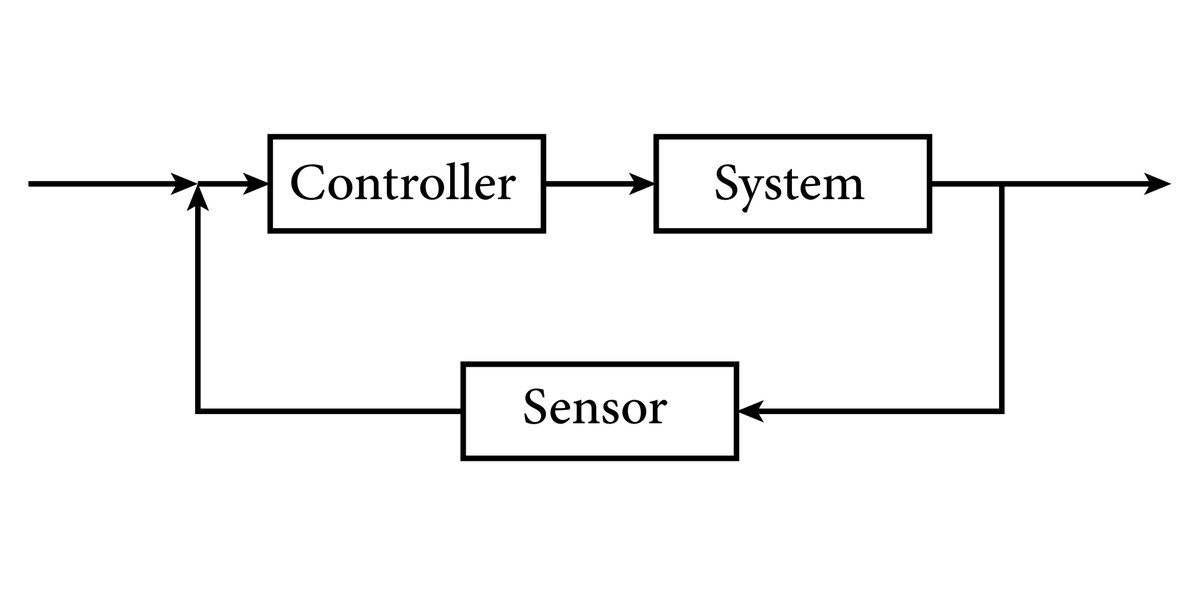
We've become obsessed with the idea that the brain is a "Prediction Machine." The dominant theory in neuroscience says we're constantly simulating the future, calculating probabilities to guess what happens next. A new paper argues this is a complete illusion. The reality is simpler, and strangely, much more powerful. Here is the argument for Perceptual Control: The "Prediction Illusion" starts with a mistake in observation. When we see someone successfully handle a chaotic environment (like catching a flyball), it *looks* like they predicted the future trajectory of the ball. But observing prediction isn't the same as implementing it. The authors use the perfect analogy: The Watt’s Steam Governor. In the 19th century, this device kept steam engines running at a constant speed. If pressure surged, it slowed the engine. If load increased, it sped up. To an observer, it looked like the machine was "predicting" pressure surges and pre-empting them. But the Governor has no brain. It has no model of the future. It’s a mechanical negative feedback loop. [cite_start]It measures the *current* speed, compares it to the *desired* speed, and adjusts the valve immediately[cite: 80]. It doesn't predict; it controls. This brings us to the "Hello" experiment, which broke my brain a little. Researchers asked people to keep a computer cursor on a target. The computer applied a "disturbance" (forces pushing the cursor away) that the person had to fight against with their mouse. Here's the twist: The disturbance wasn't random. [cite_start]It was an invisible force field shaped like the word "hello" (written upside down and mirrored)[cite: 166]. The participants fought the force, keeping the cursor steady. When researchers looked at the participants' hand movements, they had perfectly written the word "hello". Crucially, the participants had NO idea they were writing words. If the brain were a "prediction machine," it would have needed to model the force to predict the hand movement. But the participants wrote a legible word purely by reacting to immediate error signals—instantaneously correcting the cursor's position. This is **Perceptual Control Theory (PCT)**. The theory suggests the nervous system isn't a linear pipeline (Input → Compute → Output). It’s a closed loop. We act to keep our *perception* of the world matching our internal *reference value*. [Image of Perceptual Control Theory negative feedback loop diagram] Think about catching a baseball. If you were a "prediction machine," you’d calculate the ball's trajectory, wind speed, and gravity, then run to where the ball *will* be. But that’s computationally expensive and error-prone. In reality, fielders just run in a way that keeps the "optical velocity" of the ball constant in their vision. If the ball looks like it's rising too fast, they move back. Dropping? They move forward. No physics calculus required. Just maintaining a visual constant. This solves the "Noise" problem. In predictive models, small jitters in your movement are considered "noise" or errors to be filtered out. It’s the system "feeling out" the environment to maintain control. This has huge implications for AI and robotics. We are currently building robots with massive compute power to "predict" stability. But robots built on PCT principles—like inverted pendulums that just react to maintain verticality—are often more robust and stable than the predictive ones. Why does this matter for you? It changes how we view "agency." We often think we need to predict the outcome of our actions to be effective. [cite_start]But the most efficient systems don't predict the outcome—they specify the goal and let the feedback loop handle the rest[cite: 39]. The "Prediction Illusion" suggests we aren't prophets simulating the future. We are controllers, surfing the present. We don't need to know what the wave will do in 10 seconds. We just need to keep the board steady right now. If you want to dig into the paper, it’s "The prediction illusion: perceptual control mechanisms that fool the observer" by Mansell, Gulrez, and Landman (2025). It’s a dense read, but it completely reframes the "Bayesian Brain" debate. One final thought: Next time you're doing something skilled—driving, typing, sports—notice the difference. Are you calculating what comes next? Or are you just managing the gap between *what you see* and *what you want*? You might find you're doing a lot less "thinking" than you assumed.
Carlos E. Perez tweet mediaCarlos E. Perez tweet media
English
139
222
1.2K
80.5K
Filip Dousek retweetledi
J⏩
J⏩@JcardinaJ·
@wesroth AI progress is funny, half of it is better clips of people eating spaghetti and the other half is deep scientific cuts that probably a half dozen people on earth understand.
English
3
5
84
4.3K
Captain Pleasure, Andrés Gómez Emilsson
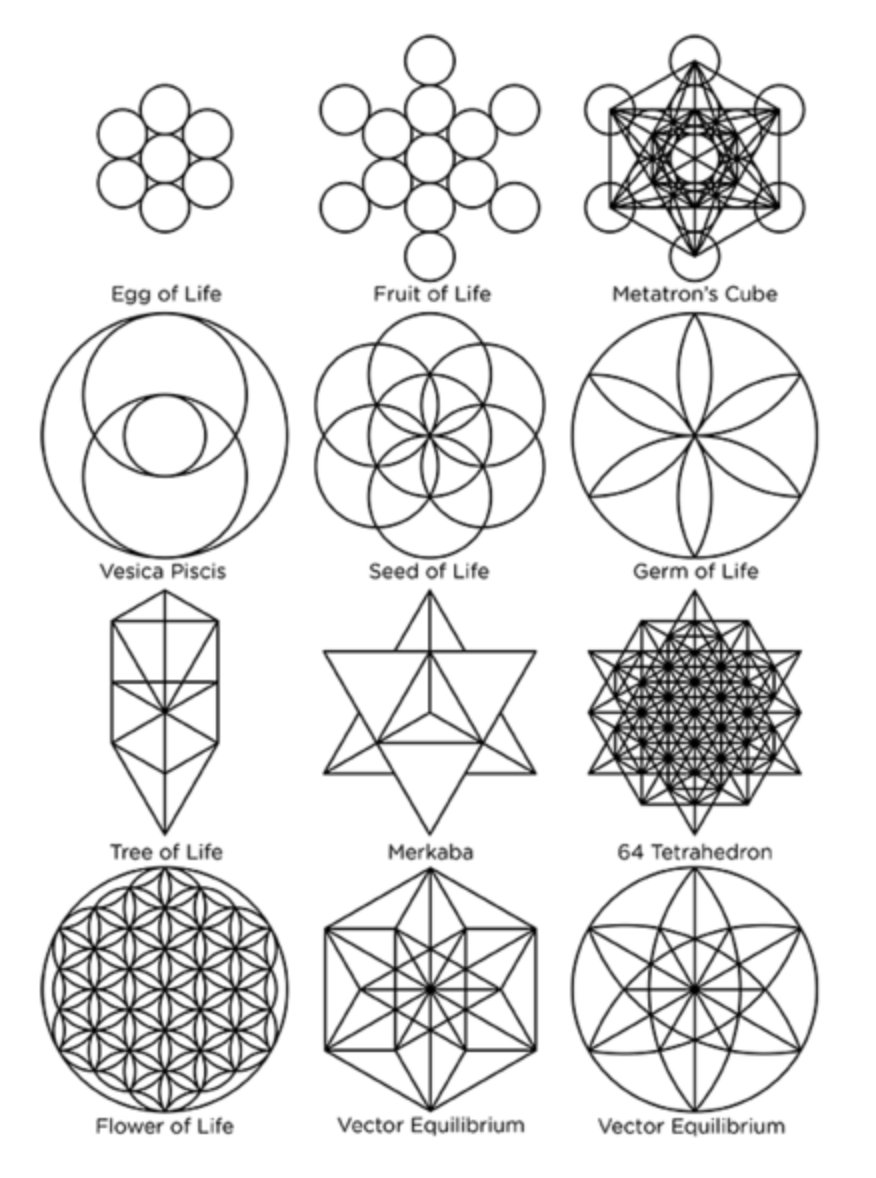
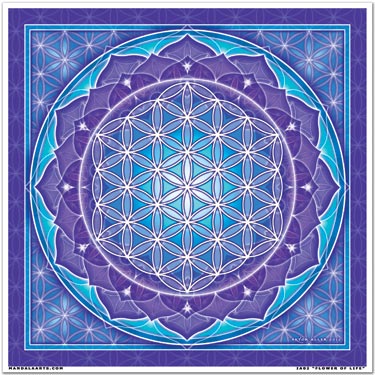
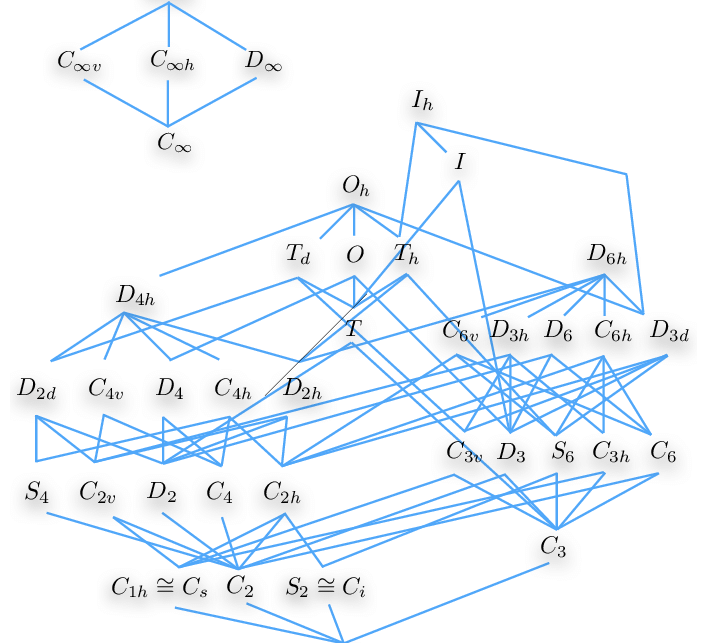
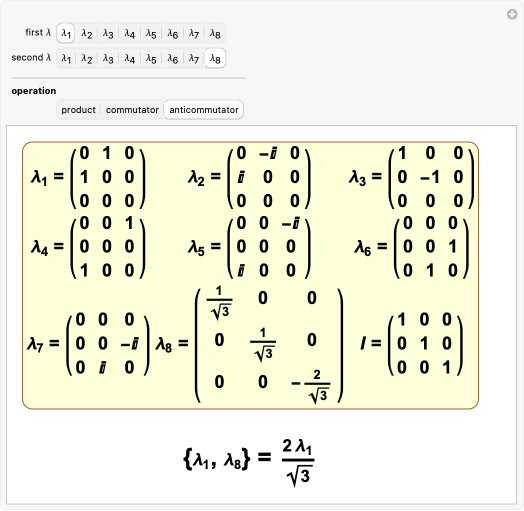
I'd love to do a "math meditation retreat" sometime. I think it would be really fun and generative. It would be a new thing: neither a meditation retreat where math is allegedly involved (e.g. numerology, "sacred geometry") nor a math seminar where the intention is to teach specific mathematical tools, concepts, and aesthetics. It would be, instead, a kind of gym for the mind, where mathematical insight is pursued as a qualia variety to be studied in terms of self-organizing principles, valence gradients, and the structure of metacognitive activity. Hear me out: It isn't all that uncommon for (1) people in yoga studios or visualization-based meditation retreats to invoke specific geometric shapes, such as Platonic objects or things like the Flower of Life (circles arranged as a hexagonal grid). At high levels of concentration they often experience remarkable states of consciousness with genuinely interesting qualities. But usually will lack the intellectual curiosity, mathematical language, and motivation to explain in detail why attention absorbed in such objects causes those feelings. Usually you get stories about Gods, spiritual realms, and metaphysical theories ("this shape is how the One turned into the Many" sort of thing), which, if you look at it quite objectively, is almost universally riddled with logical fallacies, overfitted theories, and improper characterization of the maths involved. Aesthetically, it's a mixed bag for me. And (2) people of a mathematical inclination sometimes access really refined and often sublime qualities of mind through mathematical insight, but usually this happens in a social context where studying consciousness itself is not even a possibility. Indeed, the phenomenal properties of internalizing a certain group or understanding a geometric proof are often thought of as incidental rather than fundamental to the activity. I don't think mathematicians in general are against cultivating this sublimity and approach, but at least as a community, it's not an object of study per se. And typically there is so much material to go over that spending enough time in a topic to really create the right kind of phenomenology isn't an option. More so, usually people here don't know about Jhanas, Vipassana, the Brahmaviharas, etc. Thus you get a picture where there's a big missing opportunity. Namely a retreat targeted to people in the top 1% of mathematical problem solving ability with good epistemics, meditation experience, and intense curiosity about consciousness. Learning higher math would be a nice outcome, but it's not the point of the retreat. Rather, it's to take the various meditative techniques that do require mathematical reasoning and 'feeling' and (a) extending them to much more abstract territory, and (b) articulate their phenomenology in ways that might help us understand how the mind works. Examples of (a) would be to e.g. meditate for a day on the homotopy classes of 3D objects, knotted embeddings, or Gell-Mann matrices to deeply grok SU(3) and then report on the ways in which your mind/body was able to find those mathematical correspondences inside itself. Also determine whether these objects are synergistic with which Jhanas, etc. and why. Or take the Flower of Life, and explore its group theoretic structure - are the groups and subgroups it touches essential for the valence effects? Can we optimize the Flower of Life? Outputs might include a map of phenomenology in terms of mathematical concepts, math-inpired neurotech (e.g. might discover Hopf fibration relates tactile and visual field in a recruitable way), and insights into how the mind represents mathematical knowledge and facts in terms of field dynamics and patterns of attention. Above all, perhaps we'd find the mathematical signatures of things like the Strong Force or Maxwell's equations in phenomenology itself when pushed to specific corner cases that make it all too obvious. Who's interested? :-)
Captain Pleasure, Andrés Gómez Emilsson tweet mediaCaptain Pleasure, Andrés Gómez Emilsson tweet mediaCaptain Pleasure, Andrés Gómez Emilsson tweet mediaCaptain Pleasure, Andrés Gómez Emilsson tweet media
English
29
11
164
7.1K
Cory Muscara
Cory Muscara@corymuscara·
A quiet part of healing: Letting go of the fantasy that your pain will ever be fully understood.
English
1
6
59
2.4K
Filip Dousek
Filip Dousek@fdousek·
@SamoBurja It's the great fight for resources between the dying and the unborns. Between the survival instinct and the reproduction instinct. And the babies are losing.
English
0
0
1
161
Samo Burja
Samo Burja@SamoBurja·
As far as I can tell, the most notable political science results of the 21st century is democracy cannot work well with low fertility rates. All converge on prioritizing retirees over workers and immigrants over citizens escalating social transfers beyond sustainability.
English
316
1.2K
11.7K
787.8K
Filip Dousek retweetledi
Calvin Correli
Calvin Correli@calvincorreli·
This is a perfect example of @ScottAdamsSays' two movies on one screen metaphor. Some of us see a totally disrespectful Zelensky walking away from a verbal agreement and trying to litigate and negotiate in front of a live TV audience. Others see an eval mafia boss meticulously orchestrating a public smack-down of a heroic leader of a poor victimized nation under attack. Two movies one screen.
English
27
40
258
79.7K