Klaus Feldmann

31.8K posts

Klaus Feldmann

Klaus Feldmann

@feldmann_k

#SocialInequality, Biothanatology, Education, Bourdieu, Robert Musil, Heterodox Sociology, Systems Thinking, #Exploitation

Vienna, Austria Katılım Aralık 2011
1.1K Takip Edilen786 Takipçiler
Klaus Feldmann retweetledi
Olegatr s neba 1244
Olegatr s neba 1244@OlegatrN·
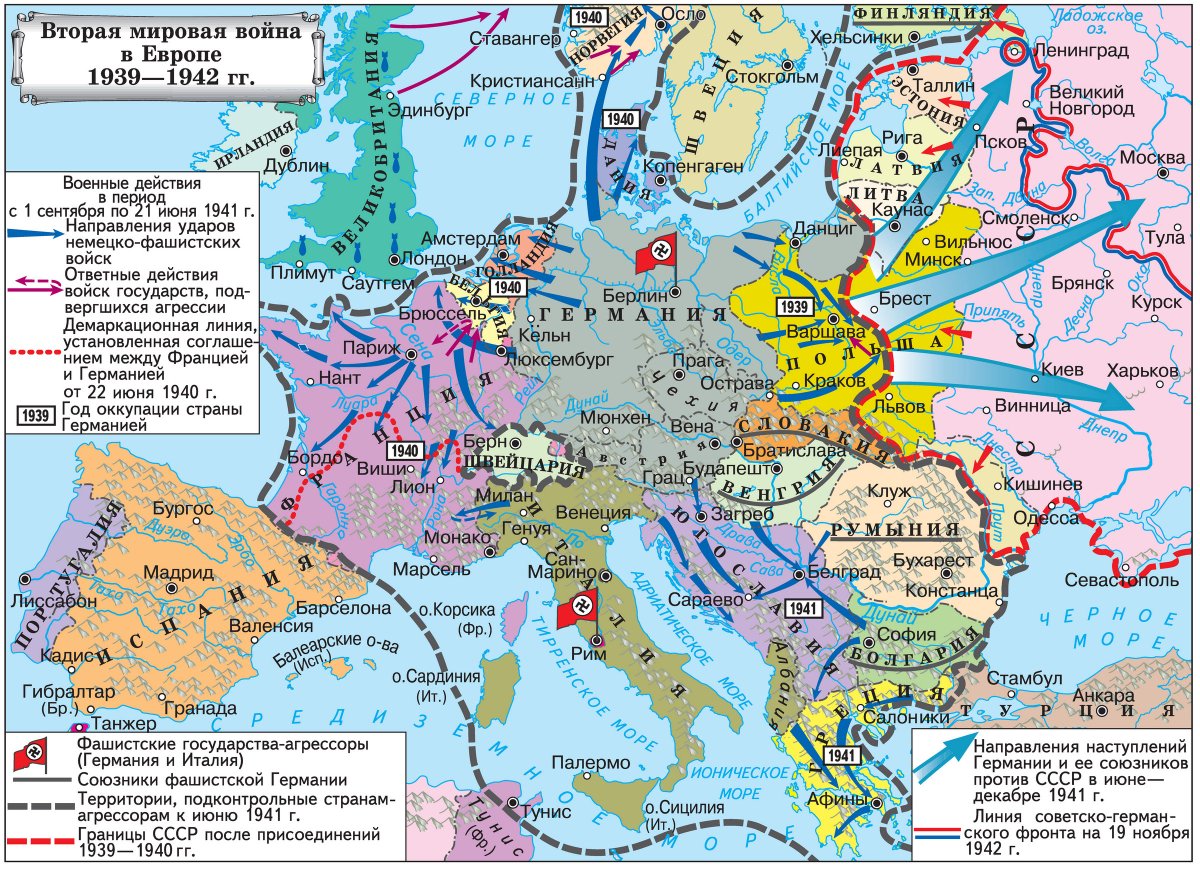
Факты истории: в 1941 на СССР напала не только Германия. Напала и остальная Европа, за исключением сербов и греков. На СССР шли-испанские дивизии и французские легионы, армии Италии, Румынии, Венгрии, Финляндии, части Чехословакии, Хорватии др. Брестскую крепость штурмовали и
Olegatr s neba 1244 tweet media
Русский
44
180
531
24.9K
Klaus Feldmann
Klaus Feldmann@feldmann_k·
@QuirinPoulsen Schon jetzt gibt es global unterschiedliche klassenspezifische Wirtschaftssysteme. Diese Segregation wird sich verstärken. Allerdings Ausbeutung und Versklavung werden weiter dominieren.
Deutsch
0
0
1
1
Klaus Feldmann retweetledi
Rolf Degen
Rolf Degen@DegenRolf·
Most viewers adjusted their initial judgments of “artworks” in line with the alleged expert evaluations, particularly those with an interest in art and a higher level of education. The main question in this article was to what degree people would change their aesthetic values to conform to the opinion of expert critics. Thus, we hypothesized that participants would exhibit visual-aesthetic conformity in rating “art” even after a single session of exposure to expert critic opinions. We exposed people to expert-critic ratings of visual “artworks.” Although the expert-critic ratings came from a model, we tried to persuade the participants that the critics were real. We then studied whether and how people changed their own ratings because of this exposure This study revealed that participants indeed conform to expert opinions . Thus, most participants alter their aesthetic values to match the experts . These participants conformed to either the strongest likes and dislikes of the experts or both. This conformity tended to be long-lasting, continuing for a week or more. During this time, the effect of conformity continued to change, with compliance tending to rise after the day of expert exposure. Why does conformity cause an increase over time? The essential role of sleep in promoting learning and memory is well-supported . In particular, numerous studies have shown that sleep after learning significantly improves memory recall. Such an improvement would explain the continuous rise in conformity. Strangely, one may be participant to expert influence even when alone. Even if a person is alone while evaluating art, the selection criteria of public art are influenced by critics and scholars. Therefore, one is appraising an image whose value has already been affected by conformity. Conformity thus exerts a complex cascade effect on society. This is further magnified by expert critics not being immune to social pressure [Results] show that experts affect people with high art interest more than normal. Similar surprising results apply to people with elevated levels of education. We suggest a common cause explaining the elevated levels of conformity for both sets of people. Whether studying art or other fields, the educational systems often emphasize the memorization of facts to answer test questions correctly . Students are rewarded for accepting authority figures’ teachings as fact, creating a tendency to follow authority. In contrast, participants with lower levels of education may be less likely to comply because of a weaker association between academic authority and objective truth.
English
3
6
41
4K
Klaus Feldmann retweetledi
Sahra Wagenknecht
Sahra Wagenknecht@SWagenknecht·
Staatsstreich? Weimar? Merken die noch nicht mal, dass diese völlig überzogene Rhetorik, mit der allzu erkennbar vom eigenen Versagen bei der Vertretung der Interessen der Bürger abgelenkt werden soll, die AfD eher noch stärker macht. Nein, Deutschland steht nicht kurz vor der Machtergreifung Hitlers. Die größte Gefahr für die Demokratie ist eine Politik, die Deutschland weiter vor die Wand fährt und sich dabei selbst zunehmend autoritär und undemokratisch verhält. Merz und seine Chaos-Koalition, die unser Land wirtschaftlich ruinieren und in einen großen Krieg führen könnten, sind eine echte Gefahr für Deutschland. Noch drei Jahre Merz, das wäre eine Katastrophe für unser Land – und nicht das Ergebnis einer demokratischen Landtagswahl, wie immer es ausfällt. welt.de/politik/deutsc…
Sahra Wagenknecht tweet media
Deutsch
176
483
2.7K
39.5K
Klaus Feldmann retweetledi
Fabio De Masi 🦩
Fabio De Masi 🦩@FabioDeMasi·
Man wünscht sich ja auch, dass mal ein Blick in das Arbeitszeitgesetz und in die betriebliche Realität geworfen wird. Ausnahmen vom 8 h Tag sind eher die Regel. Hinzu kommt: Als Ökonom fragt man sich wie eine Ausweitung der Arbeitszeiten bei Unterbeschäftigung, flacher Produktivität und schwacher Kaufkraft das Wachstum stimulieren soll? Dann werden bei stagnierender Arbeitsnachfrage eben weniger Leute beschäftigt, die länger arbeiten. Es ist der selbe Irrtum wie die gescheiterte Annahme die teure Senkung der Körperschaftssteuer würde die privaten Investitionen stimuliere . Warum sollten Unternehmen mehr investieren wenn man ihnen gratis die Gewinne erhöht? Was wir brauchen sind bezahlbare Energiepreise, Planbarkeit und Investitionen in die zivile Infrastruktur sowie eine Entlastung kleiner und mittlerer Einkommen. Die Rezepte aus der 90er Jahre Mottenkiste des Black Rock Kanzlers werden die deutsche Wirtschaft nur weiter ins Koma schicken!
Maurice Höfgen@MauriceHoefgen

Sonntag, 12:03 Uhr, im Ersten 🤝

Deutsch
21
62
336
34.7K
Klaus Feldmann
Klaus Feldmann@feldmann_k·
People think in class-specific terms: who exploits whom, and how much of the spoils (prey) can my reference group secure?
English
0
0
0
12
Klaus Feldmann retweetledi
Isabella M Weber
Isabella M Weber@IsabellaMWeber·
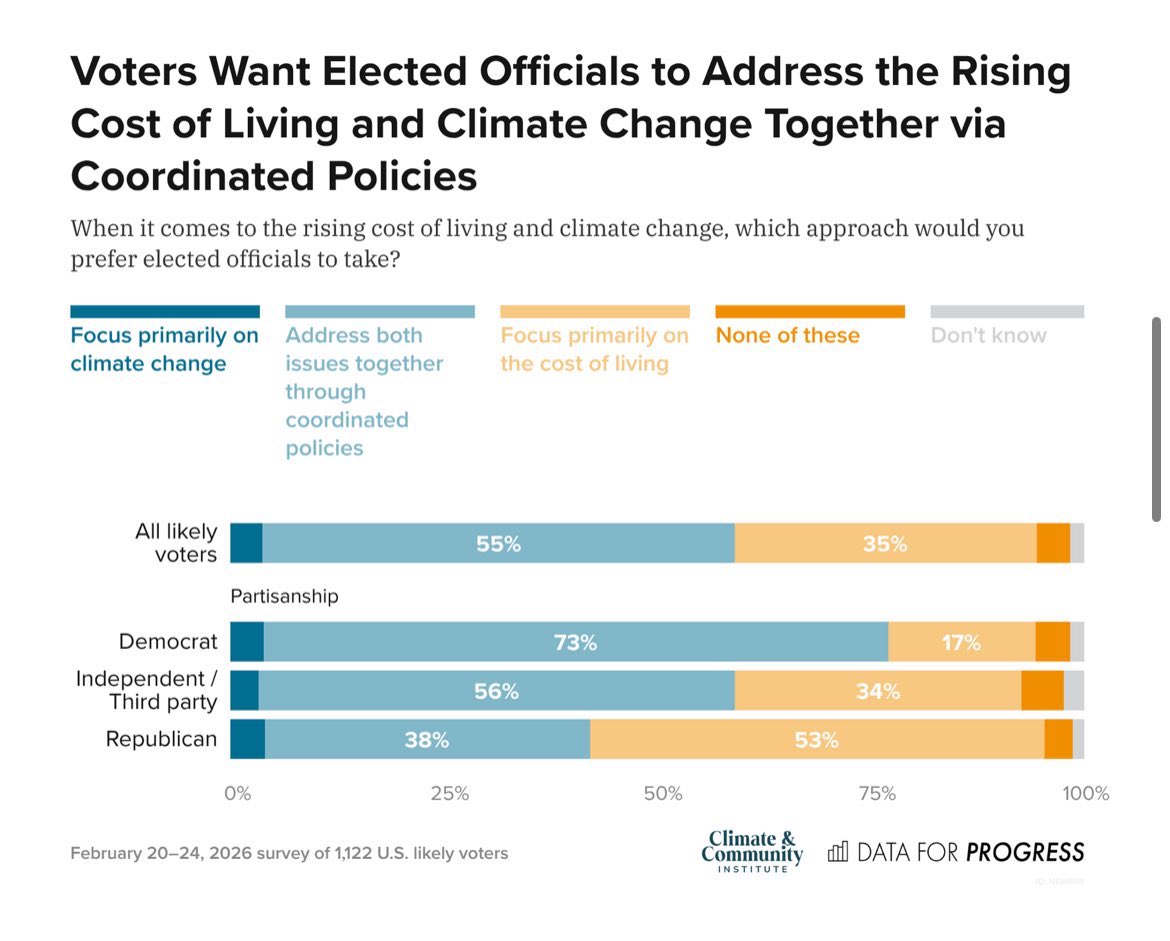
Voters think they can have it all: an affordable life and a livable planet. They are right. Both is at the core of an anti-fascist economics that centers on making life livable for all rather than letting the far right dystopia of a burning planet rule.
Isabella M Weber tweet media
English
9
61
169
5.5K
Klaus Feldmann
Klaus Feldmann@feldmann_k·
Die OberZombies des WestMülls: TraMPel, Stürmer, Ausmerz, Massacron, VolDeLeich.
Deutsch
0
0
0
18
Klaus Feldmann
Klaus Feldmann@feldmann_k·
@derspiegel Der Spiegel raffiniert: NaziVergangenheitsAufDeckung zur Verstärkung der westlichen VernichtungsPropaganda.
Deutsch
0
0
0
4
DER SPIEGEL
DER SPIEGEL@derspiegel·
Jetzt in der NSDAP-Kartei nach Vorfahren zu suchen, sei wohlfeil, sagt der Publizist Max Czollek. Das tue heute keinem mehr weh. Viele Deutsche nutzten die Familienrecherche eher, um selbst besser dazustehen. #ref=rss" target="_blank" rel="nofollow noopener">spiegel.de/geschichte/nsd…
Deutsch
42
4
11
5.9K
Klaus Feldmann retweetledi
Anish Moonka
Anish Moonka@anishmoonka·
Charles Dickens fought his depression by walking through London at night. One October he set out at 2 in the morning and walked 30 miles, all the way to his country home in Kent. In 1860 he wrote about why it worked. It took psychology another 150 years to catch up. Dickens called his bad spells "spectres." They came back every time he started a new novel and sometimes hung on for months. His mood would fall apart, his sleep would collapse, and the only thing that pulled him out was walking. He explained his method in an essay called "Night Walks," published on July 21, 1860 in his weekly magazine All the Year Round. He had tried fighting his insomnia from bed and lost. So he changed the plan. The fix, he wrote, was "getting up directly after lying down, and going out, and coming home tired at sunrise." A worried mind cannot fix itself by worrying more in bed. You have to get up and move. Most nights he walked 12 to 20 miles. A friend called it "violent walking." Dickens wrote that on these walks his wandering self had "many miles upon miles of streets in which it could, and did, have its own solitary way." Today, walking is one of the most powerful tools doctors have against depression. In 2012 a team of researchers pulled together eight high-quality studies of walking as a depression treatment. The effect was as strong as the antidepressants doctors actually prescribe. The biggest test came from Duke University. The SMILE study took 202 adults with serious depression and split them into four groups: supervised exercise, home exercise, the drug Zoloft, or a placebo pill. After 16 weeks, the people who exercised did just as well as the people on Zoloft. A 2024 review of 75 studies covering 8,636 patients confirmed it. Walking should be one of the first things doctors try. The reason is the thing Dickens stumbled onto in the dark. Depression runs on rumination, the looping bad thoughts that grind people down during the worst stretches. In 2015 Stanford researchers scanned people's brains before and after a 90-minute walk in a quiet park. The walkers had less activity in a part of the brain called the subgenual prefrontal cortex. That spot, deep behind your forehead, is the brain's worry loop. After the walk, the worry loop got quieter. The walkers said they felt less stuck inside their own heads. The brain scans agreed. A walking body shuts up a noisy mind. The street takes attention, the walking rhythm fills the head, and the dark spells lose their grip. Dickens called the streets his cure because they gave his brain somewhere else to be. The science 150 years later says he had it right. Depression hates a brain that is moving.
Anish Moonka tweet mediaAnish Moonka tweet media
English
150
1.9K
8K
402.1K
Klaus Feldmann retweetledi
DepressedBergman
DepressedBergman@DannyDrinksWine·
Andrei Tarkovsky on the theme he pursued in "Nostalghia" (1983): "In 'Nostalghia' (1983) I wanted to pursue the theme of the 'weak' man who is no fighter in terms of his outward attributes but whom I none the less see as a victor in this life. 'Stalker' (1979) delivers a monologue in defence of that weakness that is the true price and hope of life. I have always liked people who can't adapt themselves to life pragmatically. There have never been any heroes in my films, but there have always been people whose strength lies in their spiritual conviction and who take upon themselves a responsibility for others. Such people are often rather like children, only with the motivation of adults; from a common-sense point of view their position is unrealistic as well as selfless." ("Sculping in Time", Tarkovsky, 1985) P.S: On this day, 43 years ago, "Nostalghia" (1983) premiered at the Cannes Film Festival, France.
English
5
116
695
49.2K