

Felice
1.9K posts

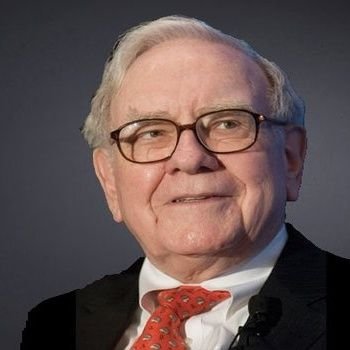
25 yaşında 100 bin dolarınızı bir hedge fon yöneticisine veriyorsunuz.
Yıllık %8 getiri sağlıyor
%1,5 yönetim ücreti ve %20 performans ücretiyle, 65 yaşına geldiğinizde sizin paranız 764 bin dolar oluyor
Yönetici ise cebinden tek kuruş koymadan 1,24 milyon dolar kazanmış oluyor
Türkçe
@BillAckman Hi Bill, is it possible to know all the investments have been made by PSUS?
English

As two of the largest forces in equity markets -- growing index ownership and increasing amounts of capital controlled by extremely short-term-oriented, leveraged, volatility-intolerant investors -- converge, we have found occasional opportunities to acquire some of the most dominant long-term compounding franchises at attractive valuations.
For example, we acquired Alphabet $GOOG when the stock declined substantially on the release of ChatGPT in late 2022, Amazon $AMZN in the weeks following Liberation Day, and $META more recently on the market's response to the company's unexpectedly large cap ex guidance and expenditures.
In our 13F which we will file later today, we will disclose a new position in Microsoft, a company we have followed for many years now offered at a highly compelling valuation. While $PSUS will not be filing a 13F tomorrow, it has also recently made $MFST a core holding.
Microsoft operates two of the most valuable franchises in enterprise technology, which account for approximately 70% of the company's overall profits: M365 and Azure.
M365, the company's productivity suite, is the dominant operating platform for knowledge work, with over 450 million workers using Word, Excel, PowerPoint, Outlook, and Teams on a daily basis.
Azure is the world's second-largest hyperscaler cloud platform and, like AWS in our Amazon investment, is a direct beneficiary of the multi-decade migration of enterprise IT workloads to the cloud, which is now further accelerated by surging demand for AI inference workloads.
Both M365 and Azure are underpinned by Microsoft's unparalleled enterprise distribution and the security, compliance, and identity infrastructure it has built and refined over decades.
Beyond these core franchises, Microsoft also owns a portfolio of other leading businesses, including LinkedIn (the world's largest professional network with 1.3 billion members), its gaming platform (Xbox and Activision Blizzard), and search and news advertising (Bing and the Edge browser).
We began building our position in MSFT in February following a meaningful share price decline after the company reported its fiscal Q2 2026 results. We were able to establish our position at a valuation of 21 times forward earnings, broadly in line with the market multiple and well below Microsoft's trading average over the last few years.
Notably, MSFT's headline multiple does not reflect the value of Microsoft's approximately 27% economic interest in OpenAI, which would represent approximately $200 billion, or 7% of Microsoft's market capitalization, at OpenAI's most recent funding round valuation.
We believe Microsoft's recent share price decline has been principally driven by investor concerns around two key issues: i) the competitive positioning of M365 against increasingly capable AI lab offerings (notably Anthropic's Claude Cowork), and ii) the durability of Azure's growth, especially in light of Microsoft's evolving relationship with OpenAI.
In our view, investors underestimate the resilience of the M365 franchise given its deeply embedded role across enterprises and highly attractive price-value proposition. Unlike point software solutions, which may be vulnerable to disintermediation by better-performing AI alternatives, M365 is tightly integrated into the daily workflow of nearly every large enterprise and is supported by Microsoft's identity, security, compliance, and data governance infrastructure, which would be nearly impossible to replicate.
Attractive bundle economics further reinforce Microsoft's advantage, with monthly average revenue per user on the M365 suite at approximately $20, less than half of what customers would pay to purchase the underlying applications individually from different vendors.
Moreover, we are encouraged to see Microsoft prioritizing its R&D efforts and investment in Copilot, its own AI agent embedded across M365, with direct involvement from CEO Satya Nadella. We believe these efforts will translate into improved product velocity and greater customer adoption over time.
Alongside Copilot's rollout, the company has also begun shifting its pricing model from pure per-seat licensing to a hybrid model of seats plus metered consumption, which helps expand the company’s revenue opportunity as AI agents drive incremental usage that a seat-only structure would not capture. These initiatives should help sustain M365’s strong underlying growth momentum, which was already evident in the business unit’s 15% revenue growth (in constant currency) last quarter.
We believe concerns regarding Azure's growth trajectory are similarly misplaced, particularly in light of the franchise's exceptional recent performance. Azure revenue grew 39% in constant currency last quarter, with company guiding to modest acceleration through the second half of the year.
We view Microsoft's recent decision to restructure its OpenAI partnership not as a concession but as part of a deliberate pivot toward a more open, multi-model architecture that better serves enterprise customers, who increasingly seek optionality across model providers.
Microsoft recently disclosed that over 10,000 enterprise customers have used more than one model on Azure Foundry, the company’s modular AI model marketplace. This model-agnostic approach also strengthens Copilot, which can auto-route queries across multiple models to deliver the optimal output for a given task.
To support Azure's rapid growth amid persistent supply constraints, Microsoft has raised its calendar year 2026 capex budget to approximately $190 billion. Consistent with what we have observed at hyperscaler peers Amazon and Google, we view this spend as growth capex that should drive future revenue generation. This is particularly true for Microsoft, given that roughly two-thirds of its capex budget is allocated to server and networking equipment that correlates directly with near-term revenue.
Like our purchases of $GOOG, $AMZN, and $META, we believe that $MSFT offers analogous and compelling long-term value at today's valuation.
English
Hi @BillAckman, I wanted to ask if the PSUS fund has started investing its money.
Pomigliano d'Arco, Campania 🇮🇹 English
@CarloCalenda Perciò investiamo nella scuola e nel futuro di questo paese...inseriamo il latino!
Italiano

Ho l’impressione che l’Italia sia fondamentalmente per il #No. Ma non solo su questo referendum.
Siamo per il No al cambiamento in qualsiasi settore.
Da questo punto di vista siamo il paese più conservatore d’Europa.
Troviamo sempre una ragione per non cambiare: la giustizia, la scuola, il regionalismo o per non fare investimenti infrastrutturali ed energetici.
Questo conservatorismo è trasversale alla destra e alla sinistra che sono normalmente immobili in attesa che l’altra parte faccia “l’errore” di proporre qualcosa.
Da questo stallo dobbiamo uscire se vogliamo sopravvivere e diventare qualcosa di più di una meta turistica.
Italiano

@Alex806854 @DellAnnaLuca @GiovanniPaglia Basta comprare le azioni brother, e si spartiscono gli utili, potrebbero farlo guarda guarda anche gli operai
Italiano

@DellAnnaLuca @GiovanniPaglia Peccato che solitamente non accade neanche che gli utili vengano ridistribuiti tra tutti.
Ad oggi molte società private hanno socializzato le perdite (fadencole pagare a Stato e dipendenti) e incassato utili.
Italiano

Quest’anno niente premio di produzione per i lavoratori Stellantis: evidentemente anche i 600 euro del 2025 per gli Elkann erano troppi.
In compenso gli azionisti hanno incassato 23 miliardi di dividendi in 4 anni.
È troppo sbagliato persino per il capitalismo.
Italiano
@frogikozh @michaeljburry “There is no obligation to do what M.Burry says.”
English

@michaeljburry Yes, you admitted your mistake, but people sold their shares and missed out on further growth. If the same thing happens to Nvidia tomorrow, you'll simply say you were wrong, but people will lose money again.
English

As Nvidia pours $30 billion into OpenAI so OpenAI can spend 20+ billion on Nvidia chips, remember this story from last week.
Reuters reported two weeks ago that OpenAI had become dissatisfied with the performance of Nvidia’s hardware for certain types of inference tasks, especially coding-related workloads and AI-to-software interactions. The company began exploring alternatives last year, including deals with AMD, Cerebras, and early discussions with Groq.
It was reported that OpenAI was specifically concerned about speed, saying Nvidia’s GPUs were not fast enough for certain inference-heavy products such as Codex, OpenAI’s coding model.
Inference, in contrast to training, relies heavily on memory access speed. Reuters reported that OpenAI was looking at architectures using large amounts of on-chip SRAM, which could accelerate real-time responses but differ from Nvidia’s conventional GPU designs.
storyboard18.com/brand-makers/d…
English
@maurorizzi_mr È giusto che decidano i sindacati, sono loro che lavorano
Italiano

Ancora sui rider: se possano essere pagati di più o se il business sia profittevole o meno non lo decidiamo noi dal divano, peraltro avendo pochissimi dati.
Di solito funziona così: aziende e sindacati negoziano la retribuzione dei lavoratori. Se le aziende hanno margine per aumentare le paghe lo faranno, riducendo i loro margini al massimo fino al punto in cui il business diventa non più profittevole. Lo Stato non c’entra.
Io l’attore che vedo totalmente assente in questa discussione è il sindacato.
Italiano
@Homelander174 Tra poco verranno sostituiti tutti con l'IA 🤞
Addio scuola old school!
Italiano

Immagina avere un coso del genere come professore e sei pure obbligato ad ascoltarlo in orario extra scolastico perché vuole fare più vius per i suoi follouers.
Radere al suolo tutto il sistema

Italiano
Felice retweetledi

The Hollow Men
American capitalism is rotting from the head down. We have replaced the "Owner-Operator"—the risk-taker-with a new, parasitic class of corporate bureaucrat: The Risk-Free Insider.
By "Insider," I am not referring to a specific title. I am referring to the entire administrative state that has captured the modern corporation. This includes the Directors who exist solely to collect fees, the Executives who exist solely to collect bonuses, and the Managers who exist solely to hire consultants.
These are the hollow men of the boardroom. They are masters of PowerPoint. They wear the right suits. They say the right buzzwords about "governance" and "ESG." But they are mercenaries fighting a war with someone else’s ammunition.
In a functioning economy, authority is tied to liability. If you make a bad decision, you lose your own money. That fear of loss is the only thing that keeps a business honest. It forces you to cut waste, obsess over the customer, and stay late to fix what is broken.
Today, we have severed that link.
We have rigged the game so that heads, the Insider wins; tails, the shareholder loses.
If the stock goes up, the Insider collects a massive performance bonus. If the stock crashes due to their own incompetence, they are fired with a "Golden Parachute" worth tens of millions. They are gambling with the house’s money, and they never leave the table poorer than they arrived.
This looting starts in the boardroom.
We have normalized a "Country Club" culture where directors are selected based on social profiling rather than their ability to build a business. The modern board member is often a professional tourist—paid an average of $350,000 a year.
Let’s be brutally honest about what that number represents. The average director is paid nearly five times the GDP per capita of the United States. They earn more for attending four quarterly lunches than the vast majority of Americans earn in five years of hard labor.
And for what?
Most of these directors are "over-boarded," sitting on three or four boards simultaneously. They treat directorships as a gig economy for the elite. They fly in, rubber-stamp a compensation package they didn't read, and fly out. They collect checks from companies they do not understand, do not use, and certainly do not love.
They are not there to ask hard questions. They are there to be collegial. They are there to protect the other Insiders.
And what happens when these boards hire executives who also have no personal capital at risk?
We get the Delegation Economy.
When a Risk-Free Insider faces a crisis—bloated expenses, a broken supply chain, or a stale product—they do not roll up their sleeves. They hire a consultant. They pay a strategy firm millions of shareholder dollars to produce a 100-page deck telling them what they already know.
This is not management. It is intellectual money laundering.
They use shareholder capital to buy an insurance policy for their own careers. If the plan fails, they can blame the consultants. They delegate the work because they are terrified of the responsibility. They would rather preside over a slow, comfortable decline than risk a bold mistake.
While American Insiders are busy optimizing their severance packages, our global competitors are optimizing their products. They are not slowed down by bureaucracy. They are not waiting for a slide deck. They are outworking us.
If we continue to fill our C-suites with administrators instead of operators, we will lose our edge. We will see iconic American franchises hollowed out by fees, managed for the benefit of the Insiders, while the true owners—the shareholders—are left holding the bag.
The time for polite governance is over.
If we want to save the American economy from mediocrity, we must demand a return to the "Owner’s Mentality." We need leaders who treat shareholder capital with the same reverence they treat their own savings. The era of the Risk-Free Insider must end.
English
Felice retweetledi

Italy Beckons The Rich: How Flat Taxes And Lifestyle Are Luring Global Millionaires zerohedge.com/markets/italy-…
English
@inverso_l @Frenkie_Woody Fortunatamente esiste il mercato dei capitali 😉
Italiano

@Frenkie_Woody Non è che tutti sanno fare gli imprenditori..quelli di se stessi sono appunto i dipendenti che se fossero più coinvolti con una % degli utili allora sì che ci sarebbe una migliore distribuzione di ricchezza..🤔
Italiano

L'uomo più ricco della Cina ha detto: "Se metti banane e soldi davanti alle scimmie, le scimmie sceglieranno le banane perché non sanno che con i soldi si possono comprare molte banane. Anzi, se offri lavoro e affari alle persone, sceglieranno il lavoro perché la maggior parte delle persone non sa che un'attività può fruttare più soldi di uno stipendio. Il motivo per cui i poveri sono poveri è perché passano molto tempo a scuola e lavorano per uno stipendio invece di lavorare per sé stessi, perché uno stipendio ti dà solo un reddito per vivere, ma il profitto può farti guadagnare una fortuna…

Italiano

@Frenkie_Woody Non è una questione di banane.
È una questione di accesso al gioco.
Se il tavolo è riservato a pochi, parlare di mentalità è comodo.
Italiano
@BenedettaFrucci Figurati io alla scuola guida, ho dovuto imparare il motore a vapore per poter guidare un auto elettrica 🤦🏻♂️
Italiano

Sostenere che lo studio del latino sia inutile nel tempo dell’intelligenza artificiale non solo è sbagliato: è esattamente l’opposto.
1) Lo studio del latino sviluppa la capacità di analisi sintattica, la capacità di distinguere funzione e forma, l’attenzione alla gerarchia delle informazioni.
Sono le stesse competenze richieste per comprendere e costruire sistemi complessi, inclusi quelli algoritmici.
2) Richiede disciplina mentale e insegna a dubitare: nella traduzione si scompone la frase, la si ricostruisce, si verifica la coerenza e il significato.
Tradurre è un esercizio di pensiero critico, fondamentale quando si usa una AI.
3) Molti termini scientifici, giuridici e tecnologici derivano dal latino.
Capire l’etimologia significa cogliere sfumature concettuali, migliorare la qualità del linguaggio.
Le materie umanistiche saranno sempre di più un bene preziosissimo.
Ciò che sarà prodotto dalla mente umana sarà sempre più raro e per questo avrà un valore sempre più alto.
Mettere in contrapposizione il latino e l’AI è profondamente miope.
Questa è la dimostrazione che i grandi esperti di economia (o presunti tali) faticano a capire la politica. E il futuro. Perchè il latino ci educa all’intelligenza artificiale molto più di qualche professore in cerca d’autore

Italiano
@FetzInvests @michaeljburry Instead, look at what Michael Burry said about Apple
About Palantir time will tell.
But his substack is fantastic!
English

@felixdnf @michaeljburry This was a headline about $AAPL in 2009
Imagine if you sold your position because someone who doesn’t understand Apple convinced you it wasn’t a company that’s changing the landscape of cellular devices
Burry is literally trying to do that exact thing with $PLTR today

English
@FetzInvests @michaeljburry For me, yes — it’s worth every penny. For you, who only read the headlines without putting them into context, evidently not.
English


@TheUltimator5 He's trying a pump and dump like RK did. Buy options and then use your online presence to pump the stock.
English

Doesn’t Michael Burry like entering trades through options?
Those massive Chicago trades over the past 2 months have been dealer hedges against over 100k $32 call options, plus some others.
I’m wondering is Burry’s $GME portfolio right now is over 100k 1GME and GME calls.
Which is about 10 million shares worth of the underlying.
English
“The Reporting Person believes that it is essential for the Chief Executive Officer of any public company to purchase shares of such company in the open market with his or her own personal funds in order to further strengthen alignment with stockholders...
Pomigliano d'Arco, Campania 🇮🇹 English
@ale_orlowsky L’infrastruttura digitale non appartiene a una corporation. Non è proprietà privata. È un bene pubblico. La paghi tu per tutti?
Italiano

Cloudflare, per chi non lo sapesse, è una delle grandi fabbriche invisibili del nostro tempo. Non produce automobili, né lavatrici. “Protegge” invece, il traffico Internet di milioni di siti. Dice di essere neutrale, Il suo amministratore delegato, Matthew Prince, ci tiene a ricordarlo: “Noi non giudichiamo i contenuti, proteggiamo la rete.”
Ma è proprio qui che casca l’asino.
I fatti: i criminali usano Cloudflare
Non si tratta di opinioni o congetture, ma di dati verificati. Da anni di indagini , inchieste giornalistiche, perizie informatiche e atti giudiziari confermano che una parte considerevole del crimine digitale si nasconde dietro i servizi di Cloudflare. Parliamo di siti di phishing, truffe finanziarie, reti di marketing fraudolento, deepfake, piattaforme pirata, portali di disinformazione, pornografia illegale (compresi casi gravissimi che coinvolgono minori).
Tutto questo ha trovato rifugio dietro infrastrutture fornite da Cloudflare: DNS, CDN, reverse proxy, protezioni anti-DDoS e meccanismi che rendono irrintracciabile l’origine dei contenuti.
La posizione dell’azienda: “non siamo responsabili”
Cloudflare non crea questi contenuti. Ma li protegge, li scherma, li rende più resistenti. E lo fa finché non interviene un giudice a cui loro rendono la vita impossibile
Matthew Prince ha ammesso: sì, sappiamo di offrire copertura a soggetti criminali. Ma secondo lui, decidere chi ha diritto a esistere in rete e chi no sarebbe censura. E quindi si astengono da ogni intervento, in nome di una presunta neutralità.
Il risultato? Il crimine digitale dura di più, si diffonde meglio,ed impossibile da fermare.
Quando un’azienda nasconde i server, assorbe gli attacchi al posto loro, ostacola le indagini, rende complesso e costoso il lavoro delle autorità, allora non è più un semplice intermediario. È un facilitatore. Un moltiplicatore. Un complice di organizzazioni criminiali e terroristi .
. L’infrastruttura digitale non appartiene a una corporation. Non è proprietà privata. È un bene pubblico. E, come tale, deve essere regolato dalle leggi decise dai cittadini attraverso i parlamenti.
I reati online non possono rimanere impuniti . Sono violazioni gravi del patto civile. Copyright, protezione dei minori, frodi e criminalità organizzata: tutto questo è oggetto di leggi precise.
Quando una società privata decide quali leggi applicare e quali no, si mette al di sopra dello Stato e dei cittadini.
Il doppio standard
Cloudflare non reagisce mai rapidamente neanche con le evidenze e richieste dei PM e dove i profitti sono consistenti, o il crimine si frammenta in piccole cellule – l’azienda temporeggia, fa finta di non vedere.
E così cade la maschera della neutralità. Perché, a ben guardare, si interviene quando conviene.
Il conflitto non è tra libertà e censura
Non lasciamoci confondere. Qui non c’è uno scontro tra la libertà d’espressione e lo spauracchio della censura. Il conflitto vero è tra la sovranità democratica e il potere privato delle infrastrutture.
Sempre più governi cominciano a porsi una domanda fondamentale: può una società commerciale decidere cosa è intoccabile, anche se è illegale? La risposta, in un ordinamento democratico, non può che essere una: no.
Cloudflare e il suo amministratore difendono i criminali in senso stretto.
In nome della neutralità, offrono rifugio alle peggiori distorsioni della rete. In nome della tecnica, sfuggono alle regole. In nome della libertà, contribuiscono all’impunità.
Eppure, la libertà non è fare tutto ciò che si vuole. È vivere in una società dove le regole valgono per tutti.
Italiano