Carl Jeffrey retweetledi

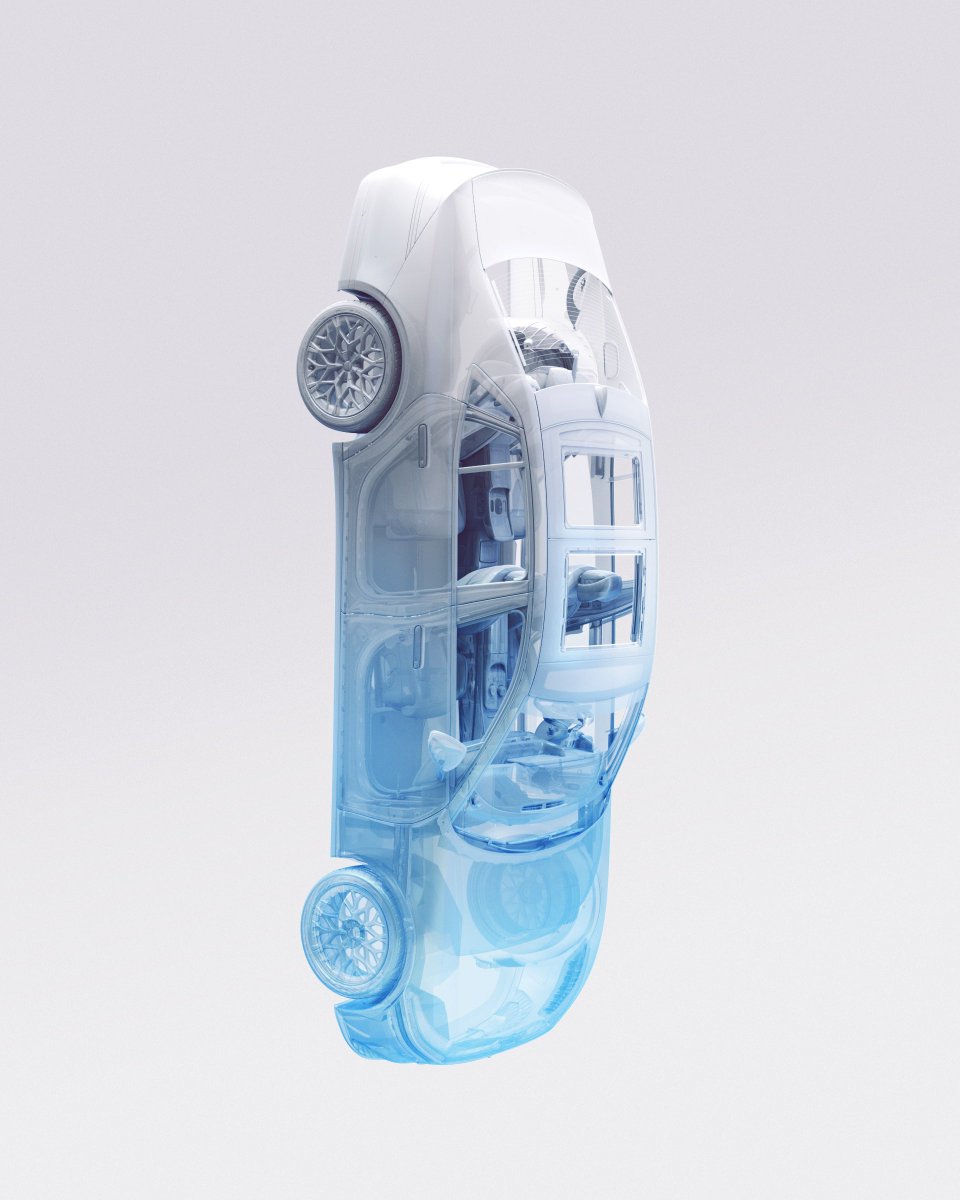
"AAA graphics aren't possible in the browser"
Hold my beer 🍺
English
Carl Jeffrey
20.5K posts

@fellowcreative
Creative Midwife™ and Joiner of dots. Designer and doer. Gets all sorts of things done. Posting stuff to inspire thinking. Pronouns? All welcome, you do you.
Okay folks, this qualifies as BREAKING NEWS! Harold “Sonny” White, the warp drive pioneer behind NASA’s EagleWorks Lab, just stepped out of stealth with Casimir Inc. to unveil MicroSPARC: the first battery free chip to harvest continuous electrical power straight from the quantum vacuum via the Casimir force. The 5 mm × 5 mm device uses millions of custom microscale Casimir cavities fabricated on a substrate. Inside each cavity, two fixed conductive walls create a region of negative vacuum pressure (the well known Casimir effect). Stationary micropillars anchored in the middle act as antennas. Electrons from the cavity walls then quantum tunnel to the pillars because the interior is a lower energy “quieter” zone — and the probability of tunneling back is orders of magnitude lower. This one way “quantum ratchet” flow generates a measurable DC current with no external power source or moving parts. Prototypes already fabricated at university nanofab facilities (Texas A&M AggieFab, MIT.nano) have been tested in RF-shielded, low noise chambers for weeks. The team reports outputs ranging from millivolts to volts at picoamp to microamp levels using precision electrometers and Kelvin Probe Force Microscopy. Target performance for the first commercial chip: ~1.5 V at 25 µA (≈40 µW continuous). Stacking and scaling could reach milliwatts or even watts per device. Initial applications are ultra low power: always on IoT sensors, wearables, and medical implants. Longer term roadmap includes trickle charging phones, powering small electronics, and eventually grid independent homes or EVs. Commercialization is targeted for 2028, starting at ~$100/W before dropping toward $10/W. White ties the work directly to his earlier theoretical paper on emergent quantization from a dynamic vacuum and sees it as a practical power source for the deep-space missions he’s long championed. Extraordinary claims require extraordinary evidence, and independent scientists have so far declined public comment. But if the engineering scales as hoped, MicroSPARC would represent a genuine paradigm shift: continuous, maintenance free power drawn from the fabric of spacetime itself. A bold leap from warp-drive theory into real hardware. Progress (and vacuum-powered chips) marches on. Photo: MicroSPARC | Casimir Inc. Source: thedebrief.org/free-energy-fr…

I reverse engineered San Francisco's towing system. I can see every car the second it's towed. So I made a site to "FIND MY" towed car. Inspired by @rtwlz
World food prices rose for a third consecutive month in April to 130.7 (highest level since February 2023), driven by increases in vegetable oil, meat, and cereal prices

Days with zero income Day 21 3 weeks Chisel sharpening
carved by logic. Topology optimization is just madness





What if you could see people's time zones visually when scheduling meetings? @Cron


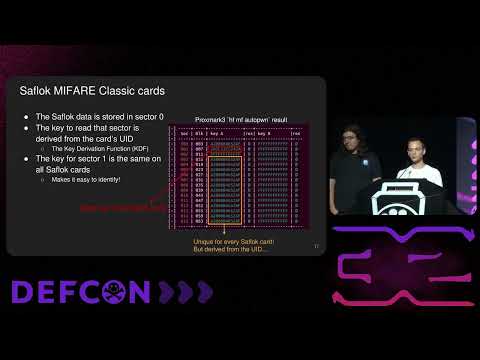
Mind blown 🤯 Some smartphones sold in mainland China (like certain OPPO models) can read MIFARE Classic cards, crack the keys in seconds, store them, and then fully emulate the card directly on the phone. No extra hardware. Just the phone. Access control, transit cards, hotel keys… game over. Huge thanks to Ian for showing me this in person. Really eye-opening how far NFC capabilities have gone in some regions. Who else has seen this in the wild? #NFC #MIFARE #TechSecurity #oppo
This is a very important observation
After a globe-spanning journey from Asia to the U.S., a Texas rediscovery, and a Kickstarter comeback, the original 1986 C64C molds are home! Forty years later, they’re back at #Commodore, doing exactly what they were built for: making official C64C cases. We sent Peri to the Commodore factory to introduce himself to them in person, and verify their full working condition. Pre-Order a C64C Ultimate Today: commodore.net
Your most private moments are someone else’s data. Tracked. Analyzed. Monetized. While big tech profits from your behavior, Keet collects nothing. Switch to Keet.io today.