
Feras Alhlou

2.8K posts

Feras Alhlou banner
Feras Alhlou

Feras Alhlou

@ferasa

7x Founder | $70M in Combined Sales | Advisor to Entrepreneurs | Author | Speaker Pivot Your Skills Into a Profitable Consulting and Services Business

San Francisco Bay Area Katılım Haziran 2008
47 Takip Edilen1.3K Takipçiler
Feras Alhlou
Feras Alhlou@ferasa·
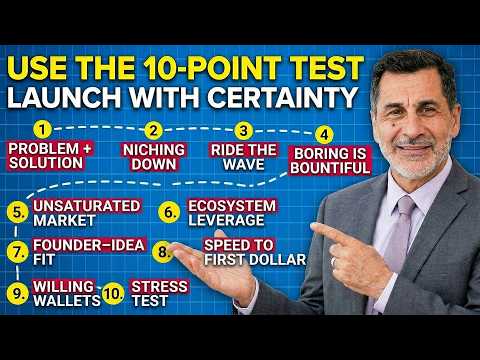
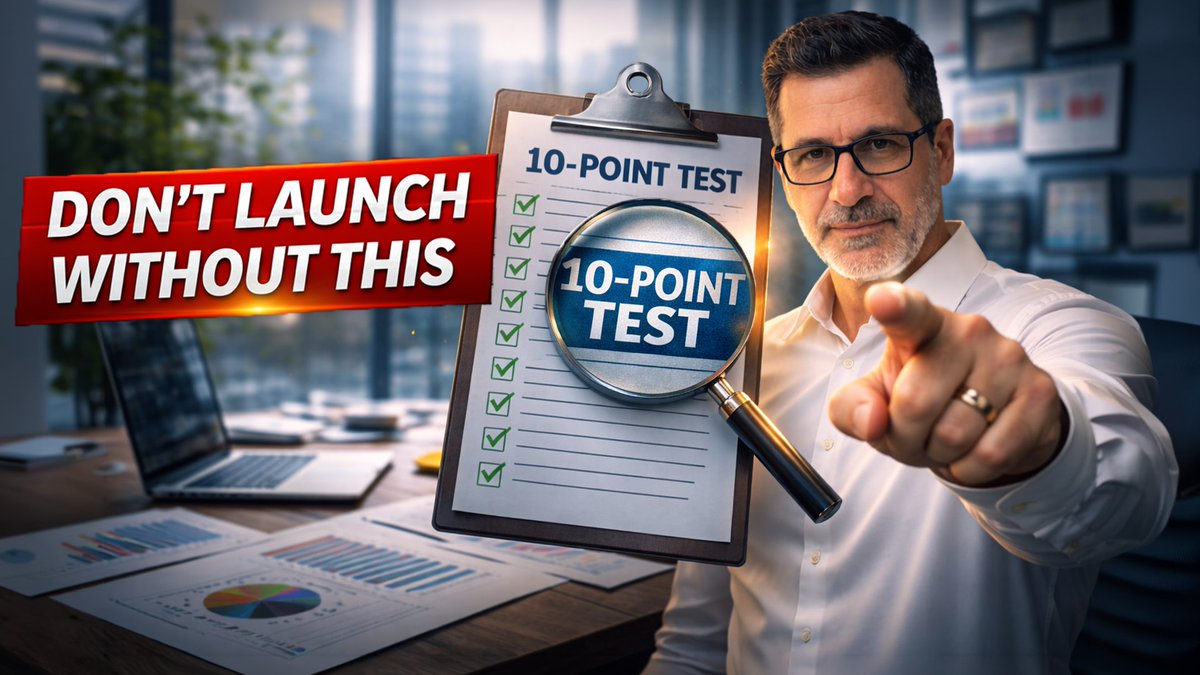
“Lack of market need” is the #1 reason startups fail. Not funding. Not competition. Not execution. Which means this: you can do everything “right”… and still fail if no one actually wants what you’re offering. I’ve seen too many consultants build offers based on assumptions instead of demand — then spend months trying to fix the wrong problem. In this 15-minute video that I just launched, I break down my 10-point validation framework I’ve used with 250+ consultants to help them avoid costly mistakes and get to revenue faster. If you’re serious about starting—or refining—your offer, this will save you time, money, and frustration. Watch it here: youtu.be/WcrrsJyFyHE #entrepreneurship #consulting #VetYourIdea (stat source: HBS)
YouTube video
YouTube
Feras Alhlou tweet media
English
0
0
0
11
Feras Alhlou
Feras Alhlou@ferasa·
If you want to be a founder, you shouldn't just take from the system, you contribute to it too. :) For me, one way I do that is donating blood, ~every couple of months. I've been fortunate to donate regularly and just completed my 118th donation as we head into March, National American Red Cross Month. The blood donation entire process takes about 45 minutes. Why do I do it? Every 2 seconds, someone in the U.S. needs blood. And 1 donation can help save up to 3 lives. If you’re eligible and not too afraid of needles :), schedule your appointment today. Leadership is service — in business and beyond. Thank you @RedCross and @RedCrossNorCal staff and volunteers and supporters for everything you do to prevent and alleviate human suffering. #RedCrossMonth #BeAHero #HelpCantWait
English
0
0
0
16
Feras Alhlou
Feras Alhlou@ferasa·
I'd say a good starting point is combining three things: a rising skill, deep knowledge of a specific industry, and a clearly defined buyer. And then layer in real differentiators like certifications, awards, partnerships, being an author/speaker, or being part of an established ecosystem (for us becoming an authorized Google partner was a strong signal early on).
English
0
0
0
90
Silyze
Silyze@silyze·
@ferasa I totally get that! It’s tough when everyone’s kind of playing it safe. What do you think are some ways to stand out in such a crowded market?
English
1
0
1
8
Feras Alhlou
Feras Alhlou@ferasa·
A common mistake I see among mid-career professionals right now — and it’s quietly limiting their options — is this: The job market is tight. And if you’re starting a business, finding clients isn’t easy either. In both cases, I keep seeing the same issue: Vanilla positioning. “Strategy consultant.” “Marketing expert.” “AI consultant.” If you pitch to everyone, you’re pitching to no one. Niching isn’t about shrinking your opportunity — it’s a force multiplier. In hiring, recruiters search by skills and context. In business, buyers look for relevance and risk reduction. The more generic you are, the harder it is for someone to say, “This is exactly who we need.” LinkedIn’s newly released 2026 fastest-growing skills in the US report makes this clear: skills-based, applied, domain-specific expertise is winning — especially where AI intersects with real-world vertical knowledge. Over time, you may niche up or niche down depending on your goals and market shifts. Here’s a starting framework: 1️⃣ Focus on skills that are rising (see LinkedIn’s latest report). 2️⃣ Layer in vertical-specific knowledge (healthcare? fintech? manufacturing?). 3️⃣ Define your target market clearly (who specifically within the vertical: segment, geography, stage). 4️⃣ Pick your arena: startup, SMB, or enterprise — they require different playbooks. 5️⃣ Build working knowledge — ideally mastery — of applied AI in your space. 6️⃣ Strengthen distinctly human capabilities (communication, empathy, judgment). 7️⃣ If you’re a new consultant or founder, optimize for speed to first dollar. Specialization doesn’t limit you — it clarifies you. More in my upcoming video on 26 business ideas for 2026. Linkedin Skills on the Rise 2026: The fastest-growing skills in the U.S: linkedin.com/pulse/linkedin… #entrepreneurship #BusinessIdeas #career #niching
English
1
0
1
32
Feras Alhlou
Feras Alhlou@ferasa·
Just released: 26 ideas to start a consulting business in 2026. Thinking about quitting your day job, or recently laid off and considering starting a consulting business? In this video, I don’t just list random business ideas. I show you how to evaluate them based on: • your skills/past experience • new skills you need to develop • difficulty level • speed to first revenue These aren’t “get rich quick” ideas. They’re grounded in real shifts happening right now across AI, consulting, creator economy, compliance, global markets, and specialized expertise. If you’re thinking about leaving corporate or building a serious side business, this will help you stop overthinking and start strategically. You don’t need a brand-new identity, you need to leverage what you already know. 🎥 Watch here: youtu.be/404dG7YweWo #Entrepreneurship #BusinessIdeas #StartABusiness #Consulting
YouTube video
YouTube
Feras Alhlou tweet media
English
0
0
0
26
Feras Alhlou
Feras Alhlou@ferasa·
The Cult of Failing Forward Boasting about mistakes has become fashionable in US culture, most notably in the realm of business and entrepreneurship. High-profile business personalities publicly humble-brag about their vulnerabilities and their countless mess-ups. In reality, they had to get many more things right than wrong, or their ventures would not have survived. Legions of other founders have made too many mistakes to recover from. Their stories are rarely told. Starting a business is a risky proposition. Depending on the study, more than half of new businesses fail within the first few years. If you're embarking down the entrepreneurship path, be mindful of this inherent risk, and do the due diligence to keep yourself from reinventing wheels and sprinting in the wrong direction. Research, reflection, and down-to-earth support from people who have been where you want to go can help keep you on the right side of the success statistics. I don't say any of this because I think that every misstep in business spells disaster. I know that overplanning, hesitation, and perfectionism kill as many ventures as underplanning and rashness. I say this because it's disingenuous and irresponsible to encourage someone with a family to support and two months of mortgage in the bank to "move fast and break things." Enough "failing forward" can lead to disappointment and destitution. Sometimes there's a better way. Where’s the line between #resilience and #recklessness?
English
0
0
0
27
Feras Alhlou
Feras Alhlou@ferasa·
I was on a podcast, and the host asked: “𝙒𝙝𝙖𝙩’𝙨 𝙩𝙝𝙚 𝙣𝙪𝙢𝙗𝙚𝙧 𝙤𝙣𝙚 𝙩𝙧𝙖𝙞𝙩 𝙛𝙤𝙧 𝙨𝙪𝙘𝙘𝙚𝙨𝙨?” There’s no silver bullet. But the question reminded me of something I read in David Brooks’ The Road to Character: character isn’t automatic. It’s built under pressure, through effort, over time. And sustained success is rarely a talent problem — it’s a character problem. That’s why I keep coming back to discipline. Because character is what you are when no one’s watching. Discipline is how you build it when no one’s clapping. Not discipline in just one area — discipline across our lives: • Discipline of thought (our mindset) • Discipline of behavior (what we choose to do) • Discipline of relationships (who we surround ourselves with) • Discipline of alignment (keeping our actions aligned with our north star) • Discipline of intention (checking our motives before we act) Now the real challenge: you can be disciplined in one area and undisciplined in another. - You can crush it in the gym and still procrastinate on hard conversations. - You can wake up at 5am and still avoid the one strategic move your career needs. But two forces can help you build more capacity for discipline: #𝟏 Research on habit formation and neuroplasticity suggests that repeated self-regulation helps strengthen the mental “circuits” behind executive control. Translation: practice it in one domain, and it becomes more accessible in others — if you choose to apply it. #𝟐 Sometimes life hands you a season that forces that choice. This week, nearly 2 billion people are observing Ramadan — fasting from dawn to sunset. That requires discipline, focus, and intention. Around the same time, billions are celebrating the Lunar New Year, and 2026 is the Year of the Fire Horse — a symbol of energy and momentum, which without discipline can quickly become impulsiveness and burnout. Different traditions. Same muscle. No matter your tradition — in life and in entrepreneurship — look for a place to practice: - Discipline of mind over impulse - Discipline of giving instead of hoarding - Discipline of kindness over being right #discipline #life #entrepreneurship
English
0
0
1
41
Feras Alhlou
Feras Alhlou@ferasa·
If you’ve got the “Super Bowl flu” today, you might want to read this. Roughly 26 million U.S. workers are expected to call out sick today, with millions more showing up late—costing businesses an estimated $5B+ in lost productivity. To be clear: calling in sick doesn’t cause layoffs. But in a market where layoffs are already accelerating, visibility and perception matter more than managers like to admit. So far in 2026 (just in tech): - 77 companies laying off - 29,925 people impacted I’ve lived this firsthand. In 2003, I was laid off from a VP role. It stung. It shook me. In hindsight, it gave me the time—and the jolt—to step back, look honestly at what I could have done better in my previous role, and figure out how to improve. Layoff data source: Linkedin, TrueUp
English
0
0
0
41
Feras Alhlou
Feras Alhlou@ferasa·
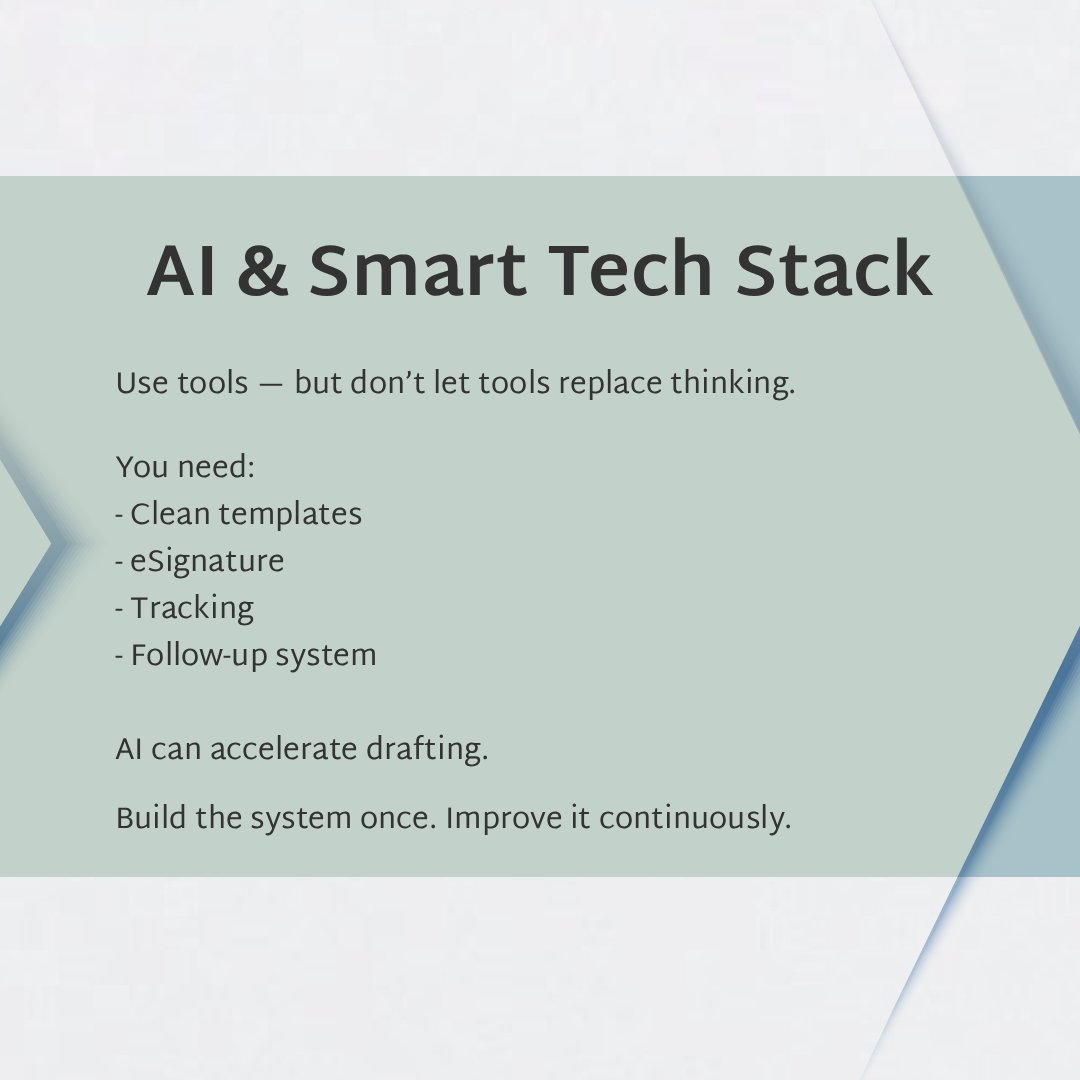
More sales and proposal roasting 🙂 Some of these mistakes are so obvious, it’s honestly mind-boggling: - Still using @gmail (yes, it matters) - Don’t use ALL CAPS for someone’s first name - If you’re using AI and automation (which is great), do it right. Test your emails. Make sure your field insertions actually work - End your email with a thank you and a proper signature You can have the best offer. You can be smart, capable, and hardworking. But if you’re sloppy in your sales process or your proposals, you will NOT close deals. Details signal competence. Sloppiness signals risk. I just released the most in-depth video I’ve ever produced on closing deals and winning proposals in 2026 — including: - Email templates - Sample proposals - Custom AI assistants I walk through all of it here: youtu.be/GIPme0ZMpzQ #Entrepreneurship #Consulting #Sales #Proposals
YouTube video
YouTube
Feras Alhlou tweet media
English
0
0
0
11
Feras Alhlou
Feras Alhlou@ferasa·
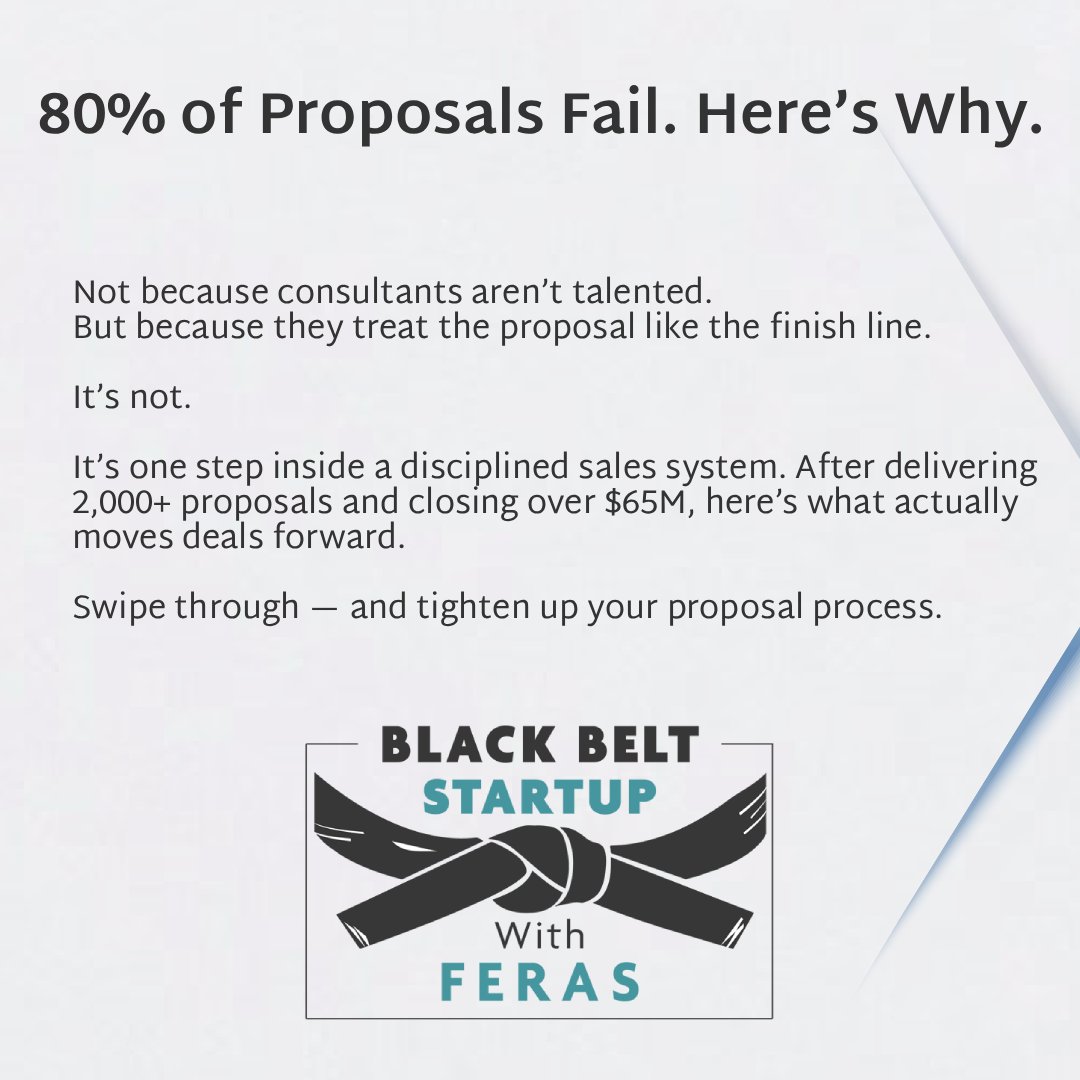
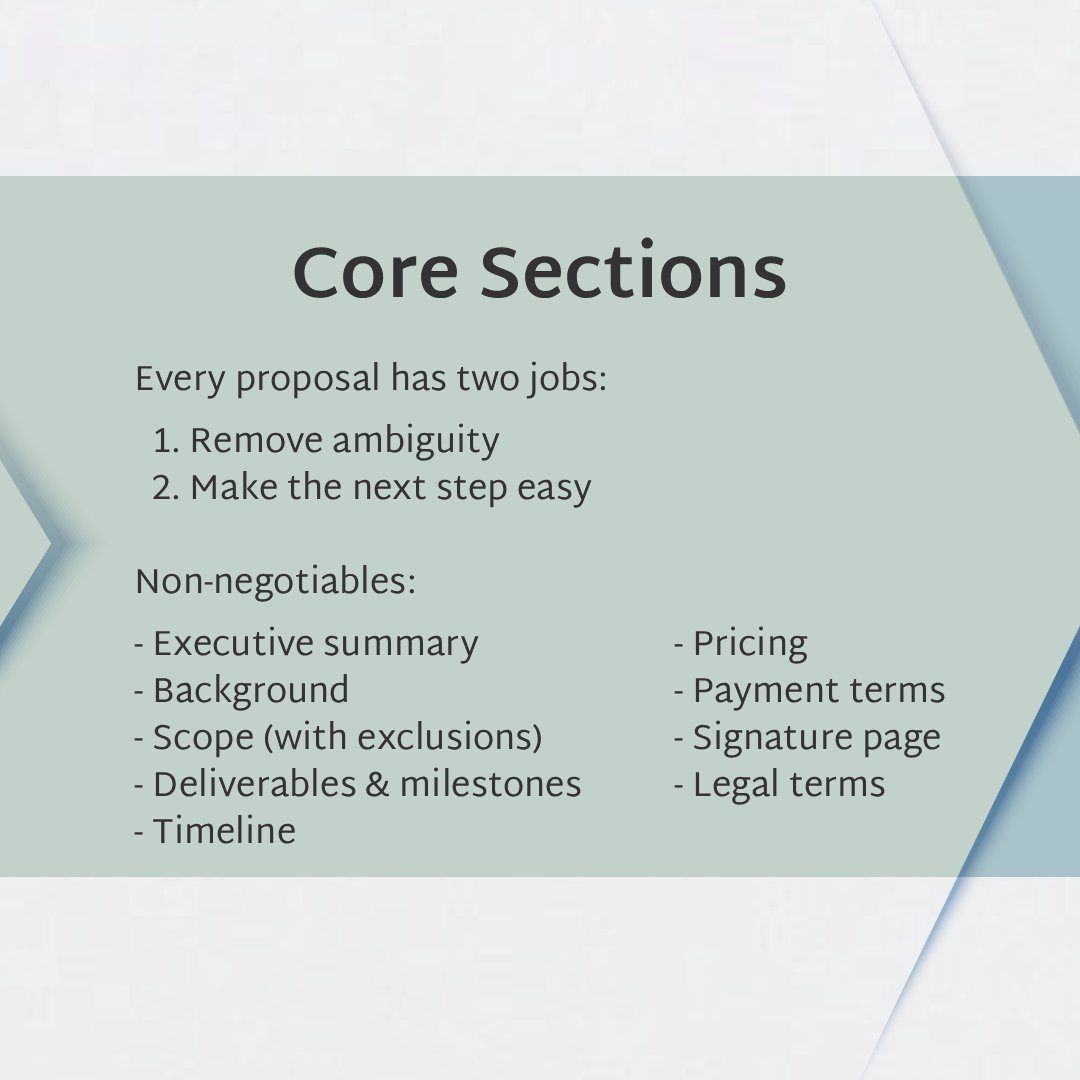
Today I released the most in-depth video I’ve ever produced: The Ultimate Guide to Writing Proposals that Close Clients in 2026. 80% of proposals fail — not because consultants can’t deliver, but because the process before and after the proposal is broken. This guide is built on 2,000+ proposals, $65M in closed revenue, and years of selling to small businesses, mid-size companies, Fortune-level organizations, and federal agencies, in the US and internationally. If proposals are part of your business, this is required viewing. :) 👉 Watch the full guide + download the proposal toolkit: youtu.be/GIPme0ZMpzQ This will change the way you sell. #entrepreneurship #consulting #sales #proposals
YouTube video
YouTube
English
0
0
1
32
Feras Alhlou
Feras Alhlou@ferasa·
Great pitch landed in my inbox last week. Smart ideas. Helpful PDF. Then they followed up with: “?” and “Following up my friend.” Good proposal. Bad execution. If you want clients to take you seriously, this is not the play. Tomorrow I’m releasing the most comprehensive proposal guide I’ve ever made — built to help you pitch better, follow up smarter, and actually close deals. Stay tuned. #entrepreneurship #sales #proposals
Feras Alhlou tweet media
English
0
0
0
20
Feras Alhlou
Feras Alhlou@ferasa·
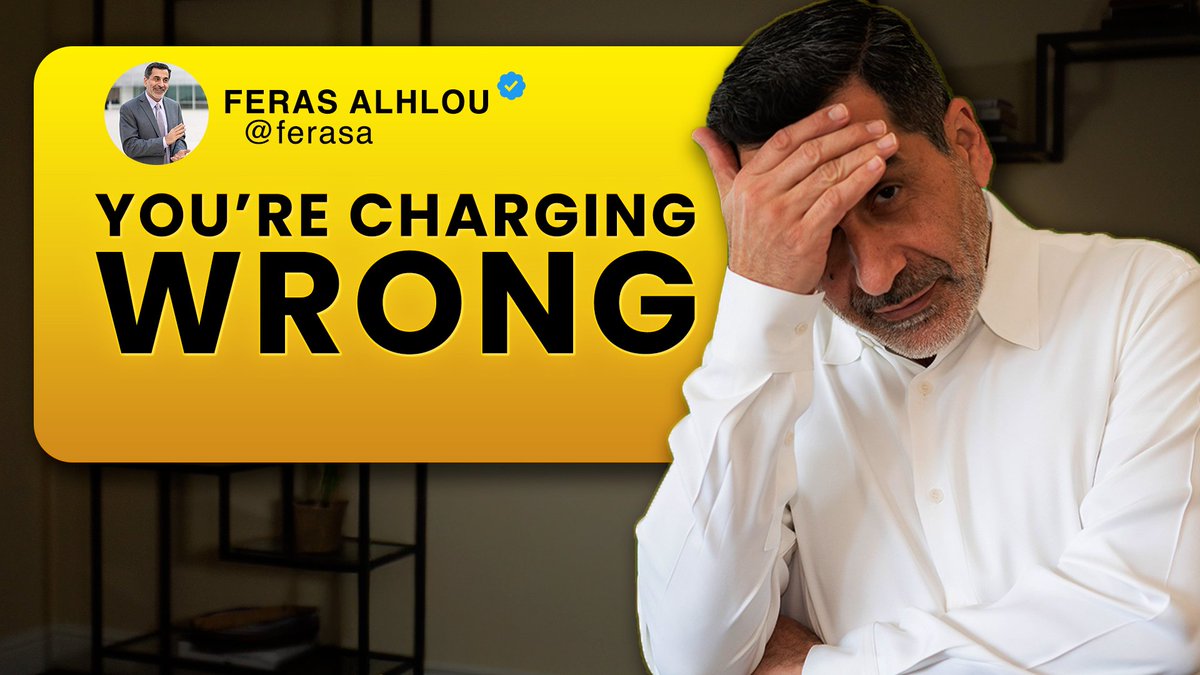
Most consultants underprice for one reason: They guess. Early in your consulting journey, pricing isn’t about being clever. It’s about being protected. Hourly pricing gets a bad reputation because people use it lazily. But when you’re new, it’s actually the most honest model you can use. You don’t yet know: • How long projects really take • Where scope creeps in • What clients will change mid-engagement So fixed pricing can quietly destroy your margins. Hourly done right gives you flexibility and clean math. That’s why even experienced firms still use it — selectively. If you’re guessing your rate, you’re not pricing. You’re gambling, and gambling is a terrible business model. I break down hourly pricing in this 16-minute video — when it works, when it doesn’t, and how to do it right in 2026. Check it out here: youtu.be/xqQFYaRC_0E #entrepreneurship #consulting #pricing #hourly
YouTube video
YouTube
Feras Alhlou tweet media
English
0
0
0
12